

MaiJinJia Biotech Files IPO Prospectus: Owner of China’s First Nucleic Acid Drug Platform Gains Backing from Tianjin Pharma and Servier

Servier
International Pharmaceutical Manufacturers

MJJ Biotech
Antisense Nucleic Acid Drug Developer
In recent years, with the continuous exploration of global research teams and biopharmaceutical companies, small nucleic acid drugs have gradually become an ideal type of drug, capable of providing solutions for many challenging diseases in clinical practice.
On one hand, small nucleic acid drugs have relatively high drug-like properties. Under current technological conditions, small nucleic acid drugs can silence any gene within the liver. Theoretically, as more delivery technologies are developed, small nucleic acid drugs could target every gene in the entire genome, whereas traditional small molecule drugs and antibody drugs can only target about 4% of gene products with marketed drugs. On the other hand, small nucleic acid drugs have a relatively long half-life, which also means a longer dosing cycle. Moreover, compared to gene therapy, small nucleic acid drugs only involve mRNA without affecting the genome, indicating higher safety.
The aforementioned advantages have ushered in an unprecedented wave of research and industrialization across the small nucleic acid field. In 2023 alone, four small nucleic acid products received approval for marketing: Tofersen, an ASO drug co-developed by Biogen and Ionis; Nedosiran, an RNAi therapy by Novo Nordisk for PH1; Izervay, an aptamer drug from Astellas; and Eplontersen, an ASO therapy developed in collaboration between AstraZeneca and Ionis.
It is not difficult to see that, compared with the rapidly developing and highly competitive CGT field, small nucleic acids have become a new blue ocean for pharmaceutical companies to lay out due to their vast number of candidate targets and longer half-life cycles. Guangdong Maijinjia Biotechnologies Co., Ltd. (hereinafter referred to as "MJJ Biotech") is one of the players in this field.
Cross complementarity:
Science-savvy serial entrepreneur + original Danish R&D team
MJJ Biotech was established in August 2019 as a Sino-Danish joint venture ASO drug innovation technology enterprise with international vision. It has received investment from the industrial fund of Huangpu District Government of Guangzhou City.
Its founder and CEO, Dr. Jiajie ZhaiGraduated from the Pharmacology program at Sun Yat-sen University, and subsequently conducted study visits in Australia, the UK, and Germany. After returning to China, engaged in entrepreneurship in the biopharmaceutical and medical device sectors in Guangzhou. Previously led the preclinical trials of a Class I new drug and the research and development, preclinical trials, clinical trials, and registration application of a Class III long-term implantable medical device.
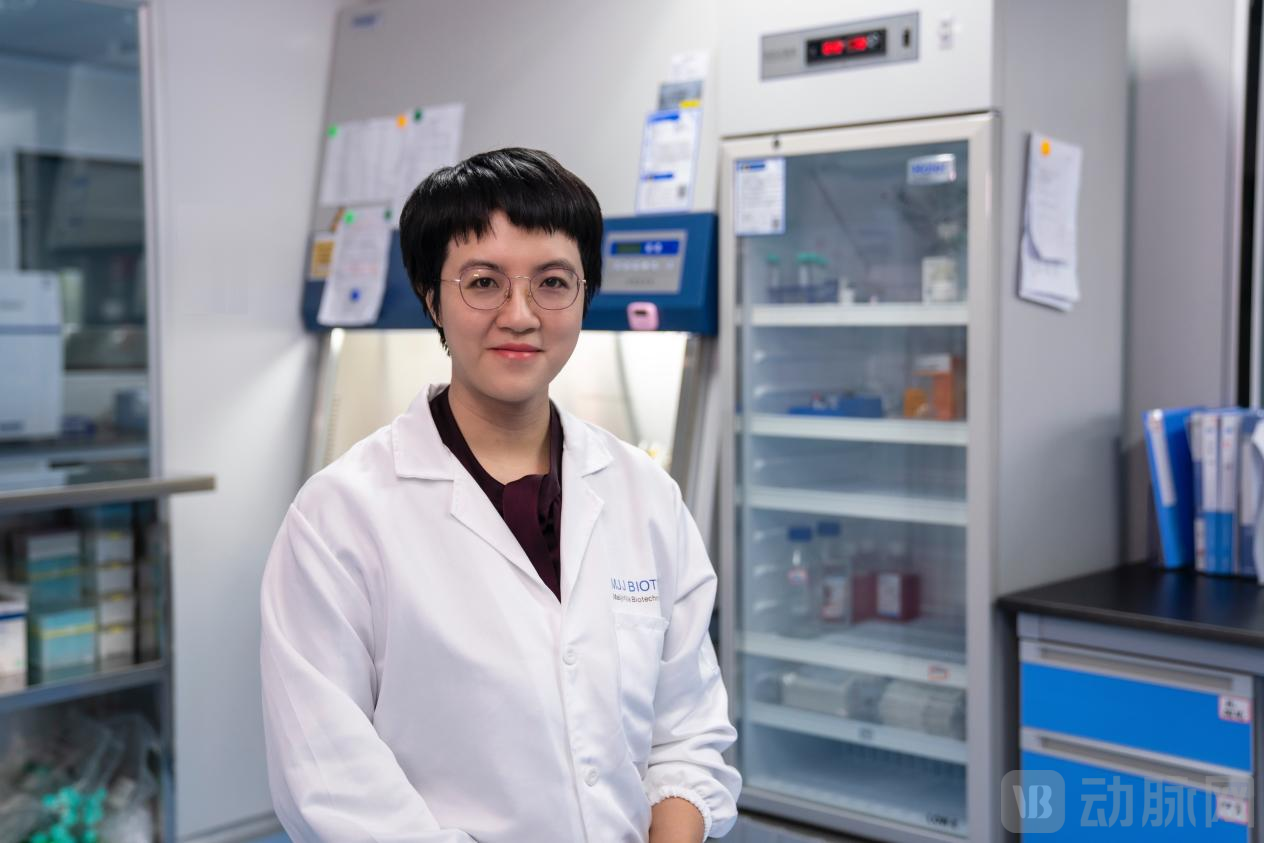
MJJ Biotech Founder and CEO Dr. Jiajie Zhai, Image Source: MJJ Biotech
In 2016, Dr. Zhai led the establishment of Guangdong Jiayuemei Biotechnology Co., Ltd., aiming to achieve the domestic production of artificial corneas in China. After years of effort, challenges related to materials, thickness, internal stress, and more were successively overcome. In 2021, the domestically produced button-type artificial cornea was finally successfully developed. Over the years, Jiayuemei's products have entered more than 20 hospitals, helping nearly a hundred patients regain their eyesight. Dr. Zhai recalled, "At first, we just wanted to catch up with the Boston Type I artificial cornea from the U.S., so that patients could access and afford artificial corneas made in China. We never expected that after overcoming numerous technical hurdles, we would surpass several technical indicators."
With this perseverance in research, Dr. Zhai collaborated with a team of Danish scientists in 2019 to establish MJJ Biotech.
When asked why he chose to collaborate with a Danish biopharmaceutical team for entrepreneurship, Dr. Zhai said, "Denmark is a country with a population of only 5.5 million, yet it has produced 14 Nobel Prize winners. The headquarters of major international pharmaceutical companies such as Novo Nordisk, Lundbeck, LEO Pharma, and ALK are all located in Denmark."Such an innovative environment is naturally very suitable for '0' to '1' original innovation work, while China is particularly suited for '1' to '100' work—rapidly scaling up based on original innovation. MJJ Biotech combines the strengths of Denmark and China, integrating them into a '0' to '100' full-coverage new drug R&D company.
The decision of the Danish team to establish its headquarters in China and transfer global patent ownership to MJJ Biotech also stems from unique considerations. In recent years, due to high R&D costs, manufacturing costs, and environmental costs, pharmaceutical industries in Europe and the U.S. have been constrained. As a result, an increasing amount of pharmaceutical production has gradually shifted to emerging markets with comparative advantages—especially China. More importantly, China’s large population provides it with certain advantages in both talent pool and patient numbers.
Another official from the Danish Ministry of Foreign Affairs once communicated with Dr. Zhai: "Most Nordic people may be more rigorous and conservative, so it is quite rare for them to place such deep trust in the MJJ Biotech team." Dr. Zhai told VCBeat that during discussions with the Danish team about establishing MJJ Biotech, Dr. Hans Thorleif Møller, the inventor of the patent, showed great confidence. He believed that, within the fertile grounds of China's inclusive pharmaceutical industry, the Blockmir technology could quickly bear fruit.
With the strong cooperation and efforts of the teams from both countries, MJJ Biotech has developed China's first nucleic acid-based technology platform, Blockmir.
Currently, the global ownership of 28 patents related to the platform's technology has been transferred from Denmark to MJJ Biotech. Moreover, all inventors of these patents, Dr. Hans Thorleif Møller and Dr. Christina Møller Udersen, are now working full-time at MJJ Biotech, ensuring the simultaneous introduction of both patents and know-how, truly achieving original innovation.This also sets MJJ Biotech apart from most small nucleic acid enterprises. The company’s Blockmir nucleic acid drug development technology and Dosevo nucleic acid drug screening technology are fully owned by the company in terms of global patent rights, rather than having usage rights limited to a specific time period or region.
Based on the Blockmir antisense nucleic acid platform,
Focus on Five Major Disease Areas
It is reported that Blockmir can bind to the microRNA binding site in mRNA and prevent microRNA from binding to the same site. Since microRNA can no longer bind to mRNA, it cannot bring the RISC complex to mRNA, thus upregulating protein expression.
Currently, most of the nucleic acid drugs under research on the market function by down-regulating mRNA, which can only cover 50% of diseases. The other 50% of human genes are negatively regulated by microRNA, including almost all diseases such as cancer, immune system disorders, and metabolic diseases, all of which arise due to this. Up-regulation can restore the expression of proteins that are lost due to negative regulation. Therefore, in principle, all these major categories of diseases can become therapeutic targets for Blockmir technology, representing a significant clinical demand.
Dr. Zhai emphasized, "When utilizing the Blockmir mechanism to upregulate protein expression, we have a clear understanding of the specific binding sites on the mRNA for the designed Blockmir lead compounds. This forms the basis for the rational design and optimization of lead compounds, which can shorten the R&D cycle and reduce R&D risks."
In addition to the advantage of increasing protein levels, the Blockmir technology platform also has three other distinct advantages:
First, Blockmir, as an ASO, does not rely on a delivery system., local injection (CNS delivery) can produce sufficient efficacy; when administering the Blockmir drug system, it automatically targets the liver and kidneys. Therefore, for liver and kidney-related indications, the Blockmir drug does not rely on a delivery system.
Secondly, Blockmir partially addresses the off-target issue.Blockmir is a spatial blocker that only interferes with the regulatory effect of miRNA on mRNA, without affecting the level of miRNA or mediating the degradation of target mRNA or non-target RNA.
Thirdly, Blockmir avoids immunogenicity issues.It is a single-stranded oligonucleotide of approximately 15nt, shorter than the 21nt length required for immune activation, which can reduce the immune response it may cause clinically.
Currently, MJJ Biotech's core patent for Blockmir has already established a robust protective barrier in Europe, North America, China, Japan, and Germany. The patent covers more than three hundred miRNA target sequences, encompassing nearly all protein targets discovered to date that can be upregulated.
Based on its core technology platform, MJJ Biotech currently focuses on five major fields: the central nervous system, ophthalmology, liver diseases, cardiovascular diseases, and nephropathy.The two core pipelines that are the main focus of advancement have indications for Glucose Transporter 1 Deficiency Syndrome and Autosomal Dominant Polycystic Kidney Disease, respectively. These two pipelines are expected to complete IND-Enabling by 2025 and submit IND applications by 2026.
In collaboration with China Resources Tianjin Pharmaceutical Co., Ltd. and Servier,
Multiple Giants Extend Olive Branches
An excellent team and technology will naturally attract the favor of partners in the industry.
On January 12, 2024, Tianjin Pharmaceutical Group (hereinafter referred to as "Jin Pharmaceutical Group") signed a strategic cooperation agreement with MJJ Biotech in Tianjin.Through this strategic cooperation, both parties will achieve closer complementary advantages, resource integration, and model innovation, jointly promote new drug research and development, facilitate the clinical application of new drugs, and jointly advance the research and industrialization of antisense oligonucleotide drugs. At the same time, both parties will broaden their thinking in new drug R&D cooperation, attempt to build a multi-dimensional business cooperation model, become a closely-knit alliance for collaboration and mutual benefit, and jointly commit to the R&D of innovative drugs in China.
Previously, MJJ Biotech also reached a collaboration with the French pharmaceutical giant Servier, with an upfront payment of nearly 2 million euros plus 35 million euros.Servier's feedback indicates that the patented technology is initially viable for drug development. It has currently passed the mid-term review of Servier’s go/no-go agreement. The meeting minutes show that Servier acknowledges MJJ Biotech's patented technology and expresses its intention to continue sustained investment in research and development. Servier has provided its own equipment to MJJ Biotech’s Denmark laboratory as experimental apparatus and dispatched technical personnel to assist on-site in order to accelerate the R&D process.
Besides, MJJ Biotech has received cooperation proposals from several pharmaceutical giants. These giants have expressed their hope that MJJ Biotech will contact them as soon as possible to initiate cooperation after achieving further results."For the later-stage development and commercialization of the pipeline, MJJ Biotech indeed prefers to advance through BD (Business Development) methods. By integrating technological and resource advantages, we hope to quickly launch products to benefit clinical patients."
We look forward to MJJ Biotech launching its products in clinical settings soon, growing into a global leader in nucleic acid drugs and the best partner for multinational pharmaceutical companies.