

AZD4820: An Oncolytic Vaccinia Virus Encoding IL-12 Demonstrates Potent Antitumor Activity and Synergy with PD-L1 Blockade in Checkpoint Inhibitor–Resistant Models

AstraZeneca
Biopharmaceutical Manufacturer
Oncolytic viruses have been engineered to selectively kill tumor cells and have shown promising results in early clinical trials. To further modulate the innate and adaptive immune systems, AZD4820, an engineered oncolytic vaccinia virus (VACV), has been developed.AZD4820 contains deletions of the viral thymidine kinase (TK) and the large subunit of ribonucleotide reductase (RR) (RRM1), which enhance tumor-specific replication.Simultaneously encoding a human IL-12 fusion protein transgene, composed of the IL-12 p40 and p35 subunits covalently linked via a glycine-serine linker. The transgene is inserted into the J2R (viral TK) locus and controlled by the late viral promoter pF17R, to restrict IL-12 production to cells with active AZD4820 replication, such as tumor cells, thereby maximizing the anti-tumor activity of IL-12 while limiting potential systemic toxicity.
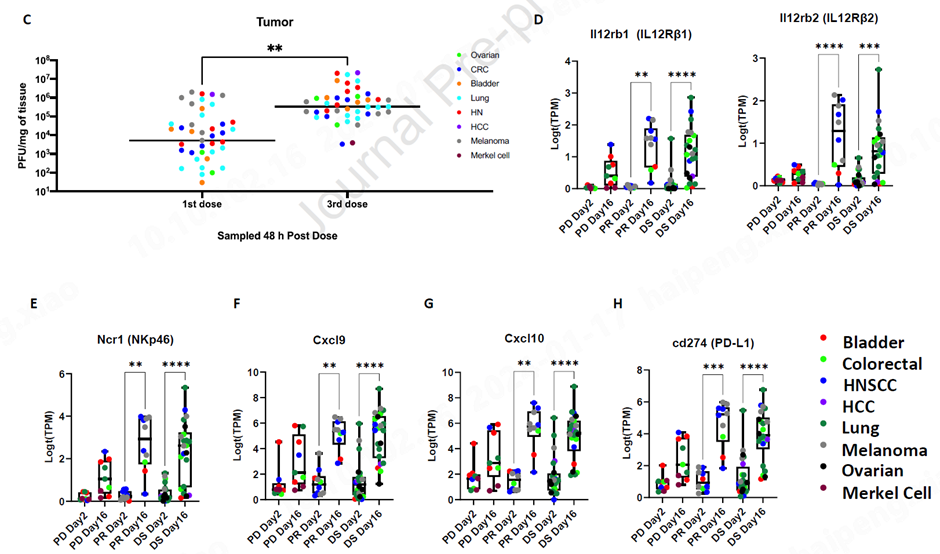
Recently, researchers from AstraZeneca published a research paper titled "Mediation of Antitumor Activity by AZD4820 Oncolytic Vaccinia Virus Encoding IL-12" in the Cell sub-journal Molecular Therapy: Oncology.Characterization of AZD4820. AZD4820 replicates and expresses IL12 in fresh tumor slice cultures and primary dissociated tumor cell cultures across multiple tumor types, demonstrating antitumor activity in syngeneic rat and mouse tumor models. AZD4820 elicits tumor-specific immune responses and synergistically enhances PD-L1 blockade efficacy in mouse tumor models with poor responses to PD-L1 antibody therapy, offering a novel therapeutic strategy for patients with checkpoint resistance.

Research FindingsAZD4820 demonstrates broad in vitro oncolytic activity and IL-12 transgene expression in cultured human tumor cell lines.
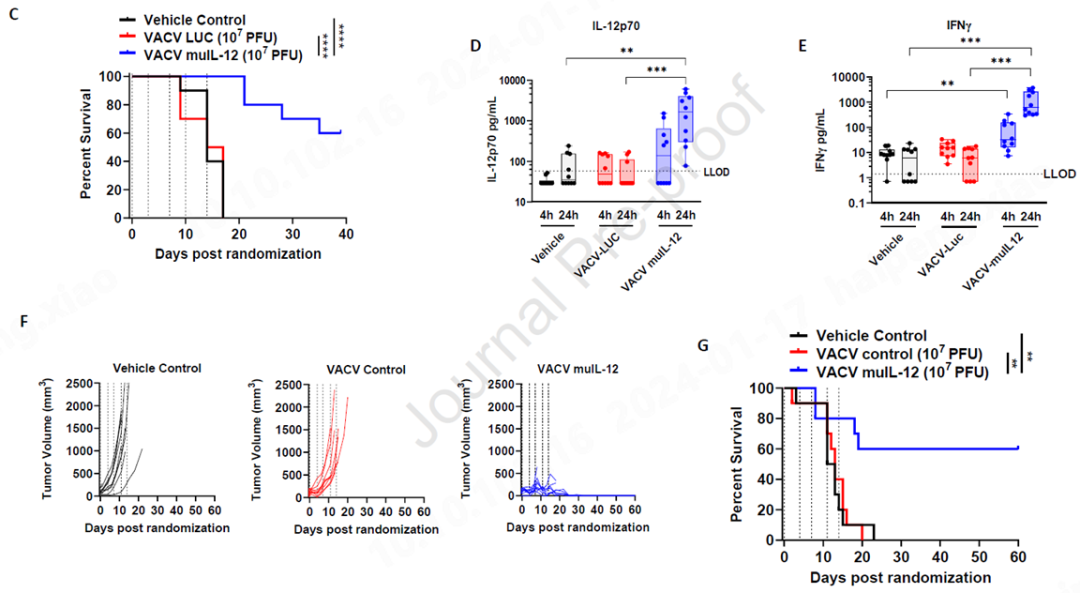
Recombinant virus expressing mouse IL-12 demonstrates antitumor activity in both MC38 and CT26 murine syngeneic tumor models with poor response to immune checkpoint inhibition.In both models, AZD4820 significantly upregulated interferon γ (IFNγ) compared to control mice treated with oncolytic vaccinia virus (VACV)-luciferase.In the CT26 study, 6 out of 10 mice treated with AZD4820 mouse surrogate showed complete response, whereas 0 out of the control VACV luciferase-treated mice exhibited complete response.
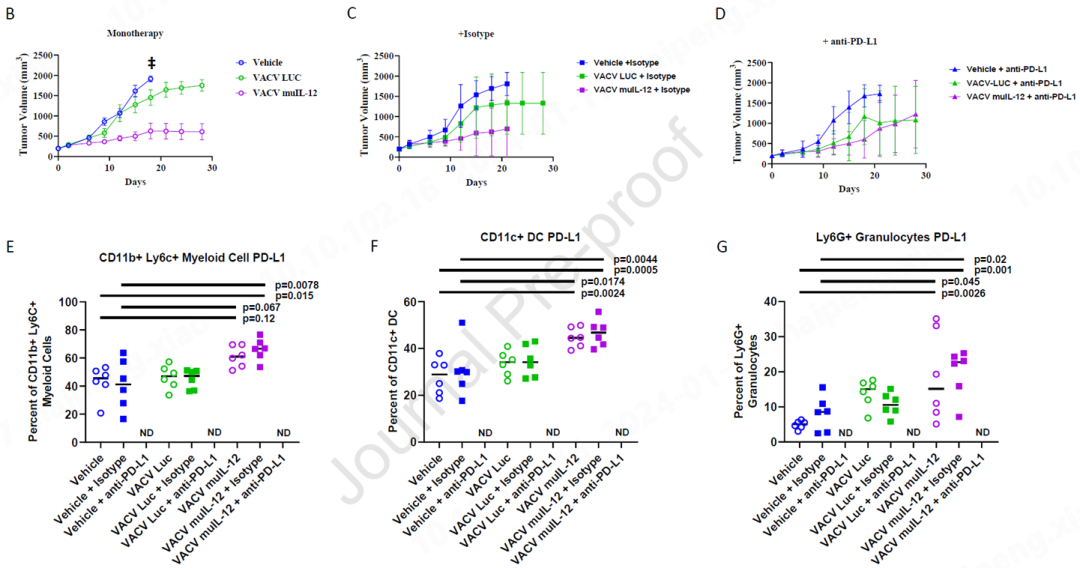
Compared with monotherapy, AZD4820 treatment combined with anti-PD-L1 blocking antibody enhances tumor-specific T-cell immunity. This indicates that vaccinia virus delivery of IL-12, combined with immune checkpoint blockade, elicits antitumor immunity in tumors with poor response to immune checkpoint inhibitors.
Thinking
Based on the preclinical evaluation of VACV delivering IL-12 and this study of AZD4820, this OV represents a promising oncolytic and immunotherapeutic agent for cancer treatment. Similarly, the correlation between viral replication and IL-12 production within tumor tissues and clinical response should be assessed.In preclinical treatment models using multi-dose regimens, the level of virus-neutralizing monoclonal antibodies was not directly measured.Moreover, despite the presence of antiviral neutralizing antibody responses induced by VACV, other clinical trials using the oncolytic vaccinia virus Pexa-Vec administered intravenously or intratumorally have demonstrated pharmacodynamic and antitumor activity.
Reference:Mediation of Antitumor Activity by AZD4820 Oncolytic Vaccinia Virus Encoding IL-12. Mol Ther Oncolytics https://doi.org/10.1016/j.omton.2023.200758