

Weekly Summary of China's Innovative Drug INDs, NDAs, Approvals and Global Phase III Clinical Trials (Jan 22–26)

Hengrui Pharma
Innovative and High-Quality Pharmaceutical Developer
Phanes China
Antibody New Drug Developer

Welcome to follow Asymchem Pharma News
Collection Period: 1.22-1.26, domestic portion includes innovative drugs with first-time clinical trial applications, first-time marketing applications, and first-time marketing approvals in China.
Summary of IND for Innovative Drugs in China
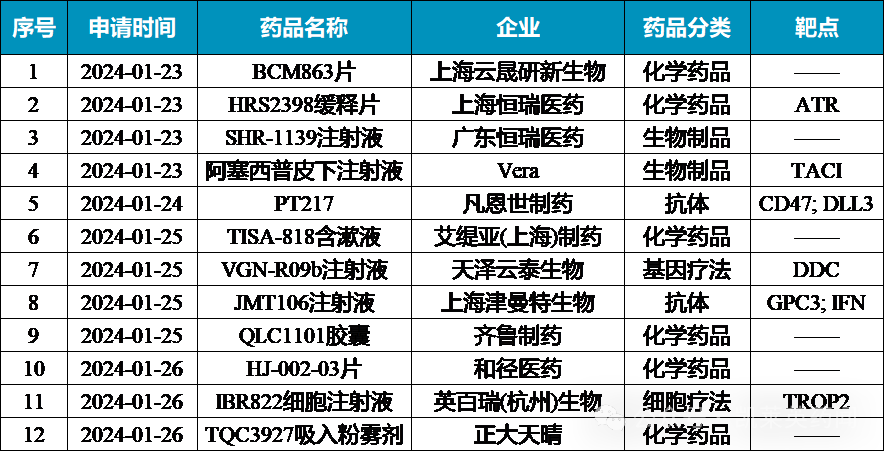
1. Hengrui Pharma: HRS2398 Sustained-Release Tablets
Mechanism of Action: ATR Inhibitor
Indications: Tumor
On January 23, the clinical application of Hengrui Pharma's HRS2398 sustained-release tablets was accepted by the CDE. HRS2398 exacerbates DNA double-strand damage and inhibits cell proliferation to exert its anti-tumor effects. ATR, or "Ataxia Telangiectasia Mutated and Rad3-related kinase," belongs to the serine-threonine kinase group within the phosphatidylinositol 3-kinase (PIKK) family. Once activated, ATR kinase regulates various cellular biological processes through multiple signaling pathways, including cell cycle arrest, inhibition of replication origins, promotion of deoxyribonucleotide synthesis, initiation of replication forks, and repair of DNA double-strand breaks. Studies have found that ATM and ATR kinases are activated or upregulated in cancer cells, and ATR is a synthetic lethal target for ATM mutations; tumor cells lacking ATM are more sensitive to ATR inhibitors. The conventional tablet form of this drug was approved by the CDE for clinical trials in August 2021 for the treatment of advanced malignant tumors.
2. Vera: Asecip Subcutaneous Injection
Mechanism of Action: TACI-Fc Fusion Protein
Indications: IgA Nephropathy
On January 23, Vera's clinical application for Atacicept subcutaneous injection was accepted by the CDE. Atacicept is a recombinant fusion protein containing a soluble transmembrane activator and calcium-modulating cyclophilin ligand interaction factor (TACI) receptor, which can bind to the cytokines B lymphocyte stimulator (BLyS) and a proliferation-inducing ligand (APRIL). This drug targets B cells and plasma cells to reduce autoantibodies and has "best-in-class" drug potential.
In June 2023, Vera announced that the Phase 2b clinical trial ORIGIN of atacicept for the treatment of IgA nephropathy (IgAN) met its primary and key secondary endpoints. At 36 weeks of treatment, the proteinuria levels in the atacicept (150 mg dose) group decreased by 35% compared to the placebo group (p=0.012). After excluding patients who did not comply with the trial protocol, the proteinuria levels in the atacicept group decreased by 43% compared to the placebo group (p=0.003). Additionally, in the ITT analysis, the eGFR of patients receiving placebo declined, while the eGFR of patients treated with atacicept remained stable over 36 weeks.
3. Phanes: PT217
Mechanism of Action: Targeting CD47/DLL3 Bispecific Antibody
Indications: Tumor
On January 24, the clinical application of Phanes' PT217 was accepted by CDE. PT217 is a bispecific antibody targeting CD47/DLL3, which can directly kill tumor cells through the ADCP activity of macrophages and the ADCC activity of NK cells, and expand the scope of tumor killing by simultaneously targeting the overexpressed DLL3 and CD47 on the surface of tumor cells. In addition, PT217 is expected to induce the presentation of tumor neoantigens by guiding tumor cells into phagocytic antigen-presenting cells (APCs), and indirectly activate T cells to kill tumor cells with low or no DLL3 expression by recognizing tumor neoantigens, thereby stimulating the acquired immune system. The anti-CD47 arm of PT217 is highly differentiated and has been shown in preclinical models to maintain strong binding activity to CD47 on tumor cells while minimally binding to human red blood cells.
PT217 has been approved by the FDA in 2022 to conduct a multi-center clinical Phase I trial in the United States, and was granted orphan drug designation by the FDA in 2022 for the treatment of small cell lung cancer.
4. Tianzeyun Bio: VGN-R09b Injection
Mechanism of Action: ——
Indications: Parkinson's disease, aromatic L-amino acid decarboxylase deficiency
On January 25, the clinical application of VGN-R09b Injection from Tianze CloudTech Biologics was accepted by the CDE for indications including Parkinson’s Disease (PD) and Aromatic L-Amino Acid Decarboxylase Deficiency (AADCD). This marks the first gene therapy product in China to have submitted and been accepted for clinical trial application. VGN-R09b uses recombinant AAV as a gene therapy vector to restore dopamine production by delivering functional AADC, thereby exerting its potential therapeutic effects. Administered via localized striatal injection, the drug directly targets the affected area, reducing the systemic dosage and consequently minimizing adverse reactions such as immune responses. Theoretically, gene therapy requires only a single injection to achieve long-term efficacy.
5. CSPC/Jinmante Biotech: JMT106 Injection
Mechanism of Action: GPC3/IFN Fusion Protein Targeting
Indications: Tumor
On January 25, the clinical application of JMT106 Injection from Shiyao/Jinmantu Biotechnology was accepted by the CDE. JMT106 is a bispecific fusion protein drug targeting GPC3 and interferon receptors. It kills tumor cells through the targeting of GPC3 antibodies and activates immune regulation in the tumor microenvironment mediated by interferon receptors. GPC3 is highly expressed in various solid tumors such as hepatocellular carcinoma, squamous cell carcinoma of the lung, and ovarian cancer. Preclinical studies have shown that JMT106 has a wide range of indications, demonstrating significant anti-tumor effects in malignant tumor models like liver cancer, lung cancer, and ovarian cancer, with good safety.
6. IBR Biotech: IBR822 Cell Injection
Mechanism of Action: Trop2-targeted CAR-raNK
Indications: Solid Tumors
On January 26, the clinical application of IBR822 Cell Injection from Yingbai Rui Bio was accepted by CDE. IBR822 Cell Injection is an antibody-NK cell conjugate drug (Trop2 CAR-raNK), consisting of a full-length monoclonal antibody targeting human Trop2 antigen chemically conjugated through a linker to allogeneic NK cells derived from peripheral blood of healthy donors and expanded in vitro. It exhibits enhanced targeting ability, specifically targeting tumor cells expressing Trop2 antigen via the anti-Trop2 monoclonal antibody, and exerts its tumoricidal effects through five major mechanisms: direct lysis of target cells by NK cells, cytokine secretion, induction of apoptosis, ADCC, and immune checkpoint pathways. This maximizes the killing effect on target cells while minimizing off-target toxicity. Additionally, this candidate product comprises non-genetically modified NK cells targeting specific tumor antigens, avoiding the risk of insertional mutagenesis caused by viral or non-viral vector integration, thus offering higher safety.
Summary of NDA for Innovative Drugs in China

1. Johnson & Johnson: Lanze Tinib Mesylate Tablets
Mechanism of Action: EGFR T790M Inhibitor
Indications: Non-Small Cell Lung Cancer
On January 26, the New Drug Application (NDA) for Janssen’s Lazertinib Mesylate Tablets was accepted by the CDE. Lazertinib is a third-generation EGFR tyrosine kinase inhibitor (EGFR-TKI) originally developed by Yuhan Corporation, with rights outside of Korea transferred to Janssen Pharmaceuticals, a subsidiary of Johnson & Johnson in the United States. Lazertinib has demonstrated strong activity in non-small cell lung cancer patients with activating EGFR mutations, T790M mutations, and central nervous system (CNS) metastases. On January 18, 2021, the South Korean Ministry of Food and Drug Safety (MFDS) approved Lazertinib for the treatment of patients with locally advanced or metastatic non-small cell lung cancer who are positive for the EGFR T790M mutation following prior EGFR-TKI therapy.
In a global, double-blind trial, previously untreated adult patients with locally advanced or metastatic non-small cell lung cancer (NSCLC) harboring EGFR mutations and eligible for first-line EGFR-TKI therapy were randomly assigned to receive Lazertinib (n=196) or Gefitinib (n=197). The primary endpoint was investigator-assessed progression-free survival (PFS) according to RECIST 1.1 criteria. Secondary endpoints included overall survival (OS), objective response rate (ORR), duration of response (DOR), disease control rate (DCR), and safety. As of the data cutoff date on July 29, 2022, the median PFS in the Lazertinib group vs. the Gefitinib group was 20.6 months vs. 9.7 months (HR 0.45; 95% confidence interval: 0.34-0.58; P<.001). The overall ORR was 76.0% vs. 76.1%, with most responses being partial responses (PR); complete responses (CR) were observed in 2 patients in the Lazertinib group and 1 patient in the Gefitinib group. Additionally, the median DOR was 19.4 months vs. 8.3 months, and the DCR was 93.9% in both groups. At the data cutoff, OS data were not yet mature; however, the estimated 18-month OS rates were 80.3% vs. 72.4%, and the 24-month OS rates were 66.4% vs. 58.4%. Safety data from the trial showed that common treatment-related adverse events (AEs) of any grade in the Lazertinib group included paresthesia (39%), rash (36%), pruritus (27%), paronychia (18%), and dry skin (15%). In the Gefitinib group, common treatment-related AEs of any grade included diarrhea (39%), rash (37%), elevated alanine aminotransferase (30%), and elevated aspartate aminotransferase (26%).
Innovative Drug Approved for Marketing in China
1. Pfizer: Rimegepant Orally Disintegrating Tablets
Mechanism of Action: CGRP Receptor Antagonist
Indications: Acute Migraine
On January 26, Pfizer's Rimegepant orally disintegrating tablets (brand name: Letaik) received approval from the China National Medical Products Administration ("NMPA") for the acute treatment of migraine with or without aura in adults. Letaik, marketed as Nurtec® ODT in the United States, is the world’s first and only CGRP receptor antagonist utilizing patented orally disintegrating tablet technology, and it is currently the only drug globally approved by both the U.S. FDA and the EU EMA for both acute treatment and prevention of migraine. Rimegepant was originally developed by Biohaven, which Pfizer acquired for $11.6 billion in May 2022 to strengthen its pipeline in neurological diseases.
In February 2022, Biohaven and Pfizer jointly announced positive topline results from a Phase 3 clinical trial of rimegepant in the Asia-Pacific region, including China and South Korea, for adult patients with acute migraine. The study met its co-primary endpoints of pain relief (p<0.0001) and relief of migraine-associated symptoms (MBS), including nausea, phonophobia, or photophobia (p<0.0001), within two hours after a single oral dose of rimegepant. In this study, patients were able to return to normal function within two hours, with some efficacy lasting up to 48 hours; in terms of safety, rimegepant demonstrated good safety and tolerability, consistent with previous clinical trial results in the United States.
2. Novo Nordisk: Semaglutide Tablets
Mechanism of Action: GLP-1 Receptor Agonist
Indications: Type 2 Diabetes
On January 26, Novo Nordisk's oral semaglutide received NMPA approval for marketing in China. Semaglutide is a GLP-1 drug used for lowering blood sugar and reducing weight. The drug works by binding to GLP-1 receptors, stimulating insulin secretion, and inhibiting glucagon secretion, thereby promoting glucose metabolism. Additionally, it can delay gastric emptying and suppress appetite. Currently, three forms of the drug have been approved for marketing: Ozempic for subcutaneous injection to lower blood sugar, Rybelsus for oral administration to lower blood sugar, and Wegovy for subcutaneous injection for weight loss. The oral semaglutide tablet is a compound formulation of semaglutide and an absorption enhancer (SNAC). Its uniqueness lies in SNAC’s ability to promote the absorption of semaglutide in the stomach, increase the pH of the environment, enhance the solubility of semaglutide, and prevent its degradation by peptidases in the stomach.
According to the latest trial data released in March 2023, higher doses of oral semaglutide (25mg, 50mg) were compared with the previously approved 14mg dose for the treatment of type 2 diabetes. The clinical trial met its primary endpoint, showing that at week 52 of treatment, both the 25mg and 50mg doses of oral semaglutide significantly outperformed the 14mg dose in reducing glycated hemoglobin (HbA1c), with similarly significant weight loss effects. Additionally, the average baseline HbA1c of patients was 9.0%, with reductions of 1.5%, 1.9%, and 2.2% in the 14mg, 25mg, and 50mg dose groups, respectively; the average baseline weight of patients was 96.4kg, with weight reductions of 4.5kg, 7.0kg, and 9.2kg in the 14mg, 25mg, and 50mg dose groups, respectively. All doses of oral semaglutide appeared to have good safety and tolerability.
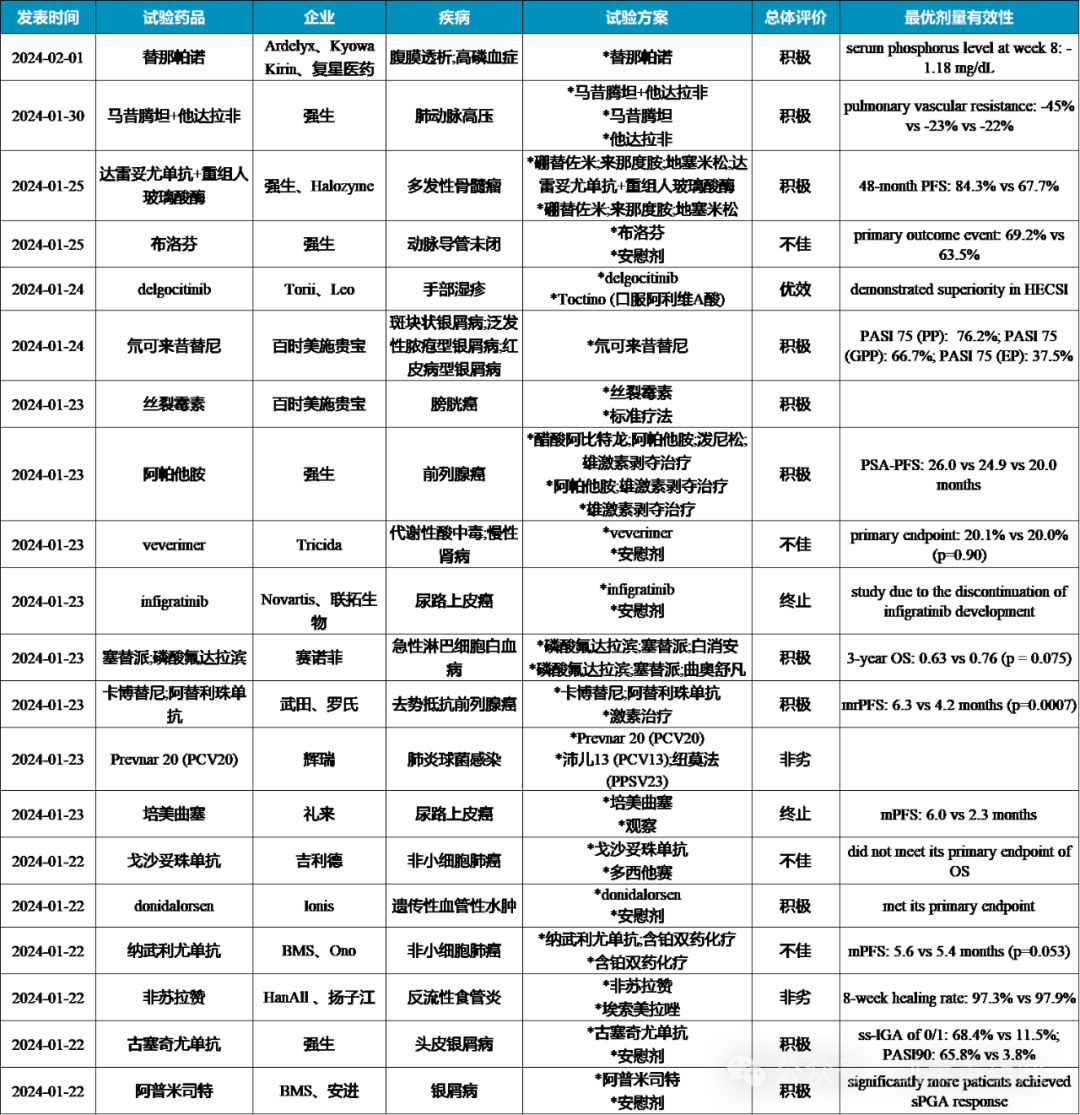
Global Phase III Clinical Summary


"Under Observation"Click once