Fosun Kite Supports National Health Commission's Lymphoma Specialist Training Initiative as CAR-T Therapy Enters an Era of Accessibility and Cure

Fosun Kairos
Developer of Tumor Immune Cell Therapy Technologies and Products


With the叠加 of aging, environmental pollution, lifestyle changes, and many other factors, the global cancer incidence and morbidity rates are becoming increasingly severe. Large B-cell lymphoma is the most common type of adult non-Hodgkin lymphoma, a malignant tumor with strong heterogeneity in the hematological system, accounting for about 40% of non-Hodgkin lymphomas. After first-line treatment, 40% of patients still experience disease progression or recurrence. Since CAR-T cell therapy entered China in 2021, the survival outcomes of Chinese patients with relapsed or refractory large B-cell lymphoma have significantly improved. New therapies and technologies have provided new options and hope for lymphoma patients in China.

During the 2024 Chinese Society of Clinical Oncology (CSCO) Annual Meeting, the Lymphoma Specialist Capacity Enhancement Program - Standardized Training Project for Cell Therapy, hosted by the National Health Commission's Center for Capacity Building and Continuing Education and supported by Fosun Kite Biotechnology Co., Ltd., was launched simultaneously.Song Xianbao, Deputy Director of the National Health Commission's Center for Capacity Building and Continuing Education, Professor Ma Jun, Director of the Harbin Institute of Hematology and Oncology and Leader of the Project Team, and Core Experts of the Project Team(Arranged in Pinyin order): Hu Yu, Huang He, Huang Huiqiang, Liang Aibin, Niu Ting, Qian Wenbin, Qiu Lugui, Song Yuqin, Wang Jianxiang, Wu Depei, Zhang Mingzhi, Zhao Weilai, Zhu Jun and other authoritative experts attended this meeting to discuss the planning of the Lymphoma Specialist Talent Competency Enhancement Project—Standardized Training Program for Cell Therapy. The aim is to promote the standardization of lymphoma cell therapy, improve the level of lymphoma treatment and cure rates, allowing more patients with LBCL to gain hope for a cure earlier. This meeting also made the first attempt at how to accelerate the transformation of innovative medical technologies into clinical practice.


Lymphoma Specialist Talent Capability Enhancement Project
Leading Cell Therapy Towards Standardization

As one of the common hematological malignancies, traditional treatment methods cannot meet the therapeutic needs of all lymphoma patients, and emerging therapies represented by CAR-T cell therapy are gradually moving towards clinical application.
With the rapid growth of lymphoma sub-specialties in China, more and more Chinese voices are being heard at various international conferences. To comprehensively enhance the professional knowledge and clinical practice capabilities of clinicians across China, and to implement the "Healthy China 2030" Plan Outline, the Health Commission's Continuing Education Center has launched the "Lymphoma Specialist Talent Competency Enhancement Program – Standardized Training for Cell Therapy." This initiative aims to cultivate specialized talent in lymphoma cell therapy, promote the development of demonstration and training bases, and advance the standardization and normalization of lymphoma treatment in China.
At the meeting,Song XianbaoIt was stated: "The medical and healthcare industry in China has now entered a high-quality development phase. The specialty of cellular biologic therapy, led by specific anti-tumor immunotherapy, has become an important direction for the development of tumor biologic treatments. However, there is currently a scarcity of CAR-T cell therapy professionals, necessitating further advancements in various aspects to accelerate the clinical translation of innovative drugs and technologies. At the same time, several requirements were proposed for the project. First, it is hoped that all parties will explore the establishment of a training system 'centered on patients' and 'based on capacity building and talent cultivation,' integrating resources to strengthen talent reserves. Second, adhere to a problem- and demand-oriented approach to promote continuing medical education, enhance the competency of medical staff, and standardize cell therapy procedures. Third, strengthen risk prevention awareness and advance all activities within the project safely and according to relevant regulations."


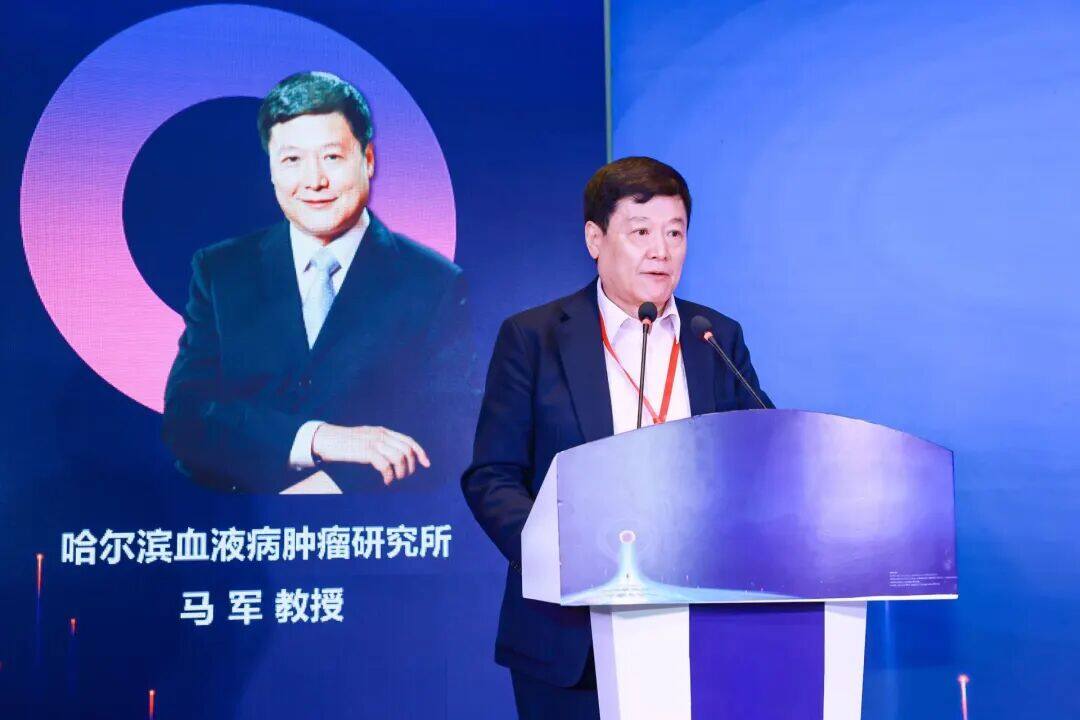
- Director of Harbin Hematology and Oncology Research Institute, Professor Ma Jun -
Professor Ma Jun, Director of Harbin Hematology and Oncology Research InstituteAs the leader of this project, he stated: "CAR-T cell immunotherapy is different from other traditional cancer treatment methods. It is a highly individualized treatment that demands high-level skills from doctors and requires a standardized training system to improve the medical quality of CAR-T treatment centers. With various innovative drugs entering the market, the development of professional talent has become particularly important."

The treatment of malignant tumors has always been a significant challenge in the medical field. Particularly for advanced or recurrent tumors, very few cases can achieve a cure. Take diffuse large B-cell lymphoma as an example—almost all patients face continuous recurrence and eventually death. However, the emergence of CAR-T therapy offers new hope for a cure for these patients. Achieving complete remission (CR) will help patients achieve long-term survival, thereby reaching the goal of a cure.
ZUMA-1 is the CAR-T study with the longest follow-up time for large B-cell lymphoma to date. The data shows that 64.1% of patients who achieved complete remission (CR) at 3 months after receiving Axi-cel treatment can maintain a 5-year sustained CR, which also means these patients have the opportunity to achieve clinical cure. Meanwhile, the payment-by-outcome model not only demonstrates care for patients with large B-cell lymphoma, bringing hope of a cure to more and broader groups of patients, but also may provide a new approach for CAR-T therapies to be included in different categories of medical insurance in the future.
CAR-T products are personalized medicines, and strict quality inspections are required throughout the process from collection, production to reinfusion, which means high costs. In this context, enabling more patients to access and afford CAR-T products requires joint efforts from multiple parties.

“
Professor Weili Zhao, Vice President of Ruijin Hospital, Shanghai Jiao Tong University School of Medicine"It means: 'CAR-T cells are derived from the patient's own T cells, so the better the activity of the T cells themselves, the better the activity of the CAR-T cells. The activity of T cells can be affected by chemotherapy drugs, and as the number of chemotherapy lines increases, the activity of T cells will gradually weaken. Therefore, the fewer chemotherapy lines before CAR-T, the better the efficacy of CAR-T often is. Thus, we advocate for the earlier and more rational application of CAR-T to allow patients to benefit sooner.'"
”
The data from real-world studies in China hold significant value and meaning for the further popularization and expanded application of CAR-T therapy. According to the results, despite the inclusion of more patients with advanced disease in real-world settings, the efficacy of Axicabtagene Ciloleucel (Axi-Cel) still achieved consistent outcomes as expected, boosting the confidence of many clinicians in recommending CAR-T therapy. Meanwhile, the safety of Axi-Cel has also been confirmed in the Chinese population, particularly with a very low incidence of neurotoxicity (NE), which greatly alleviates concerns among clinicians regarding CAR-T-related safety. Moreover, as treatment lines move earlier, the efficacy and safety of CAR-T are expected to improve further, playing a crucial role in promoting its application across a broader population. This advancement brings hope of a cure to more lymphoma patients.
About Fosun Kite
Fosun Kite Biotechnology Co., Ltd., a joint venture between Fosun Pharma and U.S.-based Kite Pharma (a subsidiary of Gilead Sciences), specializes in the field of tumor immunotherapy cell treatments. In June 2021, the company received approval for the first CAR-T cell therapy product in China—Yikaida.®(Axicabtagene Ciloleucel Injection) has currently benefited more than 600 patients with relapsed/refractory large B-cell lymphoma. In the future, Fosun Kite will actively expand to more indications, develop new targets and technologies, and accelerate the R&D process in the solid tumor field, leading the development of China's cell therapy industry.
For more information about Fosun Kite, please visit www.fosunkitebio.com