

Roche Terminates $7 Billion KRAS Cancer Immunotherapy Collaboration with Hookipa Pharma
Roche
Oncology Drug Research, Development, and Manufacturing
Hookipa Pharma
Developer of Novel Immunotherapies
On January 29, according to the announcement by Hookipa Pharma, it has receivedRoche Decides to Terminate HB-700 Project Co-developed with Hookipa for KRAS Mutation Cancer TreatmentNotification. Starting from April 25, 2024, Hookipa Pharma will regain full control of the HB-700-related intellectual property portfolio and have full cooperation and licensing rights. Prior to this, Hookipa Pharma still has the opportunity and eligibility to receive the final milestone payment related to the IND submission. Due to the termination of the collaboration, Hookipa Pharma will suspend development plans related to HB-300 and most of its preclinical research programs.
This collaboration was reached in October 2022. Through the partnership, HOOKIPA will conduct the research and early clinical development of HB-700 up to Phase Ib clinical trials. After the completion of the Phase Ib clinical trial, Roche has the option to continue leading subsequent development and commercialization activities. Roche also holds the rights to acquire a second arenavirus-based cancer immunotherapy.
According to the agreement at that time, HOOKIPA could receive a $25 million upfront payment and potential milestone payments of up to $930 million, plus tiered royalties in the high single-digit to double-digit percentages on global net sales of HB-700 and other candidate products. In addition, Roche has the right to expand the initial collaboration by adding an additional candidate product, for which HOOKIPA will receive an additional $15 million payment upon exercising the option.
According to HOOKIPA's announcement, HOOKIPA will lay off approximately 30% of its workforce and rebalance its cost structure. In the future, it will prioritize the development of the HPV 16+ cancer project HB-200, as well as the hepatitis B and human immunodeficiency virus infectious disease treatment projects in collaboration with Gilead.
After the announcement, HOOKIPA's pre-market trading fell by 10%.
Roche's HB-700 collaboration project is still in the preclinical research stage.
KRAS is one of the most frequently mutated oncogenes in tumors and was once famously considered an "undruggable" target. In May 2021, AMG 510 (sotorasib), a KRAS G12C inhibitor developed by Amgen, was approved for marketing by the U.S. FDA, breaking the 40-year deadlock of no targeted drugs available for KRAS mutations.
However, the performance of Sotorasib after its market launch has been disappointing, with sales in 2021 and 2022 reaching only $0.9 billion and $2.85 billion respectively, far below market expectations. To make matters worse, in October 2023, the FDA ODAC concluded that the primary endpoint of the Sotorasib Phase III trial—Progression-Free Survival (PFS) assessed by Blinded Independent Central Review—could not be reliably interpreted and did not support its efficacy advantage, indicating the potential risk of withdrawal of accelerated approval or delisting.
The second KRAS G12C drug globally to receive FDA accelerated approval, developed by Mirati (acquired by BMS for $4.8 billion in October 2023), is Adagrasib. However, its marketing application in the EU was recommended for rejection by the EMA, highlighting significant challenges.
In fact, the clinical research data for the two KRAS G12C drugs, sotorasib and adagrasib, have not been very promising: ORR is around 40%, median PFS improvement is approximately 6 months, and both show some degree of liver toxicity. Currently, the rights to these two drugs in China have been acquired by BeiGene and Zai Lab, respectively.
Roche's collaboration project with Hookipa, HB-700, is an investigational treatment for KRAS-mutant lung cancer, colorectal cancer, pancreatic cancer, and other cancers.Arenavirus Immunotherapy. As a replicating dual-vector therapy,Targeting the most common KRAS mutations: G12D, G12V, G12R, G12C, and G13D,These mutants are the most common KRAS mutants in pancreatic cancer, colorectal cancer, and lung cancer, accounting for 74%-95% of KRAS mutants. This suggests that this immunotherapy may have broader efficacy compared to single KRAS mutant inhibitors.
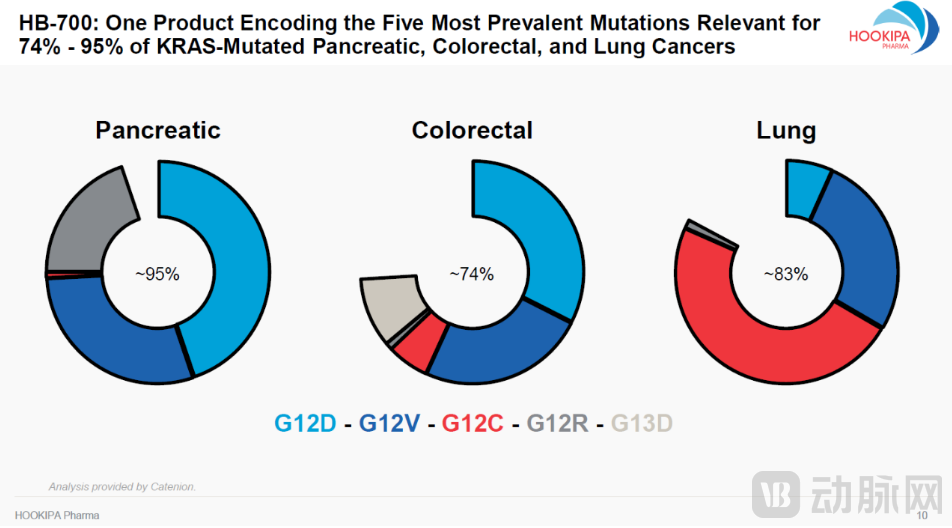 HB-700 can simultaneously express five common KRAS mutants (Source: HOOKIPA official website)
HOOKIPA was co-founded by Dr. Rolf Zinkernagel, the winner of the 1996 Nobel Prize in Physiology or Medicine, who was awarded for his research on how CD8-positive T lymphocytes recognize virus-infected cells. In this study, Rolf used arenaviruses as a research tool. Arenaviruses are RNA viruses, and several of their characteristics make them particularly suitable for stimulating antigen-specific immune responses in the human body:
· It can stimulate a strong antibody response against disease-specific antigens by infecting antigen-presenting cells.
· The immune response can be enhanced by repeated dosing.
·Can activate the immune system without adjuvants
· Demonstrated good tolerability in preclinical and clinical trials
Based on this, HOOKIPA's technology platform uses arenaviruses to express tumor-specific antigens, thereby stimulating the body's specific immune response against tumors. According to the latest announcement from HOOKIPA,HB-700 is expected to submit an IND in the first quarter of 2024, publish preclinical research results in the first half of 2024, and seek new partners.
Roche: Genentech's Self-Developed KRAS G12C Inhibitor Phase 1 Trial Results Positive
The termination of the pipeline collaboration with Hookipa does not mean that Roche is giving up on the KRAS track. The performance of HB-700 may not be the reason influencing Roche's decision either. After all, in 2022, Roche made an upfront payment of $25 million and later, in February 2023, paid another $10 million in non-dilutive milestone payments.
In fact, Roche had already laid out its KRAS strategy prior to this collaboration. In 2015, Roche's KRAS mutation diagnostic test was approved. The cobas KRAS Mutation Test assists doctors in selecting treatment plans tailored to the genetic characteristics of patients by accurately identifying the mutation status of the KRAS gene. This provides a basis for targeted therapy in metastatic colorectal cancer and advances personalized medicine.
In 2020, Genentech, a subsidiary of Roche, obtained the licensing rights for SHP2 inhibitor RG6433 from Relay Therapeutics and advanced it into clinical trials. SHP2 is believed to play a regulatory role between the "on" and "off" states of KRAS.
In addition, the KRAS G12C inhibitor divarasib (GDC-6036) developed by Genentech also published its Phase I trial results in the New England Journal of Medicine in August 2023. The results showedDivarasib can produce durable clinical responses in KRAS G12C-positive tumors.The drug achieved confirmed response rates of 53.4% in non-small cell lung cancer (NSCLC) patients and 29.1% in colorectal cancer patients. The majority of observed adverse events were mild.
The trial recruited a total of 137 patients (including 60 NSCLC patients, 55 colorectal cancer patients, and 22 patients with other solid tumors). Analysis showed,In NSCLC patients, a confirmed response was observed in 53.4% of patients (95% CI: 39.9-66.7), with a median progression-free survival of 13.1 months (95% CI: 8.8-not estimable). In colorectal cancer patients, a confirmed response was observed in 29.1% of patients (95% CI: 17.6-42.9), with a median progression-free survival of 5.6 months (95% CI: 4.1-8.2).Responses were also observed in patients with other solid tumors. Evaluation of circulating tumor DNA revealed a decrease in KRAS G12C variant allele frequency, indicating potential responses in patients. The study also identified genomic alterations associated with divarasib resistance.
In terms of safety, treatment-related adverse events occurred in 127 patients (93%); grade 3 events occurred in 15 patients (11%), and grade 4 events occurred in 1 patient (1%). Treatment-related adverse events led to dose reduction in 19 patients (14%) and treatment discontinuation in 4 patients (3%).
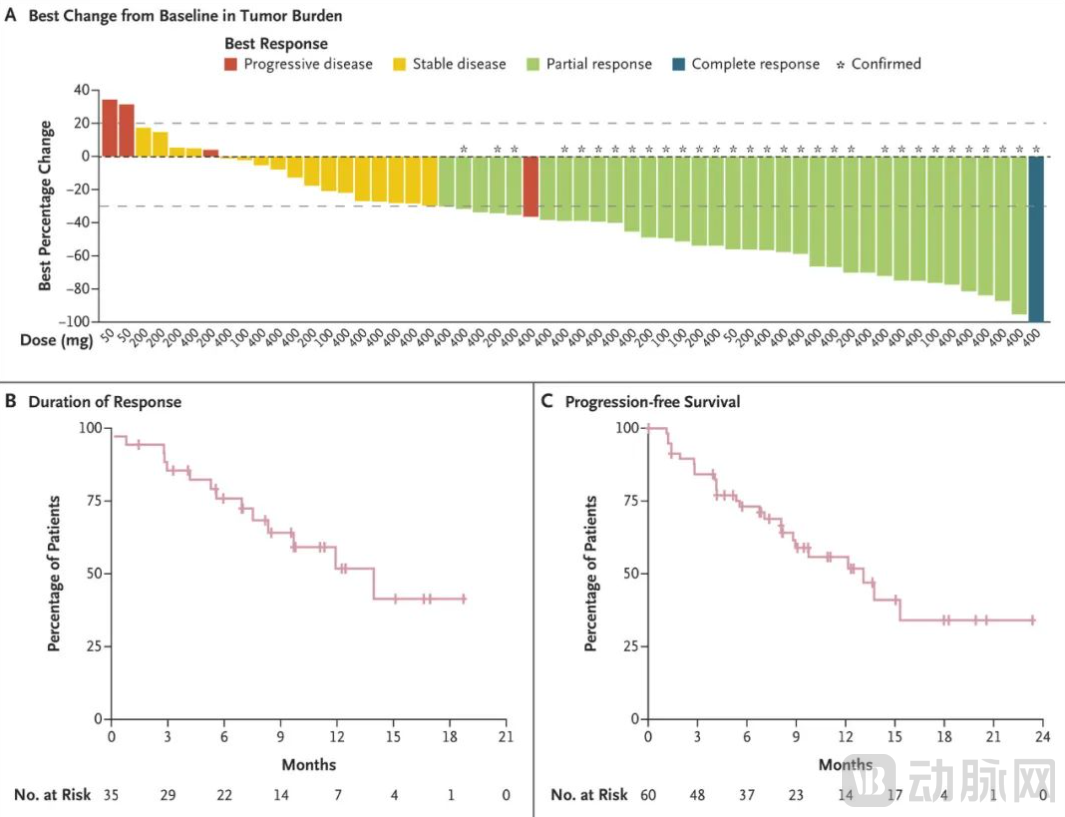 Divarasib Trial Data for NSCLC
From the Phase Ⅰ trial results, Divarasib appears to be more effective compared to other KRAS G12C inhibitors. However, the trial规模较小 and had limited racial diversity among patients. Additionally, patient responses were assessed by investigators rather than through a blinded independent review, so it remains unclear whether the drug demonstrates superiority. According to disclosures, a Phase Ⅲ trial for non-small cell lung cancer (NSCLC) is currently underway.
According to foreign media analysis, Roche seems to have more data proving that Divarasib is a "real challenger" to Amgen and BMS's products in the KRAS G12C inhibitor field, which may have prompted Roche to abandon further development of HB-700.
However, this termination of cooperation is Roche's second "slimming down" in 2024, possibly related to its strategic planning for the year. Earlier this month, AC Immune SA announced the termination of its collaboration agreements with Genentech and Roche, members of the Roche Group, concerning two Alzheimer's disease projects: the anti-Aβ antibody crenezumab and the anti-Tau antibody semorinemab.