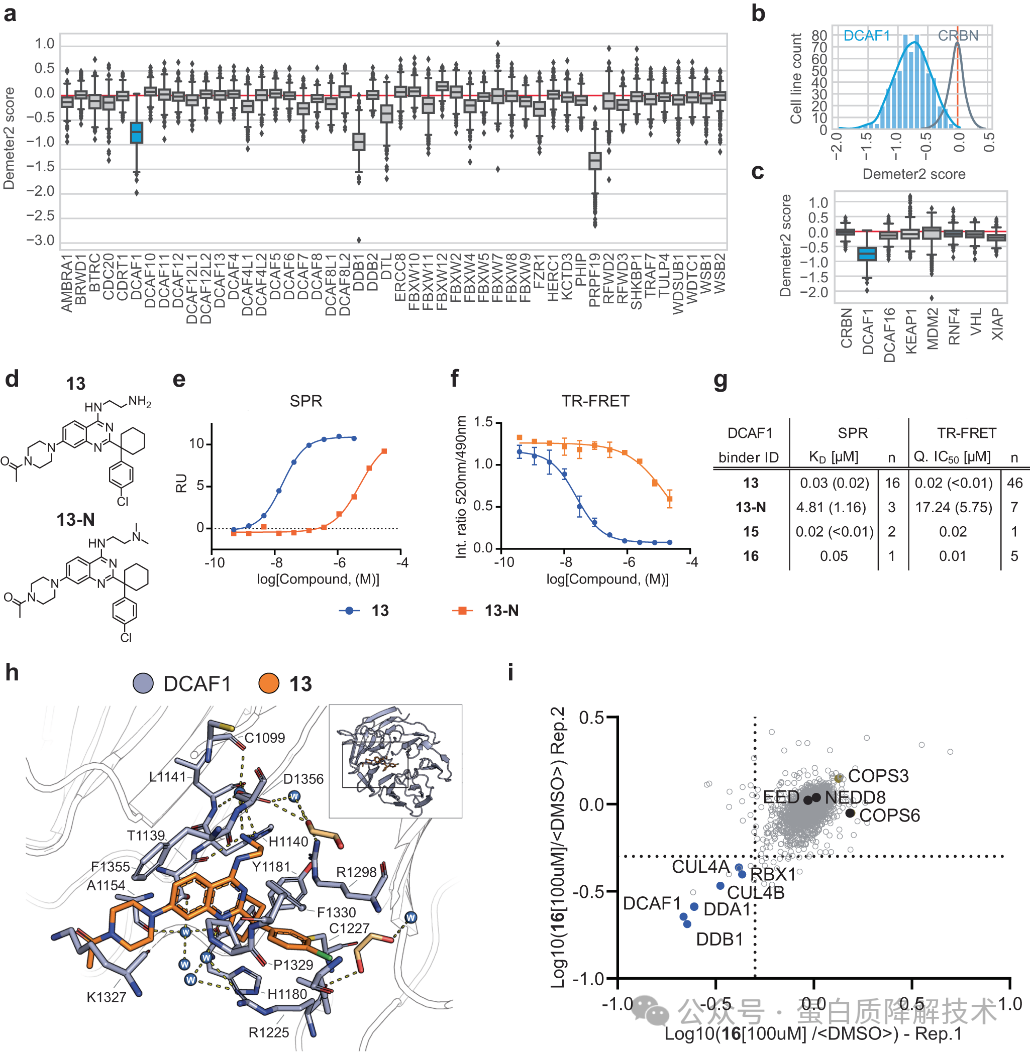
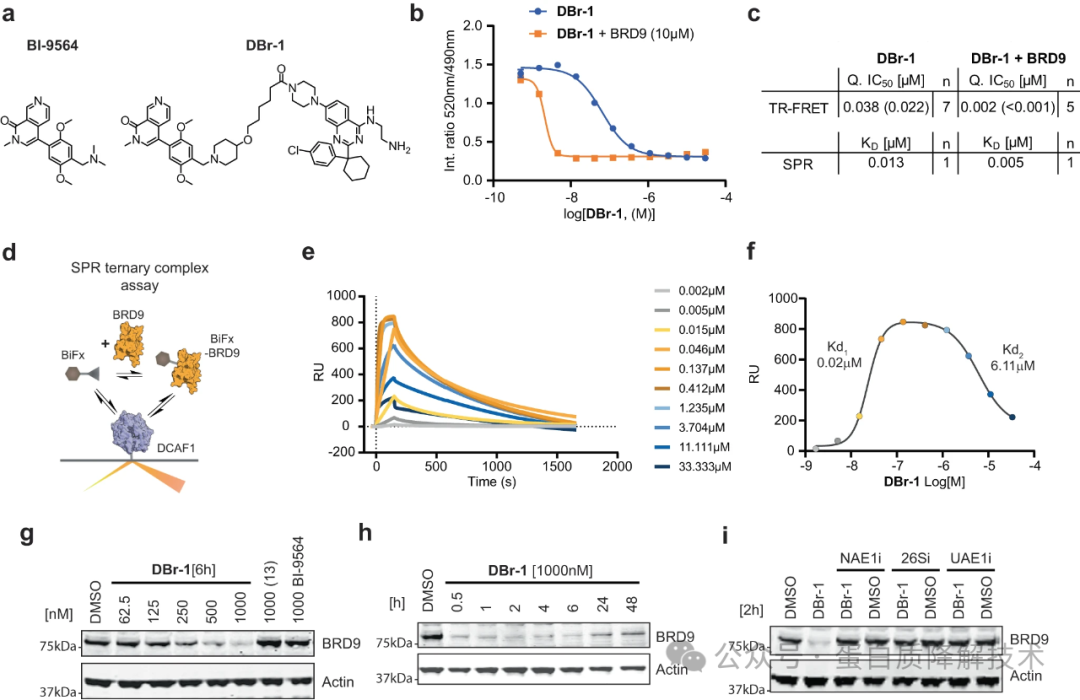
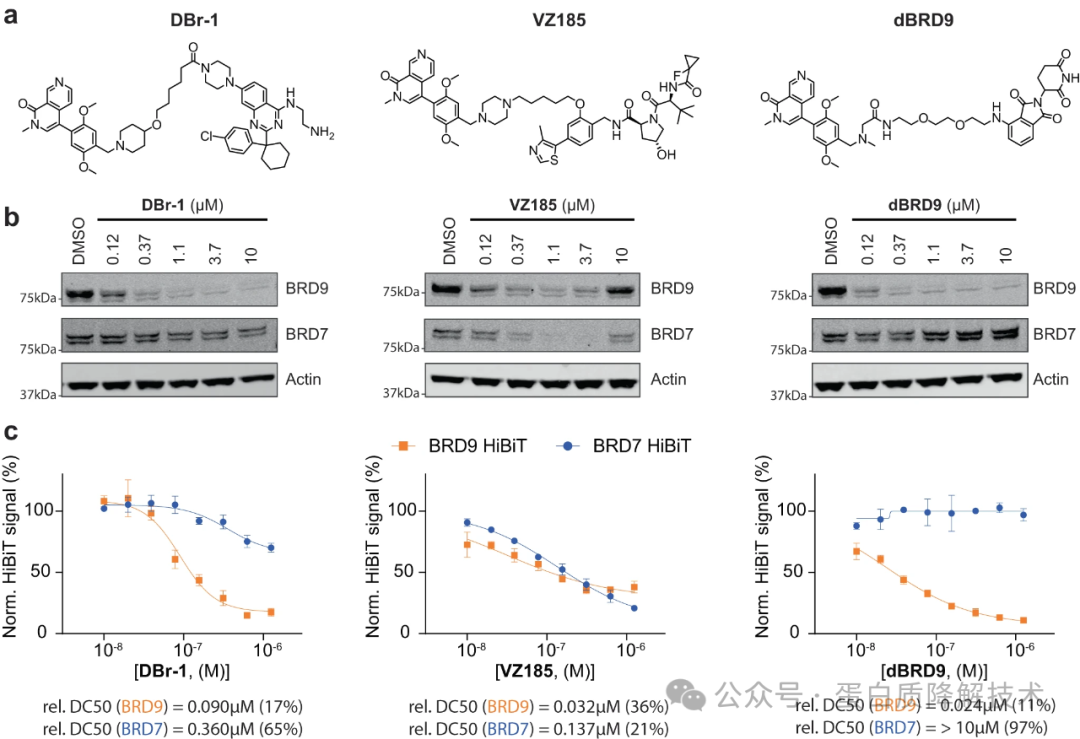
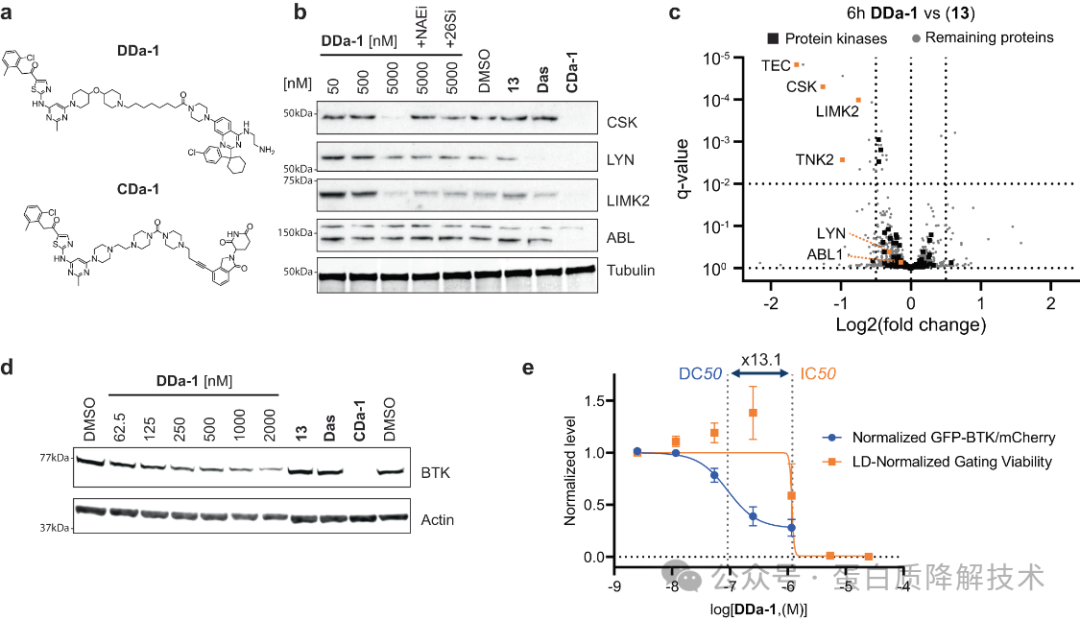
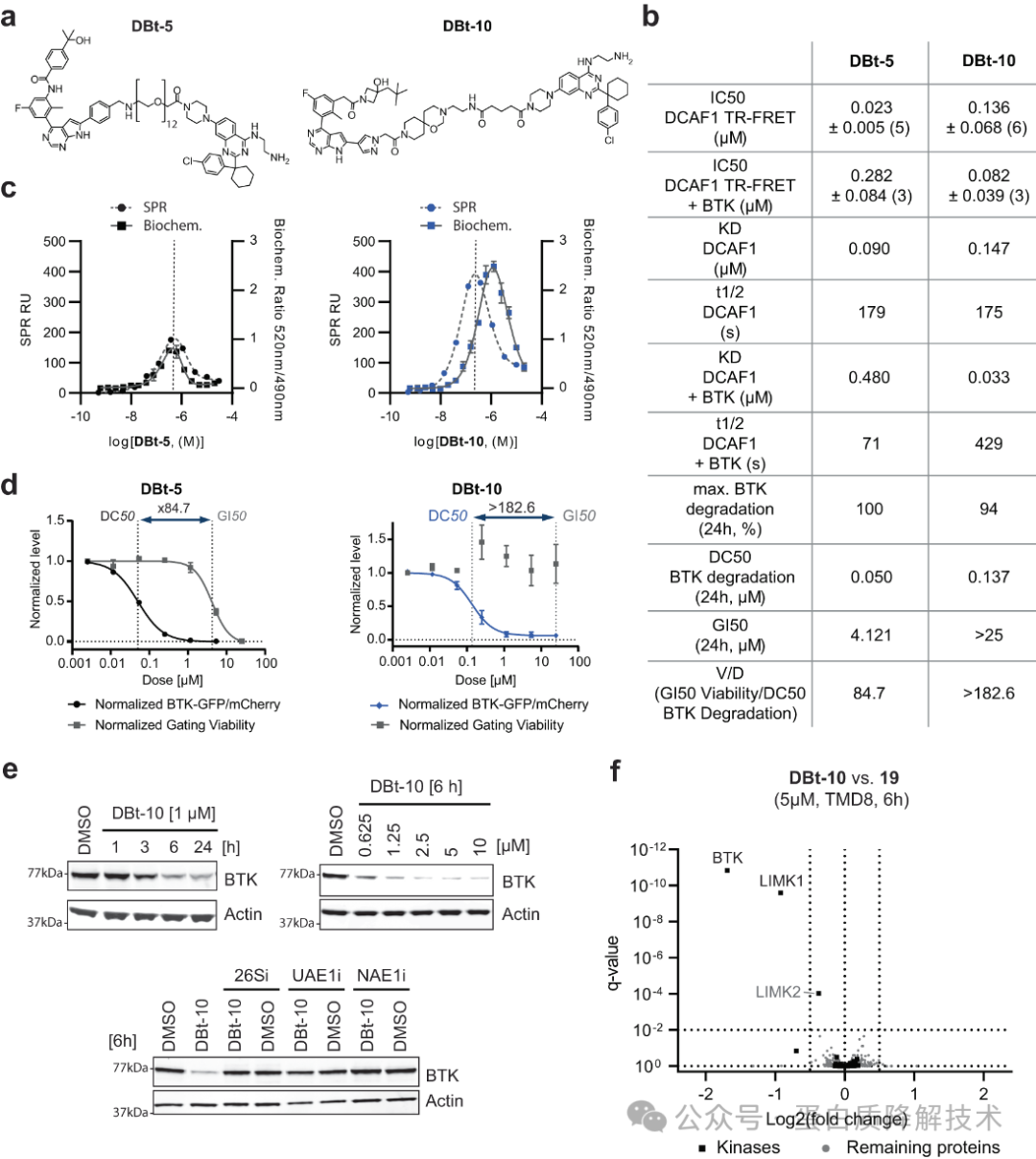
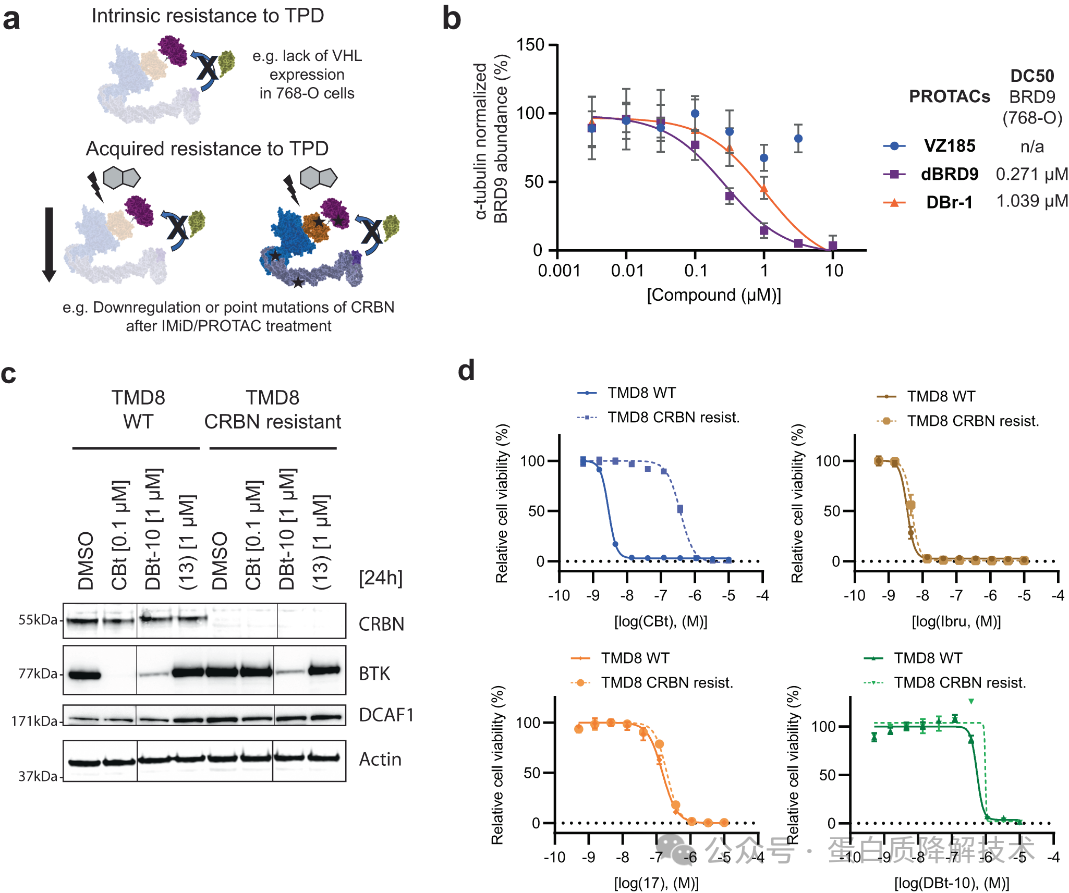
Recently, from NovartisClaudio R. ThomaAndMartin Schröder InNature CommunicationsPublished an article titled "DCAF1- based PROTACs with activity against clinically validated targets overcoming intrinsic- and acquired-degrader resistance》. Reported on a basedE3Ligase ReceptorDCAF1Non-covalentPROTACsMolecular Development,DCAF1YesCRL4The ligase subfamily containsWD40Repetitive Domain (WDR) ofE3Ligase, authored by nucleoproteinBRD9And Tyrosine KinaseBTKAs the degradation target, it was demonstrated thatDCAF1ThePROTACsCan be used for targeted degradation, and provided an alternative strategy to addressVHLAndCRBNDrug Resistance。Targeted Protein Degradation (TPD) Induced by small moleculesE3 Ligase redirection to ubiquitinate new substrates and tag them for proteasomal degradation, thereby regulating protein levels.TPDIt has recently become a key model for drug discovery. So far, the human genome encodes more than600SeedE3Ligase, only a fewE3Ligase is used forTPD, including CRBN、VHL、cIAPs、MDM2、DCAF15、DCAF16AndKEAP1etc., based on theseE3Some ligases have been developed.E3Ligase ligands, including commonVHLLigandVHL-7, CRBNLigand Immunomodulatory Inhibitory Drugs (IMiD)PomaThalidomide, lenalidomide, and their derivatives, etc.InTPDIn applications, there are few other non-covalent ligands that can match these.E3The effect of the enzyme matches.E3The covalent ligands of ligase have certain disadvantages: reducedPROTACThe catalytic properties of molecules, may block the degradation of natural substrates, and are more likely to produce targeted toxicity. CovalentE3The irreversible nature of the ligand may also enable high specificity.Complex formation with enzyme ligands. Used forTPDThe most widely used immunomodulatory drugs are thalidomide and its derivatives, which have been approved for the treatment of multiple myeloma.(MM),ItIs a dependencyIKZFTranscription Factor in Plasma Cell Malignancies. HoweverIMiDTherapeuticMMAmong the patients, approximately30%Refractory patientsCRBNHorizontal OccurrenceFinishedChanges, in most cases, will result in copy loss, and lowerCRBNContent may lead toIMiDMediatedIKZFDegradation decreases, leading to drug resistance.CRBNIs a whole-genome-basedCRISPR KOThe non-essential genes in the study, therefore,Targeted EssentialE3Ligase is a potential strategy to avoid or at least delay the emergence of treatment resistance.SelectivityDCAF1 E3LigasebinderDiscoveryRecentlyWDRDiscovery of Ligands(EED27AndWDR52)IndicateWDRIs targetable,23An article reported in a yearDCAF1TheWD40 domainReversible ligands, further emphasizing the development of non-covalent basedDCAF1ThePROTACsThe potential.In about600IndividualE3In ligase,AuthorFocused on studying48A ContainsWDRDomain as the putative recognition motifE3Ligase.DCAF1YesCRLDAF1AndEDVPPart of the complex, showing withDDB1The importance of similar tumors. In addition,DCAF1Has been proven to beCullin4The preferred receptor in the ligase combination, and isCRL4 E3The second most abundant in ligaseCRL4Receptor, second only toCRBN(Figure1)。Figure1 DCAF1Ligand Characterization for Targeted Protein DegradationUsing nuclear magnetic resonance, computer-aided drug design, biophysics, and structural-Methods such as activity relationships,AuthorScreened and optimizedEED27TheWDRLigand,Discovered compounds13Through primary amine occupancyDCAF1 WDR donut-holePocket Stent,The piperazine at the other end is located at the pocket exit and can be used for subsequent derivatization. The authors then constructed a compound derived with an alkynyl group.16And conducted chemical proteomics experiments, the results showed that the compound16Can successfully enrich the entireCRL4-DCAF1Complex(IncludingCUL4A/B,DDB1,DDA1AndRBX1) (Fig.1)。DCAF1-BRD9 PROTACSynthesis and ValidationConsideringDCAF1Mainly localized in the nucleoplasm, the authors first testedDCAF1 PROTACCan it be targeted for degradation?BRD9. The author has knownBRD9Bromodomain LigandAnd compounds13The piperazine moiety was coupled to obtainPROTACMoleculeDBr-1, and throughTR-FRETAndSPREvaluated its impact onDCAF1The binding force, the results successfully proved thatDCAF1- DBr-1-BRD9Formation of the ternary complex. The authors subsequently validated this in cells.DBr-1The degradation ability, the results showedInHEK293In cells1000 nMTheDBr-1In6 hSuccessfully degraded later90%TheBRD9, and this process can be inhibited by proteasome inhibitors.Concentration of1000 nM DBr-1The time gradient degradation experiment showed,30 minPost-degradation90%And maintain6hAbove,24hAnd48hThen slowly rebounded. Selective experiments also showed that,DBr-1In degradationBRD9At the same time, only forBRD7Has a slight impact(Figure2)。Figure2 DCAF1-BRD9 PROTACCharacterizationBased onVHLTheBRD9 PROTAC VZ185Can also degradeBRD7And9, andCRBNOfPROTAC dBRD9Can be selectively degradedBRD9. In order to evaluateDCAF1 PROTACSelectivity and test its performance,AuthorDirectly comparedDBr-1AndVZ185、dBRD9InHEK293Degradation in cellsBRD9AndBRD7The ability. The results showed,DCAF1The degradation effect ofCRBNAndVHLBasically Equivalent(Figure3)。 Figure3 Based on differentE3LigandBRD9 PROTACComparison ofDCAF1 PROTACMediating the degradation of tyrosine kinaseAfter successful degradationBRD9Afterwards`, Author`ExploredDCAF1 PROTACsWhether it can also mediate the degradation of extranuclear proteins.dasatinibCombined with over30A kinase, and inhibits at low nanomolar concentrationsABL、DDR、TEC、SRCAndEPHSubfamily57Tyrosine kinase.AuthorWilldasatinibConjugated toDCAF1On the ligand, another one was synthesized.PROTAC DDa-1. First throughWBTestDDa-1Effects on Four Types of Non-Receptor Tyrosine Kinases:C-SrcTyrosine kinase (CSK)、Lck/YesRelevant protein tyrosine kinase (LYN)、LIMDomain Kinase2(LIMK2) andAbelsonProtein Tyrosine Kinase1(ABL1)。Results showCSKAndLIMK2Protein levels in6Hours later with proteasome(26Si) andCRLDependent Method(NAE1i) significantly reduced, butLYNOrABL1Protein levels did not decrease. &CRBN-dasatinibDegradantCDa-1Compared with,DDa-1The degradation ability of these two degradation kinases is somewhat reduced.(Figure4)。Figure4 DCAF1-Dasatinib PROTACDegradation of multiple tyrosine kinasesTo gain a deeper understanding of the changes in global protein abundance, the authors utilizedProteomics methods were used to analyzeDDa-1Processing6Hours LaterHEK293TCells. Two kinases were confirmed.CSKAndLIMK2The downregulation, and further discovered two other non-receptor tyrosine kinasesTECAndTNK2Showed a significant reduction in protein levels. According to reports,TECAndTNK2Are all preferentially localized to the plasma membrane.Bruton's Tyrosine Kinase (BTK) isTECAnother member of the family has been proven to bePROTACMediated HijackingCRBNAn attractive target for degradation.Therefore, the author subsequently constructed aBTKScreening system, inTest in this systemDDa-1Endogeneity was validated.BTKDiscovery of Degradation(Figure4)。EffectiveBTKSpecificityDCAF1 PROTACDiscoverySubsequently, the authorUse oneSpecificityOfBTKLigandDifferent were synthesizedDCAF1-BTK PROTACsTwo molecules were selected for further characterization.DBt-5Is throughOneLong Polyethylene GlycollinkerConnection, andDBt-10Through a moreRigidlinkerConnectionDCAF1AndBTKLigand. ThroughTR-FRETAndSPREvaluate these twoPROTACOfDCAF1Binary Affinity.DBt-5CorrectDCAF1TheSlightly higher affinityDBt-10. InTR-FRETAndSPRIn the experiment, additionalBTKIncreasedDBt-10CorrectDCAF1Affinity, while reducing moreFlexibilityTheDBt-5CorrectDCAF1Affinity(Figure5)。Figure5 DCAF1-BTK PROTACsTheCharacterizationAnd DiscoveryThe author further evaluatedDCAF1-PROTAC-BTKSanyuanReFormation of Compounds and Two TypesPROTACAfter treatmentBTKIn vitro ubiquitination.DBt-10The initial velocity and maximumSPRHigh response indicates that stable ternary complexes can enhance ubiquitination efficiency. DespiteDBt-5AndDBt-10Exhibit different binary and ternary complex stability and cell permeability, butDBt-5AndDBt-10Can effectively degradeBTK-GFP。DBt-10The toxicity ratio ofDBt-5Small,Therefore, chooseDBt-10ProceedSubsequent experiments showed resultsDBt-10With high selectivity and significant degradationBTK(Figure5). The above results proveDCAF1Ligands can also be used to develop highly selectivePROTACs。DCAF1-PROTACsLack ofVHLExpression or based onCRBNThe degradation products provide selection for cells with acquired resistance.Author's Choice LacksVHLExpressed768-OCells as models.Based onVHLDegradantVZ185Cannot effectively degradeBRD9. Under the same experimental conditions,DCAF1And based onCRBNTheBRD9DegradantDBr-1AndDBRD9CorrectBRD9The degradation efficiency was basically the same. These results confirm that,VHLIn a non-expressing biological environment,DCAF1YesPROTACsAnother essential ligase applied(Figure6)。Figure6 Based onDCAF1ThePROTACsInKnockoutVHLOrCRBNIn the cells ofStill retains activitySubsequently, the authorTesting is based onCRBNThePROTACsEssential ligase in the case of losing degradation abilityDCAF1Whether it can be used as a substitute.DCAF1AndCRBNAll require the same binding partner (e.g.,DDB1AndCUL4A) to form activityE3Ligase complex.UseCRBN-BTK PROTACSensitive andDrug ResistanceTheTMD8Cells were used for the study, and the results showedUseDBt-10TestingTMD8 CBtSensitive and drug-resistant cells, the results showedBTKNo difference in degradation, and makeUseCBtHandling these twoTMD8Cell lines led to100Fold Difference in Proliferation Inhibition。The above experimental data showsDCAF1Is a highly promisingCRBNAndVHLSubstitute (Fig.6)。Author of this article: LGC
Disclaimer: The publication/reposting of this article is solely for the purpose of information dissemination, and does not represent the views of this official account or confirm the authenticity of its content. Any judgment made based on this content will be at your own risk.If there is any infringement, it will be deleted upon notification!
Long press to follow this official account
Fan Group/Submission/Authorization/Advertisementetc.Please contact the official account assistant.If you think this article is good-looking, please click here ↓