· Nominate Kv1.3 inhibitor DPT0218 as a preclinical candidate compound for the treatment of various immune diseases such as IBD and AD;· DPT0218 is an orally administered, highly potent, and highly selective inhibitor, characterized by high intestinal exposure and extremely low systemic exposure. It has demonstrated excellent safety in both in vivo and in vitro preclinical studies.· This project once again validates DP Technology's RiDYMO®Capabilities of the drug discovery platform.
On January 30, 2024, the DP Technology drug research and development team announced the nomination of DPT0218, an orally administered, highly selective small-molecule inhibitor targeting Kv1.3, as a preclinical candidate compound for the treatment of various immune diseases, including Inflammatory Bowel Disease (IBD) and Atopic Dermatitis (AD).The Kv1.3 channel is a voltage-gated potassium ion channel, and its high expression is crucial for maintaining the T-cell membrane potential required for inducing inflammatory responses [1]. Kv1.3 enhances the activation and proliferation of immune cells mediated by calcineurin [2]. Therefore, inhibiting Kv1.3 can specifically impair inflammatory immune cells without affecting the normal immune function of the body. In June 2022, pharmaceutical giant Eli Lilly paid D. E. Shaw Research (DESRES) a total of $535 million, with an upfront payment of $60 million, to acquire global clinical development and commercialization rights for its Kv1.3 inhibitor, DES-7114.Recently, the activity of T cells has become a compelling intervention point for the treatment of IBD [3]. Long-lived memory T cell populations, particularly tissue-resident subsets, are key factors contributing to the recurrence and persistent episodes of IBD [4]. Kv1.3 is upregulated in memory T cells and plays a central role in maintaining their activity. It has been reported that, compared with healthy volunteers, the expression of Kv1.3 in T cells from the peripheral blood and intestinal mucosa of IBD patients is significantly upregulated [5]. Therefore, Kv1.3 represents the most promising target for modulating T cell activity and treating IBD.It is estimated that there are no fewer than 8 million IBD patients globally, with over 5 million in Europe and the United States. Currently, IBD patients still have significant unmet clinical needs. It is predicted that by 2028, the global autoimmune drug market will reach 140 billion US dollars, of which the IBD drug market will reach 28 billion US dollars, accounting for 20% of the market share.DPT0218 is a potential "Best-in-Class" highly selective Kv1.3 small molecule inhibitor with a novel molecular scaffold, which has demonstrated superior efficacy in preclinical animal models of several autoimmune diseases such as IBD and AD.DPT0218 activity at the sub-nanomolar level, for Na+、K+、Ca2+Achieved over 2000 times selectivity for multiple ion channels, with high intestinal exposure and extremely low systemic exposure in pharmacokinetic characteristics, demonstrating excellent safety in both in vivo and in vitro preclinical studies.。Dr. Zhang Xiaomin, Chief Drug Officer of DP Technology, said"Antibody macromolecules play an important role in the treatment of moderate to severe IBD, but they have limitations such as restricted efficacy, immunogenicity, parenteral administration, relatively poor tolerance, and high cost. The emergence of novel oral small-molecule drugs can address the limitations of antibodies. Our research shows that DPT0218 significantly inhibits T-cell activation, proliferation, and cytokine secretion in both in vivo and in vitro studies, making it a potential effective treatment for IBD. We will actively advance this PCC molecule into clinical research and expand the application of DPT0218 in other autoimmune indications."Sun Weijie, founder and CEO of DP Technology, said"DP Technology adheres to the 'AI for Science' research paradigm, committing to implement 'AI + molecular simulation + experiments' into practical clinical needs. The kinetic process of ion channels is extremely complex,RiDYMO®The platform is undoubtedly well-suited for the development of this series of highly challenging drug systems. The successful discovery of DPT0218 is an important step towards realizing the vision of AI for Science. We look forward to establishing partnerships with experienced pharmaceutical companies in this field to jointly advance this project to its next milestone."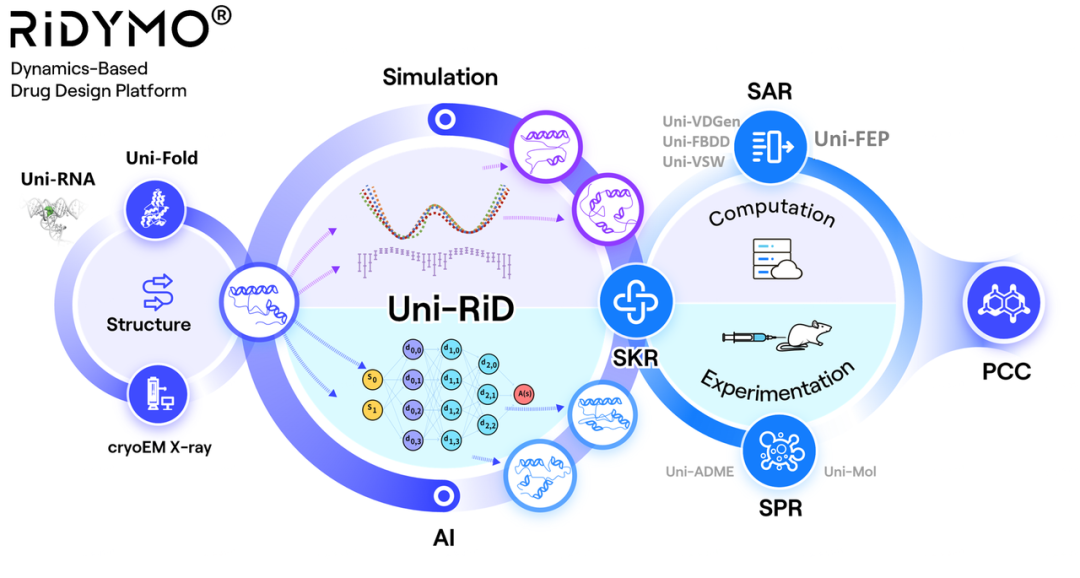
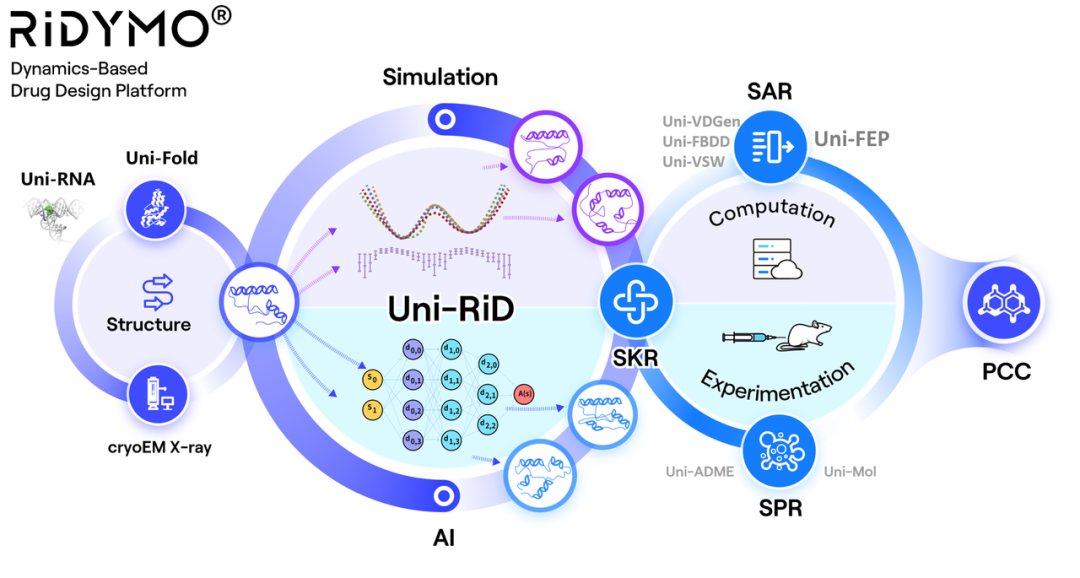
RiDYMO®The drug discovery platform integrates various AI and physical model algorithms, focusing on the development of drugs targeting "undruggable" targets and "Best-in-Class" molecules. One of its core algorithms, the Reinforced Dynamics (RiD) algorithm, offers significant advantages in molecular simulation sampling efficiency. By fully leveraging the high-dimensional representation capabilities of neural networks, RiD can efficiently capture dynamic conformational changes within complex biomolecular systems.
RiDYMO®The platform is dedicated to studying the complexity of biological systems.Kinetics and Revealing Hidden Binding Sites, Including the Following Series of Challenging Systems:protein-protein interactions (PPIs), intrinsically disordered proteins (IDPs), membrane proteins, RNA, etc.Previously, in the difficult-to-drug target c-Myc (c-Myc Breakthrough! DP Technology RiDYMO®Kinetic Platform Empowers FIC Drug Discovery)AndGPX4(Kinetics + Ferroptosis: DP Technology's First Public DisclosureRiDYMO®Progress in Platform Pipeline Applications)It has also been verified above.
About DP Technology's Drug Research and Development Team
DP Technology's drug research and development team, based on the "AI for Science" paradigm, focuses on utilizing advanced computational methods that integrate artificial intelligence and molecular simulation to drive drug development for difficult-to-drug targets. The team is led by Dr. Zhang Xiaomin, whose core members possess deep interdisciplinary backgrounds and extensive drug development experience, while also relying on DP Technology.Globally Leading Reinforced Dynamics PlatformRiDYMO®And the large molecule de novo design platform has currently formed a complete R&D system through the method of "self-built pipeline + joint development," covering three major fields: CNS, oncology, and autoimmune diseases.
For more information, please visit:https://www.dp.tech/Business CooperationFor collaboration, please contact:bd@dp.techFor media inquiries, pleaseContact:pr@dp.techReferences
[1] Chiang EY, Li T, Jeet S, et al. Potassium channels Kv1.3 and KCa3.1 co-operatively and compensatorily regulate antigen-specific memory T cell functions. Nat Commun 2017:14644.
[2] Lin CS, Boltz RC, Blake JT, et al. Voltage-gated potassium channels regulate calcium-dependent pathways involved in human T lymphocyte activation. J Exp Med 1993:637–45.
[3] Sandborn WJ, Su C, Sands BE, et al.; OCTAVE Induction 1, OCTAVE Induction 2, and OCTAVE Sustain Investigators. Tofacitinib as induction and maintenance therapy for ulcerative colitis. N Engl J Med 2017:1723–36.
[4] John T. Chang. Pathophysiology of Inflammatory Bowel Diseases. N Engl J Med 2020:2652-64.
[5] Anna-Lena Unterweger, Morten Ø. Jensen, Fabrizio Giordanetto, et al. Suppressing Kv1.3 Ion Channel Activity with a Novel Small Molecule Inhibitor Ameliorates Inflammation in a Humanised Mouse Model of Ulcerative Colitis. Journal of Crohn's and Colitis 2021:1943–58.