Disclaimer: Due to limited expertise, errors are inevitable, and some information may not be the most up-to-date. Comments pointing out any issues are welcome. This article is only an introduction to medical and health-related drugs, not a recommendation of treatment plans (if involved); it does not constitute any investment advice.
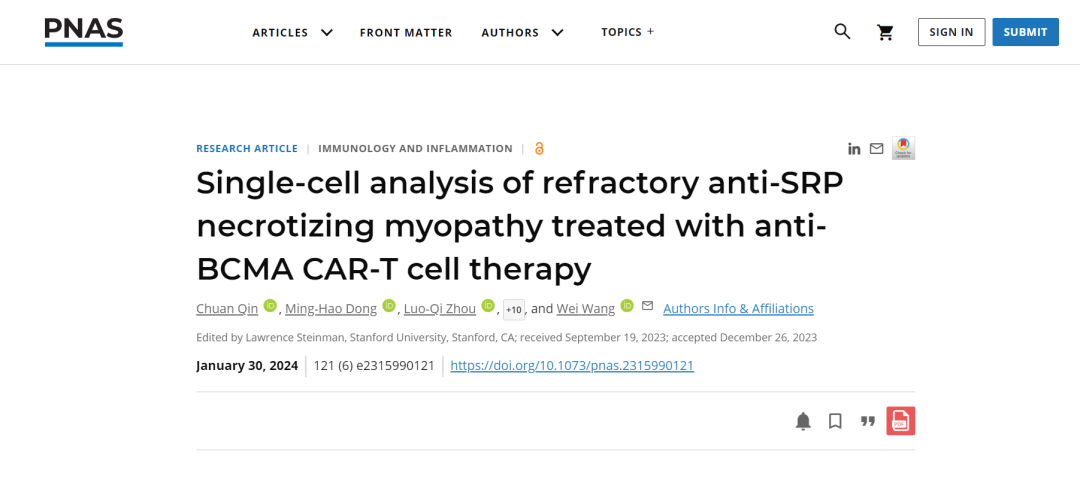
On January 30, 2024, the Proceedings of the National Academy of Sciences (PNAS) officially publishedSingle-cell analysis of refractory anti-SRP necrotizing myopathy treated with anti-BCMA CAR T-cell therapy: A study on the treatment of Immune Mediated Necrotizing Myopathy (IMNM) with IASO Bio's fully human targeted BCMA chimeric antigen receptor autologous T (BCMA CAR-T) cell injection (Equecabtagene Autoleucel Injection, R&D code CT103A)., which has preliminarily demonstrated the good tolerability and safety of BCMA CAR-T therapy in IMNM, a durable pathogenic antibody clearance effect, and potential long-lasting clinical efficacy, providing insights for antibody-mediatedAutoimmune DiseaseProvides a new therapeutic approach.
Immune-Mediated Necrotizing Myopathy(IMNM) is an autoimmune-mediated skeletal muscle disease, belonging to idiopathic inflammatory diseases. Human anti-signal recognition particle (SRP) antibodies are specific autoantibodies for IMNM. SRP antibody-mediated IMNM mainly manifests as symmetrical weakness of the proximal muscles of the limbs, prominent dysphagia, and significantly elevated serum creatine kinase levels. It is characterized by acute onset, severe condition, and rapid progression, with poor responsiveness to conventional drug treatments and a high recurrence rate.This study is an investigator-initiated open evaluation infusion of IASO Bio'sAolun Sai InjectionAn Exploratory Clinical Study on the Safety and Efficacy of Treating Relapsed/Refractory Antibody-Mediated Idiopathic Inflammatory Diseases of the Nervous System (NCT04561557), conducted by Professor Wang Wei's team from Tongji Hospital, Tongji Medical College, Huazhong University of Science and Technology.A 25-year-old male subject with refractory IMNM who was SRP antibody positive and enrolled in the study had a 7-year medical history and had previously received hormone therapy,Calcineurin Inhibitors, folic acid antagonists, CD20 monoclonal antibodies, interleukin-6 (IL-6) receptor antagonists, inosine monophosphate dehydrogenase (IMPDH) inhibitors, alkylating agents, plasma exchange, intravenous immunoglobulin, and mesenchymal stem cell infusion, but still suffered from multiple relapses and persistent damage. Prior to enrollment, under the combined treatment of regular use of hormones, interleukin-6 (IL-6) receptor antagonists, folic acid antagonists, and intravenous immunoglobulin, the patient was still paralyzed and bedridden, unable to raise their arms above their head, with serum creatine kinase as high as 4806 IU/L (reference value ≤190 U/L).Safety:The subject only experienced Grade 1 Cytokine Release Syndrome (CRS) and did not develop Immune Effector Cell-Associated Neurotoxicity Syndrome (ICANS), only experiencing transient cytopenia. Compared toMultiple MyelomaSafety Profile in Indication Studies: No New Safety Risks Identified.Effectiveness:During the 18-month follow-up after the infusion of IASO Bio's Iciclenocyte Injection, the patient's clinical symptoms and imaging characteristics showed continuous improvement. Three months after the infusion, the patient's limb strength significantly improved, with no restrictions in lifting arms and recovery of walking ability. The Manual Muscle Testing-8 (MMT-8) score improved from a baseline of 96 to 137 at the last visit (18 months post-infusion). Serum creatine kinase levels decreased from 4778 IU/L before infusion to 260 IU/L at the last visit, and myoglobin levels dropped from 837 ng/mL before infusion to 66.2 ng/mL at the last visit. Significant improvements were also observed in other quality-of-life measures. No other immunomodulatory treatments were combined during the follow-up period.
PK/PD:After infusion of Icarus Bio's Iciclen-T injection, CAR-T cells expanded well in the subjects. Serum SRP antibody levels rapidly decreased and remained at a very low level continuously.Principal Investigator of This StudyProfessor Wang Wei from Tongji Hospital, Tongji Medical College, Huazhong University of Science and Technology"This is the world's first application of BCMA CAR-T cell therapy in the treatment of IMNM, marking another significant breakthrough in the field of autoimmune diseases following the successful treatment of neuromyelitis optica. We look forward to further advancements of CAR-T therapy in autoimmune disorders, bringing hope of a cure to patients."In addition to the research findings published this time, IASO Bio and the research team are continuing to explore the safety and efficacy of Equecabtagene Autoleucel Injection in treating other antibody-mediated autoimmune diseases, including Neuromyelitis Optica Spectrum Disorders (NMOSD), Myasthenia Gravis (MG), and Chronic Inflammatory Demyelinating Polyneuropathy (CIDP), striving to transform the treatment landscape of autoimmune diseases.IASO Bio is a biopharmaceutical company dedicated to the research, production, and commercialization of innovative cell-based drugs. With a focus on developing cellular therapies and antibody drugs for hematological malignancies as its innovative foundation, the company has expanded into autoimmune diseases, possessing comprehensive capabilities spanning from early discovery, clinical development, regulatory submission, to commercial-scale manufacturing.The company currently has more than 10 innovative drug candidates at various stages of development. Among them, the injection of Ixazomib (a fully human BCMA CAR-T product) has been approved for marketing by the National Medical Products Administration (NMPA) and has received FDA approval for registration-based clinical trials in the United States for the treatment of relapsed/refractory multiple myeloma.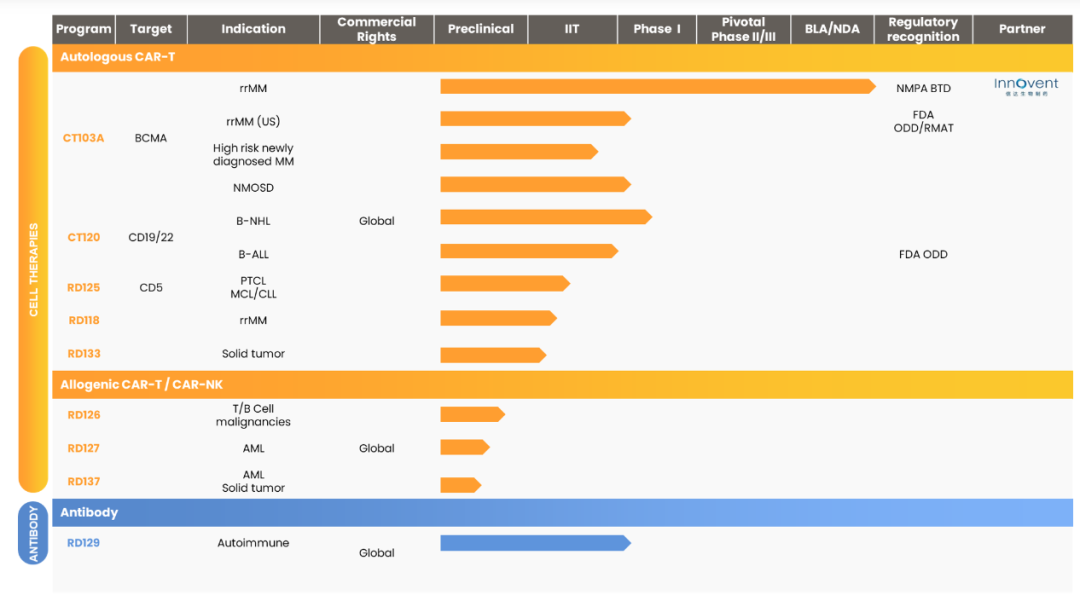
Source: IASO Bio