

GSK Outperforms Pfizer in RSV Vaccine Race as Arexvy Dominates Market with Strong 2023 Sales
Pfizer
Pharmaceutical R&D Developer

GSK
Pharmaceutical R&D Manufacturer
On January 31, GSK announced its 2023 financial results, with annual revenue of £30.328 billion (£37.846 billion), representing a year-on-year increase of 5%, and operating profit of £6.745 billion (£8.5635 billion), up 10% year-on-year. In Q4, revenue reached £8.052 billion (£10.221 billion), a year-on-year increase of 15%, while operating profit was £673 million (£854 million), down 60% year-on-year.
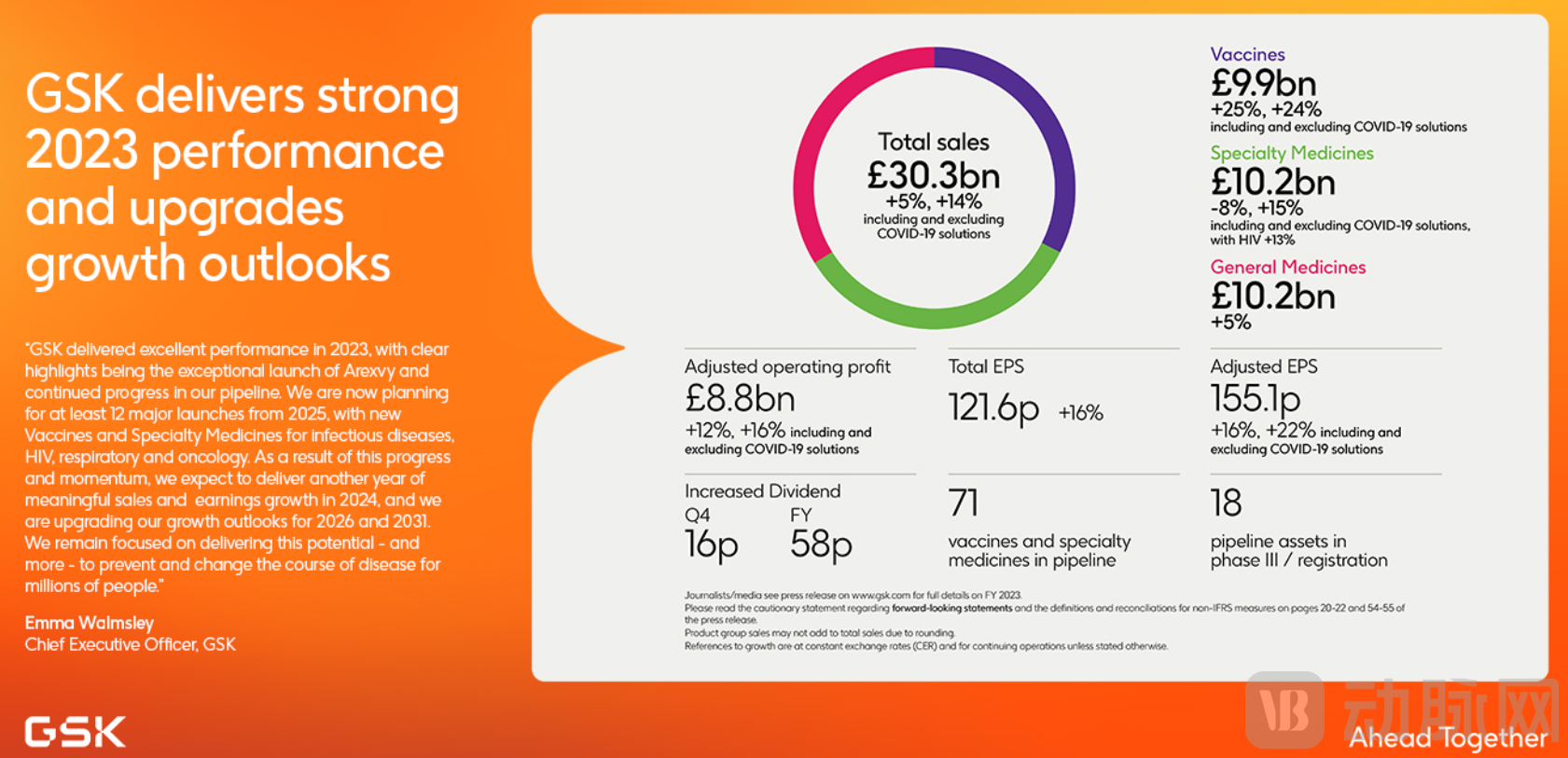
In terms of specific business segments, revenues from vaccines, specialty medicines, and general medicines remained flat in 2023. Among them, vaccine revenue reached £9.826 billion (approximately $12.262 billion), a year-on-year increase of 24%; specialty medicine revenue was £10.244 billion (approximately $12.783 billion), and general medicine revenue amounted to £10.22 billion (approximately $12.754 billion).
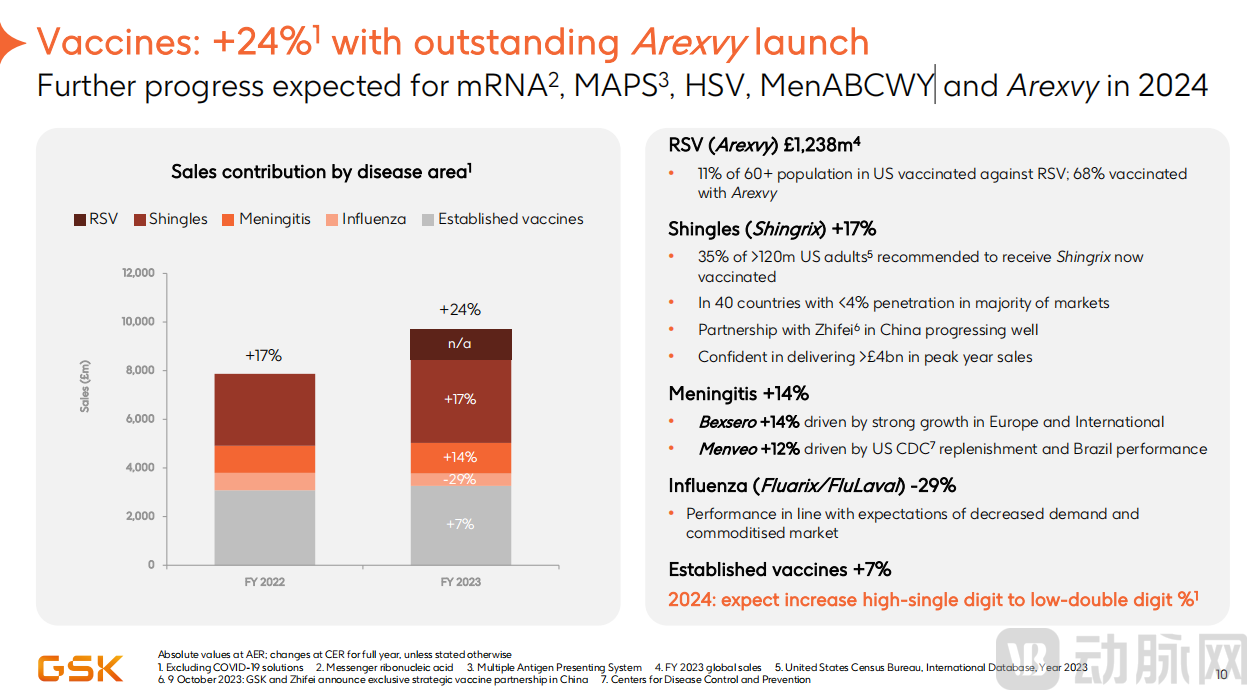
As GSK CEO Emma Walmsley stated in the annual report, "One of the most notable highlights of GSK in 2023 was the outstanding performance of the RSV (Respiratory Syncytial Virus) vaccine Arexvy." In GSK's fastest-growing vaccine segment in 2023, the revenues of the three star vaccines—Shingles (Herpes Zoster Vaccine), Meningitis (Meningococcal Vaccine), and Arexvy (RSV Vaccine)—reached £3.446 billion (£34.46 billion, approximately $43.73 billion), £1.260 billion (£12.60 billion, approximately $15.99 billion), and £1.238 billion (£12.38 billion, approximately $15.71 billion), respectively.
Head-On Competition for 2 Quarters: Arexvy Continues to Outperform Abrysvo
Arexvy was approved by the FDA for marketing in May last year. It is the first approved RSV preventive vaccine, targeting adults aged 60 and above. During the same period, Pfizer's RSV vaccine Abrysvo was also successfully approved for marketing, but the opportunity had already been lost. According to Pfizer's financial report, the sales of Abrysvo in 2023 were $890 million. Based on the data from its approval in May last year to the present, Arexvy, which was approved nearly a month earlier, continues to maintain sales that are multiples higher than those of Abrysvo.
 Arexvy VS. Abrysvo Sales Comparison VCBeat Chart
One step behind, always behind. One month after receiving FDA approval, Arexvy has now received CE approval for marketing in Europe, while Pfizer's Abrysvo was only approved for marketing in the EU at the end of August.
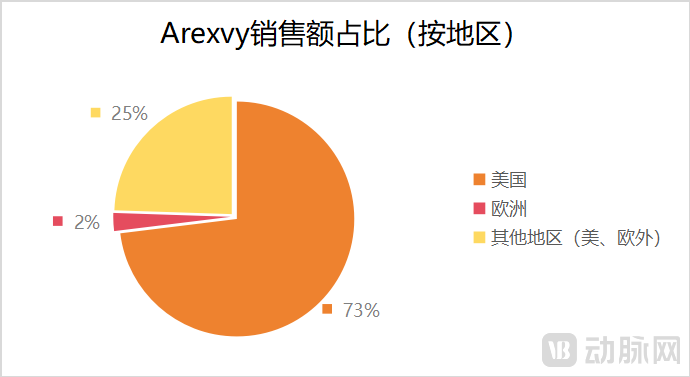
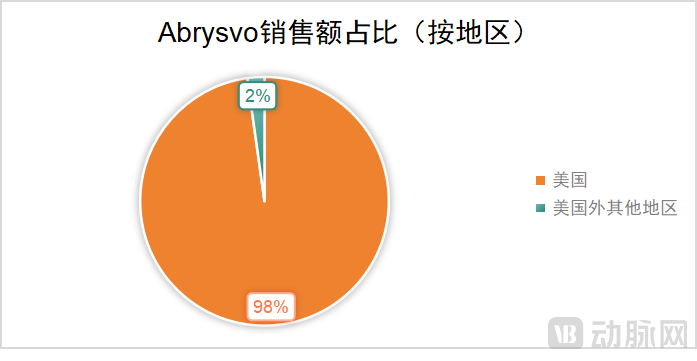
In terms of sales regions, the United States remains the main battleground where Pfizer's Abrysvo directly competes with GSK's Arexvy. According to Pfizer’s financial report, Abrysvo generated $888 million in sales in the U.S. and $20 million outside the U.S. In contrast, Arexvy reported £1.194 billion (approximately $1.513 billion) in sales in the U.S., £40 million (approximately $51 million) in Europe, and £400 million (approximately $507 million) in regions outside the U.S. and Europe. From a regional sales perspective, Arexvy still significantly outperforms Abrysvo.
 VCBeat Mapping
据统计,每年全球有约6400万人被感染RSV呼吸道合胞病毒,每年导致约16万人死亡,包括10多万名不到5岁的儿童。老年人患RSV相关严重疾病的风险很高,RSV可加重慢性阻塞性肺病、哮喘和慢性心力衰竭等疾病。在美国,对于65岁及以上的老年人,它每年导致17.7万人住院和1.4万人死亡。
According to GSK's financial report, retail pharmacies have become the primary market channel for Arexvy, with over 90% of U.S. sales obtained through this channel. Currently, GSK has covered all major retail pharmacies and signed competitive contracts with them. Pfizer's financial report did not specify its market channels, but it emphasized that the sales revenue generated by Abrysvo was mainly attributed to the elderly market aged 60 and above (although Abrysvo's target population also includes pregnant women).
 Comparison of Pfizer and GSK RSV Vaccines (Source: Open Source Securities)
Does Pfizer Have a Chance to Make a Comeback?
However, the market competition in the RSV field has not stopped, and Pfizer may still have a chance to make a comeback. Currently, GSK has applied in the EU to further expand the eligible population for Arexvy, adding people aged 50-59; meanwhile, Pfizer is also conducting clinical trials to expand the population for Abrysvo, targeting high-risk adults and people aged 2-18. The competition between the two sides remains highly noteworthy.
Arexvy also has a pricing advantage. According to current company announcements, the price of Arexvy is $305/dose, while Abrysvo is priced at $320/dose.
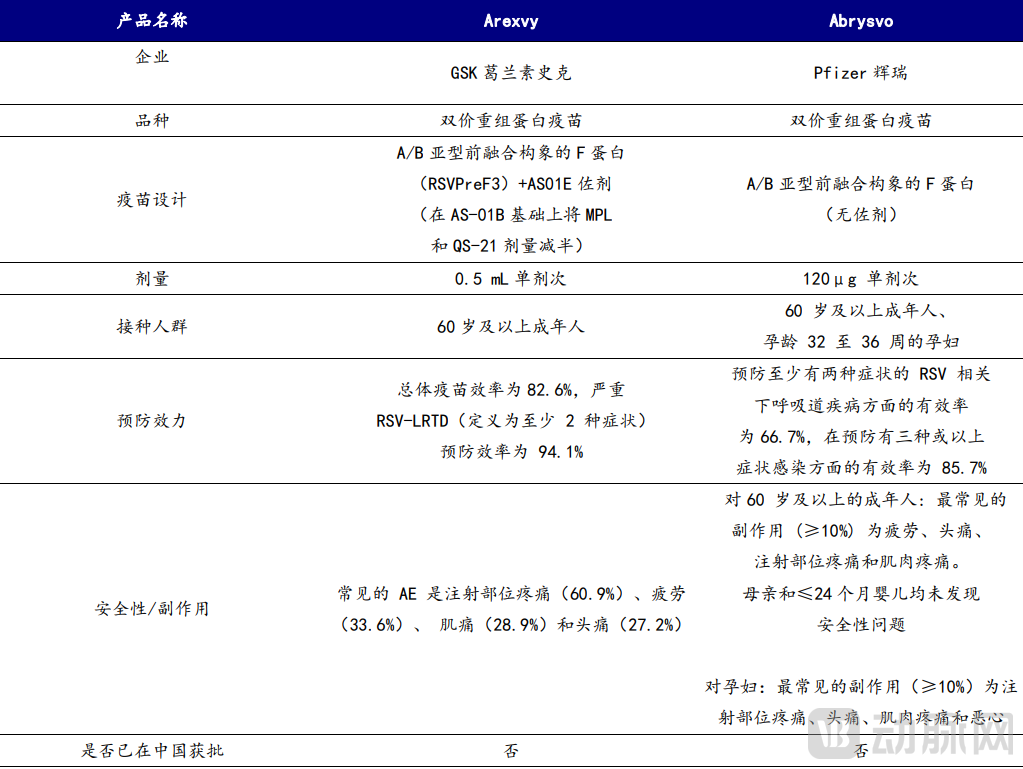
In terms of technical approach, Pfizer's vaccine currently has a slight advantage in that it can be used for active immunization of pregnant women to prevent RSV-related lower respiratory tract disease in infants from birth to 6 months of age, with better safety; GSK’s technical approach uses the superior "recombinant protein + new adjuvant," with a higher protection rate than Pfizer. It has already been approved in the United States, Europe, Canada, and Japan.
To Compete for the Billion-Dollar Market, GSK and Pfizer Engage in Patent War. GSK stated that Pfizer began researching its RSV vaccine program in 2013, at least seven years later than GSK’s initiation of its RSV project. In 2019, Pfizer challenged the validity of the European version of GSK's patent, with GSK claiming that Pfizer was already aware of its RSV patent technology by then.
From the data in this earnings report, GSK's Arexvy has an overwhelming advantage in almost all regions. Last October, GSK signed an exclusive agreement with ZhiFei Bio, granting it priority as the exclusive partner for the co-development and commercialization of any RSV vaccine for the elderly within the cooperation region.
However, an additional applicable population might give Pfizer's Abrysvo a boost. Besides the 80 million elderly people, there are also 1.5 million pregnant women suitable for receiving Abrysvo to prevent lower respiratory tract disease (LRTD) and severe LRTD in newborns up to six months old caused by RSV infection.
However, in the neonatal field, a dark horse has emerged in the RSV sector. In July last year, the FDA approved Beyfortus™ (nirsevimab-alip), an RSV vaccine antibody jointly developed by Sanofi and AstraZeneca, for market release. It is used to help prevent lower respiratory tract disease (LRTD) caused by respiratory syncytial virus (RSV) in newborns, infants during their first RSV season, and children under 24 months who are still susceptible to severe RSV disease during their second RSV season. According to Sanofi's Q3 2023 financial report, Beyfortus achieved sales of 137 million euros (approximately 148 million US dollars) in its first sales quarter. Recently, Beyfortus has been approved for marketing by the National Medical Products Administration, with production ramp-up imminent.
In this case, Pfizer will need to work hard to make Abrysvo a success.
Competing for a $10 billion market, global pharmaceutical companies are poised for action.
RSV Vaccine Sales in the First Year: GSK and Pfizer's Two Vaccines Achieve $2.44 Billion in Sales with Nearly 10 Million People Vaccinated, Exceeding Expected Revenue.
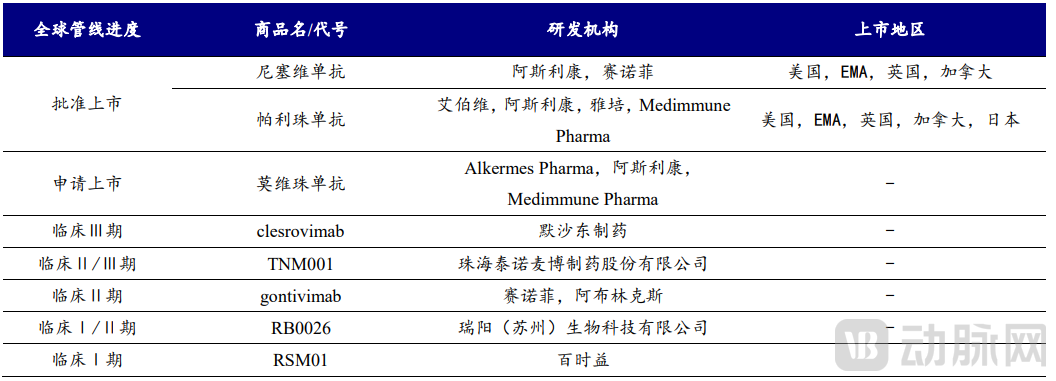
Such a promising billion-dollar track naturally does not lack players. According to incomplete statistics, so far, there are nearly 70 RSV prevention pipelines under research and development worldwide. In addition to the RSV vaccines that have been marketed by GSK, Pfizer, and Sanofi, Moderna Therapeutics' mRNA-1345 is currently in the process of applying for marketing, and Johnson & Johnson's VAC18193 has entered Phase III clinical trials. In terms of passive immunity for RSV, the FDA has approved MedImmune's humanized lgG1K monoclonal antibody Synagis, as well as Nirsevimab Beyfortus jointly developed by AstraZeneca and Sanofi.
 Global RSV Antibody Pipeline Source: Open Source Securities
Currently, apart from Beyfortus launched by Sanofi, there are no approved vaccines or antibody products for the prevention of RSV infection in China. However, there are many domestic players, with Tanox Pharma and Advaccine being among those with faster progress, having entered the late stages of clinical trials. At the same time, companies such as AIM Vaccine, CSPC Pharmaceutical Group, Zhifei Biological Products, Jiachen West Sea, Baike Biotech, Bluebird Bio/Walvax Biotech, and Clover Biopharmaceuticals are also striving to catch up.
References:
VCBeat "Who Can Save Pfizer's Plunging Revenue?"