China Approves First Oral Semaglutide for Type 2 Diabetes, Highlighting Its Potential Beyond Weight Loss—Including Anti-Cancer and Neuroprotective Effects
Novo Nordisk
Insulin Developer and Manufacturer


Recently,Novo Nordisk's Semaglutide Tablets Approved by the National Medical Products Administration for Marketing in China, for the Treatment of Type 2 DiabetesThis is the first domestically approved oral glucagon-like peptide-1 (GLP-1) receptor agonist to be marketed in China.

Mentioning Semaglutide, readers must be no strangers to it.
Semaglutide is a new long-acting GLP-1 analog that can effectively inhibit the release of glucagon, thereby achieving the effect of lowering blood sugar. With a half-life of about one week in the body, it allows for once-weekly dosing, quickly replacing the previous generation of hypoglycemic drugs.
Previously, oral semaglutide 3mg, 7mg, and 14mg have been approved by the U.S. Food and Drug Administration (FDA) for type 2 diabetes.The approval and domestic market launch of this oral version will undoubtedly spark another "wave of enthusiasm"!
But the reason why semaglutide has become a "popular" drug is because of its "infinite" potential beyond its glucose-lowering effects.
Semaglutide,
What is this weight loss tool?
Another major reason for the global popularity of Semaglutide lies in: The drug is associated with the term "weight loss."
As a long-acting GLP-1 analog, semaglutide's effect on weight control is somewhat "incidental" — as it mimics the action of glucagon, increasing the body's sensitivity to insulin. Based on this, post-meal satiety is enhanced, the rate of gastric emptying slows down, and naturally, hunger, calorie intake, and body weight are reduced.
As early as March 2021, one of the top medical journals《NEJM》The released global pivotal clinical trial shows:Only requires a once-weekly dose of 2.4mg, Semaglutide caused a significant weight loss of 15.3kg in obese participants!During the entire trial period, nearly 70% of participants lost more than 10% of their body weight, while over half of them reduced their weight by 15% or more.
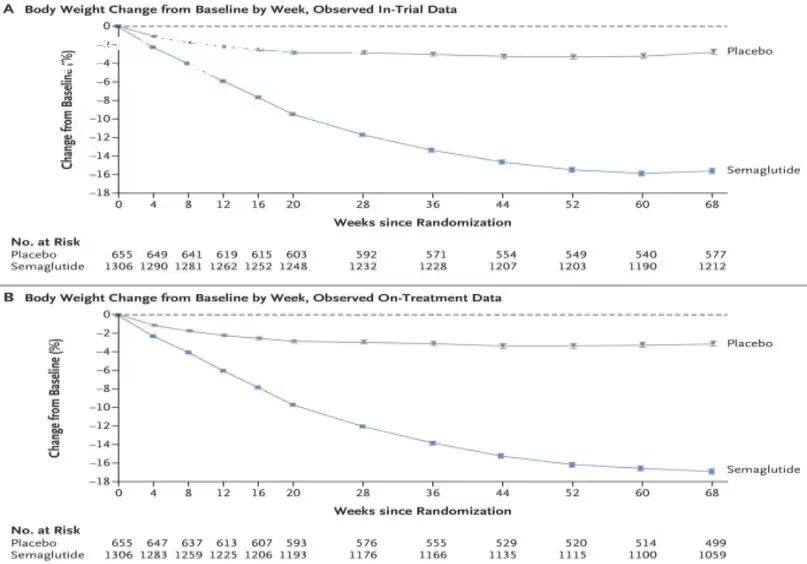
DOI: 10.1056/NEJMoa2032183
In May last year, the latest announcement on Novo Nordisk's official websiteOASIS 1 Study Phase IIIa Trial Results——This is especially a "booster shot" for overweight or obese patients.After 68 weeks of treatment, patients in the oral 50mg semaglutide group experienced a significant weight loss of 17.4%, approximately 18.3kg!
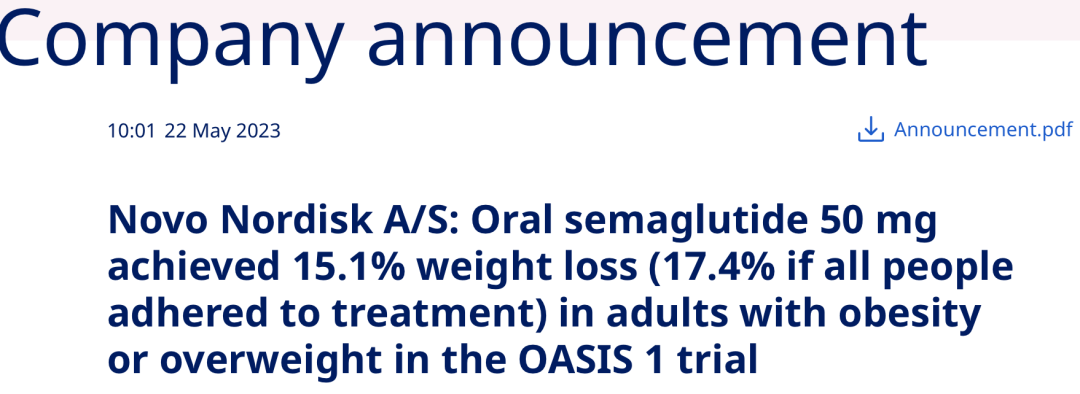
NOVO NORDISK Official Website
OASIS 1 is a Phase IIIa clinical trial within the global OASIS program, lasting 68 weeks to evaluate the efficacy and safety of semaglutide. The study enrolled 667 overweight or obese adult patients with one or more comorbidities, administering once-daily oral semaglutide 50mg for weight management.
At baseline, the average weight of the participants was 105.4 kg.After 68 weeks of treatment, the weight of the treatment group (daily oral semaglutide 50mg + lifestyle intervention) significantly decreased by 17.4%, far exceeding the 1.8% decrease in the control group (oral placebo + lifestyle intervention).
Moreover, 89.2% of participants receiving oral semaglutide 50mg experienced a weight loss of ≥5% after 68 weeks of intervention, compared to only 25.8% in the control group.
From a safety perspective, oral semaglutide 50mg demonstrated good safety and tolerability – the most common adverse events were gastrointestinal discomfort, but the vast majority were mild to moderate and decreased over time.
The "personal testimony" of celebrities and the success of clinical trials have once again labeled semaglutide as a "miracle weight-loss drug."
Novo Nordisk Executive Vice President Martin Holst Lange once introduced, "We are very excited to observe the good weight loss effect shown by the oral version of semaglutide. In the future, patients with obesity can choose to take tablets daily or inject 2.4mg weekly according to their own needs."
However, as of now, oral semaglutide has not been approved for weight loss indications in any country or region.However, the OASIS 3 study on oral semaglutide for weight loss indications has been conducted in China.

Source: Drug Clinical Trial Registration and Information Disclosure Platform
In addition to weight loss, it can also fight cancer and prevent Alzheimer's disease,
Or the next "Metformin"?
When it comes to "wonder drugs," the first that comes to mind is undoubtedly metformin – a long-standing medication for lowering blood sugar, yet it frequently makes headlines for its other therapeutic effects. As research continues to advance, semaglutide, the "rising star" in the field of diabetes, is also showing promising results in an increasing number of disease areas.
Recently, a research team from the National University of Ireland, Maynooth, revealed a major new efficacy of semaglutide —Restoring the function of natural killer cells (NK cells) in the body, thereby reducing cancer risk. The study was published in Obesity.
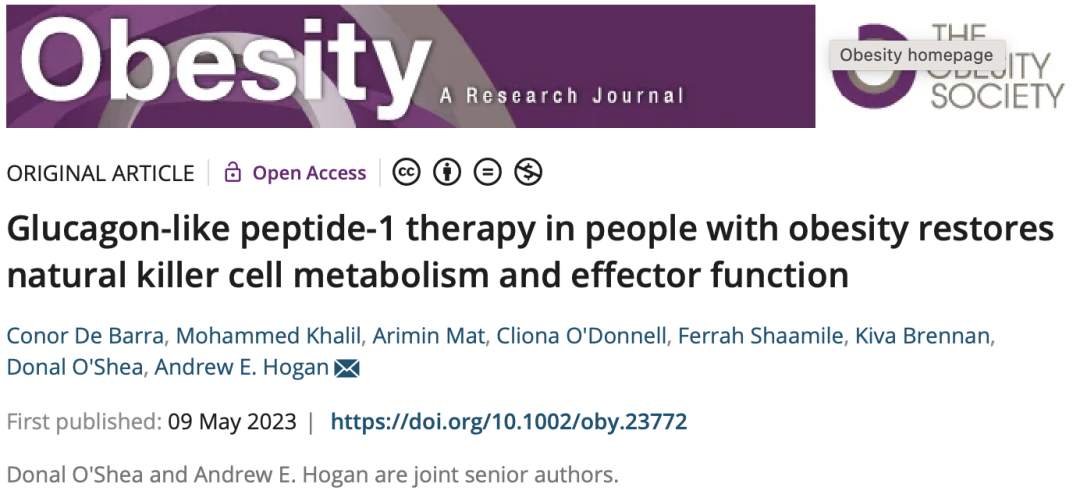
https://doi.org/10.1002/oby.23772
NK Cells in Obese Patients Often Exhibit Functional Defects, Leading to Reduced Cytokine Production and Target Cell Killing. Changes in Peripheral NK Cell Activity Can, in Turn, Trigger Multiple Conditions in Obese Patients, Such as an Increased Risk of Cancer.
Thus, researchers turned their attention to GLP-1 analogs represented by semaglutide, exploring whether the drug treatment could restore the function of NK cells in obese patients.
Consistent with previous studies, obese patients receiving GLP-1 treatment (once-weekly injection of 0.25mg semaglutide) experienced a significant decrease in BMI and improved blood glucose control.
Researchers observed and found that,The cytotoxic activity of NK cells and the production of interferon-γ/granzyme B in the treatment group were significantly increased.
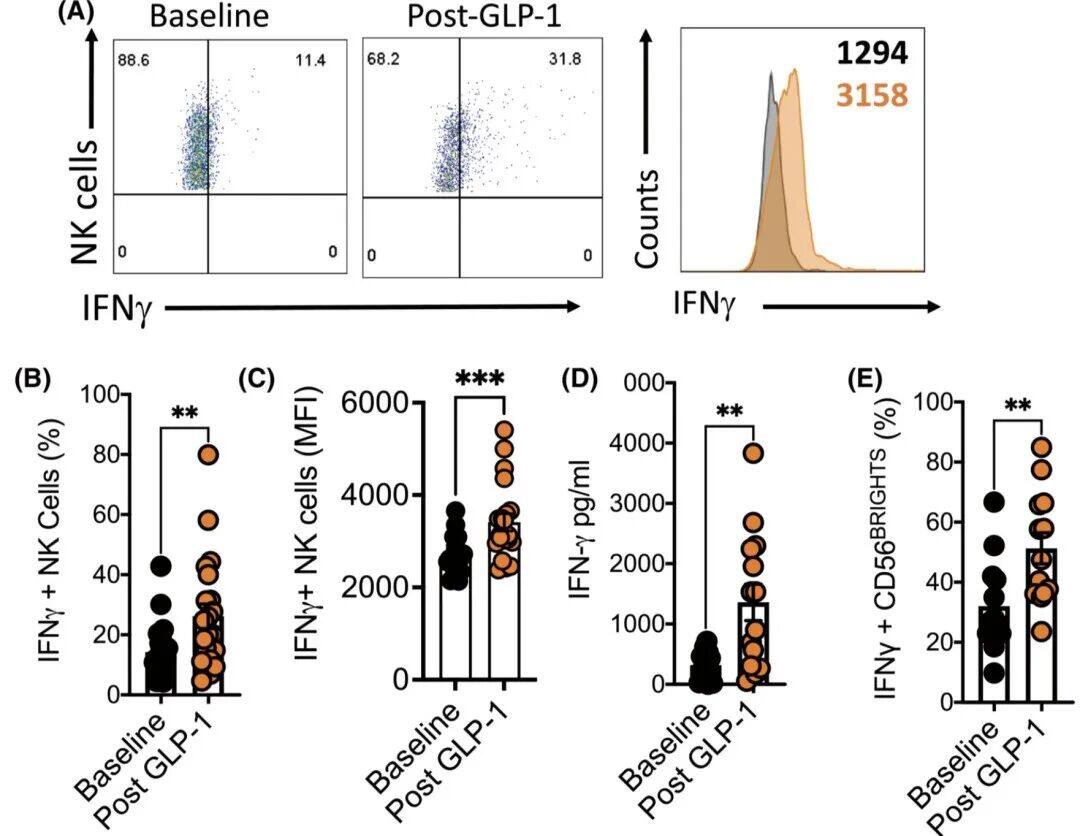
GLP-1 Therapy Enhances NK Cell Effector Function in Obese Patients
In fact, the production of NK cell cytokines depends on intrinsic cellular metabolism. Therefore, the researchers further compared the SLC7A5-mTOR-glycolysis axis in NK cells from obese patients before and after GLP-1 treatment. Notably, the CD98-mTOR-glycolysis metabolic axis was significantly enhanced, indicating that the metabolism of NK cells in obese patients improved after GLP-1 treatment, restoring their anti-cancer function.
In summary, the study data demonstrate for the first time that GLP-1 treatment can directly modulate NK cells in the peripheral blood of obese patients, restoring the ability to produce cytokines and cytotoxicity, but the restoration appears to occur in a manner independent of weight loss.
The anti-cancer potential is already impressive? Surprisingly, Semaglutide also has the ability to alleviate neurodegenerative diseases such as Alzheimer's and Parkinson's!
Previously,Alzheimer's & DementiaThe relevant study was published, in which researchers collected data from over 120,000 patients from a large database with long-term follow-up, and foundThe risk of developing dementia in the group treated with GLP-1 receptor agonists was 53% lower than in the control group.
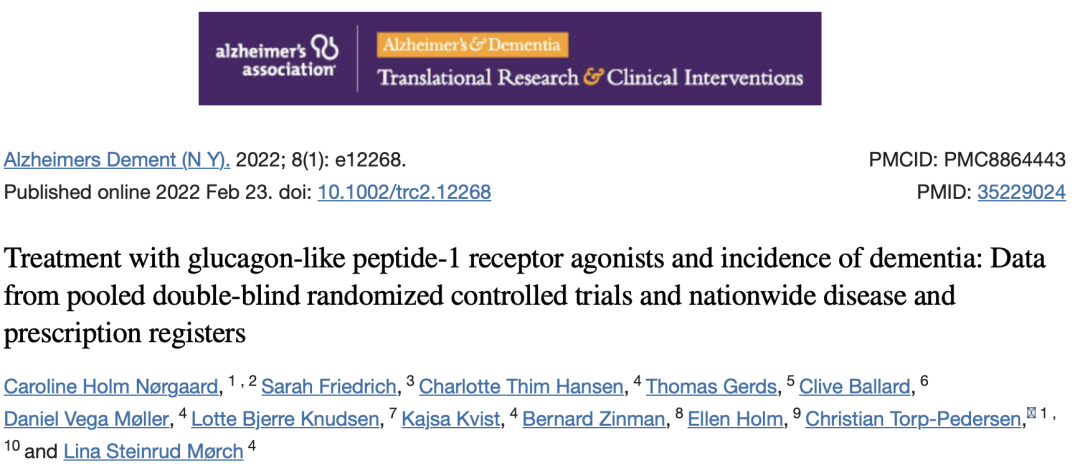
DOI: 10.1002/trc2.12268
The relevant mechanisms have also been confirmed in animal experiments – administration of GLP-1 receptor agonists can improve memory and learning abilities, increase the number of neurons, reduce β-amyloid protein, and prevent tau protein accumulation.
Of course, the "ceiling" of semaglutide should not be limited to this, and we look forward to more research in the future unveiling its mysteries.
References:
[1]https://www.novonordisk.com/news-and-media/news-and-ir-materials/news-details.html?id=166110
[2]Khoo TK, Lin J. Once-Weekly Semaglutide in Adults with Overweight or Obesity. N Engl J Med. 2021;385(1):e4. doi:10.1056/NEJMc2106918
[3]De Barra C, Khalil M, Mat A, O'Donnell C, Shaamile F, Brennan K, O'Shea D, Hogan AE. Glucagon-like peptide-1 therapy in people with obesity restores natural killer cell metabolism and effector function. Obesity (Silver Spring). 2023 May 9. doi: 10.1002/oby.23772. Epub ahead of print. PMID: 37157931.
[4]Nørgaard CH, Friedrich S, Hansen CT, Gerds T, Ballard C, Møller DV, Knudsen LB, Kvist K, Zinman B, Holm E, Torp-Pedersen C, Mørch LS. Treatment with glucagon-like peptide-1 receptor agonists and incidence of dementia: Data from pooled double-blind randomized controlled trials and nationwide disease and prescription registers. Alzheimers Dement (N Y). 2022 Feb 23;8(1):e12268. doi: 10.1002/trc2.12268. PMID: 35229024; PMCID: PMC8864443.
Text | Swagpp
Editor | Swagpp
Source | MedSci Medicine
Part of the text is sourced from the internet,This article is for academic sharing only. Please indicate the source for reprinting. If there is any infringement, please contact WeChat: bioonSir for deletion or modification!