

Roche's 2023 Financial Report Highlights Key Innovation Milestones Expected in 2024

Roche
Oncology Drug Research, Development, and Manufacturing
Recently, Roche announced its financial report for the year 2023, detailing the layout of its R&D pipeline and the latest progress. In today’s article, the content team at WuXi AppTec will interpret the key highlights for readers.

Looking back at 2023, Dr. Thomas Schinecker, CEO of Roche Group, stated that Roche has achieved significant accomplishments in regulatory affairs, clinical research and development, and major transactions.Looking ahead, Roche's two new drugs, crovalimab and inavolisib, are expected to receive regulatory approval in 2024. These drugs are respectively intended for the treatment of paroxysmal nocturnal hemoglobinuria (PNH) and hormone receptor-positive (HR+), human epidermal growth factor receptor 2-negative (HER2-) locally advanced or metastatic breast cancer.Roche plans to continue advancing innovation in its five key focus areas—Oncology/Hematology, Neuroscience, Immunology, Ophthalmology, and Cardiovascular and Metabolic Diseases—and anticipates a series of significant R&D progress between 2024 and 2025.
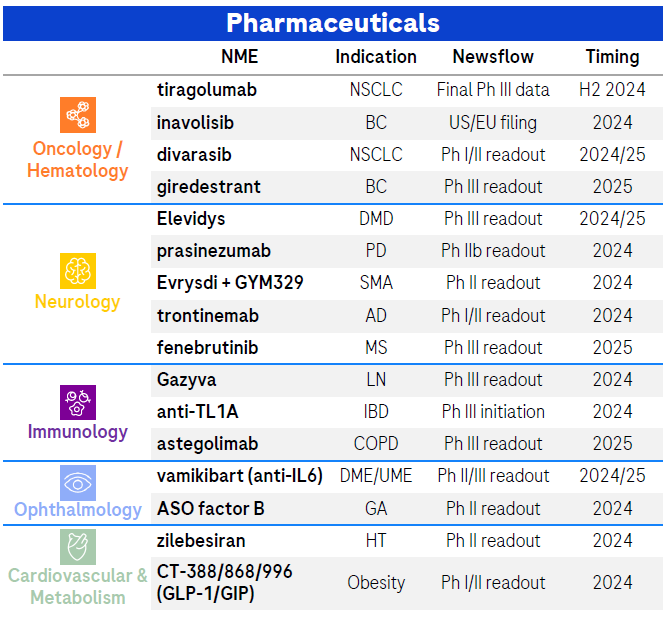
▲Roche's R&D Pipeline (Source: Reference [1])
Oncology/Hematology Field
Inavolisib, a PI3Kα small molecule inhibitor under research by Roche, is currently in Phase 3 clinical development., which includes a pivotal head-to-head trial designed to evaluate the efficacy of inavolisib in combination with the CDK4/6 inhibitor Ibrance (palbociclib) and fulvestrant (fulvestrant) as a first-line treatment for HR+, HER2- locally advanced or metastatic breast cancer patients. These patients carryPIK3CAMutation, and resistance to endocrine therapy.
The latest clinical data released shows,Compared with the control group using Ibrance and fulvestrant, the combination therapy containing inavolisib reduced the risk of disease progression by 57% (HR=0.43). Although the overall survival (OS) data is not yet mature, preliminary results have shown a positive trend (HR=0.43).Roche plans to submit these results to regulatory authorities in hopes ofPIK3CAA Potential New Treatment Option for Patients with HR+ Breast Cancer Harboring Mutations.
In addition to the above research, there are two more studies targetingPIK3CAPhase 3 Studies of Mutant Breast Cancer — INAVO121 and INAVO122 Are Currently Underway.INAVO121 Study Aims to Compare the Efficacy of Inavolisib Combined with Fulvestrant Versus Alpesilib Combined with Fulvestrant in HR+, HER2-, and CarryingPIK3CAPatients with locally advanced or metastatic breast cancer harboring mutations. The INAVO122 study compares the combination regimen of inavolisib with Phesgo to the placebo plus Phesgo regimen, to evaluate its efficacy in carriers.PIK3CAEfficacy of First-line Maintenance Therapy in Patients with HER2+ Mutated Advanced Breast Cancer.
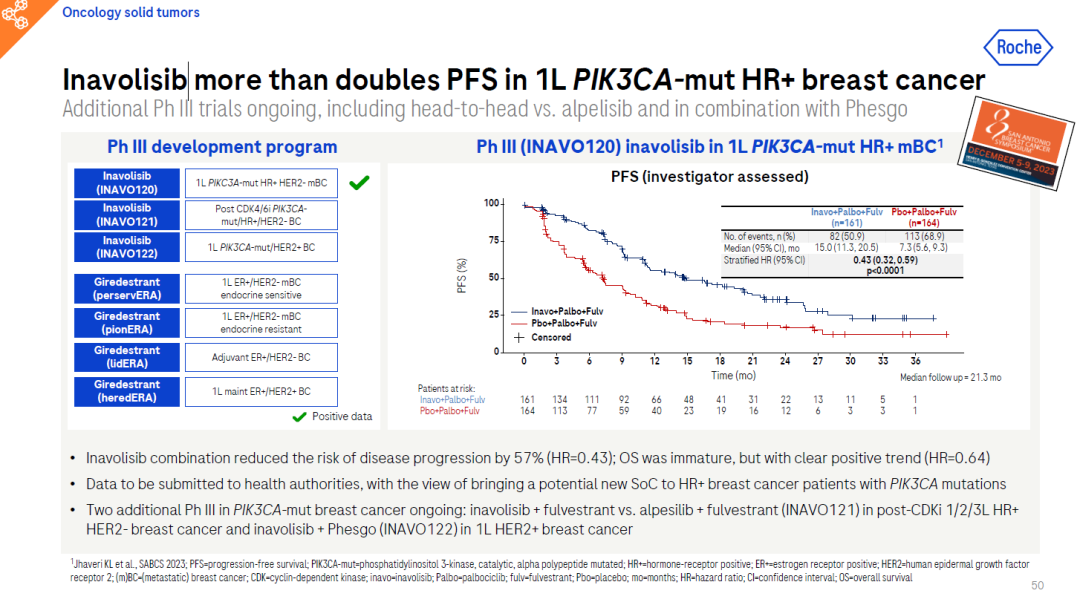
▲Trial results of Inavolisib for breast cancer treatment (Image source: Reference [1])
Roche's blockbuster product trastuzumab emtansine (trade name: Kadcyla) is an antibody-drug conjugate (ADC) targeting HER2, consisting of two components:One end of it is the HER2-targeted antibody trastuzumab, and the other end is linked to the chemotherapy drug DM1.As envisioned,This drug can bind to cancer cells expressing HER2, directly delivering potent chemotherapy drugs to HER2-positive tumor cells and killing them.。
The report points out,Kadcyla has treated more than 80,000 patients worldwide.In the Phase 3 clinical trial,Kadcyla significantly improved OS in patients with early breast cancer (HR=0.66).Long-term data also shows that patients continue to benefit in terms of invasive disease-free survival (iDFS) (HR=0.54). Meanwhile, the safety profile of Kadcyla is consistent with previous study results, with no new safety signals identified.
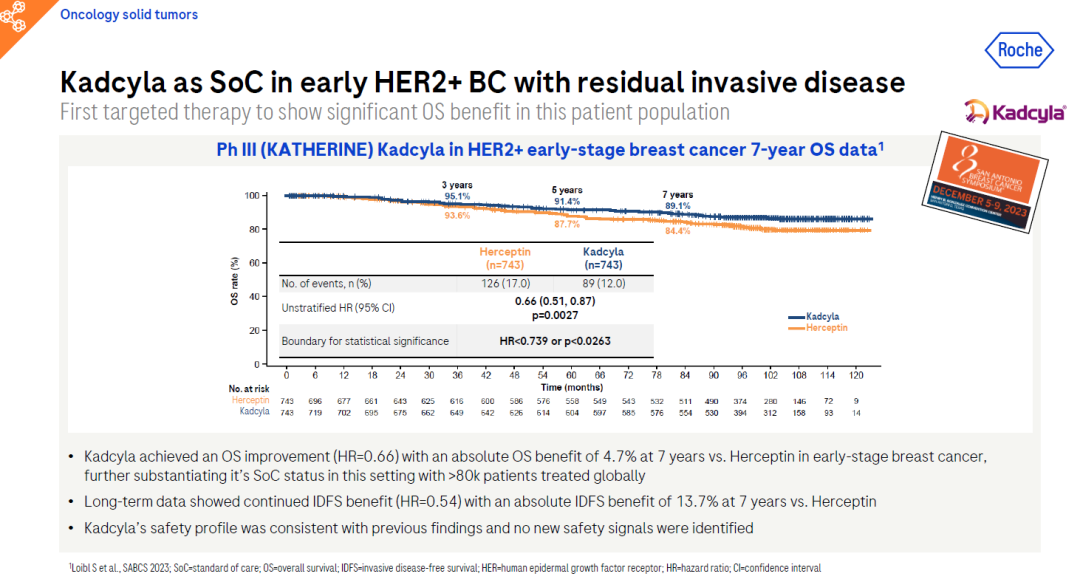
▲Trial Data of Kadcyla in the Treatment of Early Breast Cancer Patients (Source: Reference [1])
In the field of hematology, several of Roche's marketed and investigational drugs have demonstrated remarkable clinical progress, with a number of drugs expected to receive new regulatory approvals in 2024. Specifically:
Hemlibra, a bispecific antibody targeting Factor IXa and Factor X developed by Roche, is actively expanding its range of applications. Globally, approximately 24,000 patients have received Hemlibra treatment.Notably, the results of the Phase 3 clinical trial HAVEN 7 for Hemlibra in treating infants with Hemophilia A were presented at the 2023 American Society of Hematology (ASH) meeting, revealing that,For infant patients with Hemophilia A, starting subcutaneous injections of Hemlibra shortly after birth can effectively reduce the risk of intracranial bleeding and joint bleeding, thus providing protection before damage occurs.Preliminary analysis shows that Hemlibra is effective and well-tolerated in infants with severe hemophilia A.
In addition,Roche also expects its complement C5 protein antibody crovalimab to gain regulatory approval in the U.S. or Europe in 2024 for the treatment of PNH.At the same time, three Phase 3 clinical trials—STARGLO, SUNMO, and VERONA—are expected to release new clinical data, further confirming the efficacy and safety of these drugs.
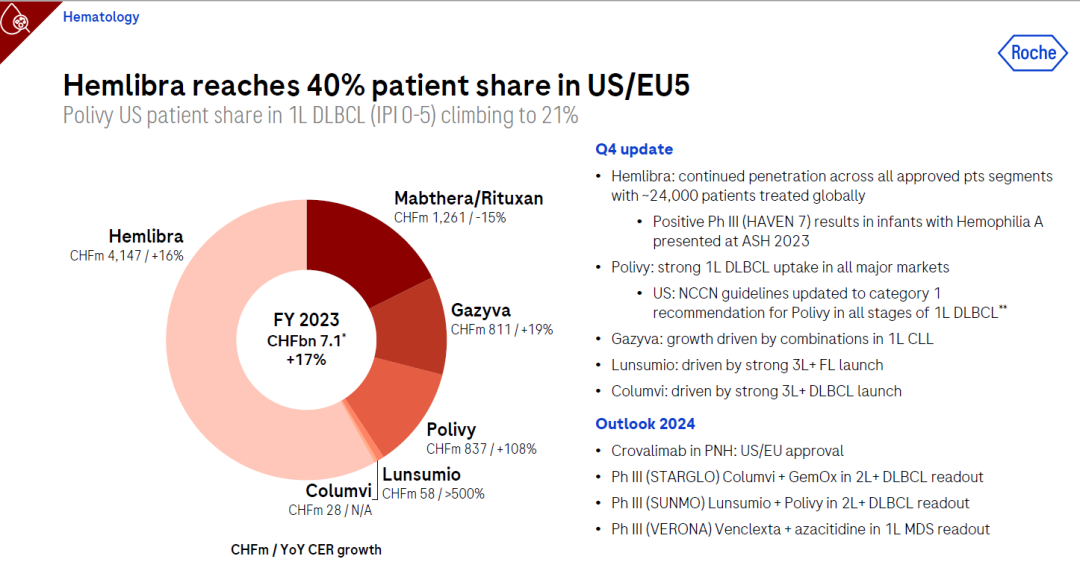
▲Pipeline progress of Roche in the field of hematology in 2023 (Source: Reference [1])
Field of Neuroscience
In the field of neuroscience, Roche is developing an innovative monoclonal antibody drug named trontinemab.TRontinemab utilizes Roche's Brain Shuttle technology to target amyloid proteins. It fuses a monoclonal antibody targeting amyloid with a protein domain capable of binding to the transferrin receptor.This design enables it to effectively cross the blood-brain barrier and reach the inner parts of the brain.
In the ongoing Phase 1b/2a clinical trial, trontinemab demonstrated significant advantages over traditional Aβ monoclonal antibodies: compared with typical Aβ monoclonal antibodies, trontinemab rapidly and robustly reduced amyloid plaques at relatively lower doses.After 28 weeks of treatment with the highest dose (1.8 mg/kg), 75% of patients had amyloid protein levels reduced below the normal detection level.These mid-term pharmacodynamics and safety data provide support for further research in the current Phase 1b/2a trial. Roche plans to present the latest results of this clinical trial at the upcoming International Conference on Alzheimer's and Parkinson's Diseases (AD/PD).
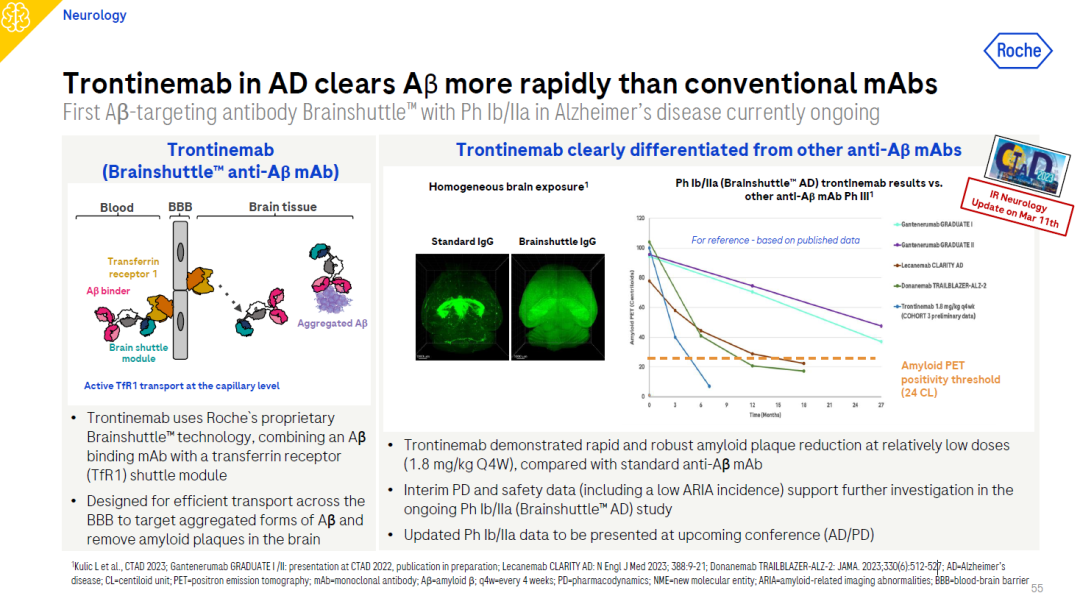
▲Trontinemab Trial Data for Alzheimer's Disease (Image Source: Reference [1])
Field of Immunology
Roche has submitted a supplemental Biologics License Application (sBLA) for Xolair (omalizumab) to the U.S. FDA, which has been granted Priority Review, for the reduction of allergic reactions, including anaphylaxis, that may occur in adults and children aged 1 year and older due to accidental exposure to one or more foods. Roche emphasized,If approved,Xolair will become the first drug to reduce allergic reactions caused by accidental exposure in patients with multiple food allergies.The FDA is expected to make an approval decision in the first quarter of 2024.
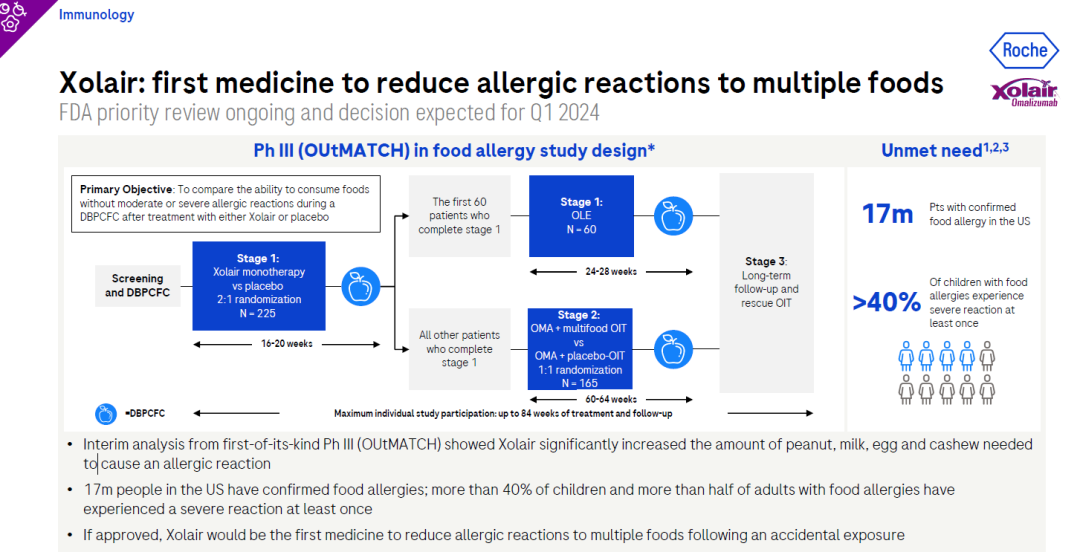
▲Xolair Poised to Reach Regulatory Milestone (Image Source: Reference [1])
In addition,Roche's Potential "First-in-Class" Drug — TL1A Antibody RVT-3101 — Expected to Enter Phase 3 Clinical Trials for Treating Patients with Ulcerative ColitisTL1A can bind to the DR3 receptor, stimulating downstream inflammatory and fibrotic processes, and dysregulation of TL1A has been found to be associated with the occurrence of various immune-mediated diseases. Therefore, blocking the TL1A pathway is considered a new strategy for treating inflammatory and fibrotic diseases.
In the Phase 2b clinical trial for ulcerative colitis, the clinical remission rate (75%) and endoscopic improvement rate (80%) of patients receiving RVT-3101 continued to increase from the induction phase to the maintenance phase. Meanwhile, the drug demonstrated good safety and tolerability in the trial. Roche stated in its report that anti-TL1A therapy has the potential to improve clinical outcomes in a variety of autoimmune diseases.
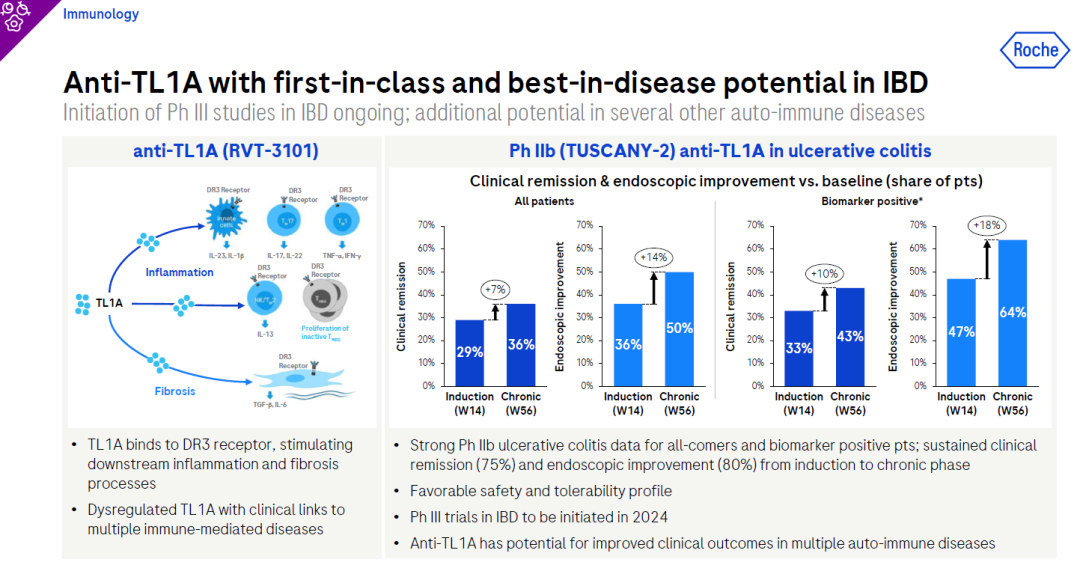
▲Trial Data of TL1A Antibody Therapy for Ulcerative Colitis (Image Source: Reference [1])
Ophthalmology Field
Roche's bispecific antibody Vabysmo (faricimab) made significant progress in 2023.The antibodyCan simultaneously target and block two key pathogenic pathways—Angiopoietin-2 (Ang-2) and Vascular Endothelial Growth Factor-A (VEGF-A),Both pathways can destabilize blood vessels, cause leakage, increase inflammation, and thereby drive many retinal diseases that may lead to vision loss.Vabysmo, by simultaneously targeting both pathways, has potential synergistic effects, which are expected to stabilize blood vessels and improve patients' vision. In October 2023, the antibody received FDA approval for the treatment of retinal vein occlusion (RVO), two months ahead of the anticipated PDUFA date.
Looking ahead to 2024, Vabysmo for the treatment of RVO is expected to gain approval in the EU.At the same time, Roche is developing the interleukin-6 (IL-6) antibody vamikibart for the treatment of diabetic macular edema (DME), and an antisense oligonucleotide (ASO) therapy targeting factor B for the treatment of geographic atrophy (GA). Both therapies will see new clinical data updates this year, which is a positive signal for patients with these diseases.
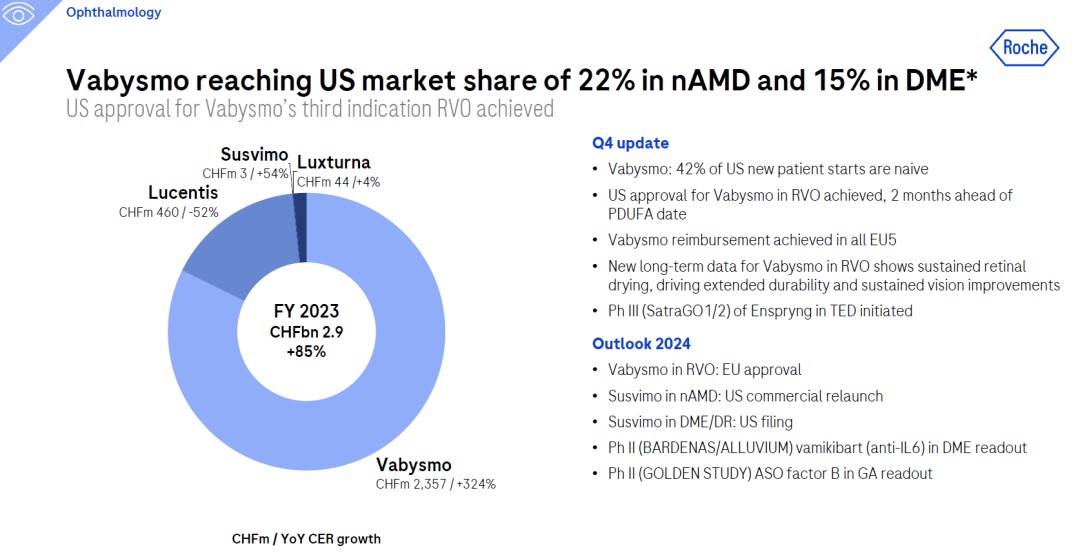
▲Pipeline Progress of Roche in Ophthalmology in 2023 (Source: Reference [1])
Cardiovascular and Metabolic Diseases Field
In December last year, Roche announced the final merger agreement with Carmot Therapeutics and incorporated its R&D pipeline, including three therapies: CT-388, CT-996, and CT-868.
CT-388 is a GLP-1/GIP receptor dual agonist preparing to enter Phase 2 clinical development for the treatment of obese patients with or without type 2 diabetes.. This drug is administered once weekly via subcutaneous injection and has the potential to become a standalone treatment option as well as be combined with other therapies to enhance weight loss effects. It may also expand to other indications. The final results of Phase 1 clinical trials for CT-388 are expected to be released by 2024.
CT-996 is a once-daily oral small molecule GLP-1 receptor agonist,Currently in Phase 1 clinical trials, it aims to treat obese patients with or without type 2 diabetes. Roche plans to release interim clinical data for the drug in 2024.
CT-868 is a GLP-1/GIP receptor dual agonist in Phase 2 clinical trials administered once daily via subcutaneous injection., specifically for the treatment of overweight or obese patients with type 1 diabetes. The interim data from the phase 2 trial of this drug is expected to be released in 2024.
Roche's R&D Program in Obesity Treatment Shows Preliminary but Encouraging Results. In the Phase 1/2 clinical trial of CT-388, the drug demonstrated good tolerability, with pharmacokinetic characteristics supporting a once-weekly dosing frequency. Preliminary results indicate that patients treated with CT-388 experienced an average weight loss of 8.4% within four weeks, equivalent to 15.4 pounds, along with reductions in waist and hip circumference as well as improved insulin sensitivity markers, indicated by HOMA-IR.
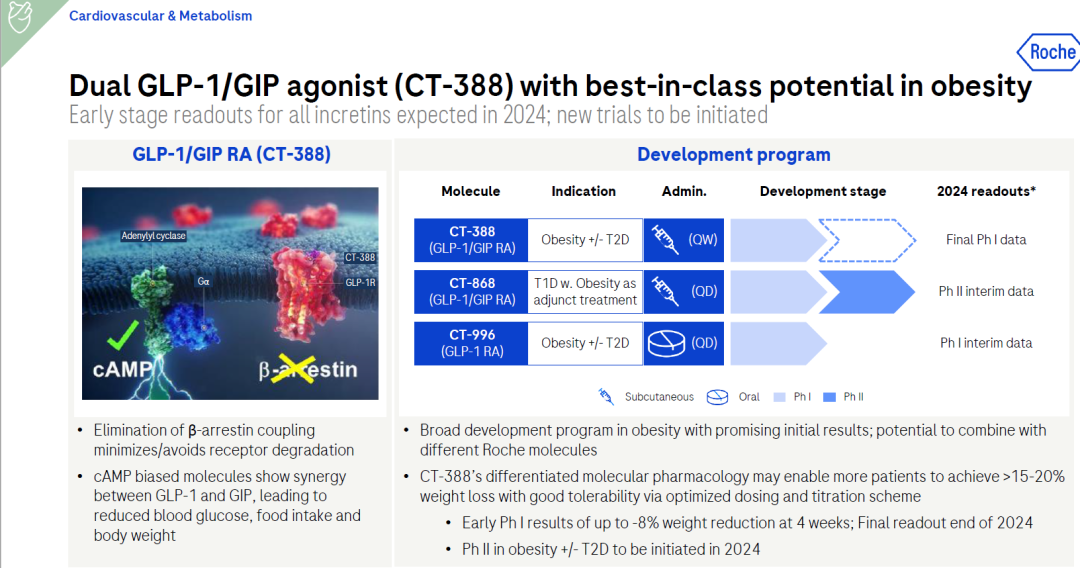
▲Pipeline Progress of Roche in the Obesity Treatment Field in 2023 (Source: Reference [1])
In addition to the aforementioned content, Roche's annual financial report released this time also covers detailed progress of Roche's R&D pipelines in various fields, as well as the R&D achievements and market performance of therapies already on the market. Due to space limitations, this article was unable to detail all of this information. Interested readers can click "Read Original" at the end of the article to access the download link and obtain Roche's 2023 Annual Report PPT.

Everyone is watching






▲To learn more about the application of cutting-edge technologies in the biopharmaceuticals industry, please long-press and scan the QR code above to access "WuXi Live Studio" and watch live discussions and exciting replays on related topics.
References:
[1] Rche Reporting,Retrieved Feb 2, 2024 from https://assets.roche.com/f/176343/x/ac48d3ba3b/irp240201-a.pdf


Share,PointLike,In view, Focusing on Global Biomedical Health Innovation