

From $225K to Nearly $200M: How Enveda Biosciences Navigated the Biotech Winter with AI-Driven Natural Product Drug Discovery
Lux Capital
Investment Institutions in the Fields of Physical and Life Sciences

True Ventures
Venture Capital Firms

Wireframe Ventures
Startup Venture Capitalists
Enveda
Small Molecule Therapy Developer

Dimension
Early-stage Venture Capital Firms
The Cold Winter of Biomedicine Continues.
From the perspective of startups, the "winter" is reflected in the increased difficulty of financing and the continuously extended financing cycle. This may be because investors are becoming more cautious, tending to invest in drugs under research that are close to or have already entered the clinical stage. However, it takes a long time for startups to reach this stage, making it difficult to quickly meet the expectations of investors. But even under such circumstances, there are still companies that manage to secure further financing successfully, with some of them attempting to attract investors through "innovation."
As in the case of Enveda Biosciences (hereinafter referred to as "Enveda"), which increased the proportion of debt financing in its Series B round. Enveda, founded in 2019, is a biotechnology company that develops innovative drugs based on natural products and natural molecules. It aims to discover and develop novel compounds from nature through metabolomics and machine learning.
In December 2022, Enveda announced debt financing as part of its $68 million Series B round. Although the company did not yet have any projects in the clinical stage at that time, it had already raised $51 million in a Series A round in 2021, reaching the set milestone. Currently, Enveda has completed over 100 million yuan in financing, with participating institutions including LUX Capital, True Ventures, Dimension, and Wireframe, among others.

The key figure leading the company through multiple rounds of financing is Viswa Colluru, the founder and CEO of Enveda. Viswa grew up in India, where his father ran a small pharmacy that sold prescription medications alongside plant-based Ayurvedic remedies. When Viswa or his family members fell ill, they often turned to natural products first. Through personal experience, he learned that plants could alleviate ailments, which became the original inspiration for Viswa's entrepreneurial journey.
Having ideas alone is not enough; entrepreneurship requires financial support. Thanks to Viswa's experience working at Recursion Pharmaceuticals, one of the earliest publicly listed AI pharmaceutical companies globally, he was able to embark on his entrepreneurial journey with $225,000, funded by the company’s leadership at the time. However, the biotechnology field differs from the software industry, which has lower operating costs—lab space, equipment, reagents, and highly educated researchers are all essential driving factors. To cut costs, Viswa decided to forgo a fixed office space, leave San Francisco, and return to India to establish a lab.
The first batch to join Enveda remotely included German computational biologist Daniel Domingo-Fernández. After Daniel joined, he developed the first-generation algorithm for Enveda's internal knowledge graph used in drug prioritization. With the support of this algorithm, the platform and technology were able to iterate, and the company gradually got on the "right track."
Beyond his role as an entrepreneur, Viswa is also progressively embracing more identities. In September 2023, Viswa participated in the seed funding rounds of BioLoomics, which focuses on the development of cancer antibody therapies, and Noetik, an AI-native biotechnology company.

Viswa Colluru (Source: Enveda's official website)
Most biopharmaceutical companies screen molecular libraries for innovative drug development, which are typically composed of synthetic molecules derived from known chemical substances. However, these known chemical substances only account for a small portion of the entire natural world. In fact, a significant proportion of commonly used drugs are derived from natural chemical substances, and bioactive natural products also serve as an important source for innovative drugs.
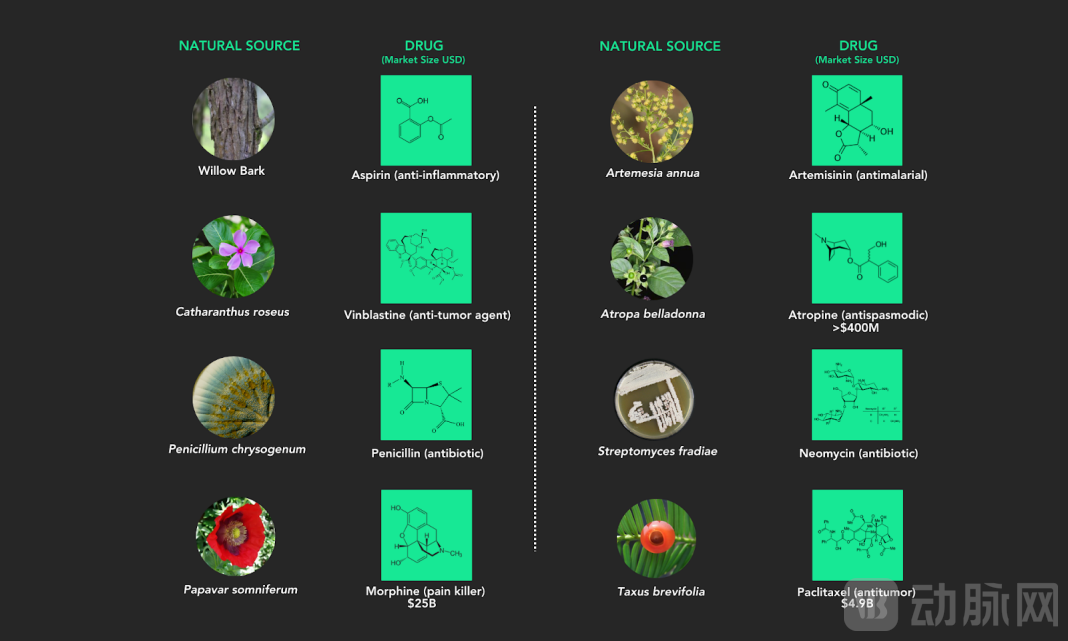
Commonly Used Drugs and Their Natural Sources (Image Source: Enveda Official Website)
Some natural metabolites can also supplement targets that synthetic small molecules cannot act on. Therefore, focusing on discovering unrecognized bioactive natural products and converting natural substances into innovative drugs has become an exploratory direction for the industry in search of new drugs. Enveda is one of them.Just as next-generation sequencing technology has contributed to the genetic code, Enveda is decoding the chemical language of life through tandem mass spectrometry (LC-MS/MS).
First, Enveda analyzes thousands of complex samples using liquid chromatography-tandem mass spectrometry (LC-MS/MS) to map knowledge graphs. Second, Enveda leverages its deep learning models to predict chemical properties and molecular structures from spectral data. Then, it annotates the function of each metabolite through high-throughput screening methods and links each molecule to bioactivity assays and organ distribution experiments.
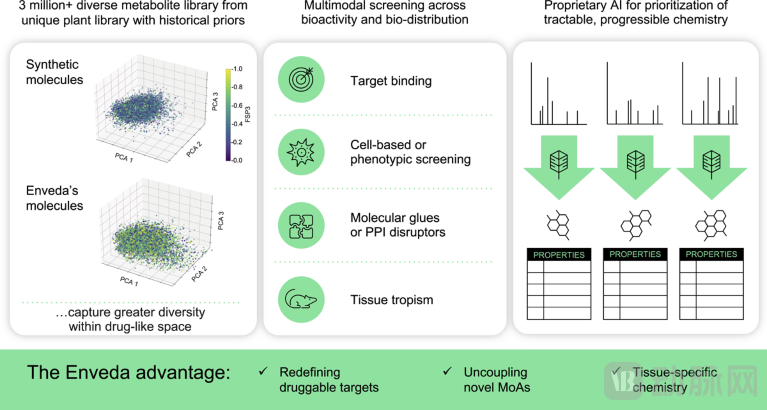 Enveda's Drug Discovery Platform (Source: Nature)
MoA, Mechanism of Action; PPI, Protein-Protein Interaction
Traditional drug screening methods require iterative extraction and separation of individual compounds, followed by analysis and database comparison. This process is analogous to sequencing genetic codes one base pair at a time, which is both time-consuming and costly.Enveda's platform can determine the characteristics and functions of each molecule in a sample in a high-throughput and multiplexed manner, without relying on the separation of individual molecules for analysis.
From active molecule identification to large-scale data acquisition, Enveda's proprietary platform has undoubtedly addressed long-standing challenges in the process of drug development from natural products.
Development has brought new challenges: In what scope should we first deploy this high-throughput chemical tool to discover new drugs? One of the difficulties in drug development lies in,Candidate drugs that are effective in the lab fail to work in the human body.So, are there underutilized but known effective drug sources for the human body? The answer is yes. Using ethnobotanical knowledge refined from thousands of years of human experience as a starting point for drug discovery will help bridge the gap from lab to clinic. Thus, Enveda is tapping into the knowledge of traditional medicines in nature and mapping the knowledge graph using ethnobotanical methods.
Using tandem mass spectrometry (LC-MS/MS), on the one hand, Enveda demonstrated non-random associations between related plant species used for similar medicinal purposes—meaning closely related plants often share similar chemical compositions. On the other hand, Enveda also showed a correlation between chemical similarity and therapeutic use, supporting the biological basis for related plants sharing common therapeutic properties.
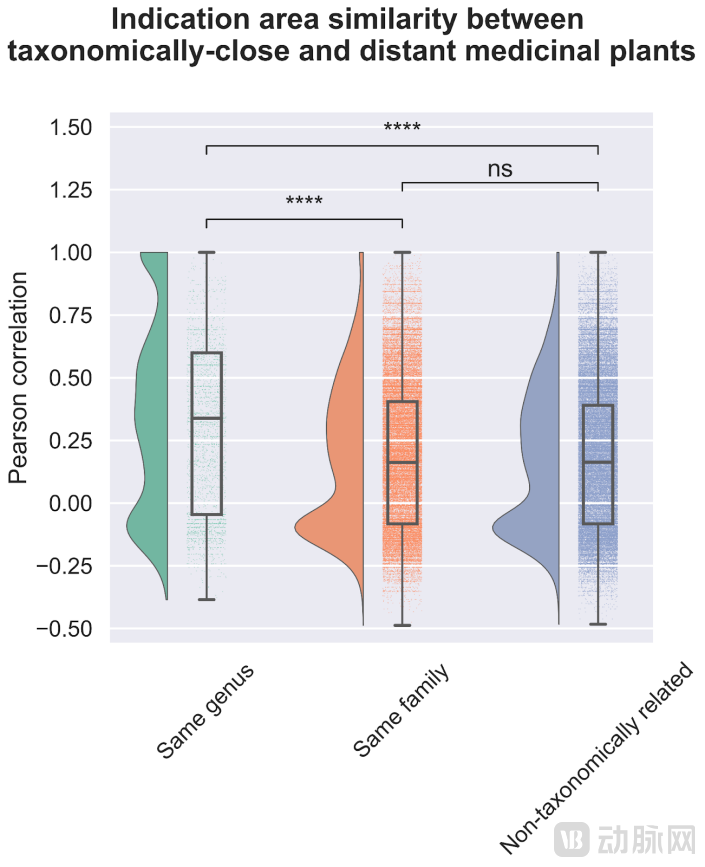 Medicinal Similarity Between Classification-Related and Non-Related Plants Based on Ethnobotanical Database Information
(Image source: Enveda official website)
These two characteristics can be applied to specific indications—using a database to identify the medicinal plants most closely related to them.After Enveda identifies several strongly correlated medicinal plants, it can locate potential bioactive compounds for the indication. By clustering species within the genus based on chemical similarity of metabolites, it accurately identifies which metabolites are unique to plants closely associated with the indication.
Secondly, except for specific indications, Enveda also utilizes these two characteristics to further explore bioactive compounds. Starting from known bioactive chemical structures and combining ethnobotanical and phytochemical knowledge, it is possible to predict which diseases it might potentially treat.After Enveda identifies a bioactive chemical substance and proposes high-confidence hypotheses in the therapeutic field, these compounds can be tested in disease models, saving a lot of "detours" in the R&D process.
Of course, this analysis is not perfect. Even though Enveda claims that its knowledge graph is the world's largest computable ethnobotanical database,Including 38,000 plant species, 11,000 disease types, and over 20 million connections between disease mechanisms and phytochemicals.
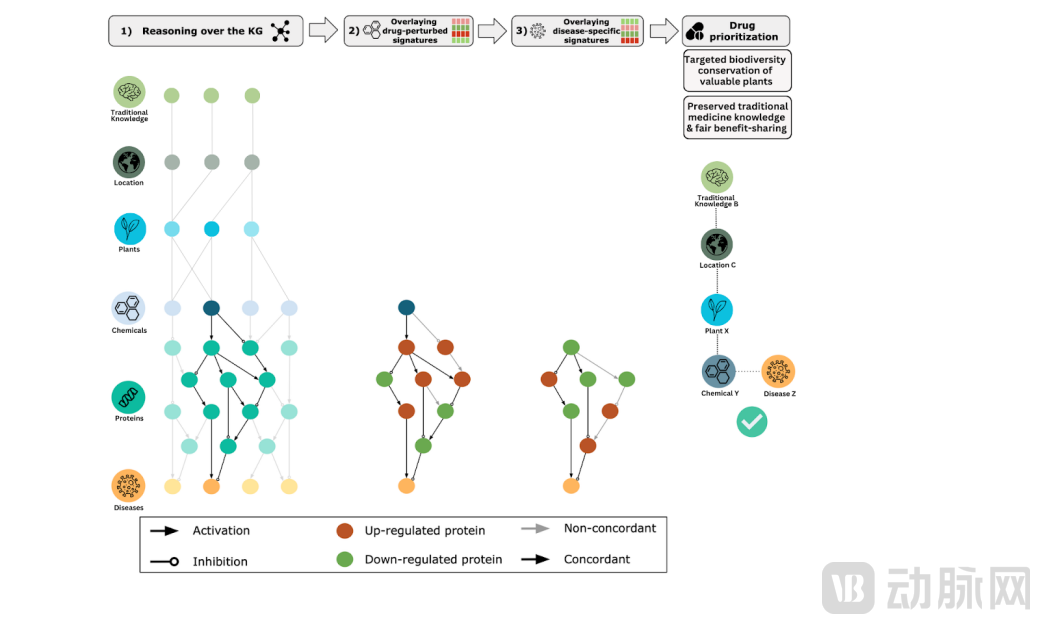 Enveda's Knowledge Graph (KG) can identify active compounds, their plant sources, geographic locations, and known traditional uses (Source: Enveda official website).
But according to Enveda, the chemical molecules in existing databases may only cover 1% of natural molecules, and the therapeutic effects of specific plants may be attributed to an unknown molecule.Therefore, Enveda has built a drug discovery search engine for new drugs in the unknown chemical space through its metabolomics and artificial intelligence discovery platform.
The chemical structure information of compounds is contained in the patterns of MS2 (MS/MS), where fragments can only be interpreted in the context of other fragments. Just as the meaning of a word needs to be understood based on its position and context within a sentence, the annotated dataset designed by Enveda can be searched according to linguistic principles.
Enveda's large language model can review fragment sequences and predict attributes, querying databases much like a search engine queries the internet. By inputting desired small molecule characteristics, users can discover potential molecular leads, including specific bioactivity, bioavailability, and required chemical properties of the molecules.
If input:
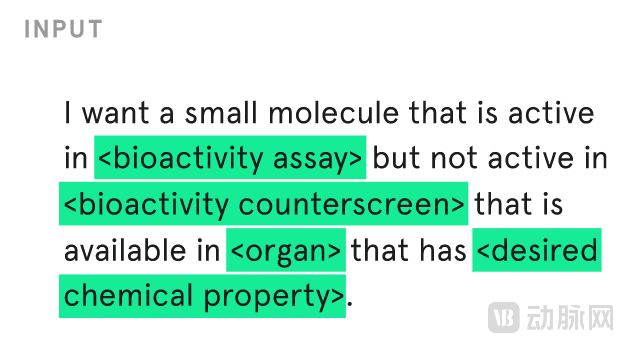 (Source: Enveda official website)
Output Results:
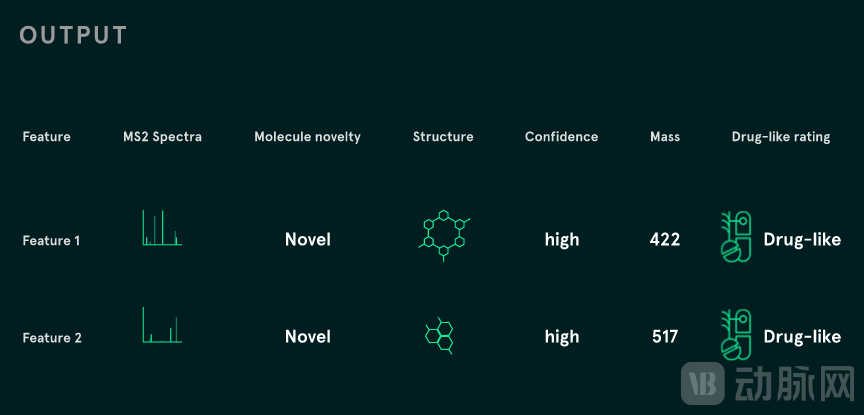 (Image source: Enveda official website)
Currently, Enveda has more than 15 drug pipelines. The indications for these pipelines are mainly concentrated in areas such as inflammation and dermatology, which aligns well with Enveda's advocacy of natural product characteristics. These drug pipelines leverage the platform’s advantages to minimize biological and commercial risks.
Enveda Biosciences, Inc. has multiple drug candidates advancing toward clinical stages, with plans to initiate at least two in 2024. These include an oral neutrophil-modulating drug for atopic dermatitis, an NLRP3 inflammasome inhibitor targeting inflammatory bowel disease, and two undisclosed indications.
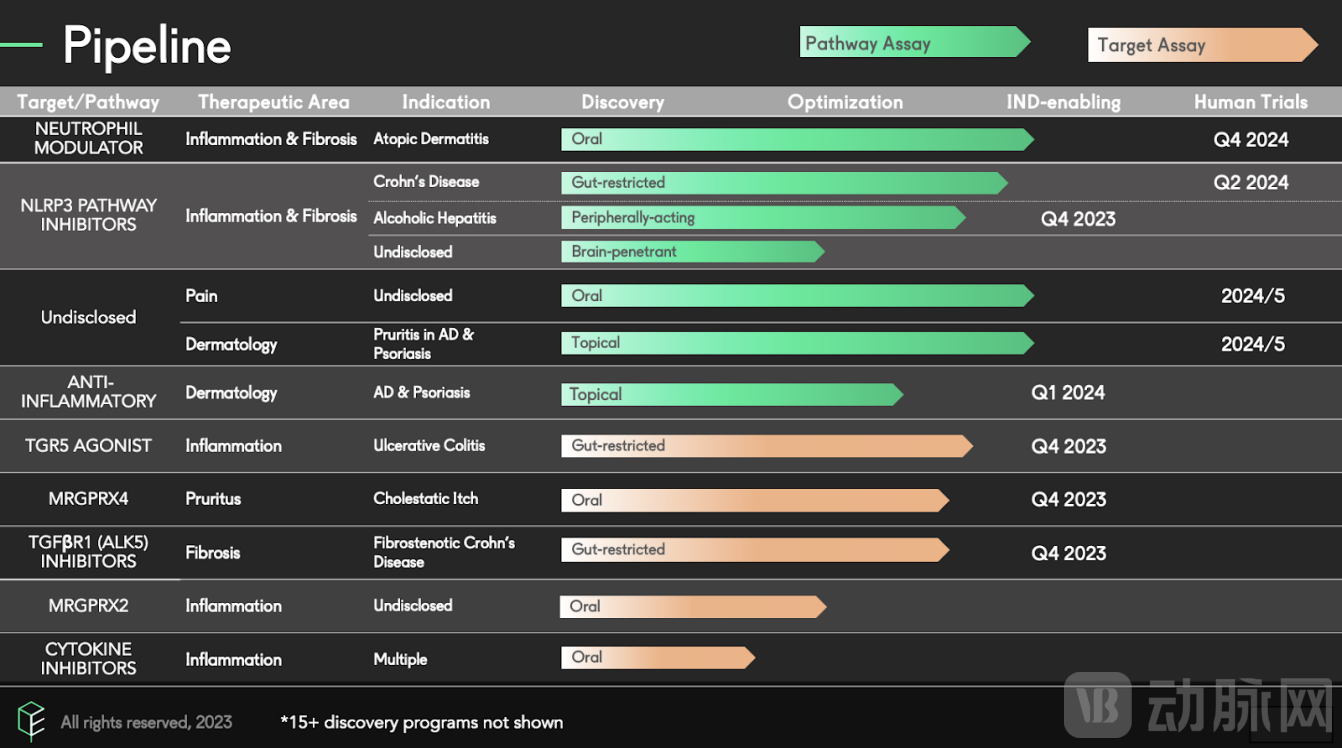 Drug Pipeline Diagram (Source: Enveda Official Website)
In January 2024, Enveda announced the establishment of the Therapeutic Advisory Board (TAB), an important milestone in Enveda's commercial transformation. Dr. Nicholas Saccomano, former Chief Scientific Officer of Pfizer's Boulder R&D headquarters, serves as the chairman of the TAB, guiding Enveda in expanding its clinical pipeline across various indications. Viswa has also clearly stated that Enveda’s long-term goal is to provide drugs for clinical use.
Enveda Combines Natural Substances with Artificial Intelligence, Sparking Unique "Sparks". In September 2021, bioinformatics company Nature's Toolbox announced a collaboration with the University of Notre Dame to use an algorithm co-developed named DruID to identify and evaluate the drug potential of unknown natural products. Companies operating in the natural molecule field also include Montai Health, a biotechnology company incubated by Flagship Pioneering, and London-based Pangea Botanica, among others.
Chinese scholar Tu Youyou was awarded the 2015 Nobel Prize in Physiology or Medicine for discovering artemisinin, a treatment for malaria, from sweet wormwood. Traditional Chinese medicine and natural drugs in China also have an inherent connection. In 2019, the "Opinions on Promoting the Inheritance and Innovative Development of Traditional Chinese Medicine" proposed to promote the innovative development of traditional Chinese medicine. The "2024 Pharmaceutical and Biotechnology Industry Investment Strategy Report" released by Guoyuan Securities highlighted three key areas: innovative drugs, innovative medical devices, and traditional Chinese medicine.
Nature may be a better medicinal chemist than humans, and many treasures of natural drugs are still waiting to be discovered in nature.