

Innovent Biologics partners with University of Michigan professor Terry J. Smith to advance next-generation thyroid eye disease research and development

Innovent
High-end Biologics Developer
Thyroid Eye Disease (TED) is an organ-specific autoimmune disease closely related to thyroid disorders, ranking first in the incidence of adult orbital diseases. TED has complex clinical manifestations and can cause eyelid retraction in one or both eyes, proptosis, diplopia, restrictive strabismus, exposure keratopathy, and TED optic neuropathy (DON), significantly impacting patients' quality of life.
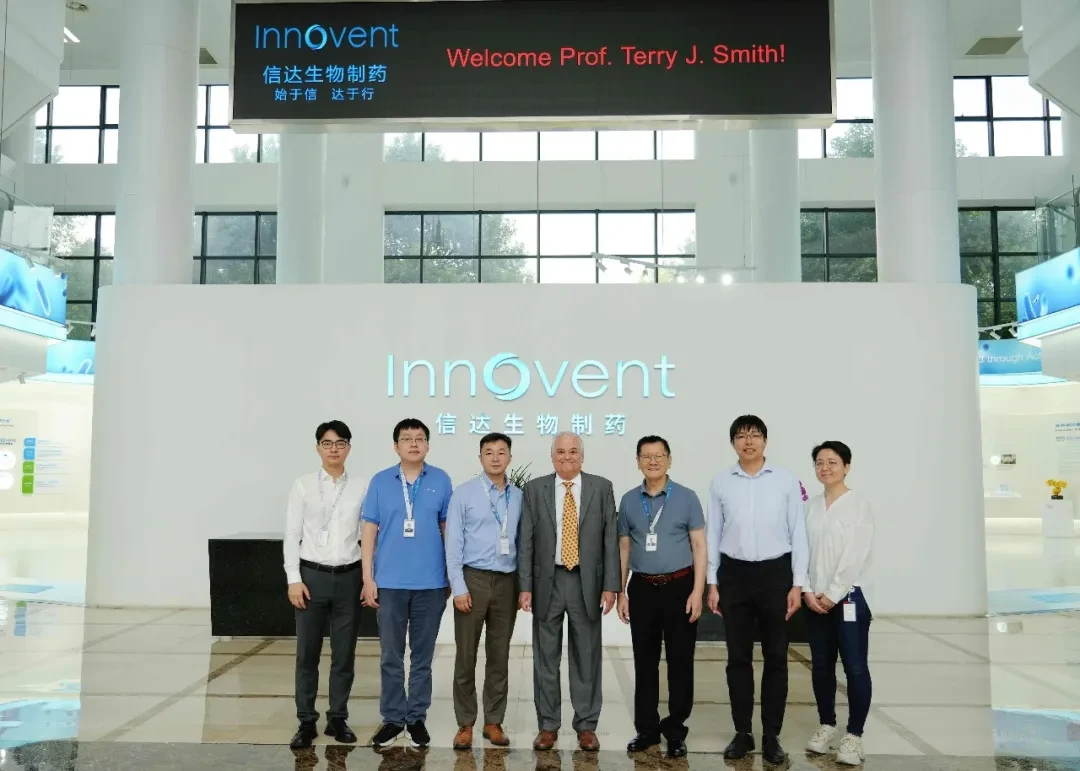
Recently, Terry J. Smith, an internationally renowned endocrinology expert and honorary research professor in the Department of Ophthalmology and Visual Sciences at the University of Michigan, visited Innovent Biologics, Inc. to engage in in-depth discussions with the clinical development team of Innovent Biologics and researchers from Guoqing Institute on the treatment prospects for Thyroid Eye Disease (TED) and future trends in drug development.Professor Terry J. Smith expressed appreciation for Innovent's research and development capabilities in the field of ophthalmology, particularly the Teprotumumab N01 injection launched in March this year. This not only fills a 70-year gap in the treatment of thyroid eye disease in China, but also addresses the lack of Asian population data in international Teprotumumab studies, providing high-quality evidence-based medical support for the drug’s application in broader populations worldwide.
The Dilemma of TED Treatment Awaits a Breakthrough: Clinics Urgently Need Innovative Therapies to Improve Patient Outcomes
There is a significant unmet need in thyroid eye disease. Currently, the traditional first-line treatment for moderate to severe active thyroid eye disease in China is intravenous glucocorticoid pulse therapy. However, this treatment shows unsatisfactory improvement in proptosis and is associated with systemic side effects related to hormone use. Second-line treatments include repeated glucocorticoid pulses, combined orbital radiotherapy, or other immunomodulators, but the outcomes remain unsatisfactory. Recently, multiple clinical treatment guidelines and expert consensus statements both domestically and internationally have included biologics targeting IGF-1R as a second-line recommendation in the treatment of thyroid eye disease. Particularly for patients with significant proptosis or diplopia, biologics targeting IGF-1R can be considered as the preferred option.
Currently, the pathogenesis of TED has not been fully elucidated both internationally and domestically, and there are still many unresolved challenges in clinical diagnosis and treatment. Innovent Biologics has been continuously exploring this field. In fact, with the deepening understanding of TED, clinical experts have been able to describe the disease's evolution mechanisms more comprehensively. Several key findings regarding the pathogenesis of TED have provided new directions for drug target screening, and multiple potential therapeutic candidates are currently under investigation.Especially in March 2025, the approval and market launch of Tidutamab N01 Injection, independently developed by Innovent Biologics, Inc., has established a new landscape for TED diagnosis and treatment in China. It brings new therapeutic hope to TED patients who have long been constrained by traditional treatment options and drives the innovation of clinical treatment paradigms.
Currently, Teprotumumab has been recommended by many authoritative guidelines both domestically and internationally for patients with moderate to severe TED, especially for TED patients with exophthalmos and diplopia, Teprotumumab can be used as the first-line treatment drug.
Focusing on Long-term Outcomes for Thyroid Patients, Innovent Actively Advances Next-generation Therapeutics for Thyroid Eye Disease
Addressing the Current Treatment Dilemma of Thyroid Eye Disease, Innovent Biologics Intensifies R&D Investment and Actively Develops Bispecific Antibody Therapeutics Targeting IGF-1R to Help Reduce Disease Recurrence at Its Source; Clinical Data Shows New-Generation Drugs Exhibit Significant Patient Benefits in Rapidly Reducing Ocular Inflammation and Improving Proptosis; Meanwhile, Innovent Continues to Focus on Patients’ Medication Experience, with the New-Generation Drug Featuring an Improved Subcutaneous Administration Method for Enhanced Treatment Convenience.
Sharing International Treatment Trends for Thyroid Eye Disease, Terry J. Smith and Innovent Biologics Join Hands to Tackle Treatment Challenges
Although TED is relatively common in clinical practice, there is currently no curative treatment available. Traditional treatments for Graves' hyperthyroidism cannot permanently alter its pathogenesis. Novel highly targeted molecules, including TSHR-blocking monoclonal antibodies, small molecule inhibitors, and B-cell and T-cell activation inhibitors, have entered clinical trials with encouraging results. The latest advances in understanding the pathogenesis of TED have driven the development of molecular drugs acting on cytokine receptors, co-stimulatory molecules, and novel IGF-1R inhibitors, with multiple clinical trials showing promising outcomes.
Teprotumumab Demonstrates Significant Efficacy in Treating Thyroid Eye Disease
Lu Shujie, Clinical Medical Director of Innovent Biologics, Inc., stated"As the first IGF-1R antibody drug in China and the first new drug for thyroid eye disease in 70 years, the clinical development of Teprotumumab N01 has gathered the collective wisdom of authoritative experts in ophthalmology and endocrinology in China. Its successful launch not only fully demonstrates Innovent Biologics' innovative R&D capabilities in ophthalmology and metabolism but also reflects the high recognition from national pharmaceutical regulatory authorities regarding its clinical value and safety. The visit of internationally renowned Professor Terry J. Smith this time highlights the international academic community's acknowledgment of Innovent’s R&D capabilities. Looking ahead, Innovent Biologics will continue to deepen its focus on ophthalmic treatment areas, including orbital and fundus diseases, fulfilling its corporate mission of 'developing high-quality biologics that are affordable for the general public.' Starting from current and future clinical needs, it will collaborate with domestic and international academia to strategically develop next-generation products, continuously meeting people's aspirations for a better life and serving more patients."
This article cannot replace professional medical guidance in any way, nor should it be regarded as medical advice. Innovent Biologics does not recommend the use of any unapproved drugs/indications.