

Fermion's Best-in-Class TYK2 JH2 Inhibitor FZ007-119 Granted IND Approval, Targeting the Multi-Billion-Dollar Autoimmune Market

Fermion
AI Drug Discovery Developer
On February 4, the National Medical Products Administration (NMPA) approved the IND application for FZ007-119, a TYK2 JH2 inhibitor developed by AI Biotech Guangzhou Fermion Technology Co., Ltd. (Fermion, hereinafter referred to as "Fermion"). This marks the third IND approval since Fermion's establishment.
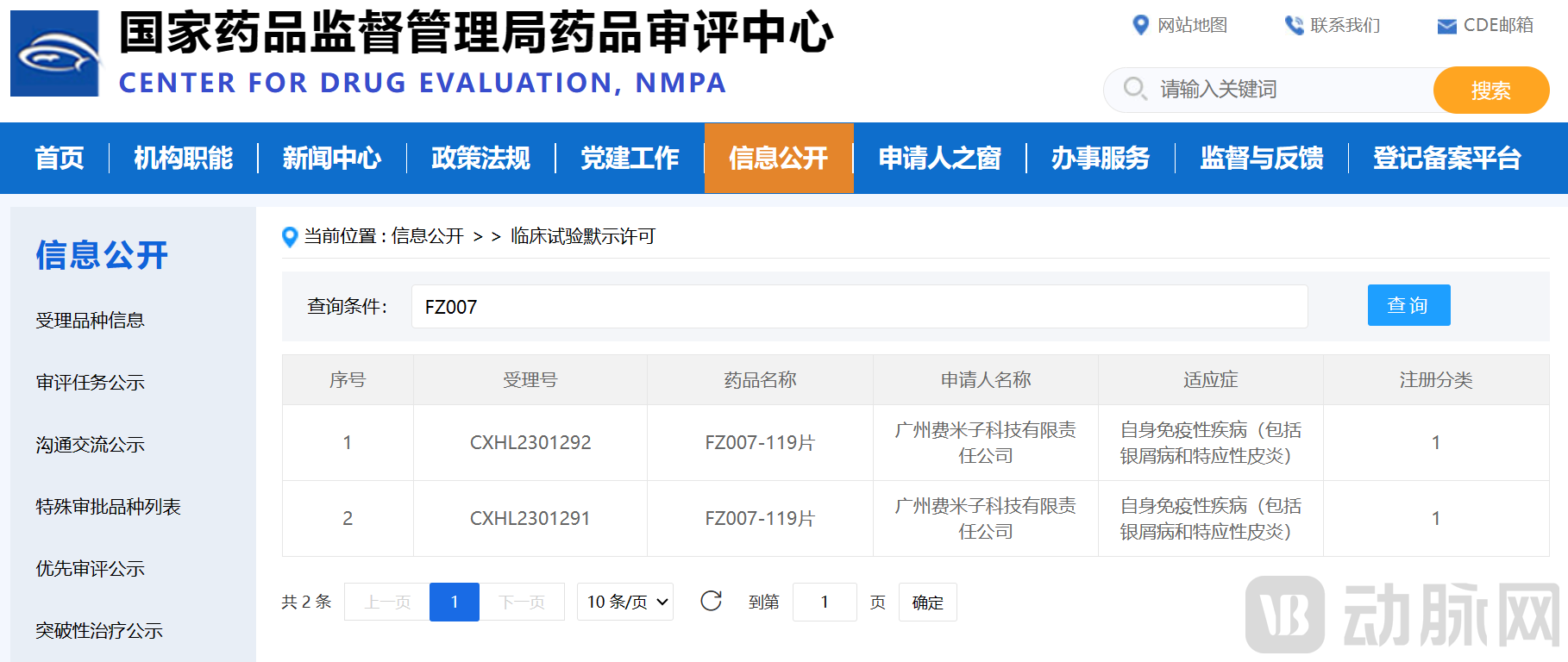
FZ007-119 is a third-generation JAK inhibitor targeting TYK2 JH2. The project was initiated in May 2021, the IND application was submitted in November 2023, and the IND was approved in January 2024, showcasing Fermion's extremely fast preclinical new drug R&D efficiency.
Since its operation began in 2019, Fermion has been developing differentiated BIC/FIC products targeting early innovative targets in the central nervous system (CNS) and autoimmune fields, striving to become an AI and data-driven innovative drug research and development company.In the field of autoimmune diseases, Fermion has currently laid out more than five pipelines, with target indications including psoriasis, inflammatory bowel disease, rheumatoid arthritis, etc. The TYK2 JH2 inhibitor FZ007-119, which has been approved this time, is the fastest progressing pipeline among them.
Targeting the Billion-Dollar Autoimmune Market, Fermion Develops the Latest Generation TYK2 JH2 Inhibitor Without Black Box Warning
The JAK kinase family, including JAK1, JAK2, JAK3, and TYK2, is the core of the entire JAK-STAT signaling pathway, showing significant potential in various diseases such as cancer, rheumatoid arthritis, and psoriasis. Based on this, JAK has become one of the hottest targets globally, with multiple MNCs such as Pfizer and Eli Lilly involved.
As of now, there are a total of 11 JAK inhibitors on the global market, which can be basically divided into two categories. One category is non-selective JAK inhibitors that simultaneously target two or more JAK sites, offering a broad range of therapeutic applications. However, while demonstrating strong efficacy, they also affect normal pathways, resulting in significant side effects, leading to a strict black box warning from the FDA. The other category comprises selective second-generation inhibitors, which enhance the selective inhibition of specific one or two subtypes among JAK1-3. Compared with the first-generation JAK inhibitors, their cardiovascular risks, infection risks, etc., are significantly reduced, but they still cannot escape the FDA's black box warning.
September 2022,BMS's Oral TYK2 JH2 Inhibitor Deucravacitinib Approved by FDA, Becomes the Only JAK Inhibitor Without Any Black Box Warning, Regarded as the Third Generation of JAK Inhibitors.The key to Deucravacitinib's breakthrough in safety lies in its targeted JAK subtype — TYK2 JH2 — referred to as "the next frontier for JAK inhibitors." Deucravacitinib is the world’s first TYK2 JH2 inhibitor.
The vast majority of JAK family members are involved in broader systemic signaling pathways and are also responsible for regulating physiological functions such as hematopoiesis and lipid metabolism. However, TYK2 almost exclusively affects immune-related signal transduction, with minimal interference on other cytokines, significantly enhancing drug safety. Specifically, TYK2 can mediate cytokines such as IL-23, IL-12, and type I interferons, promoting the production of inflammatory cytokines like IL-17 and IL-23, which are considered key pathways in the pathogenesis of autoimmune diseases such as psoriasis.
In addition to the target itself, the safety of Deucravacitinib also depends on its differentiated structural design: binding to the pseudokinase domain JH2 of TYK2, which renders TYK2 in an inactive conformation. The JH2 structures of different JAK family members are not identical, so by inhibiting JH2, it is possible to block only the signaling pathways governed by TYK2, such as IL-23, IL-12, and type I interferons, without suppressing other JAK pathways. This achieves high selectivity within the JAK family and even the entire kinase family, avoiding JAK1-3 related clinical adverse reactions while maintaining efficacy.
From the perspective of related targets and mechanisms of action, it is reasonable that FZ007-119 has become Fermion's first and fastest advancing pipeline in the field of autoimmune diseases.
Dr. Deng Daiguo believes: "Despite the fact that there are already multiple first-generation or second-generation JAK inhibitors on the market or in development globally, which have advantages in terms of treatment efficacy and medication convenience, regulatory authorities, clinicians, and patients alike continue to express concerns about the safety of JAK inhibitors."FDA Issues Multiple Black Box Warnings for Related Products; Clinicians Often Conduct ECG, Liver and Kidney Function Tests Before Prescribing JAK Inhibitors, Raising the Threshold for Their Use.
FZ007-119 is a third-generation JAK inhibitor targeting TYK2 JH2. The first drug targeting this site, Deucravacitinib, has been approved for the treatment of patients with moderate to severe plaque psoriasis and does not carry a black box warning. However, it has a relatively narrow therapeutic window, and some safety risk signals have still been identified in clinical studies, possibly due to its insufficient selectivity for JAK1-3.FZ007-119 exhibits over ten thousand times selectivity for JAK1-3 compared to Deucravacitinib, thus having the potential to become a BIC TYK2 JH2 inhibitor.
TYK2 JH2 Inhibitors: Selectivity Still Has Room for Improvement
Deucravacitinib, by acting on the pseudokinase domain (JH2) of TYK2, demonstrates very high selectivity for JAK1, JAK2, and JAK3. In two confirmatory clinical studies targeting moderate to severe plaque psoriasis, the drug avoided JAKi-related side effects. Ultimately, the FDA did not add a black box warning to the prescribing information for Deucravacitinib, bringing revolutionary changes to the development of JAK inhibitors.
However, Deucravacitinib is not perfect. According to the published clinical data, compared with placebo treatment, Deucravacitinib treatment is associated with an increased incidence of asymptomatic creatine phosphokinase (CPK) elevation, rhabdomyolysis, and elevated liver enzymes, as well as an increase in triglyceride levels. The impact of the latter on cardiovascular morbidity and mortality has not been determined. Therefore, during the treatment period, patients need regular assessment of serum triglycerides according to the clinical guidelines for hyperlipidemia.
Some of the safety signals mentioned above were actually identified in the early clinical trials of Deucravacitinib, which to some extent influenced the dose selection for Deucravacitinib in pivotal clinical studies. The approved dose of Deucravacitinib for treating psoriasis is 6 mg QD, the dose used in its two Phase III clinical trials. This selection was based on a Phase II dose-ranging (Dose-finding) trial (IM011011), which clearly demonstrated a dose-response relationship (see Figure 1). Although doses exceeding 3 mg BID showed better efficacy, they were not selected due to an observed increase in the incidence of creatine phosphokinase (CPK) with higher doses, while doses below 3 mg BID did not demonstrate significant efficacy. Therefore, only the 6 mg QD dose was chosen for the Phase III clinical trials.
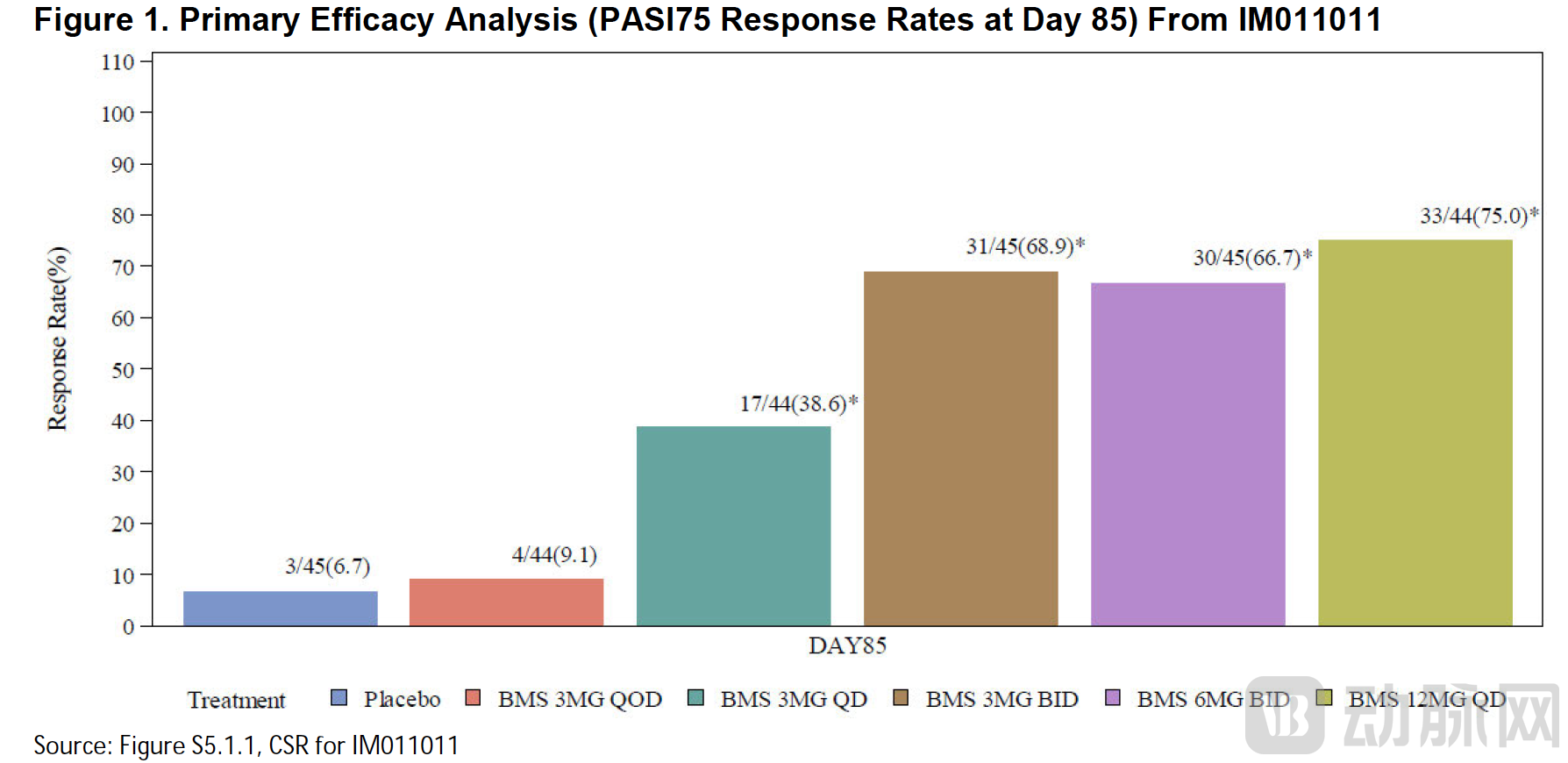
Figure 1. Dose-Response Relationship
Deucravacitinib, as the first TYK2 JH2 inhibitor to be marketed, has achieved a qualitative leap in selectivity compared to the first and second generations, butThere is still room for improvement in its selectivity. The aforementioned safety issues and narrow therapeutic window may be related to Deucravacitinib's insufficient selectivity for JAK1-3, which also provides opportunities for subsequent TKY2 inhibitor developers.
In December 2022, Takeda paid a whopping $4 billion upfront to acquire TAK-279, an investigational TYK2 selective allosteric inhibitor, from Nimbus Therapeutics, with a focus on developing treatments for various severe inflammatory and autoimmune diseases. In the article "Discovery of a Potent and Selective Tyrosine Kinase 2 Inhibitor: TAK-279" published by Silvana Leit et al. in 2023, IC50 value comparison data of two TYK2 inhibitors, TAK-279 and Deucravacitinib, under different experimental methods was presented. The comparison revealed that in the human TYK2 JH2 experiment,TAK-279 Demonstrates Superior Selectivity for the TYK2 JH2 Signaling Pathway. It may be precisely due to this selective differential advantage that prompted Takeda to invest heavily in acquiring this asset.
FZ007-119 Has Ultra-High Selectivity and Is Expected to Become the World's Potential Best JAK Inhibitor
After摆脱黑框警告, the research and development enthusiasm for JAK inhibitors has surged both in China and internationally. Including the drug discovery stage, there are currently 746 TYK2 inhibitors under research globally, of which more than 20 target the TYK2 JH2 allosteric site. However, most drug development is based on the research results published by BMS and the structural modification design of Deucravacitinib, facing the same risk of insufficient selectivity for JAK1-3 as Deucravacitinib.
The differentiation of TYK2 JH2 allosteric inhibitors is mainly reflected in two aspects: one is achieving higher TYK2 JH2 selectivity to further reduce side effects in clinical settings, and the other is having a wider safety window, allowing for the selection of higher therapeutic doses to achieve more efficient target coverage (duration of IC50/IC90), thereby achieving higher clinical efficacy and expanding indications (such as IBD).
FZ007-119 is a TYK2 JH2 inhibitor developed by Fermion's independently developed Drug Studio AI drug discovery platform. It aims to improve safety and develop differentiation by reducing off-target effects and enhancing precise distribution in target tissues, with high target selectivity and tissue targeting as the breakthrough point. The selectivity data of FZ007-119 compared to Deucravacitinib in vitro shows that FZ007-119 has significantly higher selectivity than Deucravacitinib, as detailed in the figure below.
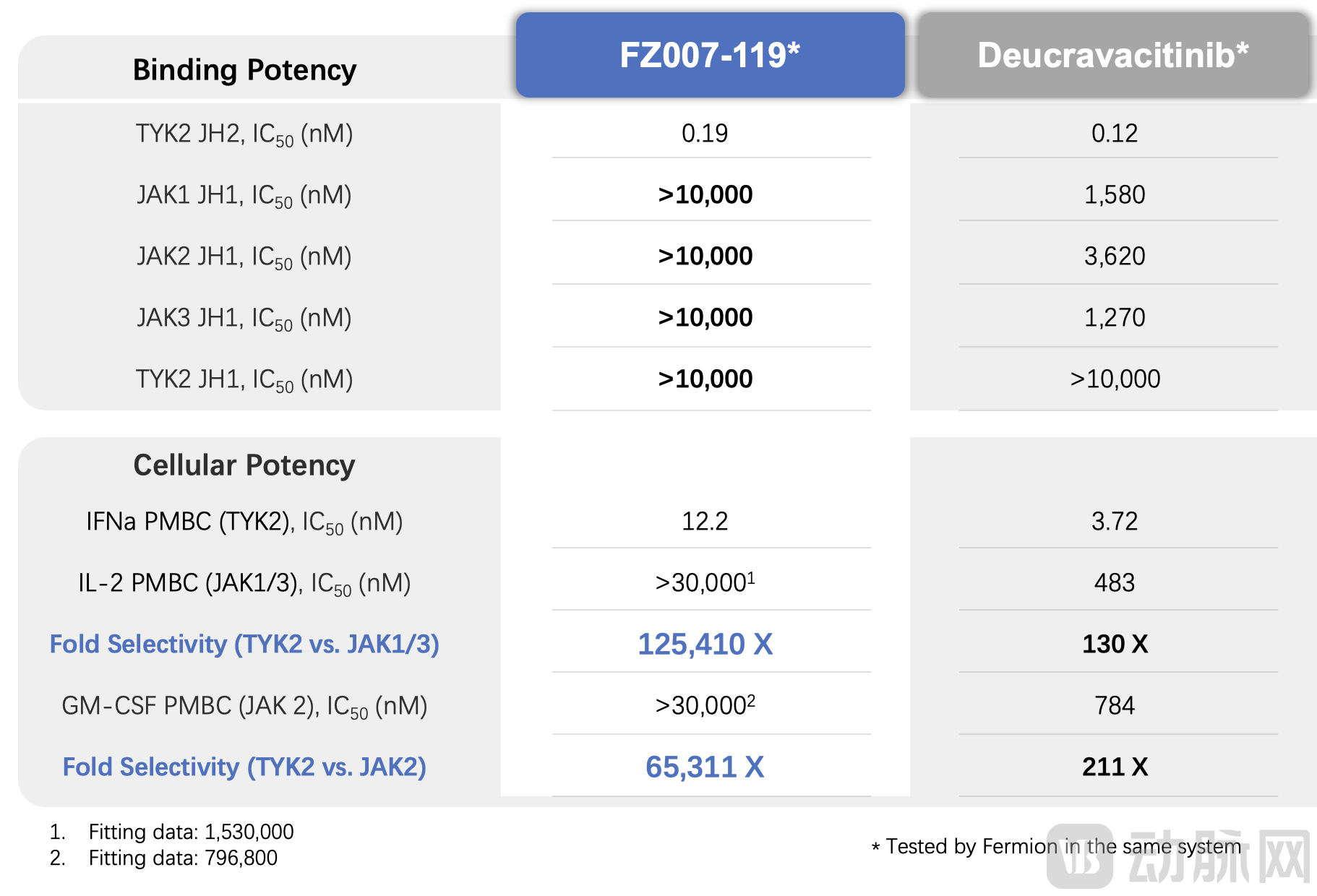 Figure 2. The selectivity of FZ007-119 and Deucravacitinib over JAK1/JAK2/JAK3
Preclinical study results of FZ007-119 show that its high selectivity for JAK1-3 has significant potential to translate into clinical benefits, such as further enhancing clinical efficacy and improving medication safety. The exceptional selectivity gives FZ007-119 the potential to become the best-in-class (BIC).
From the perspective of global top drug sales, autoimmune drugs are the second largest细分领域 after oncology drugs. According to data from Frost & Sullivan, by 2030, the market size of autoimmune drugs in China is expected to reach approximately USD 23 billion. With the rapid advancement of Fermion's potentially best-in-class TYK2 JH2 inhibitor FZ007-119 in subsequent clinical trials, it is well-positioned to compete in the vast autoimmune drug market.