Dr. Liu Riguang's Team at Guangzhou First People's Hospital Demonstrates Efficacy of Scoring Drug-Coated Balloon in Improving AVG Patency

DK Medtech
Vascular Interventional Balloon Product Developer

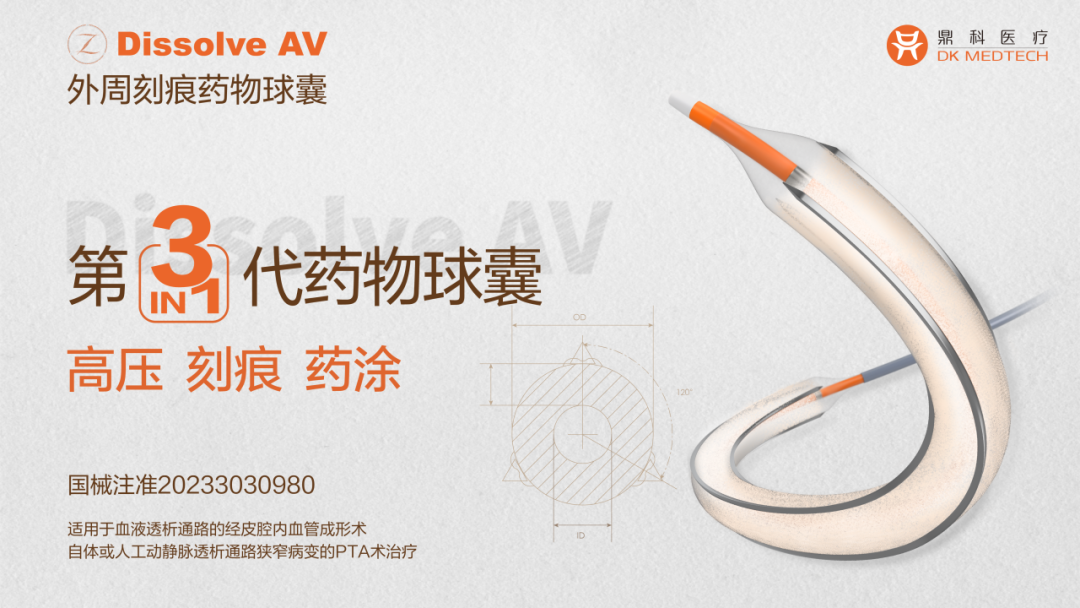
AVGHyperplasia of the venous anastomosis is a leading cause ofAVGThe main cause of stenosis, currently recommended by multiple guidelines PTA As a treatmentAVGThe preferred method for stenosis. Dense fibrosis of the venous stenotic segment or scar hyperplasia at the puncture site makes it difficult to fully dilate some lesions with a balloon of normal pressure, especially for refractory stenosis and longer segmental stenosis, which are the main reasons for surgical failure and low patency rates. The reasons may be related to:PTA The irregular violent tearing of the balloon against the intima and partial neotissue of the media during the process causes damage to the endothelial vessels and is related to the intense proliferation of vascular smooth muscle cells and macrophages. In recent years, there have been continuous international reports on the use of high-pressure balloons, scoring balloons, and drug-coated balloons for dialysis access.PTAExploration of treatments and clinical research, DK Medtech is professionally engaged in the research and development and production of vascular interventional medical products, focusing on balloon innovation and has developedDissolve™ AVScored Drug-Coated Balloon, integrating "high pressure", "scoring", and "drug coating" in one, effectively addresses multiple hotspots and challenges in hemodialysis access stenosis.
DK MedtechSpecially launched[Guangzhou First People's Hospital - Professor Ri Guang Liu: Scored Drug-Coated Balloon Facilitates AVG Patency] Case Presentation, demonstrating the meticulous operation of each case and the clinical application of advanced equipment and instruments. From the formulation of treatment strategies for different cases, standardized intraoperative procedures and technical applications, complication prevention, perioperative management, and other aspects, the aim is to promote the standardization of diagnosis and treatment for hemodialysis access stenosis, strengthen technical exchanges and experience sharing among doctors, with the hope of providing new ideas and methods for the future diagnosis and treatment of hemodialysis access, benefiting more clinical patients.

Scored Drug-Coated Balloons Facilitate Better AVG Patency
Liu Riguang, Guangzhou First People's Hospital

Basic Information NO.1
Basic Information:A 56-year-old female, on hemodialysis for 6 years, with a left upper arm AVG in use for 4 years.
Chief Complaint:Recurrent thrombosis of the left upper arm AVG for more than 2 years, with increased venous pressure 3 days after PTA recanalization (admitted on 2023-6-13).
History of Present Illness:2023-6-5Left upper arm appearsAVGThrombosis, immediately treated with day surgery, inBUrokinase thrombolysis under ultrasound guidance+Balloon dilation recanalizationAVG, Intraoperative findingsAVGThe calcification at the puncture site and the arteriovenous anastomosis is relatively significant.
Past Medical History:History of hypertension7Year, no history of diabetes. History of uremia.7Year, started using peritoneal dialysis,1Peritonitis occurred after the New Year, and hemodialysis was switched to and continued until now. Initially, a long-term dialysis catheter was placed in the right internal jugular vein.2Year, due to poor catheter function at2019Year1Monthly Establishment of the Left Upper ArmAVG. Respectively in2021Year10Month,2023Year3Thrombosis occurred in the month, and urokinase thrombolysis was administered.+Balloon dilation recanalization.
Physical Examination:Left Upper Arm Brachial Artery-Axillary VeinCTypeAVG, puncture site tumor-like expansion, palpable hard mass.AVGStrong pulsation at the puncture site, weak thrill.
Admission Diagnosis:Stenosis of the anastomosis of artificial blood vessels.
History of Vascular Access NO.2
Time | Main Treatment Process |
April 2017 | Long-term Catheter in Right Internal Jugular Vein |
January 2019 | Left Upper Arm Brachial Artery Axillary Vein C-Type AVG |
October 2021 | Thrombosis of the left upper arm AVG, initially treated with urokinase thrombolysis for recanalization, followed by PTA under B-mode ultrasound guidance. |
March 2023 | Thrombosis of the left upper arm AVG, ultrasound-guided urokinase thrombolysis + PTA |
June 5, 2023 | Thrombosis of the left upper arm AVG, ultrasound-guided urokinase thrombolysis + PTA |
June 13, 2023 | Increased Venous Pressure in Left Upper Arm AVG |
Preoperative Analysis NO.3
Preoperative Analysis
Preoperative physical examination and color Doppler ultrasound evaluation suggest elastic recoil of the venous anastomosis leading to stenosis. Based on theoretical knowledge, this is likely due to severe intimal hyperplasia.
Surgical Goal
Main Objectives:Dilate the venous anastomosis to restore normal venous pressure and meet the requirements for dialysis.
Secondary Objective:Prolong AVG service life, fewer complications, fewer interventions.
Surgical Strategy/Plan
Balloon dilation under DSA guidance.
Equipment Preparation
Ponte high-pressure balloon 6*40mm dilation performed eight days ago;
DK Medtech Scored Drug-Coated Balloon 7*60mm.
Surgical Procedure NO.4
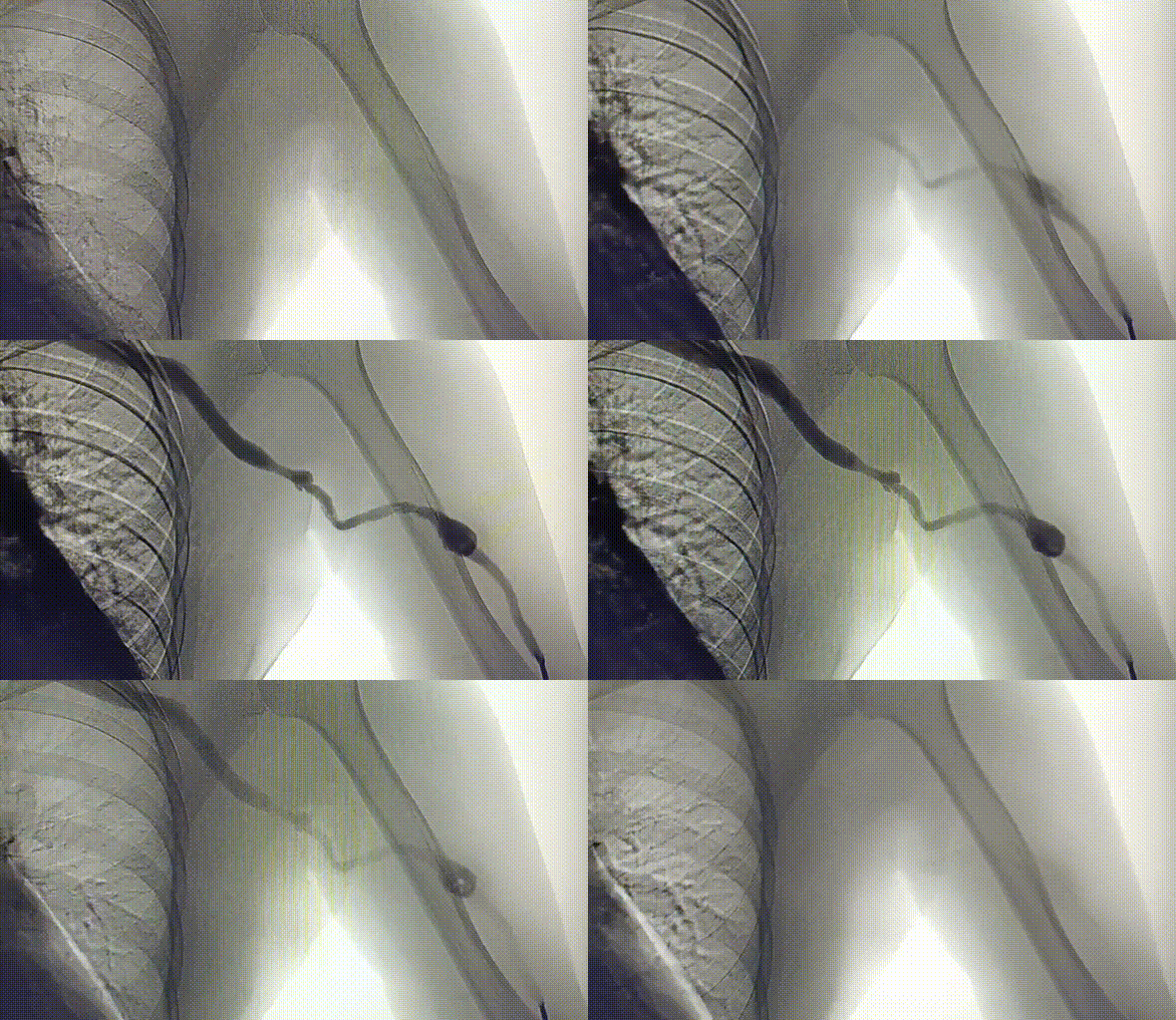
Before expansion.
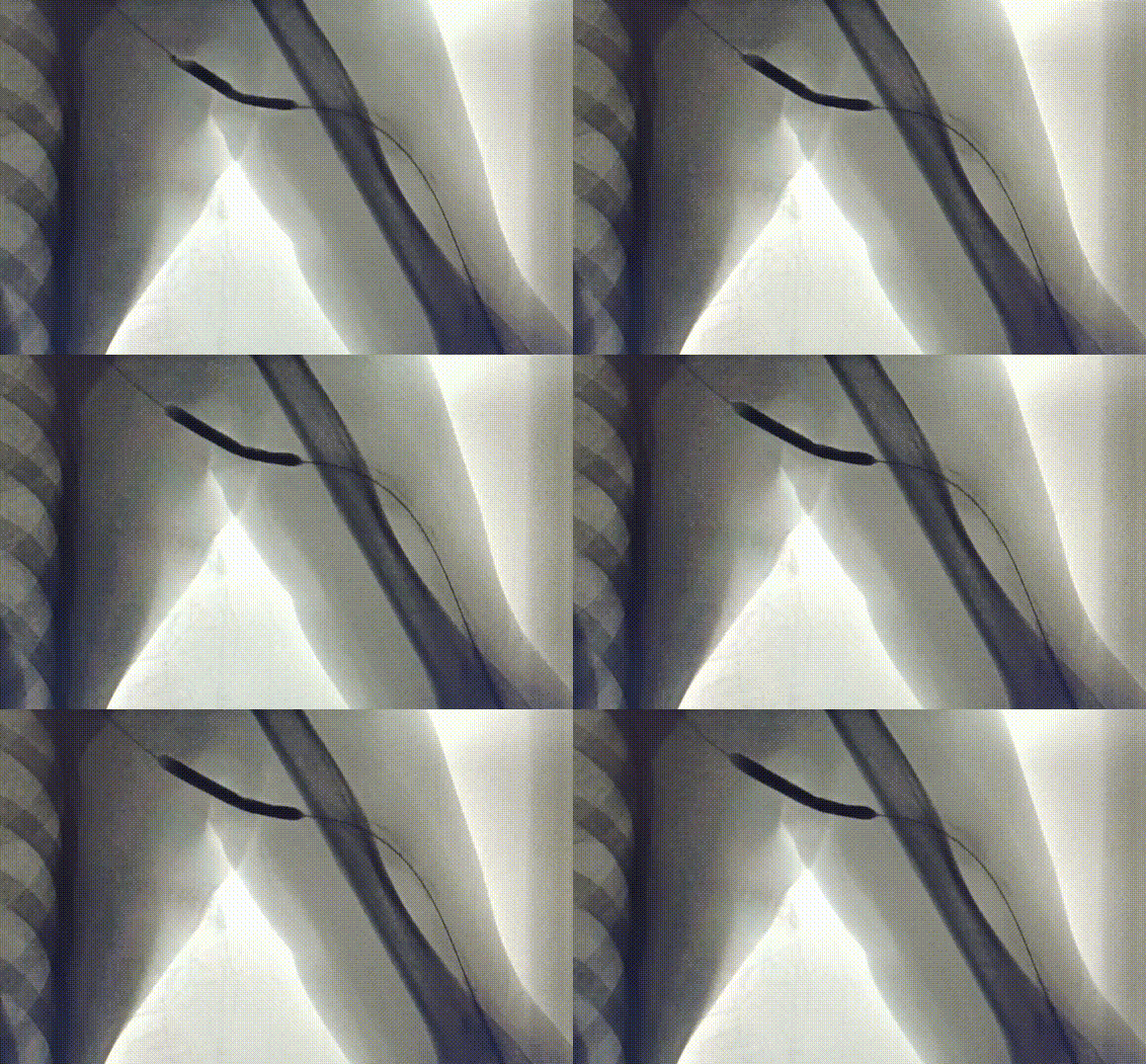
DK Medtech scored drug-coated balloon 7*60mm, slowly pressurized to 20ATM, and maintained expansion for 2min30s.
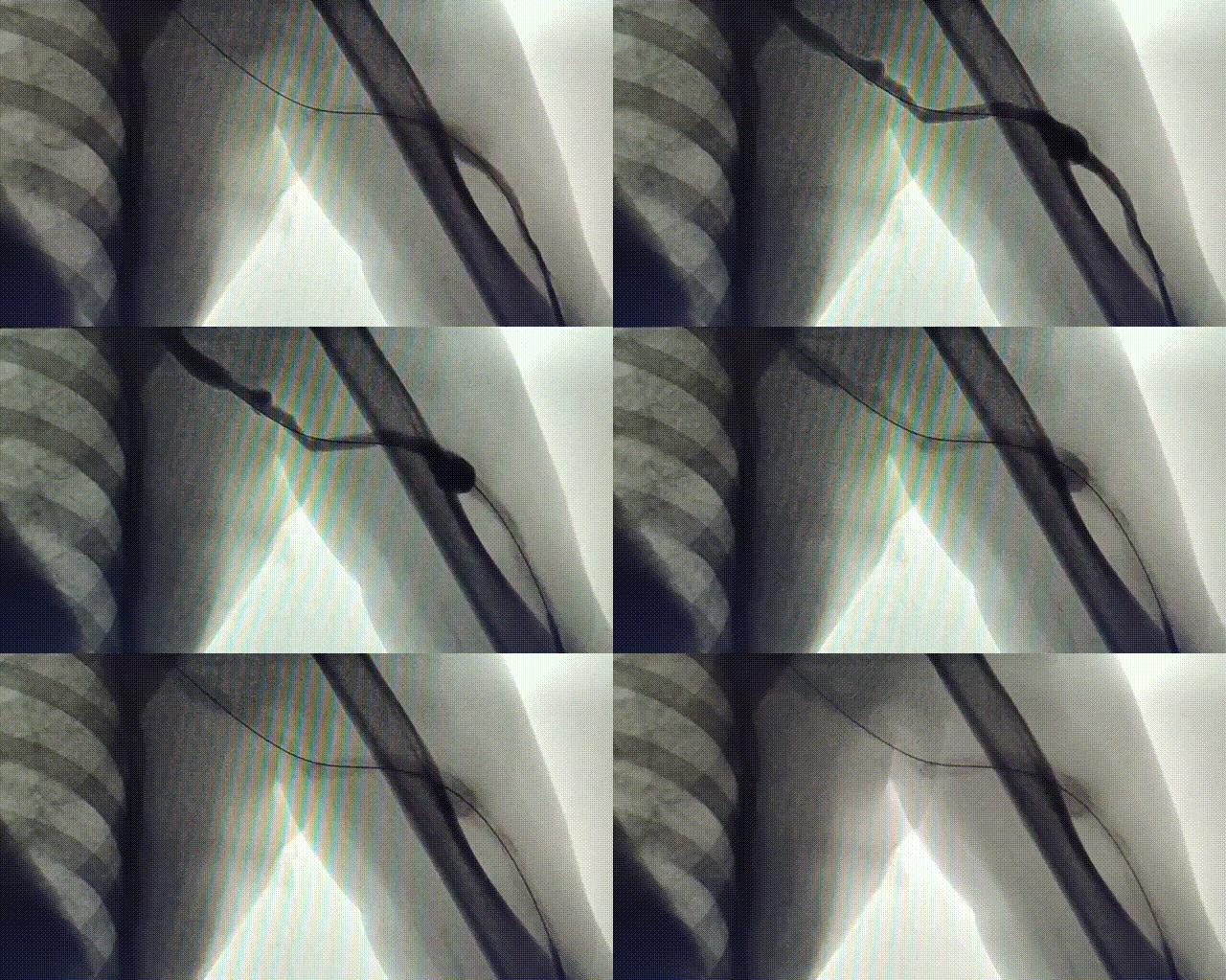
Post-dilation imaging shows: Angiography reveals significant improvement in stenosis, with residual stenosis less than 30%.
Follow-up NO.5
Discharge Status
After balloon dilation, the AVG vascular thrill significantly increased.
The patient was discharged on the same day and returned to the original dialysis institution for dialysis treatment using the AVG. Both blood flow and venous pressure were normal.
Telephone follow-up on January 3, 2024, AVG in use, with normal blood flow and venous pressure.
Case Summary NO.6
Case Characteristics:AVG Venous Anastomotic Stenosis.
Preoperative Assessment Key Points:
The patient has been using AVG for over 4 years, and has repeatedly experienced thrombosis in the past six months, which is considered to be related to AVG calcification and venous anastomotic stenosis.
The nature of venous anastomotic stenosis may be directly related to the efficacy of using drug-coated balloons.
Angiographic evaluation before balloon dilation showed that the calcified segment was mainly limited to the AVG puncture site, and the venous anastomotic stenosis was still dominated by intimal hyperplasia.
Surgical Strategy/Technical Key Points:
The patient underwent balloon dilation 8 days ago with a 6mm diameter balloon; using a larger diameter (1mm larger than the original balloon) may help reduce elastic recoil.
The use of paclitaxel-coated balloons helps to slow the rate of intimal hyperplasia and extend AVG patency.
Device Features/Usage Tips:
Using a scored drug-coated balloon may not require pre-treatment of the vascular lesion segment.
After the balloon is opened, the pressure expansion state should be maintained for 2-3 minutes.
References:DK Medtech's Drug-Coated Balloon Catheter Launches RCT in China.
Effectiveness Evaluation:The original patient experienced AVG thrombosis every 3 months, requiring thrombolysis and balloon dilation treatment. After using the scored drug-coated balloon for dilation treatment this time, it has been more than 7 months and the AVG is functioning well. The scored drug-coated balloon can indeed extend the life of AVG.

Introduction of Experts

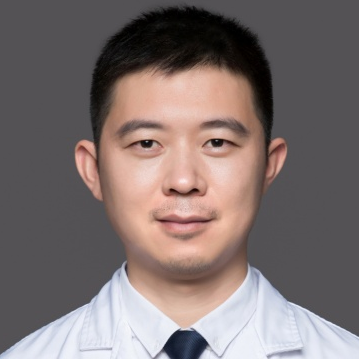
Professor Liu Riguang
Surgeon of This Case
Deputy Director of the Department of Nephrology, Director of the Blood Purification Center, and Director of the Dialysis Access Center at Guangzhou First People's Hospital; Chief Physician; Master’s degree. Graduated from Sun Yat-sen University of Medical Sciences for undergraduate studies and obtained a Master’s degree from the School of Public Health at the University of Hong Kong. Specializes in the intervention and management of advanced chronic kidney disease, is proficient in using various blood purification techniques to treat acute and chronic renal failure, and is particularly skilled in establishing vascular access for dialysis and managing various access-related complications.
Social Appointments: Vice Chairman of the Interventional Nephrology Group of the Guangdong Provincial Medical Association's Blood Purification Branch, Member of the Blood Purification Management Professional Committee of the Guangdong Hospital Management Association, Vice Chairman of the Blood Purification Professional Committee of the Guangdong Integrated Traditional Chinese and Western Medicine Association, Vice Chairman of the Interventional Nephrology Branch of the Guangdong Biomedical Engineering Society, Vice Chairman of the Vascular Access Professional Committee of the Guangdong Grassroots Medical Association, Vice Chairman of the Guangzhou Medical Association's Blood Purification Branch, Standing Committee Member of the Guangzhou Medical Association's Nephrology Branch, Expert and Secretary of the Guangzhou Blood Purification Quality Control Center, etc.

Professor Chen Haoxiong
Surgeon of This Case
Chief Physician of the Department of Nephrology, Guangzhou First People's Hospital, Deputy Director of the Vascular Access Center, Guangzhou First People's Hospital,2003Graduated from the School of Clinical Medicine, Sun Yat-sen University, in [Year].
Vice Chairman of the Interventional Nephrology Professional Committee of the Nephrology Management Branch of the Guangdong Provincial Medical Industry Association; Member of the Youth Committee of the Nephrology and Dialysis Professional Committee of the China Non-Public Medical Institutions Association; Standing Committee Member of the Blood Purification Professional Committee of the Guangdong Provincial Biomedical Engineering Society; Standing Committee Member of the Vascular Access Professional Committee of the Guangdong Provincial Grassroots Medicine Association; Standing Committee Member of the Nephrology Professional Committee of the Guangdong Provincial Health Management Association; [Name of Committee/Organization Not Fully Provided in Chinese]-Member of the First Committee of the Plasma Purification Professional Committee, Member of the Vascular Access Group of the First Committee of the Guangdong Medical Association's Blood Purification Branch, Member and Deputy Head of the Access Group of the Guangzhou Medical Association's Blood Purification Branch, Expert of the Guangzhou Blood Purification Quality Control Center, and one of the Eighth "Good Doctors of Yangcheng".

Department Introduction

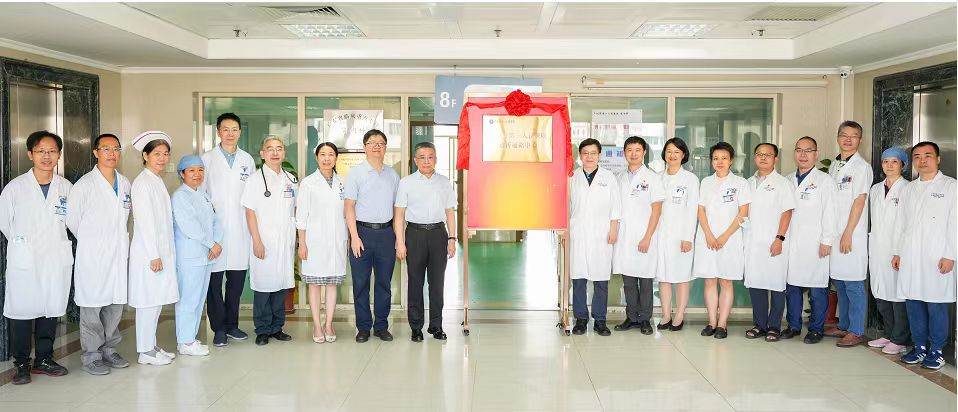
The Dialysis Access Center of Guangzhou First People's Hospital is one of the earliest centers in China to perform vascular access surgeries led by nephrologists. It serves as the deputy组长unit of the Interventional Nephrology Group under the Hemodialysis Branch of the Guangdong Medical Association, and the组长unit of the Dialysis Access Group under the Hemodialysis Branch of the Guangzhou Medical Association. The center is capable of performing a full range of dialysis access surgeries, including autologous arteriovenous fistula formation, arteriovenous graft bypass, establishment and maintenance of long-term catheters, percutaneous transluminal angioplasty for fistula complications, peritoneal dialysis catheter placement, and interventional correction of malpositioned catheters.
Core Work Philosophy: Establish appropriate access for every dialysis patient!
Central Work Phone:13168333911Welcome to call for consultation if needed!
Copyright Statement: This platform aims to help medical and health professionals better understand the latest developments in relevant disease areas. The information published on this platform does not imply agreement with its descriptions or viewpoints, but is merely intended to provide more information. If there are any copyright issues, we kindly request the rights holders to contact us, and we will address them as soon as possible. The information is solely for medical and health professionals to stay informed, and such information cannot replace professional medical guidance in any way, nor should it be regarded as medical advice. If such information is used for purposes other than staying informed, this platform and the author shall not bear any related responsibilities.Contact Email for Cooperation:vascular@edoctor.cn。