

Two domestic orthopedic surgery robots approved simultaneously, Lancet accelerates product adoption in hospitals

Lancet Robot
Orthopedic Surgical Robot Developer
Smart Medical Devices Network News Recently released approval documents from the National Medical Products Administration (NMPA) show that Hangzhou Lancet Robotics Co., Ltd. (hereinafter referred to as Lancet Robotics) has obtained simultaneous approval for two of its orthopedic surgical robots: the Spinal Surgical Navigation and Positioning System and the Knee Joint Replacement Surgical Navigation System. The registration certificate numbers are National Device Approval 20253011814 and National Device Approval 20253011800, respectively.
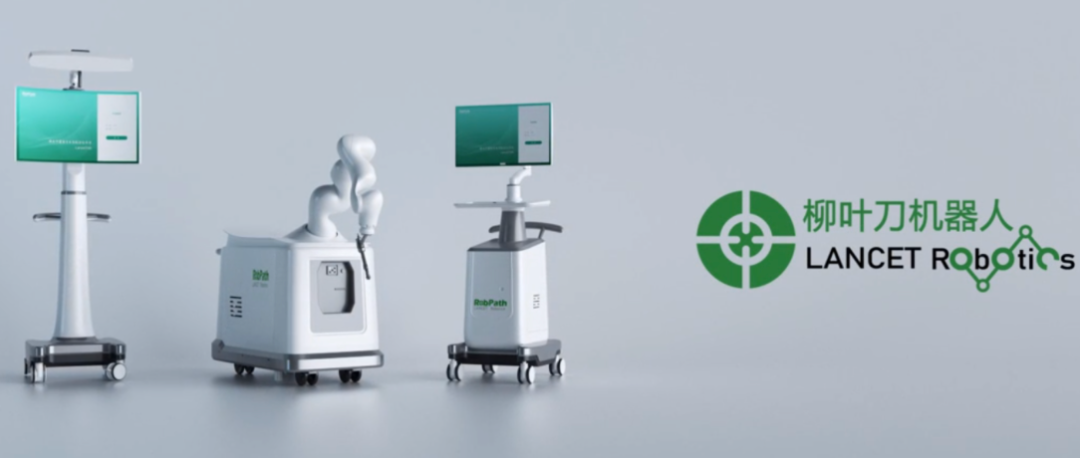
Hangzhou Lancet Robot Co., Ltd.founded in 2018, is a full-process surgical robot solutions provider. Its products now cover multiple key clinical departments and fields, including joint replacement, spinal trauma, dental implantation, neurosurgery, minimally invasive tumor intervention, and vascular intervention. Prior to this approval, the company had already obtained five Class III medical device registration certificates (for its hip-knee integrated joint replacement surgical robot, joint replacement navigation system, dental implant surgical robot, and dental implant navigation system), one U.S. FDA 510(K) clearance, and two Class II medical device registration certificates. In addition, several cross-departmental surgical robot products are steadily advancing through the NMPA and FDA registration processes.
The Two Orthopedic Surgeries Approved This TimeThe robots are allLancet Robot independently developed, from core technologies such as key algorithms and mass production processes to core components.Fully realized100% localized production, from manufacturing cost to end-user price, effectively breaks down the cost barriers of high-end medical equipment, significantly enhancing the surgical technical skills and service capabilities of grassroots medical institutions, making high-quality medical services accessible to a broader patient population.
The technological development of orthopedic surgical robots has undergone an evolution from early mechanical assistance to modern intelligent systems, andAIArtificial Intelligence AlgorithmMaturity andAIThe breakthrough of large models has enabledSurgical robots have made corresponding breakthroughs in image recognition, formulation of treatment plans, determination of treatment structures, navigation path planning, planning of surgical execution plans, and real-time optimization of surgical plan execution.
Lancet RobotInIn key algorithms,The technical difficulties of precise positioning in deep three-dimensional space were tackled as a key research project and successfully resolved. Currently, the product is able to...360° Acquire Patient's Bone Information, Develop Precise Surgical Plans, Empower Traditional Surgery.
Lancet RobotThe core technological advantage of the product lies in the integration of a binocular vision system and a seven degrees-of-freedom robotic arm system. The former ensures sub-millimeter accuracy by capturing the position and orientation information of surgical instruments and reflective spheres at high frequencies during surgery; the latter, with its flexible movement, achieves excellent human-machine collaboration, allowing the positioning error throughout the entire surgical process to reachBelow 1 millimeter, surpassing industry standards.
With the dual advantages of product performance and cost, the products developed by Hangzhou Lancet Robot Co., Ltd. have been widely promoted and used domestically. Besides top-tier tertiary hospitals, the customer base also covers county-level grassroots municipal hospitals and private hospitals. Meanwhile, the company has also expanded its reach by obtaining approval from the United States.FDA Registration Actively Expands Overseas Presence, Starting with Markets in South America, Southeast Asia, South Asia, and Eastern Europe, Securing Over 20 Overseas Orders; Commercial Installation of Surgical Robot Overseas Clinical Centers Ongoing.
The two surgical robot products approved this time, Lancet Robot alsoAchievedThe modular instruments are designed for immediate use after being detached, ensuring a sterile and undisturbed surgical process that aligns with efficient workflows.Can significantly shorten the operation time, making it more conducive for doctors to perform surgeries and for patients to recover.。
Currently, all over China, every year,More than 1 million orthopedic surgeries, and this number is still climbing with the aggravation of population aging.
But the penetration rate of surgical robots in the industry is still far lower than that in developed countries abroad. Lancet Robot Co., Ltd. stated that under the heavy workload, surgical robots can serve as an intelligent tool, acting as the doctor's "third hand" to help more patients achieve faster recovery.
Starting with joint replacement surgical robot products entering the orthopedic field, to now having spinal surgery navigation and positioning equipment as well as knee joint replacement surgery navigation equipment simultaneously approved, Lancet Robot has proven that building a common technology platform for surgical robots is a viable path. The person in charge of Lancet Robot also stated that, based on establishing an integrated innovation platform combining industry, academia, research, and medicine, they are confident in breaking new technical barriers regardless of the type of robot. The company’s goal is to make surgeries smarter with the assistance of robots.
It is reported that Hangzhou Lancet Robot Co., Ltd. is promoting its flagThe components used in the products can be localized, allowing these products to be promoted to more grassroots hospitals.In the future, Lancet will accelerate the registration and listing of multiple localized surgical robots worldwide, further expanding the globalization layout of domestically produced surgical robots.