

QL1706 (anti-PD-1 IgG4/CTLA-4 antibody) plus chemotherapy with or without bevacizumab demonstrates promising efficacy and manageable safety in advanced non-small cell lung cancer: a phase II study

Qilu Pharmaceutical
Specialty Formulations and Active Pharmaceutical Ingredients (API) Developer
FrontlinePD-1/PD-L1AndCTLA-4Inhibitors have become a driving force in negative metastatic non-small cell lung cancer (NSCLC) as the mainstay of treatment. Several large-scaleIIIThe phase trial showed that, compared with standard care chemotherapy, using alonePD-1Inhibitors or Combination UseCTLA-4Inhibitors offer survival benefits. InKEYNOTE-189And407In the trial, first-linepembrolizumabAdding chemotherapy extends patients' survival compared to placebo. Additionally,CheckMate-9LAThe trial also demonstrated that dual immunotherapy plus chemotherapy had a longer overall survival compared to chemotherapy alone (OS) Advantages (14.1Months for10.7months). Based on2Years of PersistenceOSBenefits,nivolumab,ipilimumabAnd the chemotherapy regimen was first approved for advanced stagesNSCLCThe dual immunotherapy regimen. Despite its impressive survival benefits, more than50%The patients in1Disease progression still occurs within the year, recently50%Patients experience serious adverse reactions.
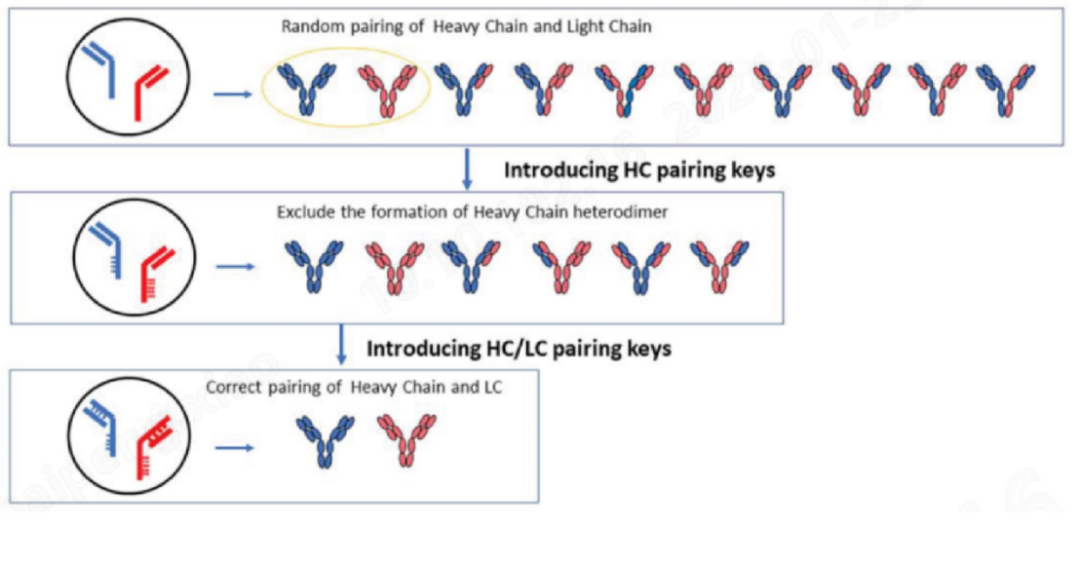
QL1706 is an antibody drug developed based on Qilu Pharmaceutical's self-developed MabPair antibody platform, which simultaneously targets PD-1 and CTLA-4. It is different from previous bispecific antibodies. MabPair enables the production of two completely distinct monoclonal antibodies within the same mammalian cell.This platform mainly utilizes the principle of repulsion between like charges. By modifying the charges, it prevents the mispairing of the heavy and light chains of two antibodies, thereby enabling the expression of two different monoclonal antibodies in the same host cell. QL1706 demonstrated activity against advanced NSCLC in a Phase I study in solid tumors. Therefore, it is necessary to evaluate QL1706 in combination with chemotherapy (with or without bevacizumab) for the treatment of EGFR wild-type and mutant advanced NSCLC.
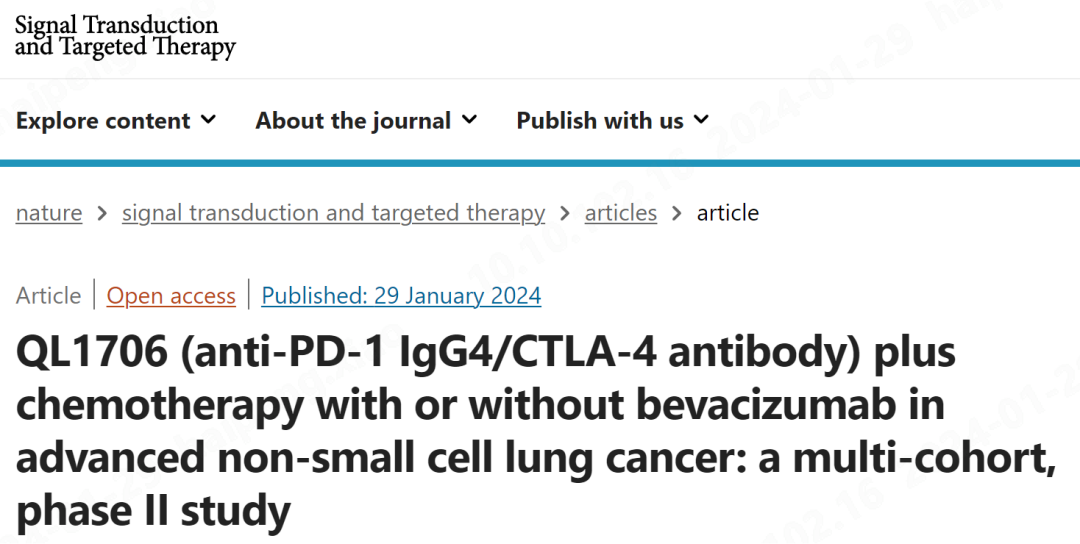
Recently, researchers from Qilu Pharmaceutical Co., Ltd. and the Sun Yat-sen University Cancer Center published a research paper titled "QL1706 (anti-PD-1 IgG4/CTLA-4 antibody) plus chemotherapy with or without bevacizumab in advanced non-small cell lung cancer: a multi-cohort, phase II study" in the Nature sub-journal Signal Transduction and Targeted Therapy.Based on the current evidence, a trial (NCT05329025) is designed to explore whether the dual immunotherapy of PD-1/CTLA-4 bispecific antibody QL1706 plus bevacizumab chemotherapy (2 or 4 cycles) and maintenance therapy can provide durable responses and survival benefits.
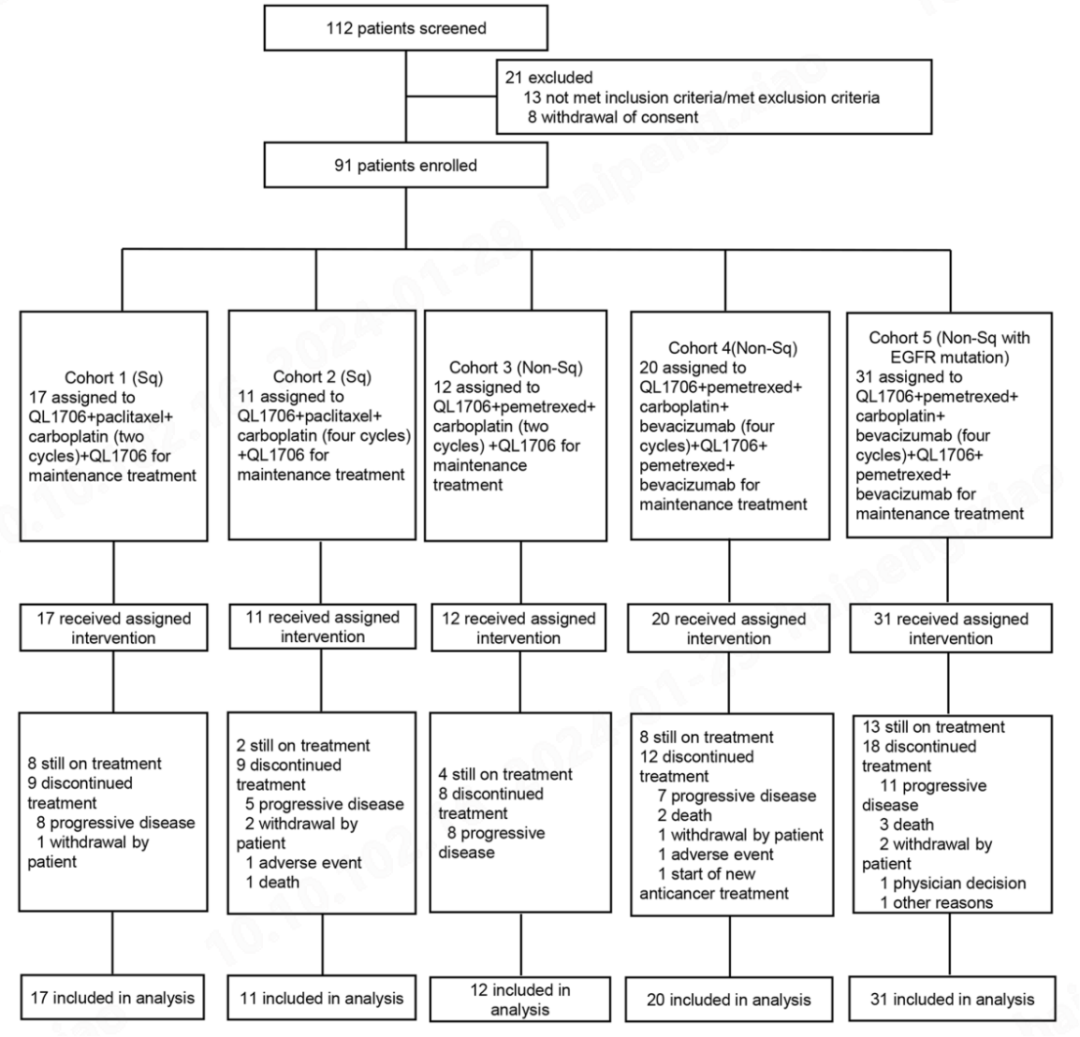
An open-label, multi-cohort phase II study (NCT05329025) was conducted to investigate the safety and efficacy of QL1706 (a single bifunctional MabPair product targeting PD-1 and CTLA-4) and chemotherapy with or without bevacizumab in this population. Patients were divided into five different cohorts based on genotype (Cohorts 1-4, EGFR wild-type; Cohort 5, EGFR-mutant and EGFR tyrosine kinase inhibitor [TKIs] progression type). Between June 11, 2021, and December 29, 2021, a total of 91 patients were enrolled.
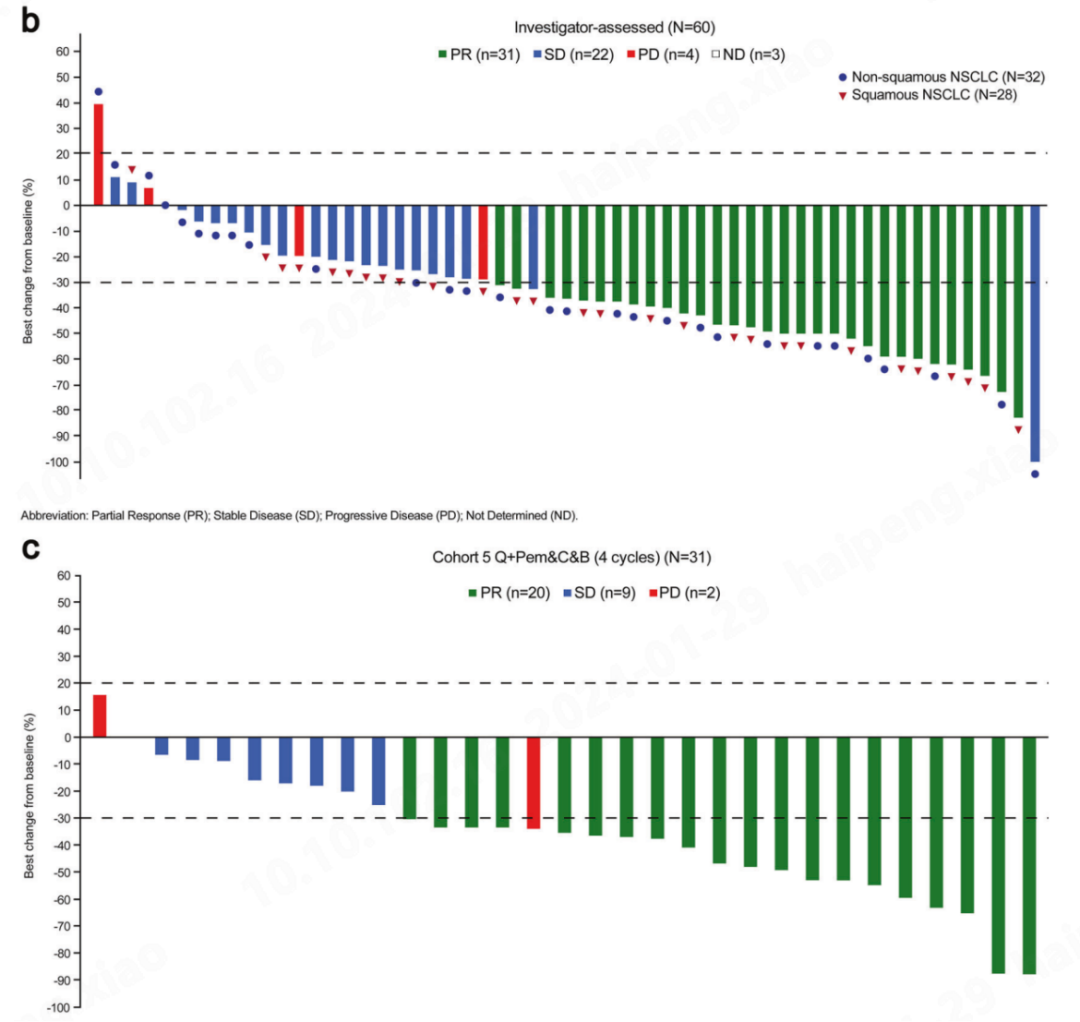
The most commonTreatment-related adverse events (TRAEs) included decreased appetite (60 [65.9%]), anemia (60 [65.2%]), infusion-related reactions (48 [52.7%]), and pruritus (44 [48.4%]); ≥ 30 patients (33.0%) experienced three TRAEs. Among wild-type EGFR patients, 27 (45%) achieved PR (ORR = 45%), with a median progression-free survival (mPFS) of 6.8 months (95% CI: 5.2–9.7).Among 31 patients with mutated EGFR, 17 (54.8%) achieved PR (ORR = 54.8%), with mPFS of 8.5 months (95% CI: 5.72, not evaluable).
Overall, QL1706 plus chemotherapy is tolerable and exhibits promising antitumor activity in the first-line setting for EGFR wild-type advanced NSCLC, with or without bevacizumab. Additionally, QL1706 plus chemotherapy and bevacizumab shows favorable antitumor activity in patients with EGFR-mutant NSCLC who have failed prior treatment, demonstrating potential for treating this population.
Thinking
This Phase II study demonstrated that, regardless of the histological type, first-line QL1706 plus bevacizumab or chemotherapy with or without bevacizumab showed encouraging activity in advanced NSCLC. Encouraging and durable responses were reported, with an ORR of 45% and mDOR not reached (NR). The ORR and mPFS in EGFR wild-type patients were comparable to the dual immunotherapy (nivolumab and ipilimumab) and chemotherapy outcomes reported in the CheckMate-9LA study.Moreover, in the non-squamous NSCLC population, mPFS slightly favored the QL1706 plus four-cycle bevacizumab chemotherapy regimen, supporting its further investigation in a Phase III study.
In summary, QL1706 plus chemotherapy (with or without bevacizumab) demonstrated manageable safety in advanced NSCLC and showed encouraging activity as a first-line treatment for EGFR wild-type NSCLC. Additionally, QL1706 combined with chemotherapy and bevacizumab was effective in previously EGFR TKI-treated patients with EGFR mutations, showing potential for treating this patient population.
Reference:Huang, Y., Yang, Y., Zhao, Y.et al. QL1706 (anti-PD-1 IgG4/CTLA-4 antibody) plus chemotherapy with or without bevacizumab in advanced non-small cell lung cancer: a multi-cohort, phase II study. Sig Transduct Target Ther 9, 23 (2024). https://doi.org/10.1038/s41392-023-01731-x