China's First-Ever Implantable Ocular Muscle Neurostimulator i-NYS Enters Innovation Review Pathway and Files for IPO
Super Vision
Ophthalmic Disease Treatment Product Developer

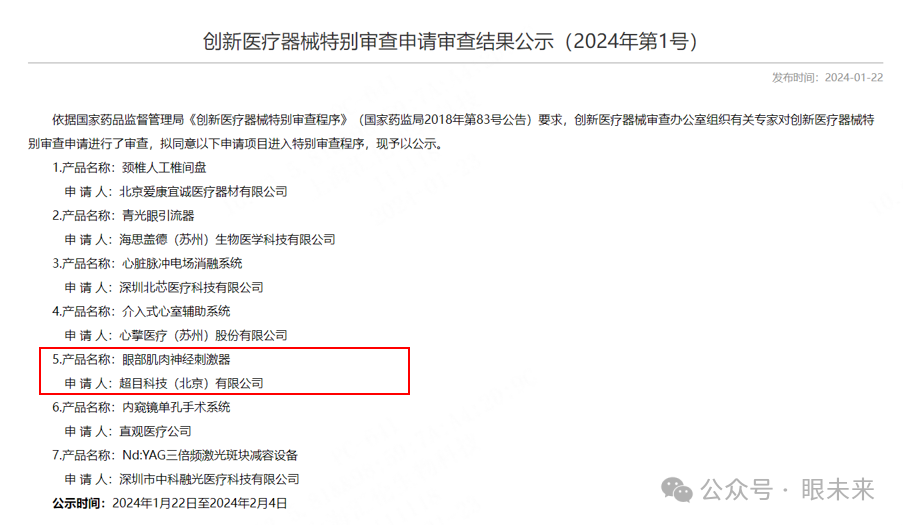
Recently, the National Medical Products Administration released the "Review Results of Special Review Applications for Innovative Medical Devices (No. 1, 2024)". A total of seven devices are proposed to enter the special review process for innovative devices, including Super Vision's Ocular Muscle and Nerve Stimulator (i-NYS). The i-NYS is an innovative product with independent intellectual property rights developed over 19 years by Professor Wang Lejin’s team from Peking University People's Hospital. It is the world's first new technology specifically designed to treat congenital nystagmus.
Professor Wang Lejin's Super Vision Technology, Inc. has developed a clinical medical technology for product transformation, creating the i-NYS implantable ocular muscle neurostimulator that controls congenital nystagmus through neuromodulation technology. This is the world's first and only Class III active implantable medical device for treating congenital nystagmus, offering hope to completely solve the treatment challenges of nystagmus.
As of October 26, 2023, the safety and efficacy clinical trial for i-NYS conducted in China for the treatment of congenital nystagmus has completed the enrollment of all subjects.
Congenital Nystagmus (CN), known as an "incurable disease" in the field of ophthalmology, is characterized by involuntary eye oscillations or jerks caused by abnormal neural discharges in the brain. It is often triggered by genetic mutations, with symptoms appearing between 3 to 6 months of age and persisting throughout life. The incidence rate of nystagmus in newborns is one in a thousand, and 85% of patients suffer from amblyopia, which affects their quality of life. Severe cases can prevent normal learning and working, significantly restricting daily life and imposing a heavy burden on families and society.
Currently, there are approximately 1.3 million patients with nystagmus in China, with about 20,000 new cases each year; globally, there are about 7 million patients, with 100,000 new cases annually. Current treatment methods are still primarily surgical, supplemented by non-surgical treatments, focusing on alleviating nystagmus and correcting head position. However, these methods only provide symptomatic relief and cannot offer a cure. An ocular muscle nerve stimulator can control nystagmus by stimulating the patient, offering more stable results compared to traditional surgery, with favorable long-term outcomes.
In 2004, Professor Wang Lejin proposed combining Functional Electrical Stimulation (FES) technology with extraocular muscles, based on the experimental results of Liberson's FES technology, to create a product capable of eliminating nystagmus and improving vision.
Since then, the project has been persisting in experimentation. Around 2008, expert论证 began, and in 2012, the project started to develop equipment. In 2014, the project received the National Major Instrument Project from the National Natural Science Foundation of China. In 2015, it was awarded 7.1 million yuan in support from the National Natural Science Foundation's Major Instrument Project. In the same year, the project conducted microelectrode stimulation experiments on the eye muscles of clinical patients. The experimental results showed that the叠加 of microcurrent and abnormal nerve discharges neutralized each other, suppressing abnormal nerve impulses with significant effects.
Professor Wang Lejin introduced that this intelligent nystagmus neuromuscular electrical stimulator product is expected to fill the gap in the field of nystagmus treatment. The market space in China is expected to reach 20-40 billion yuan, while the global market size will exceed 10 billion.
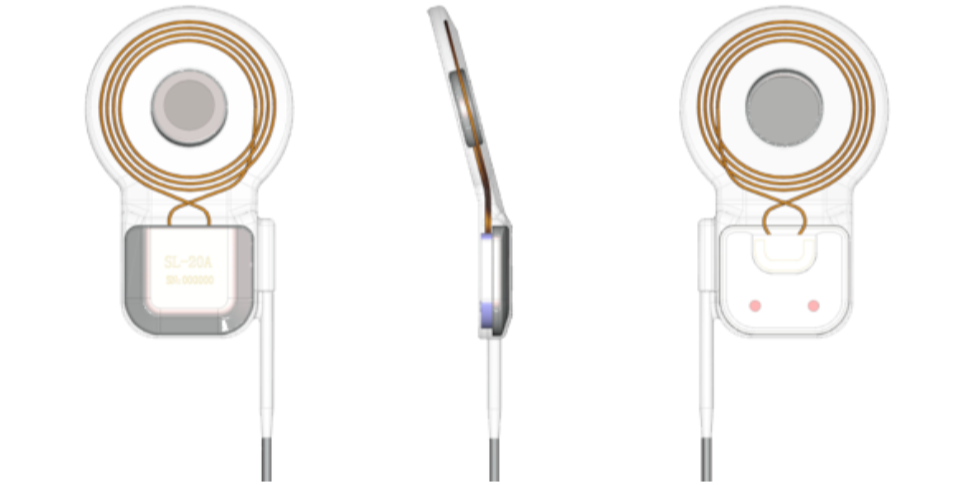
▲ Image source: Company's official website
The implantable ocular muscle neurostimulator (i-NYS) is the world's first implantable neuromodulation device for the treatment of congenital nystagmus. The i-NYS implant and its unique electrode suppress abnormal nerve impulses associated with congenital nystagmus by delivering microcurrent stimulation to the ocular muscles, thereby achieving the goal of inhibiting nystagmus. The i-NYS has obtained multiple patents both in China and internationally, completed 70 human clinical implants, and demonstrated positive therapeutic effects in the treatment of nystagmus.
Wang Wensi, Chief Scientist of Super Vision and professor at the Faculty of Information Technology of Beijing University of Technology, explained: "This implantable ocular muscle neurostimulator is a product similar to cochlear implants or cardiac pacemakers. It has highly reliable encapsulation with wireless power supply, transmitting energy wirelessly. It includes a chip system designed for controlled neural stimulation within the body. Through bidirectional, repeated, and high-frequency neural stimulation, it suppresses abnormal nerve impulses such as nystagmus and other issues related to the ocular muscle nervous system."
Proven by 8 clinical cases, i-NYS can reduce tremor frequency and amplitude by more than 50%, increase gaze time by 3 times, and improve vision from below 0.3 to above 0.5. This is the world's first true control of nystagmus symptoms and a significant medical breakthrough.
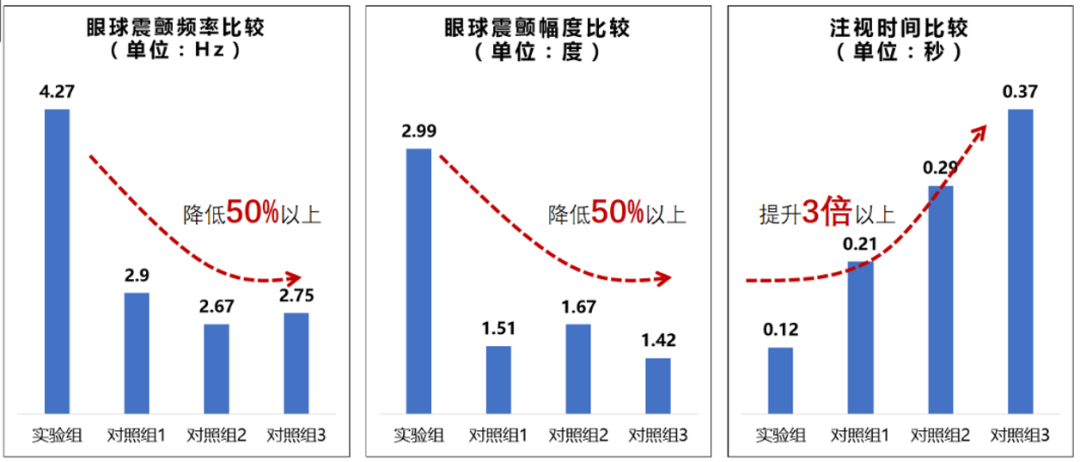
▲Image source: Company's official website
Super Vision Technology, Inc. (referred to as "Super Vision"), established in 2018, is a startup company specializing in innovative diagnostic and therapeutic technologies in the ophthalmology field. It was co-founded by ophthalmology experts from Peking University People's Hospital and professors from Beijing University of Technology. Super Vision has developed a rich pipeline of products in research and pre-research stages, including implantable ocular muscle neurostimulators, myopia treatment devices, implantable glaucoma micro-drainage devices, implantable adjustable intraocular lenses, and strabismus diagnosis and treatment integrated machines. Among these, the implantable ocular muscle neurostimulator is the world’s first and currently the only product capable of curing congenital nystagmus.
Super Vision's Congenital Nystagmus (CN) Neuromodulation System and Therapy represent a groundbreaking treatment approach for nystagmus, bringing revolutionary changes to CN treatment; Corneal/Scleral Cross-Linking Technology explores possibilities in corneal refractive correction and scleral reinforcement surgery. Additionally, the strabismus diagnosis and surgical planning system enhances the accuracy of strabismus diagnosis while optimizing the design of strabismus surgery.
Since Super Vision Technology, Inc. settled in the Zhongguan Village Dongsheng International Science Park in 2020, the company has developed rapidly and has raised over 100 million yuan in cumulative financing to date. In 2020, the prototype of Super Vision's implantable ocular muscle neurostimulator was unveiled, representing that Chinese companies have mastered key core technologies in the field of Class III active implantable medical devices, breaking the international technology monopoly. In 2021, a GMP facility was established, allowing the company to independently register products and commence production. In 2022, Super Vision initiated type testing; in early 2023, pre-clinical screening and surgical preparations began, with the world's first implant surgery on a trial participant successfully completed by Professor Tao Yong from Beijing Chaoyang Hospital.
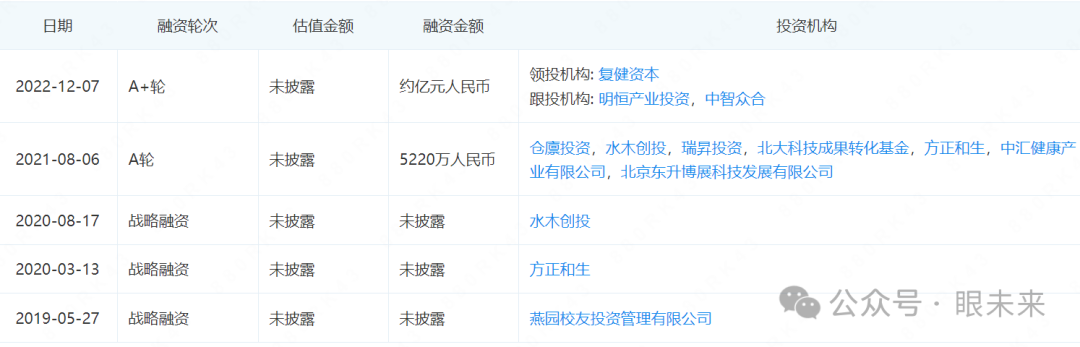
As of the publication date, the company has completed five rounds of financing, with the most recent being a nearly RMB100-million Series A+ round in December 2022. This round was led by Fosun Health Capital's Xing Future Venture Capital Fund, with participation from Ming Heng Industry Investment and Zhongzhi Zhonghe. The proceeds will be used for clinical trials of the world’s first eye tremor electrical modulation product and the development of a new generation of implantable medical chips, while also accelerating the advancement of new products for myopia correction.
The company's financing history is as follows:
▲ Source of the article:Eye Future
▲ Please indicate the source above when reprinting.



PAST/ISSUE/REVIEW
6 Billion, Another Major Move by Haier in the Medical Field
Hiring, Promotion, Dismissal, Resignation - The Most Important Personnel Changes in the Medical Device Field in 2023
Major Breakthrough! New Progress for China-produced World's Highest Frequency Intravascular Ultrasound System