

Idecabtagene Autoleucel (CT103A) Demonstrates Promising Safety and Durable Efficacy in Refractory Immune-Mediated Necrotizing Myopathy: A Case Report from Investigator-Initiated Trial

IASO Biotechnology
Cancer Treatment New Drug Developer
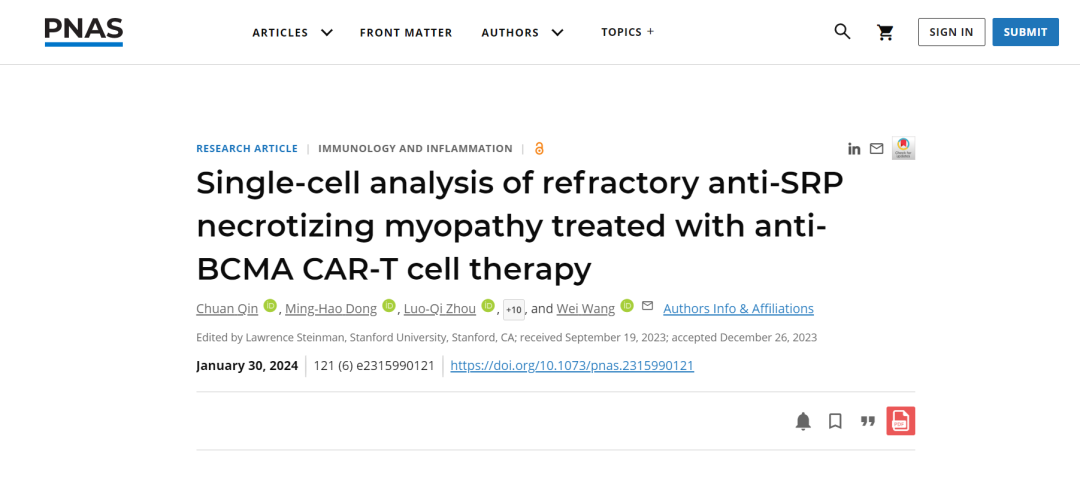
Nanjing IASO Biotherapeutics Co., Ltd. released the research results of fully human BCMA-targeted chimeric antigen receptor autologous T (BCMA CAR-T) cell injection (Idecabtagene vicleucel injection, R&D code CT103A) for the treatment of Immune-Mediated Necrotizing Myopathy (IMNM). The study preliminarily demonstrated the good tolerability and safety of BCMA CAR-T therapy in IMNM, a durable pathogenic antibody clearance effect, and potential long-lasting clinical efficacy, providing a new therapeutic approach for antibody-mediated autoimmune diseases.
Immune-Mediated Necrotizing Myopathy (IMNM) is an autoimmune-mediated skeletal muscle disease, classified as an idiopathic inflammatory disease. Human anti-signal recognition particle (SRP) antibodies are specific autoantibodies associated with IMNM. SRP antibody-mediated IMNM mainly presents with symmetrical weakness of proximal limb muscles, prominent dysphagia, and significantly elevated serum creatine kinase levels. It is characterized by acute onset, severe condition, and rapid progression, with poor responsiveness to conventional drug treatments and a high recurrence rate.
An Investigator-Initiated, Open-Label Study to Evaluate the Safety and Efficacy of Infusing Ixcellen Injection in the Treatment of Relapsed/Refractory Antibody-Mediated Idiopathic Inflammatory Neurological Diseases (NCT04561557).
The study enrolled a 25-year-old male subject with refractory IMNM who was SRP antibody positive. The patient had a 7-year history of the disease and had previously received various treatments, including corticosteroids, calcineurin inhibitors, folate antagonists, CD20 monoclonal antibodies, interleukin-6 (IL-6) receptor antagonists, inosine monophosphate dehydrogenase (IMPDH) inhibitors, alkylating agents, plasmapheresis, intravenous immunoglobulin, and mesenchymal stem cell infusion, but still experienced multiple relapses and ongoing damage. Prior to enrollment, despite being on a combination therapy of corticosteroids, interleukin-6 (IL-6) receptor antagonists, folate antagonists, and intravenous immunoglobulin, the patient remained bedridden due to paralysis, unable to raise his arms above his head, with a serum creatine kinase level of 4806 IU/L (reference value ≤190 U/L).
In terms of safety, the subject experienced Grade 1 Cytokine Release Syndrome (CRS) and did not develop Immune Effector Cell-Associated Neurotoxicity Syndrome (ICANS), while experiencing transient cytopenia. Compared to the safety profile in the multiple myeloma indication study, no new safety risks were identified.
In terms of efficacy, during the 18-month follow-up after the infusion of Icarus Bio's Icicarlon injection, patients' clinical symptoms and imaging characteristics continued to improve. Three months after the infusion, the muscle strength in the patients' limbs significantly improved, with no restrictions on lifting their arms, and they regained the ability to walk. The Manual Muscle Testing-8 (MMT-8) score improved from a baseline of 96 to 137 at the last visit (18 months post-infusion). Serum creatine kinase levels decreased from 4778 IU/L before infusion to 260 IU/L at the last visit, and myoglobin levels dropped from 837 ng/mL before infusion to 66.2 ng/mL at the last visit. Significant improvements were also observed in other quality-of-life assessments. No other immunomodulatory treatments were combined during the follow-up period.
After infusion of Icaroten-cel Injection, CAR-T cells expanded well in the subjects. Serum SRP antibody levels rapidly decreased and remained consistently at very low levels. (Source: Nanjing IASO Biotherapeutics Co., Ltd.)