Advancing High-Quality Ophthalmology Development and Enhancing Public Eye Health: New Prospectus Filed

Roche
Oncology Drug Research, Development, and Manufacturing
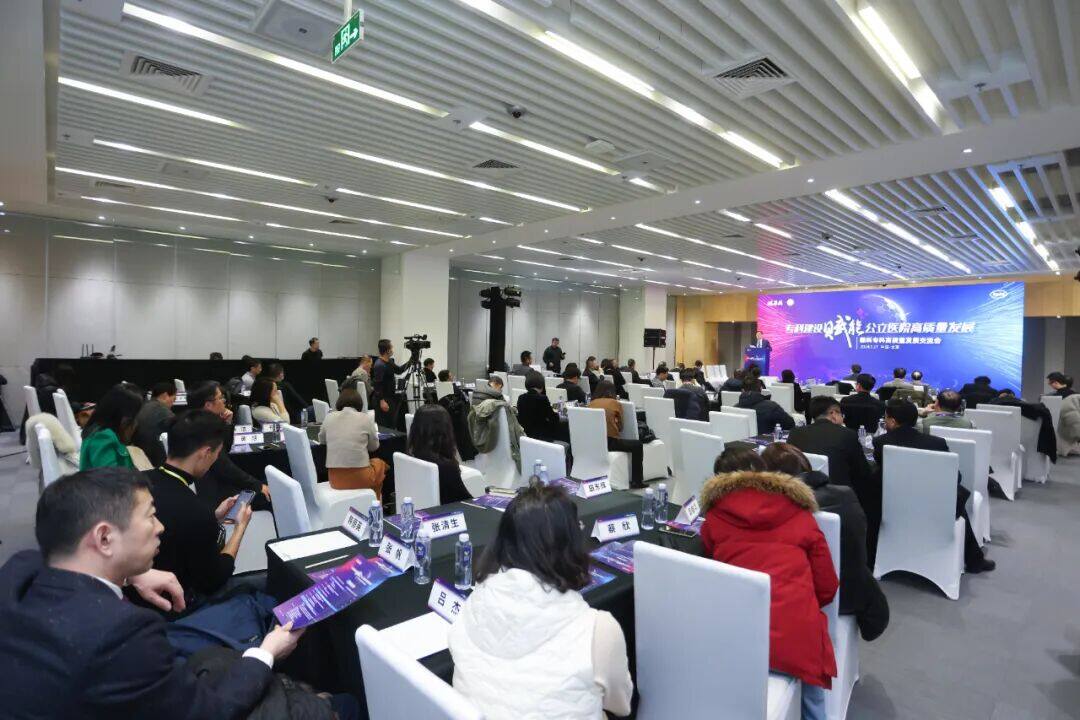
The "14th Five-Year Plan" for National Eye Health in China (2021-2025) proposes to "support the construction of key ophthalmology clinical specialties at the national, provincial, and municipal (county) levels, improve the related ophthalmology subspecialty systems, and further enhance the service capabilities of ophthalmology clinical specialties," providing direction for the high-quality development of ophthalmology.Recently, the "Specialty Construction Empowering High-Quality Development of Public Hospitals — Ophthalmology Specialty High-Quality Development Symposium," hosted by the Health News and supported by Roche Pharmaceuticals, was held in Beijing.The meeting conducted an in-depth discussion on the current state of industry development and pressing issues, while also launching the "Ophthalmology High-Quality Development Enhancement Initiative".Qu Jia, Director of the State Key Laboratory of Ophthalmic Optics and Visual Sciences and General President of Wenzhou Medical University Eye Hospital Group, presided over the meeting.
Xu Xun, Director of the National Clinical Research Center for Ocular Diseases, delivered the opening speech at the conference.He proposed that ophthalmic medical practitioners shoulder the significant mission of promoting high-quality development in ophthalmology. Early detection, early diagnosis, and early treatment of eye diseases are crucial. It is necessary to further enhance public awareness and attention, improve the screening capabilities of grassroots healthcare institutions, consolidate and enhance the diagnostic and treatment abilities of ophthalmology specialists, while focusing on improving clinical treatment protocols and introducing innovative drugs and devices, thereby reducing the incidence of eye diseases and improving residents' eye health levels.
Reshape Management Philosophy and Processes
The first session of the conference, themed "Reshaping Management Philosophy and Processes," was comprehensively discussed.。
Sun Xiaodong, Vice President of Shanghai First People's HospitalIntroduction: Currently, the diagnosis and treatment of eye diseases are in a significant transitional period. It is necessary to accelerate the transformation from "disease-centered" to "health-centered," while emphasizing both clinical treatment and clinical innovation. Taking the opportunity to build the National Clinical Research Center for Ocular Diseases, Shanghai First People's Hospital focuses on the requirements of China’s national medical strategy and the actual needs of patients. With patients at the core, services as the content, management as the key approach, and informatization as the support, the hospital promotes the digitalization, standardization, and networking of eye disease diagnosis and treatment. It aims to create a digital ophthalmology ecosystem with demonstrative and leading roles. The hospital breaks through physical boundaries, re-engineers processes, and provides a convenient medical environment. It promotes an innovative model integrating online and offline services, striving to ensure patients “make one less trip.” Furthermore, it extends services from in-hospital treatment to out-of-hospital management, establishing a new "visual health" management model covering the entire cycle, including prevention, rehabilitation care, health management, and healthy living.
Li Xiaorong, Dean of Tianjin Medical University Eye HospitalIntroduction: High-quality development in ophthalmology must focus on the whole-course management of eye diseases, with key efforts in early screening, optimal treatment, and chronic disease management. In terms of early screening, a research model based on big data of eye disease patients should be established, standardized screening procedures should be formulated, definitions of high-risk groups should be explored, and quantifiable evaluation indicators should be set. Regarding optimal treatment, the current difficulty in eliminating retinal fluid should be reversed to achieve lasting and stable regression of fluid; the dilemma of monthly intravitreal injections should be overcome to enable long-term treatment; better vision improvement should be achieved to enhance patient satisfaction. For chronic disease management, management models should be improved by promoting information technology empowerment, actively disseminating disease knowledge, addressing patient concerns, and providing convenient follow-up services to improve patient compliance and treatment outcomes.
Jia QuIntroduction: In the performance assessment of national tertiary public hospitals, the Eye Hospital of Wenzhou Medical University ranked first in ophthalmology nationwide for three consecutive years (2020–2022), showing significant improvements in the four dimensions of medical quality, operational efficiency, sustainable development, and satisfaction evaluation. Such achievements are attributed to the hospital's establishment of a high-level ophthalmic medical quality management and evaluation system. Guided by this system, the hospital has continuously deepened its quality connotation construction, created a new model of integrated ophthalmology and optometry diagnosis and treatment, and built an entire innovation chain from "clinical problems–original innovation–clinical evaluation–achievement transformation," promoting the resolution of a series of clinical issues under the new visual quality standards.
Zhang Mingzhi, Dean of the Fifth Clinical College of Shantou University Medical College and Executive Vice Dean of the Joint Shantou International Eye Center of Shantou University & The Chinese University of Hong Kong, presided over the discussion section of this session.
Hu Bo, Party Secretary of the Affiliated Eye Hospital of Nanchang UniversityIt was pointed out that the uneven distribution of medical resources has long existed, and ophthalmology is no exception. To break this imbalance, specialized alliances, internet hospitals, and telemedicine can be utilized to further promote the下沉 of high-quality medical resources, allowing more appropriate technologies to be extended to grassroots healthcare institutions, thereby improving the level of eye disease treatment in economically underdeveloped areas and remote rural regions.
Lü Furong, Former Deputy Dean of the First Affiliated Hospital of Chongqing Medical UniversityIt was proposed that the cross-integration of ophthalmology with other disciplines needs to be further enhanced. Ocular diseases are often associated with diseases in the immune system, cardiovascular system, endocrine system, and more. Establishing effective multidisciplinary diagnosis and treatment for ocular diseases is an important challenge faced by general hospitals. General hospitals should fully utilize their advantages, such as a broad range of specialties, strong interdisciplinary research capabilities, and a solid foundation in multidisciplinary diagnosis and treatment, to explore and establish a multidisciplinary diagnosis and treatment model for ocular diseases, thereby promoting advancements in ocular disease treatment.
Zhang Guoming, Vice President of Shenzhen Eye Hospital Affiliated to Jinan UniversityIt is proposed that establishing a working mechanism that combines eye disease treatment, prevention, and rehabilitation to provide patients with continuous diagnostic services of screening-diagnosis-treatment-follow-up is a significant requirement set by the state for the prevention and control of eye diseases. Traditionally, specialized eye hospitals have focused on diagnosis and treatment, paying less attention to the early-stage screening and later-stage follow-up. Going forward, specialized eye hospitals need to accelerate their transformation and extend their scope of work to encompass eye disease prevention and follow-up. Through science popularization campaigns and in-depth collaboration with grassroots healthcare institutions, they should promote the integration of medical treatment and prevention, thereby advancing ophthalmology development.
Vice President of Yichang Central People's Hospital, Liang LiangIt was noted that in many general hospitals, ophthalmology remains a relatively weak department. However, under the context of performance evaluation for tertiary public hospitals, ophthalmology has become an advantageous department worthy of focused attention and development due to factors such as higher CMI values (Case Mix Index) for ophthalmic diseases and being more suitable for day surgeries.General hospitals should pay attention to the construction of ophthalmology, establish management models, build professional teams, introduce new technologies and medicines, and promote the development of ophthalmology. At the same time, it is necessary to focus on the coordinated development of ophthalmology with other disciplines and enhance the diagnosis and treatment capabilities of eye diseases through multidisciplinary consultation.
Wang Donglin, Vice President of Jinan Mingshui Eye HospitalIt was proposed that early detection, early diagnosis, and early treatment can not only reduce the burden on patients but also save a significant amount of medical expenses and health insurance expenditures for the country. The prevention of eye diseases requires cooperation between different levels of medical institutions. Higher-level hospitals should assist grassroots healthcare institutions in conducting eye disease screening and public education, while actively accepting referrals of eye disease patients from lower levels to improve the overall effectiveness of eye disease prevention and treatment in the region.
Accelerate the Application of Innovative Treatment Methods
The second session of the conference, themed "Accelerating the Application of Innovative Treatment Methods," conducted a comprehensive discussion.Xie Like, Vice President of the Ophthalmology Hospital of the China Academy of Chinese Medical Sciences, presided over this session.
Yingbo Zhao, Director of the Pharmaceutical Management Research Department of the Hospital Management Research Institute of the National Health Commission of ChinaIntroduction: Currently, there are still some pain points in the rational use of ophthalmic drugs. From the patient's perspective, effective treatment drugs are lacking for certain subtypes, some populations respond poorly to treatments, and the overall treatment costs are relatively high. There is an urgent need for better treatment options and longer treatment intervals. From the perspective of medical institutions, the number of medication administrations per patient per course of treatment is high, increasing the workload intensity on medical staff. There is an urgent need to explore more effective treatment methods and more cost-efficient diagnosis and treatment models. From a societal perspective, the economic burden of diseases is heavy, the pressure on medical insurance expenditure is significant, and the coverage of medical insurance is insufficient. There is an urgent need to improve overall economic efficiency. To address these issues, it is recommended to enhance the rational and economical use of ophthalmic drugs through measures such as improving the pharmaceutical management organizational structure of medical institutions, optimizing drug procurement and distribution policies, refining prescription review and dispensing processes, and innovating drug treatment plans.
Yuan Jin, Vice President of Zhongshan Ophthalmic Center, Sun Yat-sen UniversityIntroduction: Currently, the imbalance between supply and demand for high-quality medical resources remains the main issue, with patients generally preferring to visit large hospitals. Since 2012, Sun Yat-sen University's Zhongshan Ophthalmic Center has focused on ophthalmic day surgery as a key area of development, leveraging the short, stable, and efficient nature of ophthalmic surgeries to promote the day surgery model. As the scope of day surgery continues to expand and ophthalmic treatment methods become increasingly diverse, the center has actively explored and implemented new models of day treatment. By establishing an intraocular targeted drug therapy platform, formulating injection treatment standards, rationally adjusting spatial layouts, and optimizing treatment processes, the center has enhanced the patient treatment experience. The new day treatment model has effectively reduced patients' time in the hospital, increased bed turnover rates, and lowered medical costs for patients. At the same time, the safe, efficient, and innovative day treatment model has significantly improved the center’s diagnostic and treatment quality and efficiency, promoting its high-quality development.
Xu Donghang, Deputy Director of the Department of Pharmacy, Second Affiliated Hospital, Zhejiang University School of MedicineIntroduction: In recent years, fundus diseases have gradually shown a trend of becoming chronic, becoming a major ocular disease affecting residents' eye health and causing blindness. In the past, due to the lack of targeted drugs, some patients with fundus diseases had poor treatment outcomes and continued vision loss, mainly because retinal fluid could not be eliminated in time. As the fluid continuously affects vision, restoring vision and eliminating fluid are the main goals of clinical treatment for some fundus diseases. Traditional anti-VEGF drugs, limited by their mechanisms, do not control fluid effectively. The newly launched bispecific antibody faricimab breaks through the limitations of single-pathway drugs, offering double the fluid elimination capability, quadruple the injection interval, and a “+1 line” improvement in visual acuity. This can help reduce costs for patients, medical institutions, and society while expanding health benefits for patients.
Xi Heng, Deputy Chief Pharmacist of Chengdu Third People's HospitalIt was proposed that a balance needs to be struck between ensuring rational clinical use of drugs and promoting high-quality development of specialized disciplines. Therefore, it is recommended to distinguish between conventional treatment and exploratory treatment. For conventional treatment, adherence to diagnostic and treatment norms, medication guidelines, and drug package inserts should be maintained; for exploratory treatment, there should be clinical evidence from within and outside China, informed consent from patients, and review by an ethics committee. At the same time, off-label drug use should strictly follow relevant management regulations.
Yuan Mengke, Director of the Department of Ophthalmology at Peking University International HospitalIt was pointed out that the advantages of ophthalmology lie in the high proportion of level three and four surgeries and a high CMI value; its particularity is reflected in the large capital investment required for equipment, and the high proportion of "nationally negotiated drugs," expensive drugs, and new drugs in treatment medications, which can easily affect assessment indicators such as drug proportion. Therefore, it is recommended that healthcare institution managers comprehensively consider the strengths and weaknesses of ophthalmology, balance resource allocation needed for its development, and promote high-quality growth in ophthalmology.
Compiled by: Ning Yan Yang
Editor: Yang Jinwei
Review: Lingmin Kong, Meng Sun
Produced by: Small and Medium Health 2