Sanofi's IL-13/TSLP Bispecific Antibody Lunsekimig (SAR443765) Granted IND Approval in China for Moderate-to-Severe Asthma

Sanofi
Pharmaceutical R&D Developer
According to the CDE official website, Sanofi's Class 1 new drug SAR443765 injection has received tacit approval for clinical trials to treat adult patients with moderate to severe asthma. Public information indicates that SAR443765 injection (Lunsekimig) is an IL-13/TSLP bispecific antibody.

Source of the image: CDE official website
IL-13×TSLP
Enhanced efficacy
TSLP (Thymic Stromal Lymphopoietin) is an epithelial-derived cytokine that plays a crucial role in maintaining immune homeostasis and regulating inflammatory responses of mucosal barriers. It is associated with various diseases such as atopic dermatitis, asthma, cancer, obesity, and inflammatory disorders. Particularly in asthma treatment, TSLP is currently the only proven target effective for low Th2-type asthma. Interleukin IL-13 is an immune-modulatory cytokine primarily secreted by activated Th2 cells. Research indicates that this target can play a role in asthma, chronic obstructive pulmonary disease (COPD), and cancer treatment.
Relevant studies show that simultaneously inhibiting the IL-13 and TSLP signaling pathways may produce a synergistic effect, leading to stronger efficacy. Lunsekimig is a nanobody that links the heavy chain variable domains (VHH) targeting IL-13 and TSLP together, and it has currently entered Phase II clinical research.
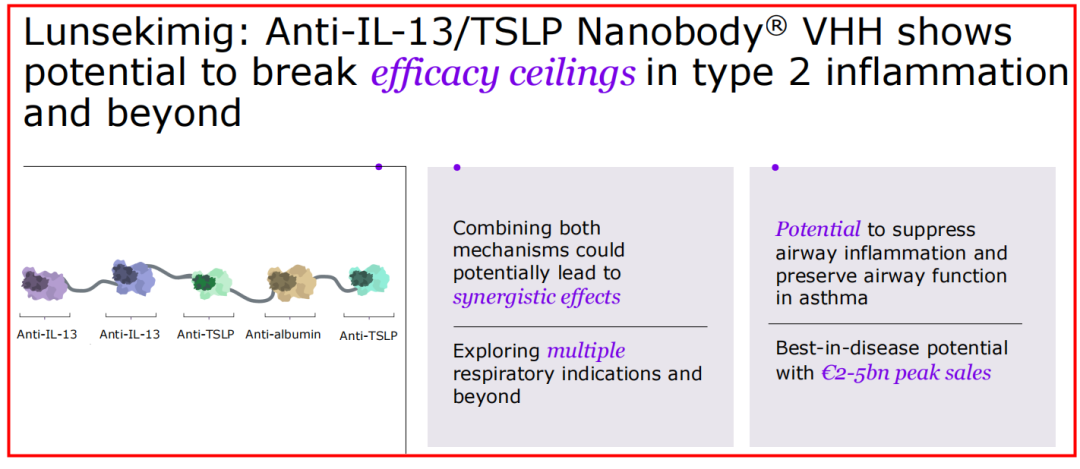
Image Source: Sanofi
At the 2023 American Thoracic Society (ATS) Annual Meeting, Sanofi presented Phase Ib clinical data for Lunsekimig: Compared to using TSLP or IL-13 alone, Lunsekimig significantly improved patients' fractional exhaled nitric oxide (FeNO, an indicator of airway inflammation), demonstrating superior efficacy.
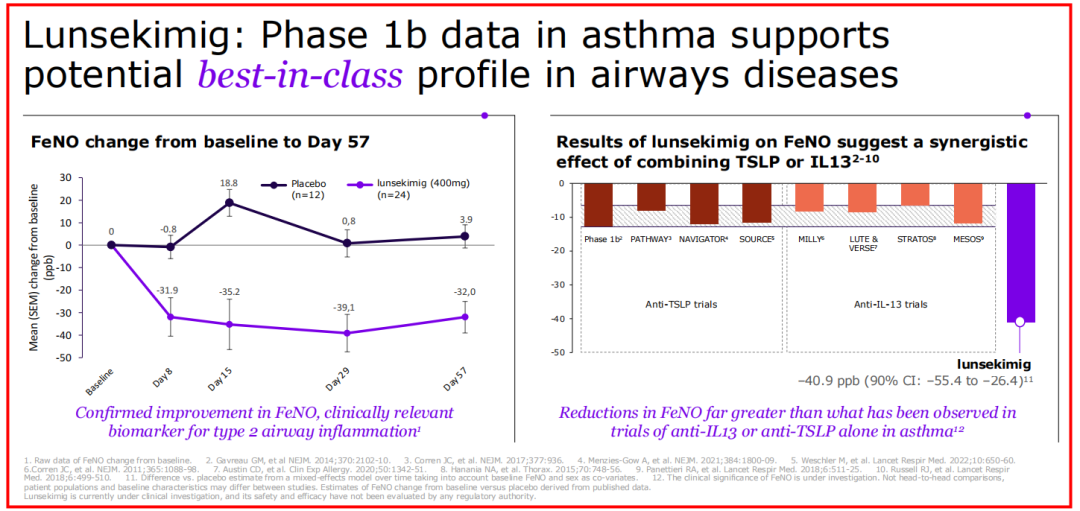
Image Source: Sanofi
The approval of Lunsekimig for clinical use in China is expected to bring new treatment options for asthma, especially low Th2-type asthma.
Dupilumab Performs Strongly
Acceleration of I&I Pipeline Construction
At the beginning of this month, Sanofi released its 2023 financial report, showing strong performance in the Immunology & Inflammation (I&I) field, mainly due to its leading product Dupixent. According to the financial report, Dupixent's sales reached 10.715 billion euros (approximately 11.717 billion US dollars) in 2023, increasing by 34% year-on-year. Sanofi CEO Paul Hudson said that Dupixent's sales are expected to reach 13 billion euros in 2024.
At the same time, Sanofi continues to accelerate the construction of its I&I pipeline, including exploring more indications for Dupilumab and advancing the research progress of other drugs in clinical trials.
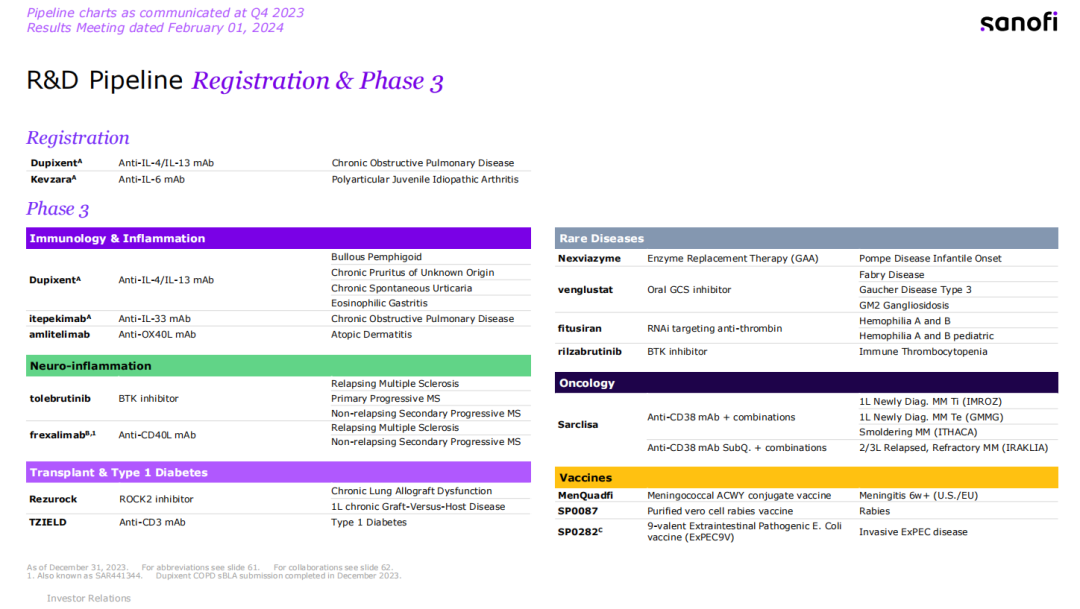
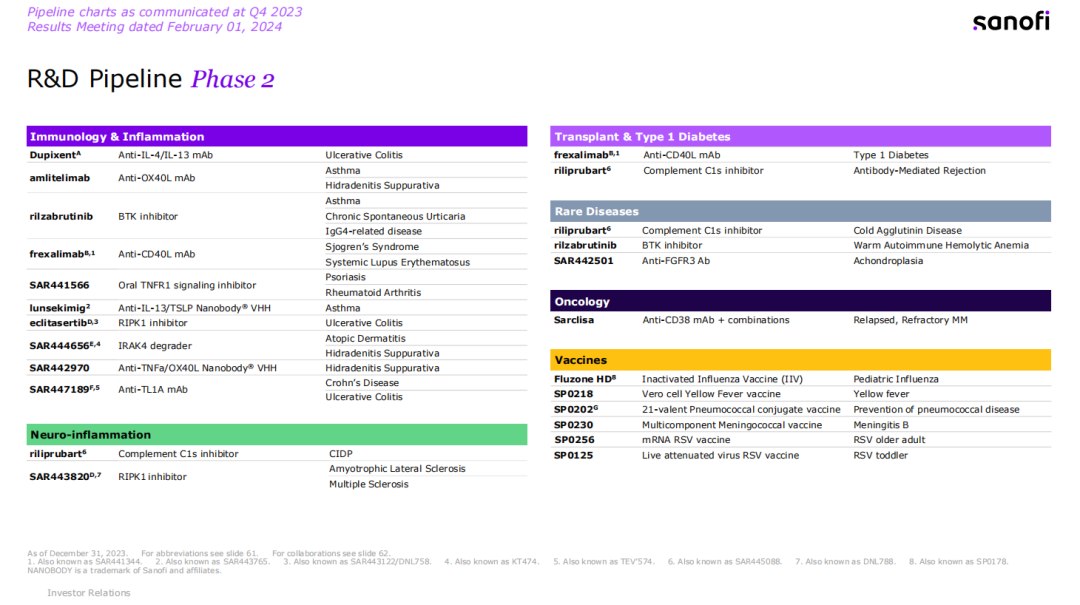
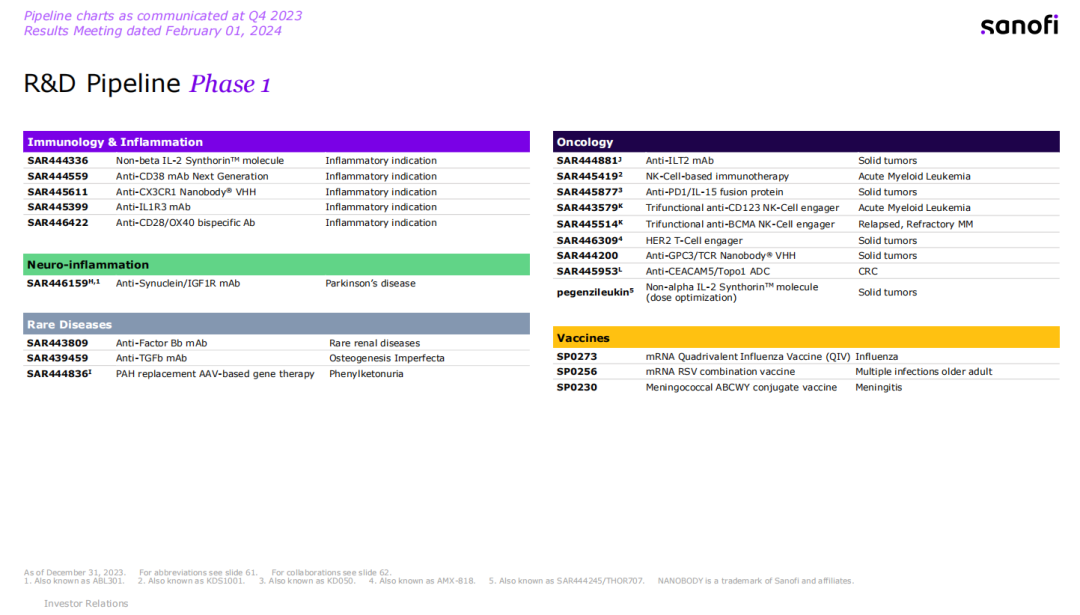
Image Source: Sanofi
Itepekimab
Itepekimab is an IL-33 monoclonal antibody that directly targets IL-33, reducing airway inflammation and preventing the activation of ILC2 cells, thereby alleviating asthma symptoms and improving lung function. Itepekimab is currently being developed for the treatment of diseases such as COPD and asthma.
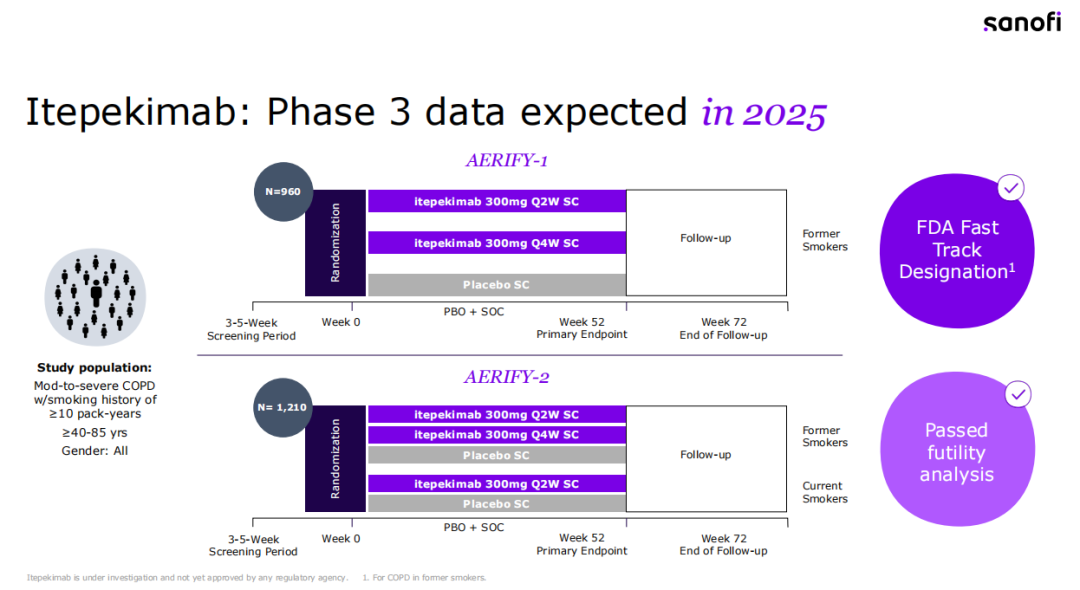
Image Source: Sanofi
Amlitelimab
Amlitelimab is an OX40-ligand monoclonal antibody with the potential to become the best-in-class OX40L antibody. In October 2023, positive results from the Phase 2b STREAM-AD trial of Amlitelimab were announced: Amlitelimab significantly alleviated symptoms in adult patients with moderate to severe atopic dermatitis (AD). Sanofi stated that it will initiate a Phase 3 trial of Amlitelimab for the treatment of atopic dermatitis in the first half of 2024.
In addition, Rilzabrutinib, a BTK inhibitor for the treatment of ITP, is currently in Phase II clinical trials. The clinical trials of frexalimab, a CD40L monoclonal antibody for the treatment of multiple sclerosis and type 1 diabetes, are accelerating, and clinical studies of other I&I pipeline products are also proceeding steadily.
Conclusion
In November 2023, Dupilumab's asthma indication was officially approved in China, and at the end of January this year, its EoE indication was fully approved by the FDA for both pediatric and adult patients. Meanwhile, other products in Sanofi’s I&I pipeline, including Lunsekimig, are accelerating research progress and are expected to bring more breakthrough therapies to the autoimmune field.

Editor: Mu Mian
Disclaimer: The views expressed in this article are solely those of the author and do not represent the position of Pharma Intelligence Network. We welcome exchanges and additional insights in the comment section; for reprints, please be sure to credit the author and source. If the content, copyright, or other issues are involved, please leave a message on this platform, and we will address it promptly.