

Qilu Enters the Fray as Major Chinese Pharma Players Challenge Originator in Key Anti-Cancer Drug Azacitidine

Qilu Pharmaceutical
Specialty Formulations and Active Pharmaceutical Ingredients (API) Developer
Yangtze River Pharmaceutical Group
Pharmaceutical and Health Service Providers

CHIATAI TIANQING
High-quality pharmaceuticals research, production, and sales provider
Hansoh Pharma
Innovative Therapeutic Drug Developer
As the largest细分赛道 globally, the oncology field has always been a必争之地 for major pharmaceutical companies.
Recently, the official website of the National Medical Products Administration announced that the marketing application of Azacitidine for Injection, a generic drug submitted by Qilu Pharmaceutical, has been approved and passed the consistency evaluation.
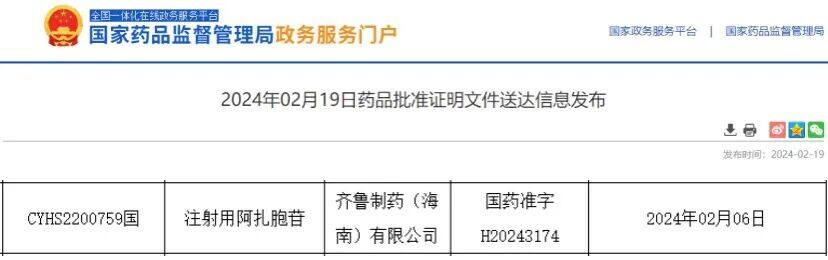
The original research and development manufacturer of Azacitidine is Celgene. In 2018, its global sales revenue reached 594 million US dollars. The company's injectable Azacitidine was approved to enter the Chinese market in 2017. It was a negotiated product in the 2017 and 2019 editions of the National Medical Insurance Catalogue of China, and successfully entered the third batch of centralized procurement.
Industry data shows that the sales scale of injectable azacitidine in China is growing rapidly and has become a blockbuster product with sales exceeding 100 million yuan.Market observers believe that, with the number of cancer patients increasing rapidly worldwide, the antimetabolite drug market will continue to grow. From a long-term perspective, the market capacity for azacitidine is large and it has potential for future development. Meanwhile, the clustering of major pharmaceutical companies such as Qilu Pharmaceutical, Yangtze River Pharmaceutical Group, CHIATAI TIANQING, and Hansoh Pharma will lead to increasingly fierce competition in the niche market.
New Player Enters the 300 Million Yuan Market
"Big fish in big water" means that in order to strive for success in this field, both courage and wisdom are indispensable.
Azacitidine for Injection is a nucleoside metabolic inhibitor that can be used to treat intermediate-2/high-risk myelodysplastic syndrome (MDS), acute myeloid leukemia (AML) with 20-30% bone marrow blasts, and chronic myelomonocytic leukemia (CMML). For high-risk elderly patients over the age of 65, azacitidine treatment is the preferred option, offering significant survival benefits.
In 2004, the U.S. Food and Drug Administration (FDA) approved azacitidine for marketing as the first methyltransferase inhibitor for the treatment of myelodysplastic syndromes (MDS). The product is suitable for the treatment of all subtypes of MDS and has orphan drug designation. It is recommended by the National Comprehensive Cancer Network guidelines as a first-line treatment and is, to date, the only demethylating drug that can significantly extend the overall survival of high-risk MDS patients.
The original research company of Azacitidine is the American company CELGENE, and its trade name is Vidaza. In December 2008, Azacitidine was also approved in the European Union, becoming the first treatment in Europe that can significantly extend the overall survival period of patients with intermediate-2 and high-risk MDS and AML. In March 2011, Japan's Nippon Shinyaku Co., Ltd. launched Azacitidine in Japan for the treatment of MDS. After being approved to enter the Chinese market in 2017, the sales of injectable Azacitidine in Chinese public medical institutions reached 8.48 million yuan in 2018. It is worth mentioning that, in that year, only the product from the original research manufacturer was available on the domestic market.
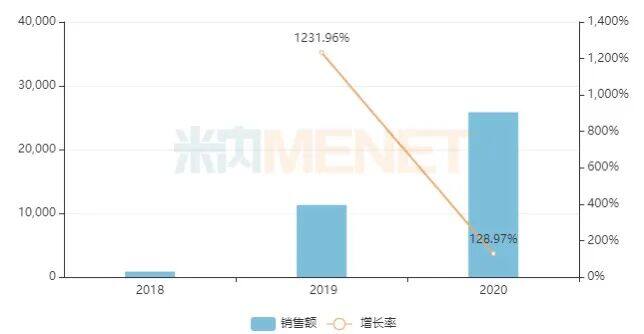
In recent years, the sales of Azacitidine have generally shown a steady growth trend. According to the sales data statistics from key urban public hospitals by Menet, in 2018, Azacitidine entered the National Reimbursement Drug List through negotiation, and in 2019, Huiyu and CHIATAI TIANQING simultaneously obtained the domestically produced generic drug approval (and were considered as passing the consistency evaluation). With the joint efforts of "original research + generics," Azacitidine experienced a significant sales surge at the terminals of China's urban public hospitals, county-level public hospitals, urban community health centers, and township health clinics (referred to as "China's public medical institutions"). The growth rate that year was as high as 1232%. By 2021, the sales of Azacitidine at the terminals of China’s public medical institutions had fully surpassed 300 million yuan.
According to publicly available data, in China's anti-tumor drug market, antimetabolites are the second-largest category, surpassed only by plant extracts. The share of total anti-tumor drug usage has increased from 7.11% a decade ago to 20.81%, amounting to nearly 2.7 billion RMB, with the top ten varieties accounting for 20.39% of the anti-tumor drug market. Azacitidine, which belongs to the antimetabolite class, has seen its overall market exceed 10 billion RMB in scale, further highlighting the critical role of antimetabolite drugs in clinical practice.
In 2023, Qilu Pharmaceutical and its subsidiaries had 34 new products approved for marketing applications, distributed across 10 major categories. The largest number, 9 products, were in the anti-tumor and immunomodulatory agents category, with 7 products each in systemic anti-infective drugs and sensory system drugs.
In recent years, Qilu Pharmaceutical has continuously accelerated its layout in the generic drug field, with more than 150 varieties passing evaluation, of which over 50 products are the first to do so.The market expects that the listing application of the submitted Class 4 generic azacitidine for injection will be approved and pass the consistency evaluation. A large number of companies at the forefront of niche markets, represented by Qilu Pharmaceutical, will leverage their strong production and sales capabilities to drive the growth potential of this product in the Chinese market, ushering in a new round of explosive growth in the niche sector.
Big Pharma "Clusters" in Competition
In fact, the huge market has already attracted generic drug companies to "rush over upon hearing the news." In February 2018, BeiGene announced that it had obtained exclusive distribution rights granted by Celgene, allowing it to exclusively sell the drug in China. In September 2019, CHIATAI TIANQING and Huiyu Pharma's injectable Azacitidine were simultaneously approved for production, taking the lead.
In addition to the aforementioned companies, currently in China, Shandong New Era Pharmaceutical, Yangtze River Pharmaceutical Group Co., Ltd., and Jiangsu Hansoh Pharmaceutical Group Co., Ltd. also hold production licenses. Moreover, in the field of generic drug development, only Jianjin Pharmaceutical and Ruiyang Pharmaceutical have submitted applications for the generic version of Azacitidine for Injection, both of which are still under review.
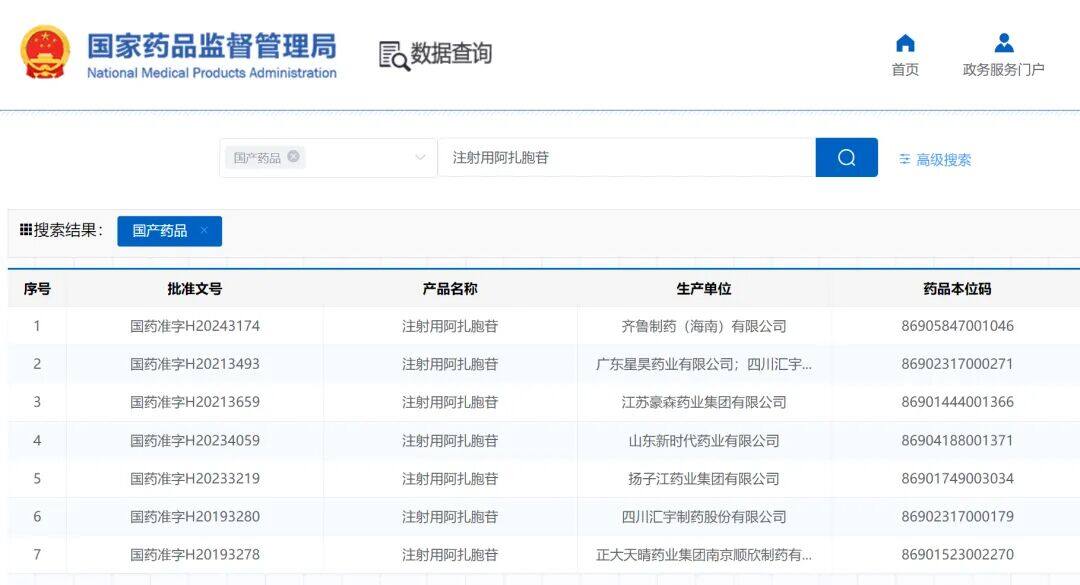
As a product that gained prominence through centralized procurement, the market price competition for Azacitidine for Injection has also drawn significant attention in the industry. According to statistics from Menet, after eight rounds of centralized procurement, many domestic companies have quickly seized the market by leveraging the benefits of procurement policies.
In October 2018, the National Healthcare Security Administration included 17 anti-cancer drugs in the Class B list of the National Basic Medical Insurance, Work-related Injury Insurance, and Maternity Insurance Drug Directory. Among them was azacitidine for injection, which had been on the market for just over a year.
According to relevant statistics, Azacitidine, an injectable drug for treating myelodysplastic syndromes and chronic myelomonocytic leukemia, requires patients to undergo 80 injections annually. Previously priced at 2,625 yuan per injection across China, the annual cost for patients amounted to 210,000 yuan. After negotiations with the national medical insurance system, its price dropped to 1,055 yuan, representing a decrease of 59.81%. Overall, the annual cost for 80 injections is now only 84,400 yuan. The financial burden on patients for this medication has been significantly reduced.
The dosage form and specification of Azacitidine sold in sample hospitals is 100mg injectable powder. In the first half of 2020, the sales of Azacitidine in sample hospitals amounted to 57.13 million yuan, with Celgene, Chia Tai Tianqing, and Huiyu accounting for 93.31%, 6.38%, and 0.31%, respectively.
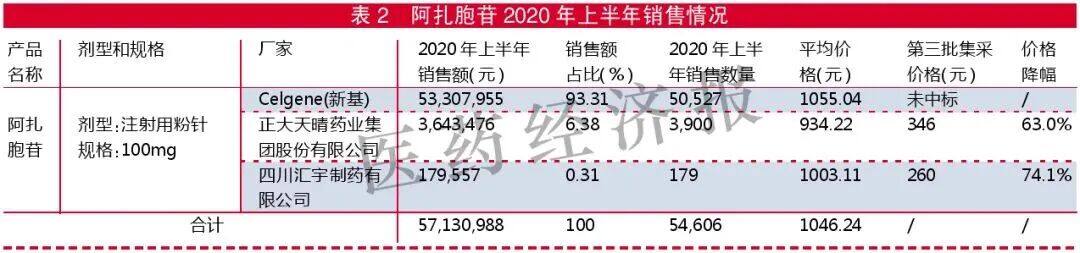
Azacitidine for Injection is part of the third batch of national drug procurement in China. Huiyu Pharmaceutical secured the top position with a bid of 260 yuan per bottle, covering 16 provinces including Tianjin, Hebei, Shanghai, Fujian, Guangdong, and Sichuan, demonstrating its determination to increase market share. According to data from Menet, in 2022, Huiyu Pharmaceutical ranked first in market share for Azacitidine for Injection.
In terms of pricing, at the end of September 2019, CHIATAI TIANQING's Azacitidine for Injection was approved and priced at 996 RMB. According to the notice issued by Jilin Province titled "Announcement on the Display of the List of Anti-Cancer Drugs (First Batch), Blood Products, Insulin, and Generic Drugs within the National Negotiation Period with Price-Limiting Online Listing," Sichuan Huiyu's online listing price limit is 999 RMB.
Whether in national centralized procurement or medical insurance negotiations, the price reduction of original research drugs and imported drugs is becoming increasingly significant, and this trend of price cuts is continuously spreading. Within less than a year of its market launch, Chia Tai Tianqing's Azacitidine for Injection 100mg proactively reduced its price to 870 RMB in the Liaoning market, once again setting a new record for the lowest bid price in China, leading to substantial changes in the pharmaceuticals market.
Industry insiders believe that, influenced by policies and the market, an increasing number of companies may choose to proactively cut prices and engage more actively in market positioning. Compared to the global market, there is still significant room for development for azacitidine in China, with over a dozen companies currently planning their strategies. Whoever captures the market first in China will have the opportunity to compete with the original product for market share.



www.yyjjb.com.cn
Insight into Industry Trends

"Pharmaceutical Economy News"
Academic Official Account
Focus on the Frontiers of Oncology Academia

Terminal Official Account