

Seismic Therapeutic Files for IPO Following $121M Series B to Advance AI-Driven Immunology Pipeline

Seismic Therapeutic
Immunotherapy Developer

Bessemer Venture Partners
Venture Capital Firms

Codon Capital
Early-Stage Venture Capital Firms

Alexandria Venture Investments
Healthcare Venture Capital Firms

Amgen Ventures
A venture capital firm based in California
GC&H Investments
Venture Capital Firms

Lightspeed Venture Partners
Venture Capital Firms

Polaris Partners
Venture Capital Firms in Digital Media, Life Sciences, and Enterprise Software

Boxer Capital
Venture Capital Firms

GV
Google's Investment Fund
2023 is a year of the rise of artificial intelligence, which is continuously expanding the boundaries of human cognition. New technologies such as AI, big data, and cloud computing are constantly emerging, bringing unprecedented opportunities to various industries. The advent of AlphaFold2 and ChatGPT has also ushered in rapid development for AI-driven drug discovery.
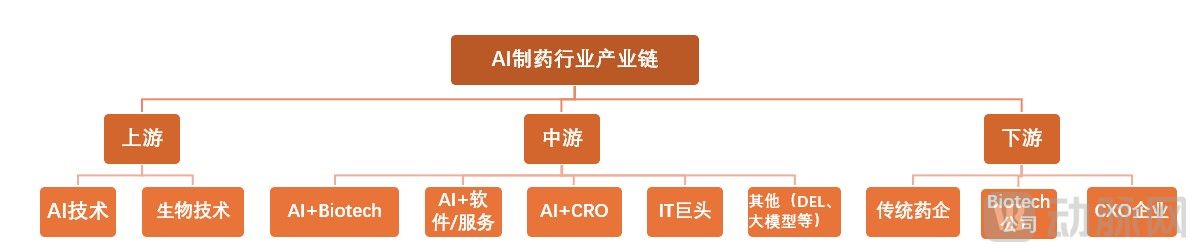
(Source: Public information, compiled by VCBeat)
According to Research and Markets, the global AI pharmaceuticals market size was $1.04 billion in 2022 and is expected to increase to $2.994 billion by 2026. Additionally, as per statistics from the AI consulting firm Deep Pharma Intelligence, as of the end of March 2023, the total investment in global AI pharmaceutical companies has reached $59.3 billion. AI pharmaceutical companies worldwide are striving to seize opportunities and maintain an edge in the digital wave.
In December last year, Seismic Therapeutic, Inc. (hereinafter referred to as "Seismic"), a machine learning immunology company, announced the completion of a $121 million Series B financing round.This round of financing was led by new investor Bessemer Venture Partners, with other new investors including Amgen Ventures, Codon Capital, Alexandria Venture Investments, Gangels, and GC&H, as well as existing investors Timothy A. Springer, Lightspeed Venture Partners, Polaris Partners, Boxer Capital, GV, Samsara Bio Capital, and the company's management and founders also participating.After two rounds of financing, Seismic Therapeutic, Inc. has raised a total amount exceeding 200 million US dollars.
The funds from Series B financing will be used for Seismic Therapeutic's Phase I clinical trials of two leading projects: the pan-immunoglobulin (Ig)G protease carving (Sc) candidate enzyme (S-1117), and the PD-1 agonist Fc gamma receptor IIb selective dual-cell bi-directional (DcB) candidate antibody (S-4321). In addition, Seismic Therapeutic will use this funding to expand its product pipeline and increase investment in machine learning for biologics drug discovery in the field of immunology.
In the IgSc enzyme project, Seismic Therapeutic designed a novel pan-IgG protease aimed at reducing B-cell and T-cell immunogenicity while maintaining enzymatic activity and stability. The novel pan-IgG protease can lower IgG and immune complex levels, reduce antibody effector functions (such as complement fixation), and cleave antigen receptors on self-reactive memory B cells, thereby modulating Ig-mediated autoimmunity and inflammation, making it suitable for treating acute and chronic autoantibody-mediated diseases.
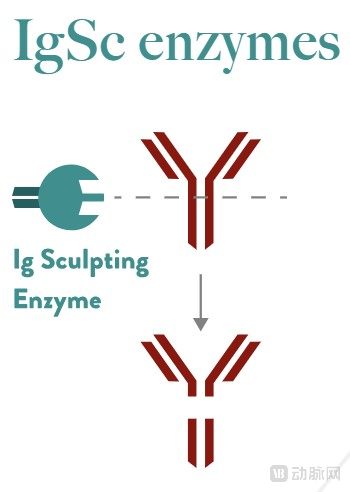
(Image source: Seismic official website)
DcB Antibody Therapy Focuses on Dysregulated Cell-Mediated Immunity, Optimally Activating Antigen-Presenting Cells Such as T Cells and B Cells to Restore Immune Balance. By activating these pathways, the therapy can control various diseases, such as multiple sclerosis, lupus, and rheumatoid arthritis. DcB antibodies can simultaneously engage multiple inhibitory pathways involving more than one type of immune cell to achieve precise regulation on both sides of the immunological synapse.
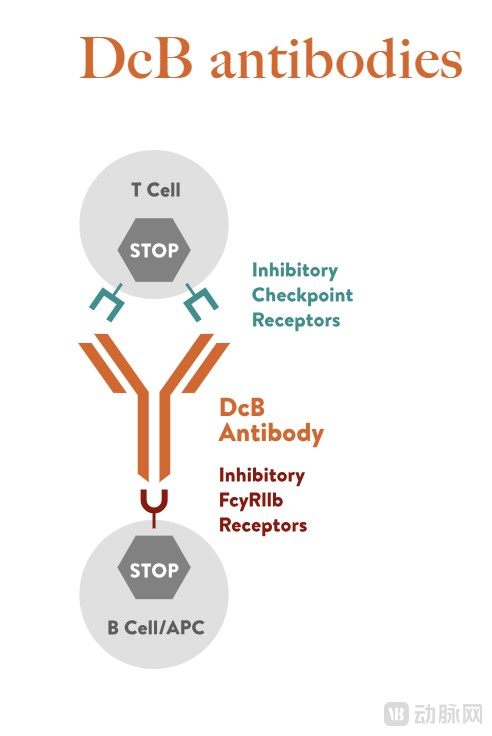
(Source: Seismic Therapeutic, Inc. official website)
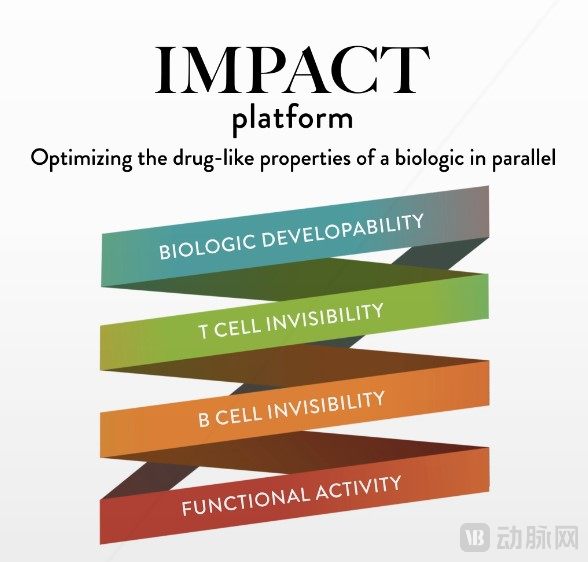
Based on machine learning, structural biology, translational immunology, and engineering, Seismic Therapeutic has developed the IMPACT technology platform. This platform fully integrates the key elements of machine learning and biologics drug discovery, enabling the large-scale generation of engineered drug molecules to more effectively treat autoimmune diseases.
The uniqueness of the IMPACT platform lies in "parallelizing" the various interdisciplinary components of biologics development., bypassing the trial-and-error path in traditional biologics development. This approach can simultaneously optimize biological function, reduce immunogenicity and development risks, thus having the potential to create novel biologics with superior properties.
(Source: Seismic Therapeutic, Inc. official website)
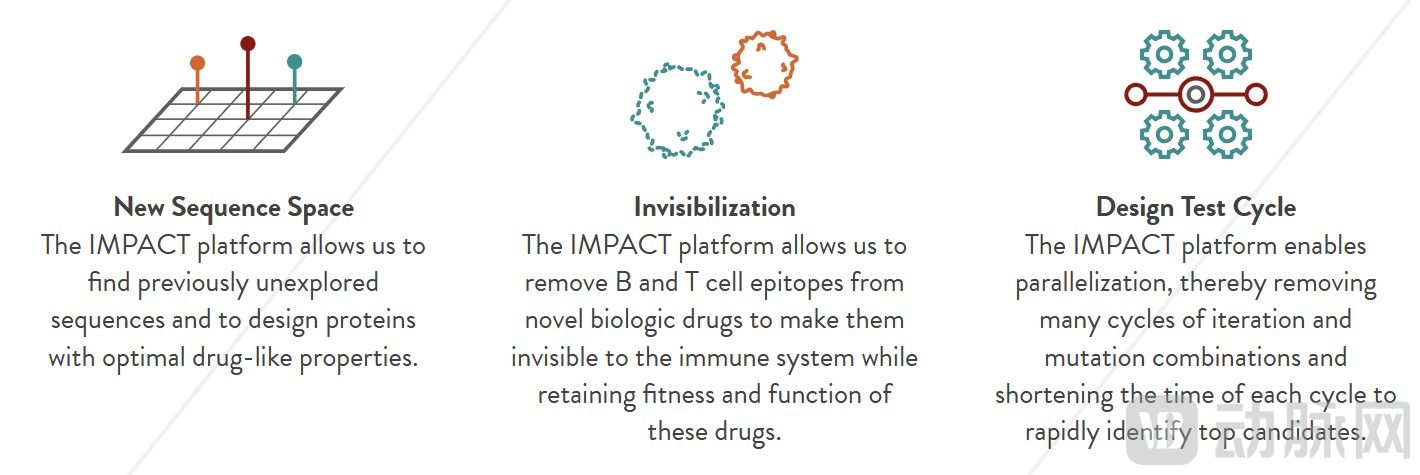
The platform has the following characteristics:
1.Adjustable Activity: By exploring a large number of protein sequence variations, a faster trial-and-error approach is adopted to optimize therapeutic effects.
2.Invisibilization: The designed candidate drug can avoid recognition by the immune system while maintaining protein adaptability and functionality.
3.Parallelization: Utilize rapid design-test cycles to identify and modify key attributes simultaneously at an unprecedented scale.
4.Drug Development: Create biologics with special drug properties, adjusting drug manufacturability from the outset to achieve efficient production and effective clinical transition.
(Image source: Seismic official website)
For a long time, the pharmaceutical research and development field has been governed by the "Double Ten Rule," which means that it takes an average of ten years and about one billion US dollars to develop a new drug from the start of research to final approval for market launch. With the participation of AI in the drug research and development process, the "Double Ten Rule" may be broken.
According to a Tech Emergence research report, AI can save 40% to 50% of the time in compound synthesis and screening, reducing the cost of compound screening for the pharmaceutical industry by $26 billion annually.
Since 2015, a multitude of domestic AI pharmaceutical startups have emerged in China, such as XtalPi, EDDA Tech, StarMap PharmTech, Viva Biotech, and SinoPacBio.
Traditional pharmaceutical companies are also stepping up, joining the AI drug discovery track through strategic cooperation and equity investments. For example, WuXi AppTec has successively invested in seven AI drug discovery companies including Strateos, Engine Biosciences, and Insillico Medicine; Hengrui Pharma has reached a cooperation with French company Iktos, which specializes in developing AI-based new drug design platforms, to introduce an AI new drug R&D platform; Fosun Pharma's anti-cancer candidate drug co-developed with AI drug discovery company Insilico Medicine has been approved by the National Medical Products Administration (NMPA) to enter clinical trials.
Besides, the large Internet companies are also striving to have a share in the blue ocean market of AI pharmaceuticals R&D.
For example, Baidu has established BioMap, an innovative drug discovery platform driven by a bio-computing engine, and Sooth Intelligent Biotechnology, an AI-driven new drug R&D company. Tencent has launched its first AI-powered drug discovery platform, Yunshen Zhikang. Alibaba has also collaborated with the Global Health Drug Discovery Institute to co-develop an AI drug discovery and big data platform. Additionally, other internet companies such as Huawei and ByteDance have leveraged their own AI algorithm advantages to create drug discovery platforms.
Notably, apart from internet giants, traditional pharmaceutical companies and related industries have also started to venture into the AI drug development field. For instance, Ping An Insurance (Group) Company of China established an AI drug research team in 2020; Yunnan Baiyao has signed a "Comprehensive Cooperation Agreement on AI Drug Development" with Huawei. Both parties will engage in extensive exchanges and cooperation in the AI drug development sector, including but not limited to small and large molecule design, related disease conditions, and database development.
To promote the development of the AI industry and AI-driven new drug research and development, the Chinese government has also issued a series of policies and regulations. In January 2022, the "14th Five-Year Plan for Pharmaceutical Industry Development," jointly issued by nine departments, proposed to empower pharmaceutical research and development with new-generation information technology. In August of the same year, the "Notice on Supporting the Construction of Demonstration Application Scenarios for New-Generation Artificial Intelligence" proposed the large-scale construction of medical databases and knowledge bases, as well as the training of large-scale medical artificial intelligence models—key infrastructures for intelligent healthcare. It emphasized the use of evidence-based AI diagnostic decision-making technologies to establish a new model of AI-enabled medical services.
According to incomplete statistics from VCBeat, as of November 2023, 16 life science AI pipelines have ceased development or been removed from official websites, and one drug has had its clinical trial priority downgraded. However, the total number of pipelines continues to grow at a relatively fast pace. Globally, there are 97 active AI-involved pipelines in clinical stages, with more than half in Phase I clinical trials and over one-third in Phase II clinical trials.
Of these pipelines, 67 come from abroad, accounting for 69.07%, and 30 are from within China, accounting for 30.93%. Companies such as Insilico Medicine, Accutar Biotechnology, Unknown Group, Egret Pharmaceuticals, Drug Farm, and Regor Therapeutics all have multiple pipelines simultaneously undergoing clinical trials, propelling China into the global forefront of AI-driven drug discovery.
So Far, No AI-Assisted Developed New Drug Has Been Marketed. It Is Evident That Even With AI Assistance, Drug Development Still Faces Numerous Challenges. However, It Is Certain That The Integration Of AI And Drug Development Will Be The Future Trend Of The Pharmaceutical Industry. We Believe That Within The Next Ten To Twenty Years, This Integration Will Bring A Revolutionary Transformation To The Medical Field And Usher In A New Era.
References:
1. China Medical News "Is it a help or a disruption? AI drug development may end the 'double ten rule' in drug research and development"
2, VCBeat "2023 Medical Artificial Intelligence Report: From the Edge to the Core, Medical Artificial Intelligence Bets Big on 'Treatment'"