Regeneron's Next-Gen C5 Antibody Pozelimab Granted Clinical Trial Approval in China for Generalized Myasthenia Gravis
Regeneron
Biopharmaceutical Manufacturer
On February 26, according to the CDE official website, Regeneron's Pozelimab injection received clinical trial implied permission. The indication is: Pozelimab and Cemdisiran combined for the treatment of adult male and female patients with generalized myasthenia gravis (gMG) clinically and serologically (anti-AChR or anti-LRP4 serum positive) confirmed, accompanied by signs and symptoms of myasthenia gravis.
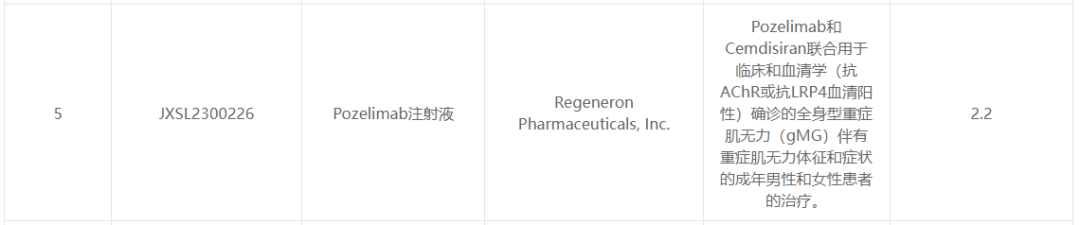
Image Source: CDE Official Website
In August 2023, the FDA approved Pozelimab, which became the first FDA-approved drug for treating adults and children over 1 year old with CD55-deficient protein-losing enteropathy (CHAPLE).
Inhibition of C5 Complement
Clinical Acceleration of Combination Therapy
The complement system is one of the primary effector mechanisms of the innate immune system, with functions including enhancing (complementing) the clearance of microorganisms and damaged cells by antibodies and phagocytes, promoting inflammation, and attacking pathogen cell membranes. However, the erroneous attack on healthy organs, tissues, and the central nervous system by the complement system often leads to complement-mediated diseases and causes damage.
There are three activation pathways of the complement system, regulated by different proteins. The complement protein C5 is at the terminal end of the complement cascade and can regulate complement signals activated by all pathways. Therefore, inhibiting C5 complement activity can suppress autoimmune attacks and alleviate disease symptoms.
Pozelimab is a fully human monoclonal antibody that can prevent or alleviate diseases mediated by the complement pathway by blocking the activity of complement factor C5. According to publicly available information, in addition to the approved CHAPLE indication, Pozelimab is also being developed in combination with Alnylam's cemdisiran for the treatment of other complement-mediated diseases such as paroxysmal nocturnal hemoglobinuria (PNH) and myasthenia gravis (MG). This combination therapy is currently in Phase III clinical trials, with cemdisiran being an RNAi candidate drug targeting the complement C5 protein. The BLA application for this combination therapy is expected to be submitted in 2024 and beyond.

Image Source: Regeneron
Pozelimab has received implied permission for clinical trials in China for the indication of gMG, and Regeneron may initiate related clinical trials in China.
Increased R&D Investment
Strengthening the R&D Pipeline
At the beginning of this month, Regeneron released its 2023 financial report, with total annual revenue reaching $13.117 billion, including $7.078 billion from product sales, a year-on-year increase of 3%. According to the financial report, Regeneron's R&D investment in 2023 reached $4.439 billion, accounting for 34% of total revenue. Currently, Regeneron has established a pipeline comprising over 30 therapies targeting eye diseases, allergic and inflammatory diseases, cancer, cardiovascular and metabolic diseases, hematological disorders, infectious diseases, and rare diseases.
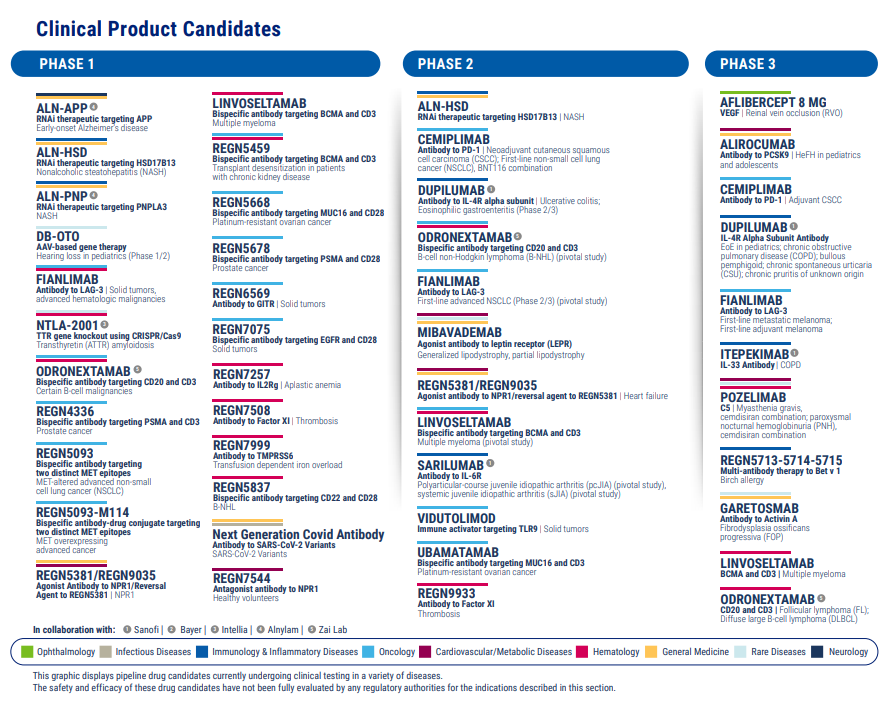
Image Source: Regeneron
In addition to the combination of Pozelimab and Cemdisiran, Regeneron has also explored the combination of antibodies with other drugs, such as "antibody + gene therapy" and "antibody + cell therapy." According to reports, on January 30, 2024, Regeneron announced that it would acquire 2seventy bio and obtain all development and commercialization rights to the latter's novel investigational immunocyte therapies. The company stated that the goal of this transaction is to combine Regeneron’s antibody capabilities with 2seventy bio’s cell therapy. Moreover, public information indicates that Regeneron has been involved in antibody conjugation methods to enhance the targeting of gene therapies like AAV, enabling them to penetrate specific muscle or brain tissues.
In addition, Regeneron announced its entry into the weight-loss market in 2024 and plans to conduct Phase II trials on the combination of Trevogrumab (an anti-myostatin antibody) with other drugs by mid-2024. Moreover, as early as 2021, Regeneron published research related to GPR75 gene variants associated with a lower risk of obesity and has continued to advance its studies in this area.
Conclusion
Regeneron stated in its 2023 financial report that it will continue to expand research on the blockbuster products Dupixent and EYLEA HD in 2024, while promoting more novel therapies and advancing its continuously growing product pipeline.

Editor: Muyan
Disclaimer: This article is a reprint from Yaozhi.com. The images and text are the original property of their respective owners. The purpose of the reprint is to convey more information and does not represent the views of this platform. If there are any issues regarding content, copyright, or other matters, please leave a message on this platform, and we will address it promptly.