

KeFei Vision, Backed by Over 40 Years of USTC Research, Files IPO Prospectus for Integrated Solutions for Visual Impairment

UFLY VISION
One-stop Solution and Service Provider for Visual Function Disorders
It is often said“The eyes are the window to the soul.”。Modern cognitive science shows that the movement of the eyes and the cognitive activities inside the brainIntervalClose ties existTheContact. Visual signals, after leaving the eye along the optic nerve, pass throughThe relay of the lateral geniculate body will eventually be summarized by the visual cortex of the brain to process all visual information."Interpret" what we have witnessed.
The Visual Research Laboratory of the University of Science and Technology of China (USTC), established in 1982, has long been engaged in research on visual information processing mechanisms, the neural mechanisms of cognitive function impairment in amblyopia, and visual neural development. The current director of the laboratory, Researcher Zhou Yifeng, graduated from USTC’s Young Talent Class. For many years, he has been dedicated to fundamental research and the transformation of results in the field of visual neurobiology. He has published over 130 SCI papers, including more than 80 as the first author or corresponding author, which have been cited over 2,000 times by peers both domestically and internationally.
Eye health involves the entire life span of people across all age groups. Taking the laboratory's research on "Neural Mechanisms of Cognitive Function Impairment in Amblyopia" as an example, amblyopia is a neurovisual disease caused by developmental defects in the brain. Dr. Zhou Yifeng collaborated with Professor Lu Zhonglin from the University of Southern California, also an alumnus of the University of Science and Technology of China (USTC), to provide the first international evidence that "adult amblyopia is treatable." The related research findings were tracked and reported by The New York Times at the time.
In 2013, in response to national policies on the transformation of technical achievements and under the incubation of the Institute of Advanced Technology at the University of Science and Technology of China (USTC), Dr. Zhou Yifeng commercialized and promoted the brain technology achievements from USTC's Vision Research Laboratory. He founded UFLY VISION, a company focused on the visual health field, providing users with one-stop solutions and services for visual functional disorders.
The visual cortex is the area of the cerebral cortex related to visual information processing and is the core region for vision formation. For a normal person, visual information accounts for more than 70% of all sensory information. The functional status of the visual cortex directly determines visual functions such as eyesight and is the main factor affecting sensory information.
"Neurons in the brain's visual cortex that process visual information are a key focus of brain science research," said Shi Zhongdong, Chairman of UFLY VISION, in an interview with VCBeat. "As an innovative high-tech medical enterprise specializing in the field of eye and brain vision, the underlying architecture of UFLY VISION’s technical products is primarily based on over 40 years of foundational research from the Visual Research Laboratory at the University of Science and Technology of China."
Based on neuroplasticity, UFLY VISION has primarily commercialized two laboratory achievements: the neural modulation technology of perceptual learning and the gradient training algorithm. In other words, UFLY VISION mainly utilizes the self-developed brain technology of perceptual learning digital medical treatment from the University of Science and Technology of China to specifically train and stimulate certain cortical neurons, thereby efficiently activating and adjusting neural pathways to help patients improve or even restore visual cortex function.
Shi Zhongdong also vividly compared the digital medical technology of brain science visual perception learning to a "digital pill." "Regarding this digital medical technology of brain science visual perception learning, Dr. Zhou Yifeng, the founder of UFLY VISION, collaborated with Professor Zhang Yudong from the Chengdu Institute of Optics and Electronics at the Chinese Academy of Sciences to innovatively combine visual perception training with adaptive optics for the human eye. This allowed individuals with normal vision to achieve super vision of 2.0 or higher. Their 'super vision' remained stable even after being retested five months later. Through the precise activation of specific visual cortex areas in the brain using the 'digital pill,' the nervous system can enhance its ability to process information through learning, breaking the inherent standards of traditional eye charts and enabling the human eye to 'see' farther and smaller details, deeply developing our brains."
Building on a foundation of strong scientific research capabilities, UFLY VISION has spent a decade developing a comprehensive training product system based on the principles of brain plasticity. This system focuses on addressing clinical low-vision rehabilitation, as well as eye-brain health and the prevention and control of myopia and presbyopia. It also offers a full-process visual rehabilitation closed-loop training solution that encompasses "screening + testing and assessment + corrective eyewear fitting + training and treatment."
"Traditional solutions for visual dysfunction often focus only on the front end of the system, such as instrument-based muscle regulation training or photoelectric stimulation of the retina, and fail to reach the depth and precision required by brain science research. UFLY VISION's perceptual learning digital medical technology is based on neuroplasticity, supported by mature foundational theoretical research, and validated through evidence-based medicine. It has shown excellent therapeutic effects on various visual dysfunctions and is not prone to recurrence," said Shi Zhongdong.
Focusing on visual perception learning digital medical technology, UFLY VISION has launched a series of medical products, including visual cortical function detectors, visual perception learning therapy training systems, and intelligent occlusion filter lenses.
There are multiple visual cortical areas in the human cerebral cortex that participate in visual processing. Accurately locating the functional sites of damaged areas is the primary prerequisite for conducting visual stimulation training. The Visual Cortex Function Detector developed by UFLY VISION, based on its proprietary patented technology for cortical visual perception function testing, can precisely detect and evaluate eight representative cortical visual functions of the subject, identifying the individual’s "functional impairment site."
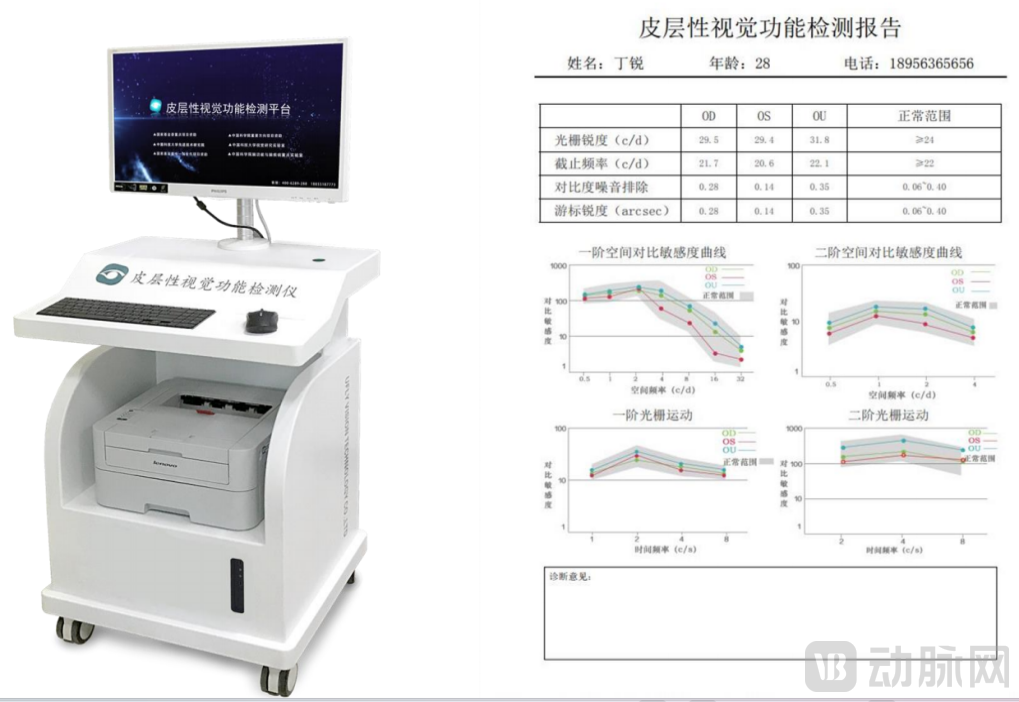
Visual Perception Function Tester
After targeting the affected area, UFLY VISION's visual perceptual learning treatment training system ensures that the training stimuli dynamically remain at the optimal therapeutic intensity and precise location, achieving "targeted treatment." This training system also obtained China's first Class II medical device registration certificate for AI-based visual adaptive training in 2015.
As a non-traditional software-based medical device, the significance of obtaining the first Class II certificate lies in UFLY VISION’s collaboration with the Visual Research Laboratory at the University of Science and Technology of China. By establishing disease models on animal subjects ranging from mice, to cats, to monkeys, they developed eight digital biomarkers for central visual functions, trained through extensive data. These ultimately formed a "digital pill" based on professional neuroscience and ophthalmology, designed to precisely strengthen synaptic connections between existing neurons, promote the formation of new synapses, and enhance neuronal functionality.
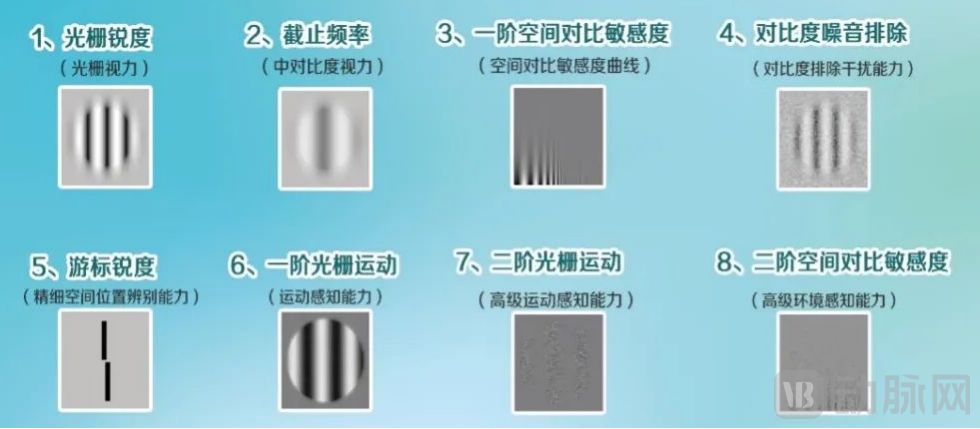
Digital Biomarkers
At the same time, the visual perception learning treatment training system also integrates AI adaptive self-feedback functions to address the issue of dynamic changes in subjective feelings during the "screening, testing, monitoring, evaluation, and treatment" process for different patients undergoing visual perception rehabilitation. This ensures treatment quality and the feasibility of personalized treatment, rapidly improving and restoring patients' visual function.
Regarding typical vision training products on the market, Shi Zhongdong mentioned, "Although gamification can improve compliance temporarily, a purely gamified approach may even interfere with the training effect. This is because the corresponding brain regions for gaming and the areas of the visual system that need repair are not the same. Therefore, UFLY VISION pursues scientific training that makes professional scenarios more engaging — combining a series of software and hardware to create professional training service technology, forming a complete product system. This ensures short treatment durations, quick effectiveness, no risk of game addiction, and is suitable for various visual functional disorders in both children and adults."
Visual rehabilitation treatment is a long-term process, and the treatment scenarios often undergo dynamic changes. To reduce the workload of doctors and rehabilitation therapists and improve patients' adherence to digital therapeutics, UFLY VISION has developed a multi-dimensional perceptual function precision cloud platform. This platform includes self-testing and screening tools for different application scenarios, precise detection and assessment modules, allowing users to actively participate in and understand their rehabilitation status.
Eye health is a major public health and social issue involving people's livelihood. The "14th Five-Year Plan" for National Eye Health (2021-2025) recently issued by the National Health Commission encourages multidimensional integration between medical institutions, disease prevention and control institutions, maternal and child health care institutions, and rehabilitation institutions to build a continuous diagnostic and treatment service system covering the entire life cycle, including screening, diagnosis, treatment, and follow-up.
Research data from VCBeat indicates that, between 2015 and 2019, the compound growth rate of China's ophthalmic medical services market reached 19.6%. It is projected that by 2025, the market size will exceed 250 billion yuan.
Facing the urgently needed full-life-cycle service system for diagnosis and treatment, along with a market space worth hundreds of billions, in 2022, UFLY VISION officially completed its transformation from home-based training to visual rehabilitation training rooms, as well as the construction of a complete closed-loop product line and the UFLY Cloud Service System 5.0, formally launching an integrated screening and training model for comprehensive ophthalmic rehabilitation and operations.
In fact, since 1993, the USTC Vision Research Laboratory led by researcher Zhou Yifeng has started cross-disciplinary cooperation with well-known ophthalmology centers in China, such as West China Hospital of Sichuan University, the 301 Hospital Ophthalmology Department, and Tianjin Eye Hospital. It is one of the earliest and longest-running neuro-ophthalmology interdisciplinary research teams in China.
UFLY VISION, in collaboration with hospitals and third parties, has established a visual function rehabilitation training room that serves as a professional hub between doctors and patients. On one hand, the rehabilitation training room helps ophthalmologists, who are busy with clinical work, manage patients efficiently and provide better services. On the other hand, the professional optometrists in the rehabilitation training room can assist patients in completing high-quality daily visual rehabilitation exercises, eliminating the hassle of registration, queuing, and waiting time, improving patient compliance with treatment, and making eye disease rehabilitation more effective and efficient.
In 2023, UFLY VISION began to layout regional partnership for vision rehabilitation training rooms, expansion of thousands of stores in B2B, fast applications and online operations in B2C, and school and community public welfare in B2G as part of its development strategies. Currently, it has reached cooperation intentions with multiple domestic listed companies across different industries, achieving comprehensive and coordinated development across multiple channels and businesses driven by demand.
In multi-party collaborations, UFLY VISION's industrial "Pro-Community" project cooperation model at the Shenzhen Brain Science Industry Innovation Center (referred to as "Brain Innovation Center") stands out. The Brain Innovation Center is a specialized industrial platform under the Institute of Brain Cognition and Brain Diseases at the Shenzhen Institutes of Advanced Technology, Chinese Academy of Sciences, dedicated to advancing the brain science and brain health industry. The Brain Innovation Center prioritizes advancing brain health services, actively building a brain health service system for the elderly and adolescents that encompasses health education, early screening and diagnosis, disease treatment, and rehabilitation care.
The Qinshequ Platform is a brain health service platform developed by the Brain Innovation Center based on community application scenarios, mainly targeting neurodegenerative disease screening for the elderly and brain development monitoring for teenagers, integrating "screening + diagnosis/treatment + education." The core products of UFLY VISION align closely with the business layout of the Qinshequ Platform. Through close collaboration, both parties have achieved significant results. Together, they have reached multiple community outlets in Shenzhen, providing brain health screenings, digital therapeutics, and other services for the elderly and teenagers, receiving unanimous praise from local health authorities and community residents.
The brain is the most complex and mysterious organ in the human body. UFLY VISION's visual perception digital medical technology, as a cutting-edge neuroscience innovation with deep technical accumulation, holds vast potential for imagination. However, forward-looking technologies also have their weaknesses, as both doctors and patients, as well as the market, remain "undecided" about them. This reverence for scientific barriers not only restricts the development of hard tech but also hinders high-quality innovative medical resources from reaching patients.
In this regard, Shi Zhongdong concluded in the interview, "UFLY VISION is currently in a new round of financing. After undergoing a strategic transformation, the company will accelerate the expansion of one-stop visual dysfunction solutions and service application scenarios in the medical field. At the same time, it will integrate into the channels of strategic partners to rapidly develop vision health application scenarios directly facing end users (C-end), ensuring synchronized development in market promotion, doctor education, and patient education. This is because only when outstanding scientific research technology successfully transforms into commercial success can it truly drive industrial development, thereby elevating China’s eye health initiatives to new heights."
About Shenzhen Brain Science and Technology Industry Innovation Center
Shenzhen Brain Technology Industry Innovation Center (referred to as "Brain Innovation Center") is a professional incubation platform built under the strong support of Shenzhen and Guangming District governments. It receives technical support and operational management from the Institute of Brain Cognition and Brain Diseases at Shenzhen Institutes of Advanced Technology, Chinese Academy of Sciences, and the Shenzhen-Hong Kong Institute of Brain Science Innovation. The Brain Innovation Center is committed to creating China's first "brain-ready" professional incubation empowerment platform, striving to become a leading demonstration hub for brain technology industry innovation that serves all of China and radiates globally. Since its trial operation began in October 2022, the Brain Innovation Center has developed over 220,000 square meters of "phased" incubation and industrial space, attracting nearly 50 companies to its incubator and industrial park. Both the incubator and the China Merchants Brain and Brain-inspired Intelligence Industrial Park are fully occupied. The total historical financing of the resident companies exceeds 1 billion yuan, with a valuation surpassing 10 billion yuan. The center has assisted these companies in securing more than 200 million yuan in new funding and established China’s first venture capital fund in the field of brain science and brain-inspired intelligence fully funded by social capital, with a scale of 100 million yuan, focusing on investing in high-quality early-stage projects at the Brain Innovation Center. The Brain Innovation Center sincerely invites enterprises, institutions, and research teams related to brain science, brain-computer engineering, and brain health to visit and exchange ideas!