Iaso Bio's BCMA-Targeted CAR-T Therapy Eque-cel Shows Promising Results in Autoimmune Diseases with Data Published in EMBO Molecular Medicine and PNAS

IASO Biotechnology
Cancer Treatment New Drug Developer
Recently, IASO Bio announced the development of its fully human BCMA-targeted CAR-T cell product.YiKiorlance Injection(Research and Development Code: CT103A)Treatment of Autoimmune DiseasesData from two investigator-initiated clinical trials were published in authoritative international academic journals, respectively.EMBO Molecular Medicine、*Proceedings of the National Academy of Sciences* (The Proceedings of the National Academy of Sciences,PNAS) were published. The data from these two studies respectively demonstratedIdecabtagene Vicleucel Injection for the Treatment of Refractory Myasthenia Gravis、Immune-Mediated Necrotizing MyopathyThe potential. In China, IASO Bio's Cilta-cel was approved in June 2023 for the treatment of adult patients with relapsed/refractory multiple myeloma.
Research Data on Icaritin for the Treatment of Refractory Severe Myasthenia Gravis
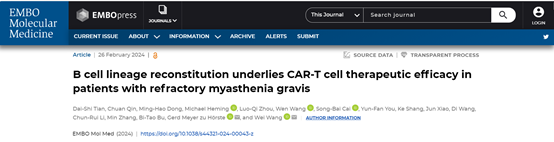
February 26,EMBO Molecular MedicineOfficially PublishedTreatment of Two Refractory Myasthenia Gravis (MG) Subjects with Icaritin Cel InjectionClinical Research Paper——B cell lineage reconstitution underlies CAR-T cell therapeutic efficacy in patients with refractory myasthenia gravis. The study preliminarily demonstratedGood Tolerability and Safety of BCMA-Targeted CAR-T Therapy in MG TreatmentandLong-lasting Clinical Efficacy。
MG is an autoimmune disease mediated by autoantibodies that results in acquired neuromuscular junction (NMJ) transmission dysfunction.Acetylcholine receptor (AChR) antibodies are the most common pathogenic antibodies. In addition, antibodies targeting other components of the postsynaptic membrane, including muscle-specific receptor tyrosine kinase (MuSK), low-density lipoprotein receptor-related protein 4 (LRP4), and ryanodine receptor (RyR), have been successively discovered to be involved in the pathogenesis of myasthenia gravis (MG). Currently, the main treatments for MG include cholinesterase inhibitors, glucocorticoids, immunosuppressants, intravenous immunoglobulin, plasma exchange, and thymectomy. The primary causes of death in patients include respiratory failure and pulmonary infections.
This time inEMBO Molecular MedicineThe published study is an open-label evaluation initiated by the investigator.Infusion of Icarositamab Injection for the Treatment of Relapsed/Refractory Antibody-Mediated Idiopathic Inflammatory Neurological DiseasesAn exploratory clinical study on the safety and efficacy, conducted by Tongji Hospital, Tongji Medical College, Huazhong University of Science and Technology.Professor Wang WeiTeam。
The study enrolled two subjects with refractory MG. One subject was a 33-year-old female who was positive for AChR-IgG and Titin-IgG. She underwent thymectomy 21 months prior to enrollment and had not achieved clinical remission despite treatments with cholinesterase inhibitors, glucocorticoids, immunosuppressants, and targeted CD20 monoclonal antibody therapy. The other subject was a 60-year-old female who was MuSK-IgG4 positive, with a 20-year history of the disease, and previous treatments including steroids, immunosuppressants, and targeted CD20 monoclonal antibodies were ineffective. The two subjects received doses of 1.01×10⁶CAR-T/Kg and 0.96×10⁶Single infusion treatment with IASO Bio's CAR-T/kg Elcabtagene Autoleucel Injection.
Safety Data Shows: Among the 2 subjects, only 1 subject experienced Grade 1 cytokine release syndrome (CRS). No immune effector cell-associated neurotoxicity syndrome (ICANS) occurred, and ≥Grade 3 cytopenia recovered within 4 weeks after infusion. Compared with the safety profile in the multiple myeloma indication study, no new safety risks were identified, and the safety was better.
Efficacy Data Shows: 2 subjectsClinical symptoms continued to improve for more than 18 months.; Three months after the infusion of Ixcellence Injection, the patient's limb strength and vital capacity significantly improved. The Myasthenia Gravis-Activities of Daily Living score (MG-ADL), Quantitative Myasthenia Gravis score (QMG), Myasthenia Gravis-Quality of Life score (MG-QOL), and modified Rankin Scale score (mRS) continued to improve. During the follow-up period, apart from low-dose neostigmine (90 mg/day and 60 mg/day respectively), no other immunomodulatory treatments were used.
PK/PD data show: After infusion, Idecabtagene Vicleucel showed good expansion in the subjects but with a relatively short duration. The anti-AChR and anti-Titin antibodies, as well as anti-MuSK antibodies, in two subjects rapidly decreased after infusion and remained at very low levels for a long time. B cells and plasma cells in these two subjects dropped to undetectable levels within two months after infusion and then gradually recovered. At 18 months post-infusion, B cells in both subjects had returned to normal levels, with approximately 80% being naïve B cells, while plasma cells remained at lower levels. These results suggest that the long-term efficacy of CAR-T cell therapy may be related to the reconstitution of B cells predominantly with a naïve phenotype and the sustained depletion of plasma cells.
The principal investigator of this study is from Tongji Hospital, Tongji Medical College, Huazhong University of Science and Technology.Professor Wang WeiSaid: "Myasthenia gravis has a long course, is difficult to cure, and prone to relapse. Although current traditional drug treatments can improve muscle weakness symptoms to a certain extent, they are still insufficient in terms of disease control and long-term safety. Patients have an urgent need for better clinical outcomes and treatment methods."In our IIT study, we are pleased to see that BCMA CAR-T cell therapy can halt the progression of MG and demonstrate signs of reversing the disease, which is expected to transform the treatment landscape for MG and bring hope of a cure to patients.。”
Research Data on Idecabtagene Vicleucel for the Treatment of Immune-Mediated Necrotizing Myopathy
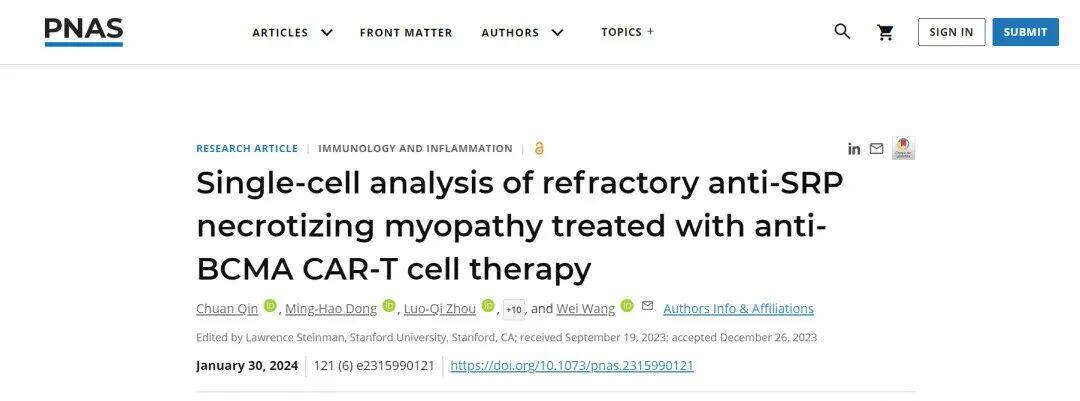
On January 30, the Proceedings of the National Academy of Sciences of the United States of America (PNAS) officially published the research paper on IASO Bio's Equecabtagene Autoleucel Injection for the treatment of Immune-Mediated Necrotizing Myopathy (IMNM).Single-cell analysis of refractory anti-SRP necrotizing myopathy treated with anti-BCMA CAR T-cell therapy". The research data preliminarily demonstratedTargeting BCMA CAR-T Therapy Shows Good Tolerability and Safety in IMNMSex、Persistent Pathogenic Antibody ClearanceandPotential Durable Clinical Efficacy, providing a new therapeutic approach for antibody-mediated autoimmune diseases.
IMNM is an autoimmune-mediated skeletal muscle disease and belongs to idiopathic inflammatory diseases.Human anti-signal recognition particle (SRP) antibodies are specific autoantibodies associated with IMNM. SRP antibody-mediated IMNM mainly presents as symmetrical weakness of proximal limb muscles, prominent dysphagia, and significantly elevated serum creatine kinase levels. It is characterized by acute onset, severe condition, and rapid progression, with poor responsiveness to conventional drug treatments and a high recurrence rate.
This is an investigator-initiated open-label evaluation published in the Proceedings of the National Academy of Sciences of the United States of America.Infusion of Icaritin Cell Injection for the Treatment of Relapsed/Refractory Antibody-Mediated Idiopathic Inflammatory Neurological DiseasesAn exploratory clinical study on the safety and efficacy, conducted by Tongji Hospital, Tongji Medical College, Huazhong University of Science and Technology.Professor Wang Wei's Team。
In this study, a 25-year-old male subject with refractory IMNM who was SRP antibody-positive was enrolled. With a 7-year history of the disease, he had previously received various treatments, including corticosteroids, calcineurin inhibitors, folate antagonists, CD20 monoclonal antibodies, interleukin-6 (IL-6) receptor antagonists, inosine monophosphate dehydrogenase (IMPDH) inhibitors, alkylating agents, plasmapheresis, intravenous immunoglobulin, and mesenchymal stem cell infusion, but still experienced multiple relapses and ongoing damage. Prior to enrollment, despite being on a combination therapy regimen of corticosteroids, IL-6 receptor antagonists, folate antagonists, and intravenous immunoglobulin, the patient remained bedridden, unable to raise his arms above his head, with a serum creatine kinase level as high as 4806 IU/L (reference value ≤190 U/L).
Safety Data Shows: The subject only experienced Grade 1 cytokine release syndrome (CRS), without immune effector cell-associated neurotoxicity syndrome (ICANS), and only had transient cytopenia; compared with the safety profile in the multiple myeloma indication study, no new safety risks were identified.
Efficacy Data Shows: During the 18-month follow-up after the infusion of IASO Bio's equecabtagene autoleucel injection,The patient's clinical symptoms and imaging characteristics have continued to improve. Three months after the infusion of Icaritin Cell Injection, the patient's limb strength significantly improved, with no restrictions in lifting arms and a regained ability to walk.; Manual Muscle Testing-8 (MMT-8) scores improved from a baseline of 96 to 137 at the final visit (18 months post-infusion); serum creatine kinase levels decreased from 4778 IU/L pre-infusion to 260 IU/L at the final visit, and myoglobin levels dropped from 837 ng/mL pre-infusion to 66.2 ng/mL at the final visit; significant improvements were also observed in other quality-of-life measures. No other immunomodulatory treatments were combined during the follow-up period.
PK/PD data show:After the infusion of Icarositamab Injection, CAR-T cells expanded well in the subjects, and the serum SRP antibody levels rapidly decreased and remained at a very low level continuously.
The principal investigator of this study, Tongji Hospital affiliated to Tongji Medical College of Huazhong University of Science and TechnologyProfessor Wang WeiThis represents another significant breakthrough for the product in the field of autoimmune diseases, following its successful treatment of neuromyelitis optica. We look forward to further advancements of CAR-T therapy in autoimmune indications, bringing hope of a cure to patients."
In addition to the two research results published this time, IASO Bio and the research team are still continuously exploring the use of Equecabtagene Autoleucel Injection in treating other antibody-mediated autoimmune diseases.Safety and effectiveness,IncludingNeuromyelitis Optica Spectrum Disorders (NMOSD), Chronic Inflammatory Demyelinating Polyneuropathy (CIDP), hoping to bring new treatment options for more autoimmune diseases.
References:
[1] IASO Bio's Icarus Lentiviral Gene Therapy Injection for the Treatment of Refractory Myasthenia Gravis (MG): A Case Report Published in "EMBO Molecular Medicine". Retrieved Feb 28, 2024, from https://mp.weixin.qq.com/s/O1tUmBLLeN8jC9B3gkmoSw
[2] IASO Bio's Icarus Injection First Used Globally to Treat Immune-Mediated Necrotizing Myopathy (IMNM) Research Published in Proceedings of the National Academy of Sciences (PNAS). Retrieved Jan 30, 2024, from https://mp.weixin.qq.com/s/c1tpfhH5uNu2pMoqSp93lA
This article was compiled and edited by the WuXi AppTec content team based on publicly available information. Individuals are welcome to share it on their social media feeds. For authorization to repost, please leave a message on the "MedView" WeChat Official Account to contact us. For other collaboration inquiries, please contact wuxi_media@wuxiapptec.com.
Disclaimer: The content team of WuXi AppTec focuses on introducing the research progress in global biopharmaceuticals and health. This article is for information exchange purposes only, and the views expressed in the article do not represent the position of WuXi AppTec, nor does it mean that WuXi AppTec supports or opposes the views mentioned in the article. This article is not a recommendation for treatment plans. For guidance on treatment options, please visit a正规 hospital.