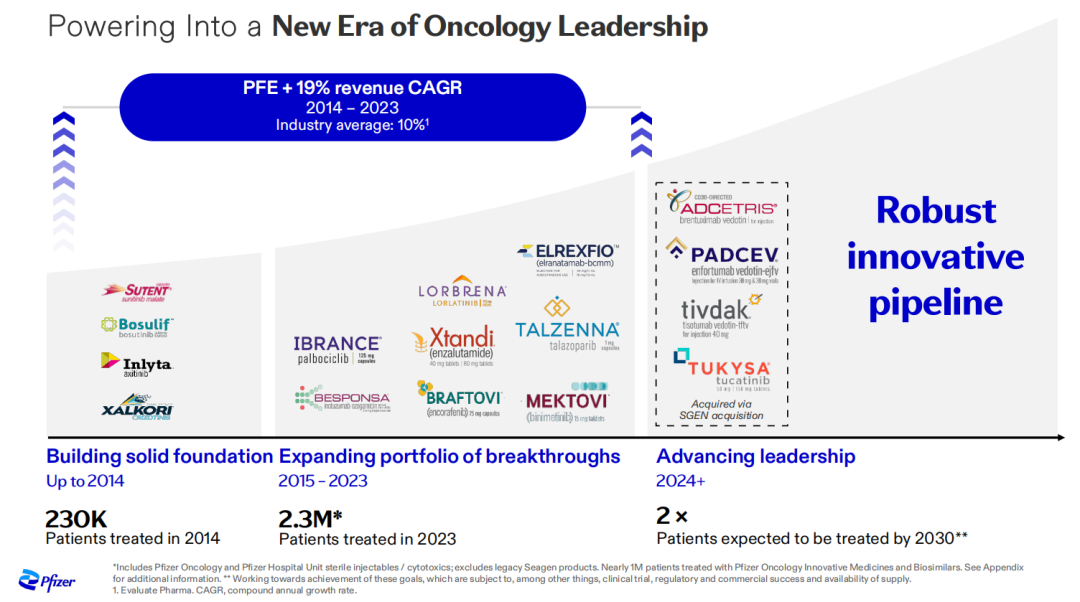
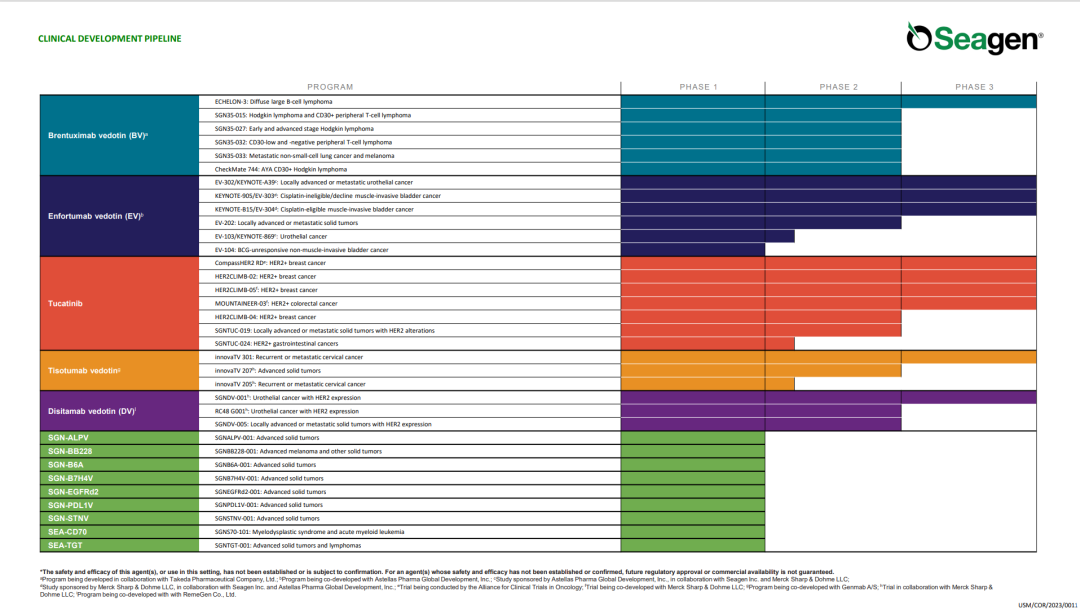
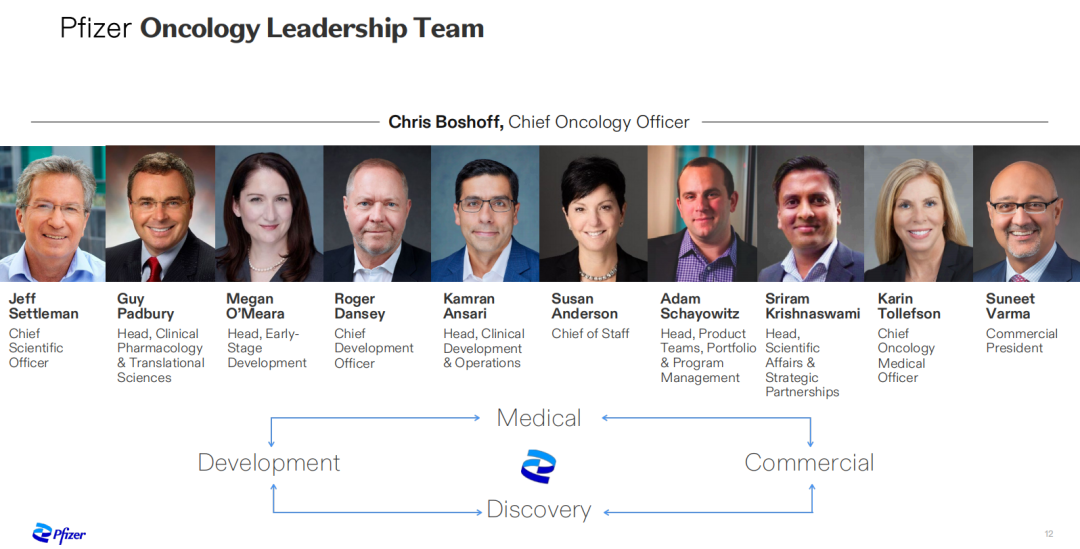
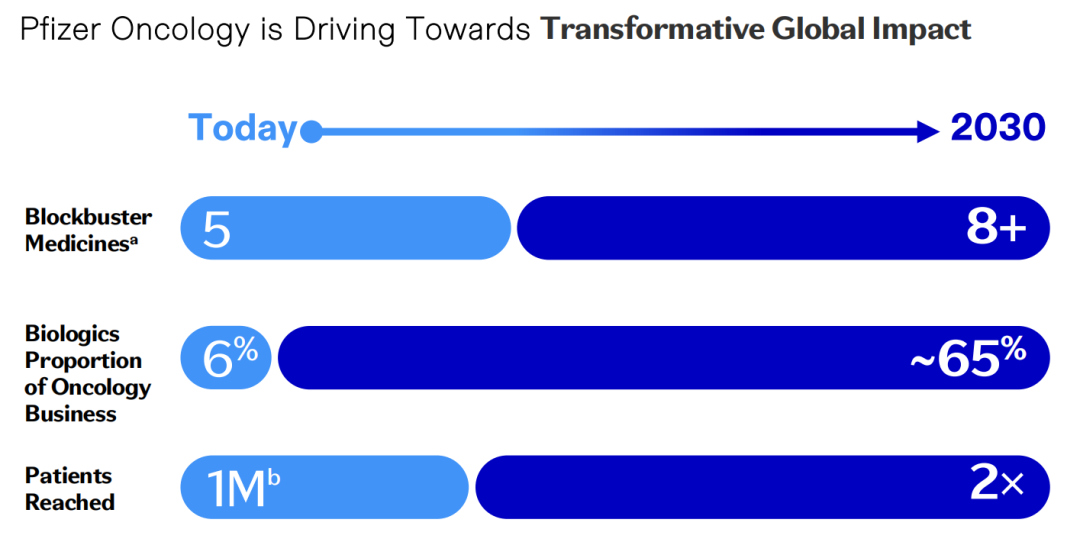
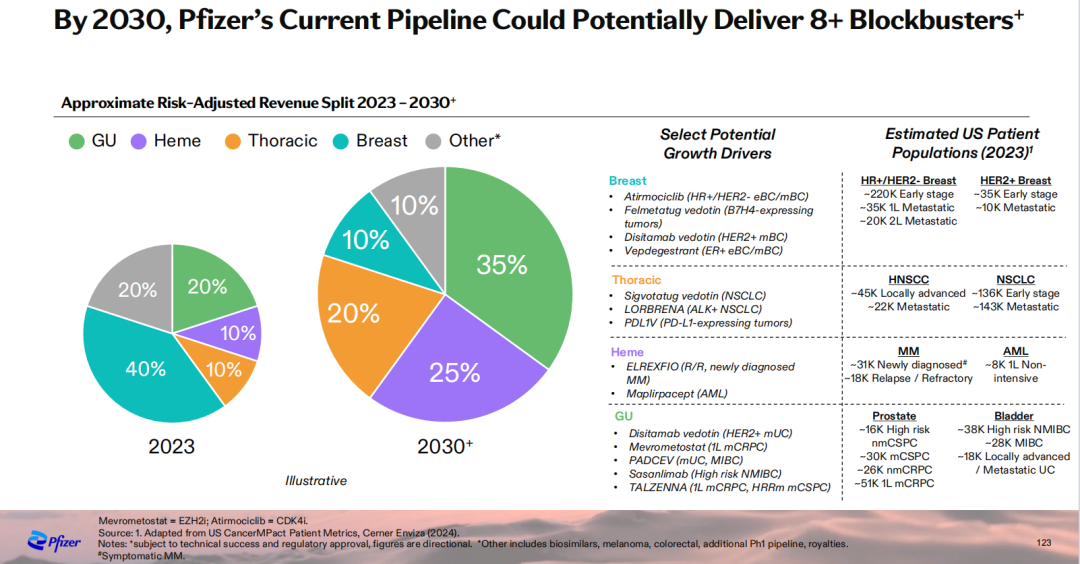
February 29, 2024Pfizer Launches Oncology Innovation Day. According toPfizer CEO Albert Bourla said that Pfizer has systematically developed a new oncology strategy after acquiring Seagen, an antibody-drug conjugate specialist, for $43 billion.By 2030, Pfizer is expected to see its oncology revenueAbout 2/3 will come from new molecular entities and new indications for existing products.PS: In[Pharmaceutical Time and Space] Reply to the keyword "Pfizer Oncology Innovation Day", you can obtainPfizer Oncology Innovation Day Report PPT Materials (141 Pages Total)!Pfizer's $43 billion acquisition of Seagen is the largest M&A deal in the biopharmaceutical field since AbbVie's $63 billion acquisition of Allergan in June 2019.It provides for PfizerFinishedFour approved products and a robust pipeline of ADC candidates. PfizerPreviously alsoIndicates,By 2030, the products from the acquisition of Seagen are expected to generate an additional $10 billion in annual revenue.In December 2023, as Pfizer was nearing the completion of its acquisition of Seagen, the company announced a reorganization of its corporate structure.Newly Established Pfizer Oncology Division, integrating tumor commercialization and R&D operations together,This department is led by Chris Boshoff, M.D.——Has been serving as the leader of Pfizer's Oncology R&D Department for the past 6 months.During this event,Pfizer's newly appointed Chief Oncology Officer, Dr. Chris Boshoff, announced strategic priorities,The company's goal is to have at least8Heavyweight Anti-Cancer Drugs. Pfizer hopes thatDouble the number of patients receiving its innovative cancer drug treatment from approximately 2.3 million in 2023.According to the new plan, Pfizer is also focusing on four major types of cancer——Breast cancer, genitourinary cancers, hematologic cancers, and thoracic cancers——The company already has commercial products.Boshoff said, "In these areas, we are initiating parallel early trials where the treatable population is the largest, with the aim of accelerating a new wave of breakthroughs."And transfer the approved drugs to the early treatment field.”Pfizer Acquires Seagen and Designs New Oncology Blueprint, Because the CompanyThe Best-Selling Anti-Cancer Drug IbranceA decrease in sales revenue, andAstellas Partner Xtandi's Collaboration Revenue Flat. Both Drugs Expected to Lose Market Exclusivity in 2027.And Seagen's addition has brought Pfizer to what Boshoff called a tipping point in its position within the oncology field.However, during the eventPfizerNot provided by 2030Tumor DrugsSpecific Sales Forecast for Franchise RightsSuneet Varma, Oncology Commercial Lead, stated,The company expects "Sales and Profits in the Oncology FieldWill continue to grow stronglyTo this 10End of the year". He added that by that time, about two-thirds of the risk-adjusted oncology revenue would come from new molecular entities and new indications for existing products.Before acquiring Seagen, Pfizer's three major anticancer drugs—Ibrance, Xtandi, and Inlyta—were all small-molecule drugs. Today,The company aims to increase the proportion of biologics in its revenue mix from 6% to 65% by 2030.Boshoff believesPfizer has the capability to enhance Seagen's previous product portfolio. He pointed out that Pfizer has 10 manufacturing sites across three continents producing oncology drugs, whereas Seagen has only one.PfizerThe vial capacity used for ADC production is Seagen's.6Times. He pointed out that Pfizer has commercial operations in more than 100 countries and regions, and the size of the customer-facing commercial team after the merger is Seagen.Three times the size of one's own team.
Breast Cancer
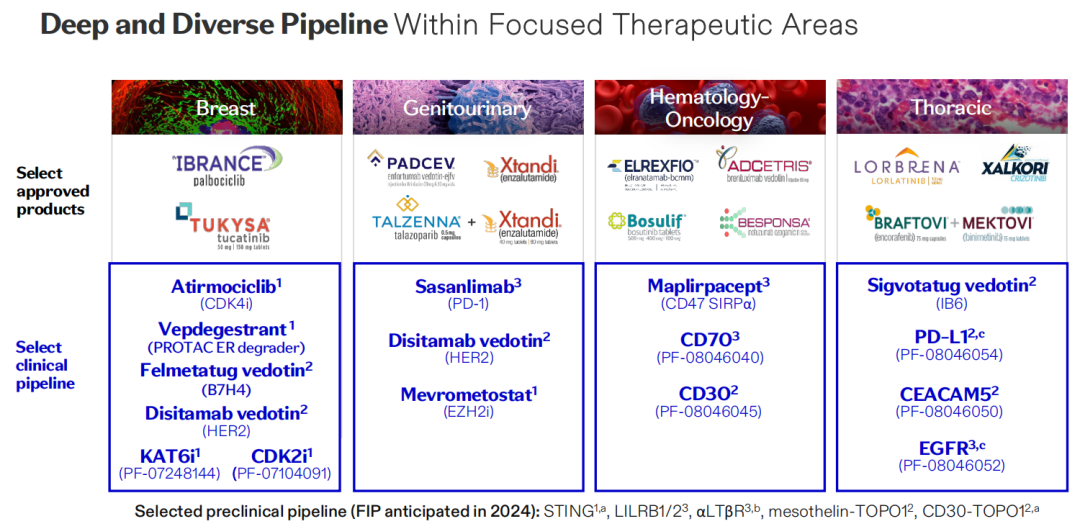
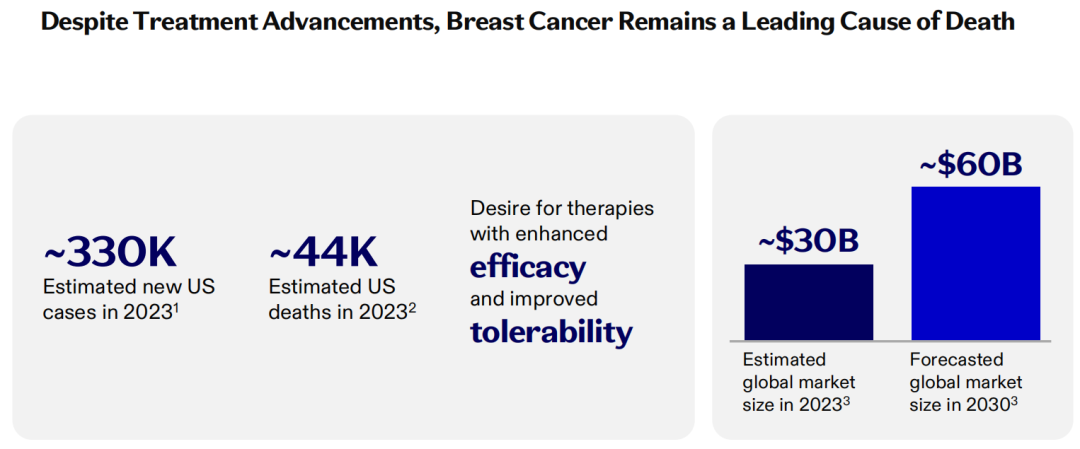
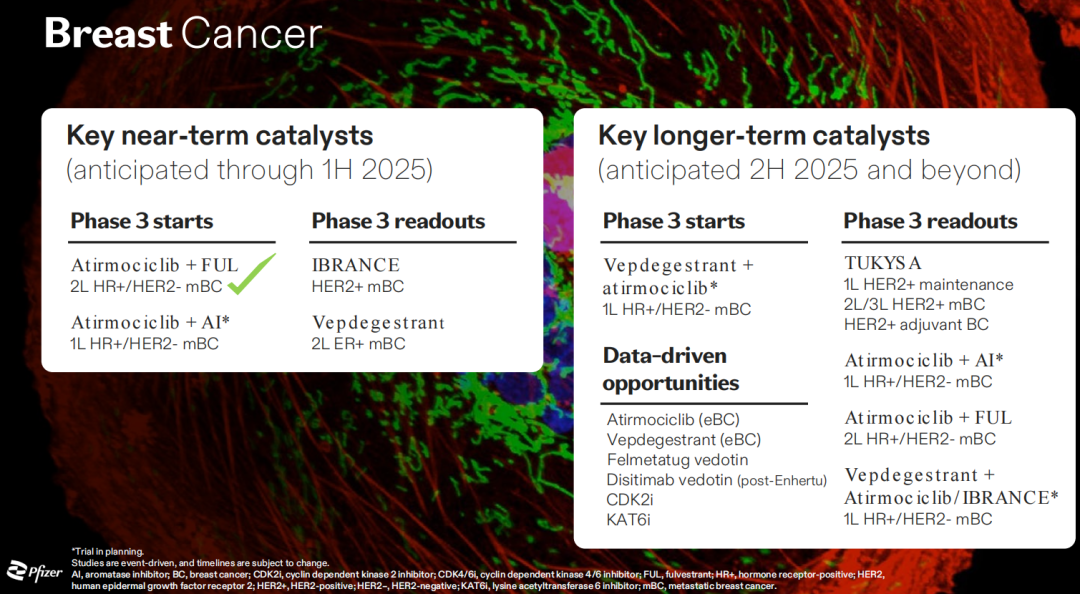
In breast cancer, Seagen has introduced the HER2-targeted ADC, disitamab vedotin.(DisitamabVedotin)And tyrosine kinase inhibitor Tukysa. ForContinuing the legacy of Ibrance, Pfizer is researching a CDK4 inhibitor named aitrmociclib.The inhibitor has already entered Phase 3 clinical trials for second-line HR-positive, HER2-negative breast cancer, with first-line trials planned to begin in the second half of this year.。Varma in thisTold investors at the event that although these new drugs have growth potential, their patent cliff will be very steep.Pfizer Projects Breast Cancer’s Contribution to Total Oncology Sales by 2030ProportionWill decrease from approximately 40% in 2023 to around 10%.
Genitourinary Cancer
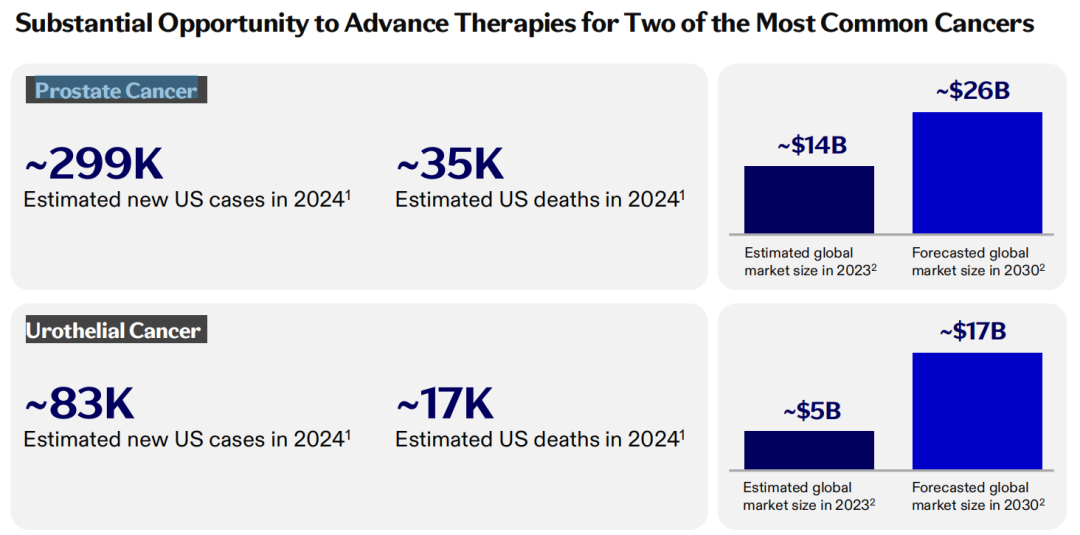
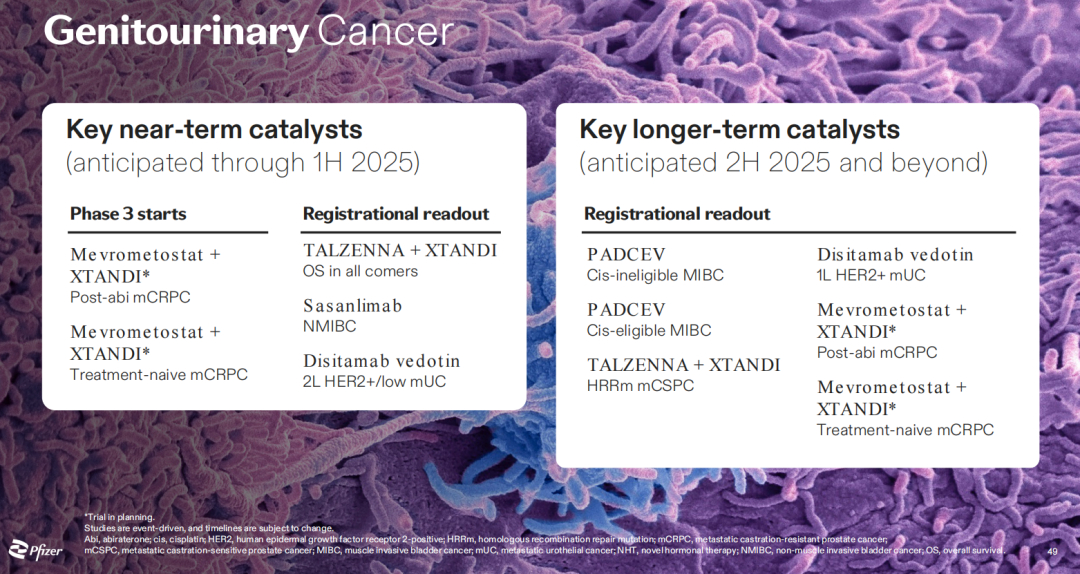
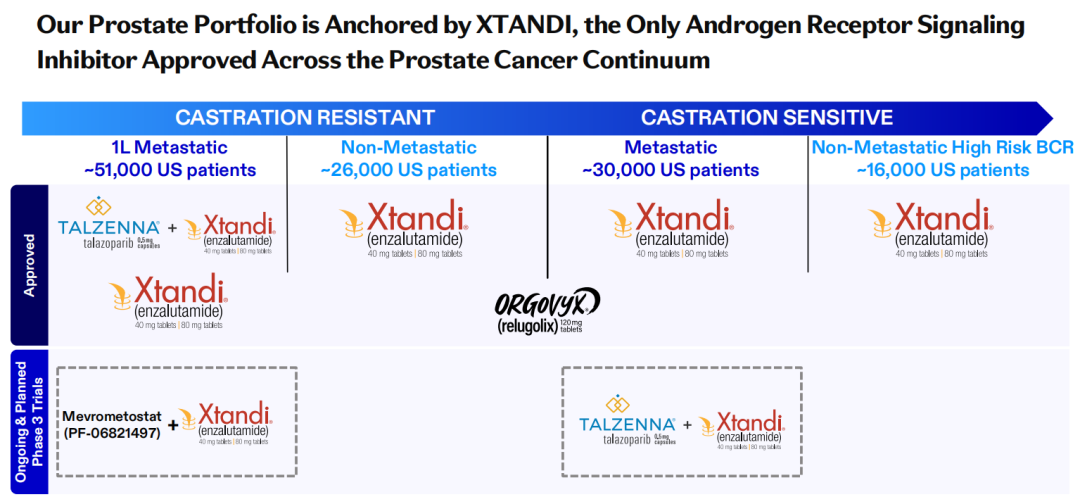
Breast CancerOn the contrary,Urogenital system cancers are expected to become Pfizer's largest oncology franchise, contributing about 35%.. In this field, Pfizer's collaboration with Astellas on PadcevAndMerck's Keytruda combination is becoming the new standard for first-line bladder cancer treatment.RongchangThe biodrug Disitamab Vedotin, which has been sold in China, is also undergoing a phase 3 trial with Keytruda for previously untreated HER2-expressing bladder cancer.More importantly, Pfizer is also counting on longer follow-up of the overall survival data from the Phase 3 TALAPRO-2 trial later this year toHopeTo expand the combination of its PARP inhibitor Talzenna and Xtandi to a broader population of prostate cancer patients. Additionally, the company aims to initiate this effort later this year.Two Phase 3 Trials for Metastatic Castration-Resistant Prostate Cancer.
Blood Cancer
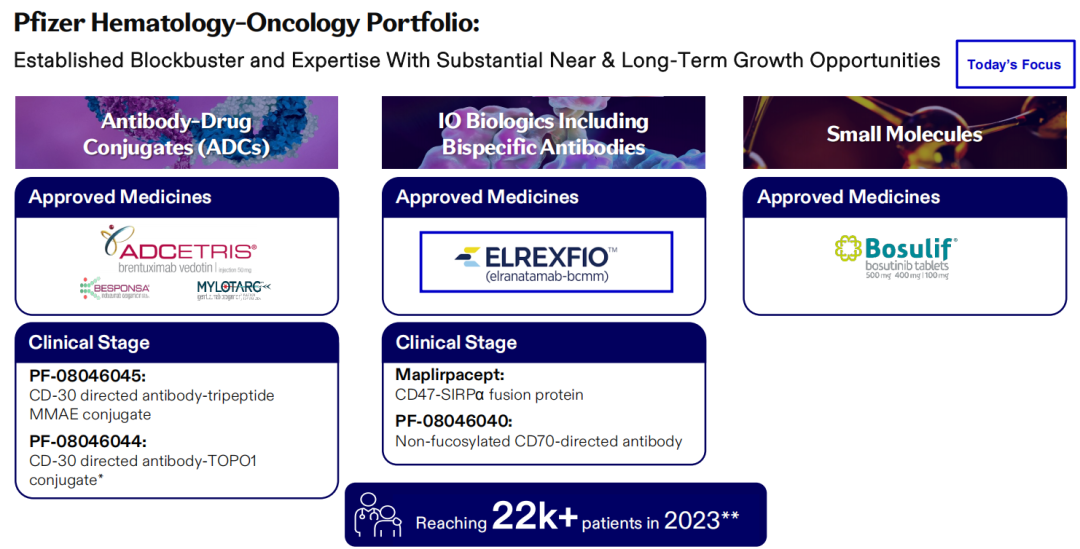
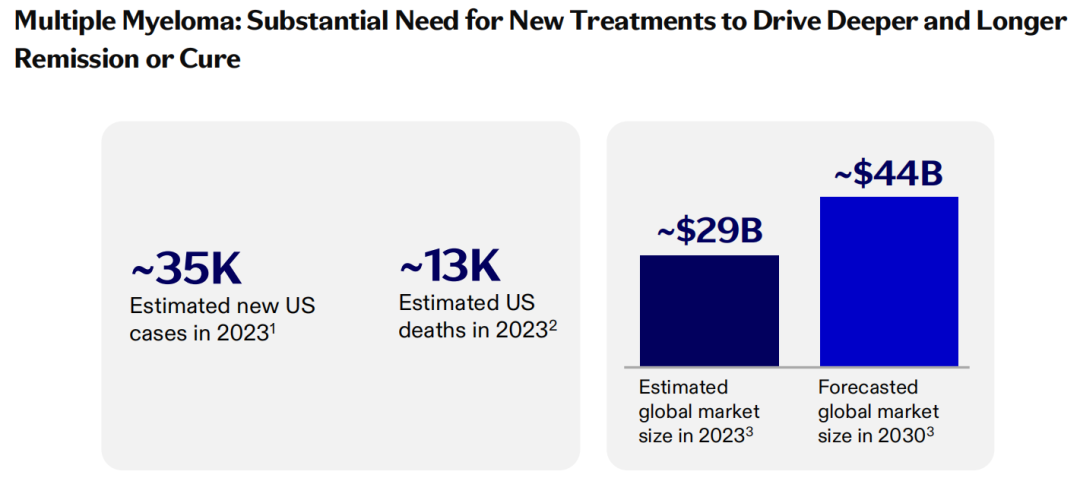
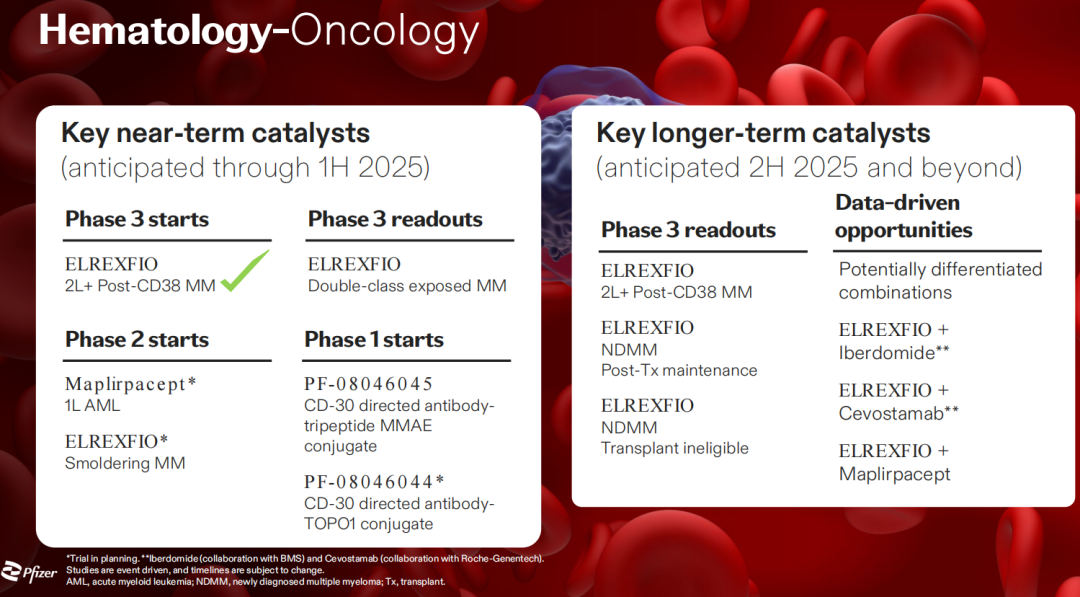
Recently, Pfizer has alsoBegin to advance into the field of leukemiaThe FDA has approved the BCMA-targeted bispecific drug Elrexfio. Similarly, several phase 3 trials for the treatment of multiple myeloma are currently underway, including2A trial for newly diagnosed patients, as maintenance treatment post-transplant or for patients unsuitable for transplant. Additionally, SeagenAnother is Adcetris, a well-known blockbuster for classical Hodgkin lymphoma.
Thoracic Cancer
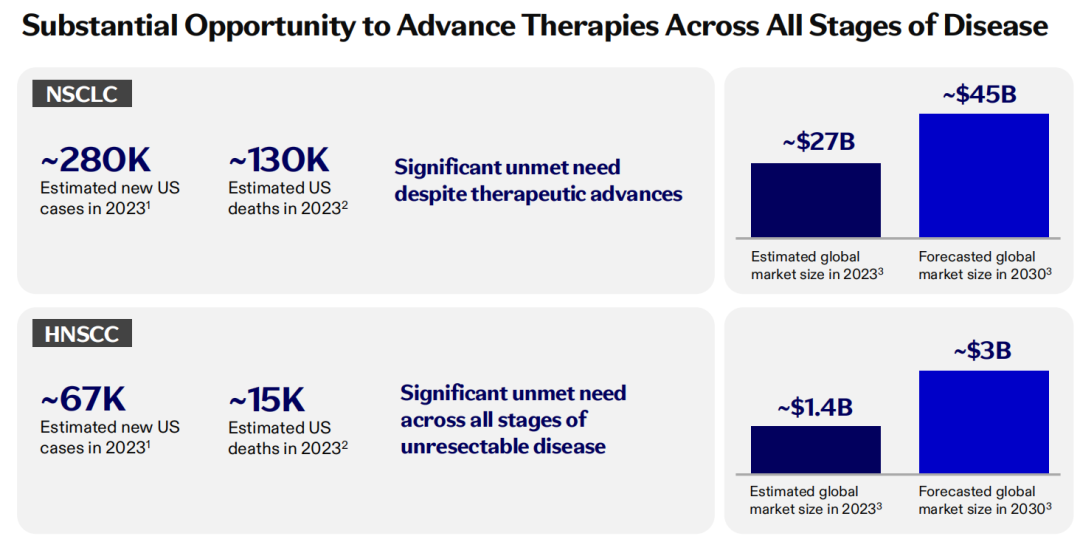
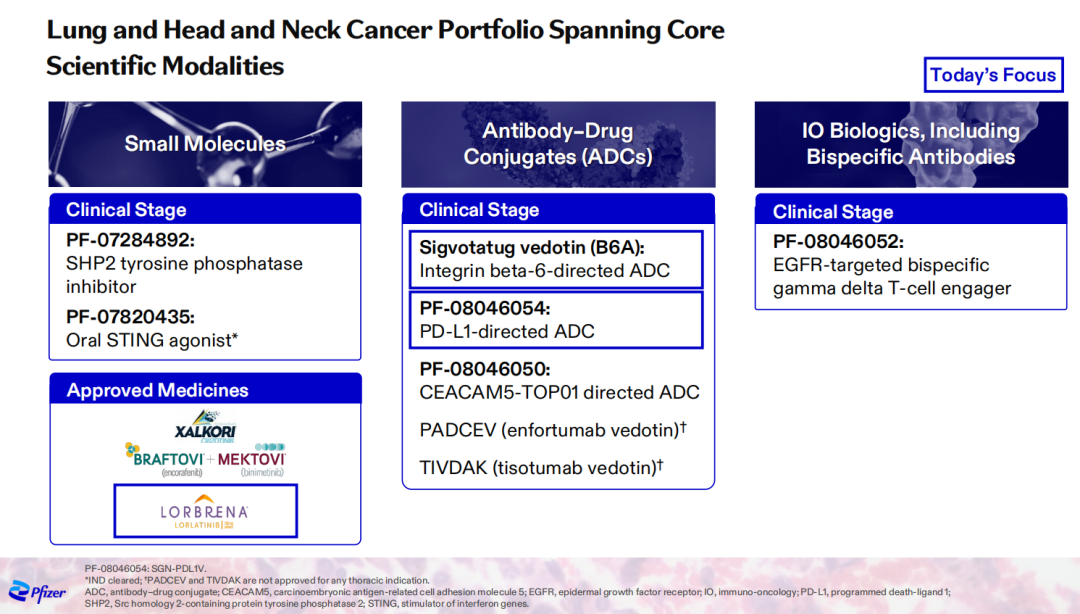
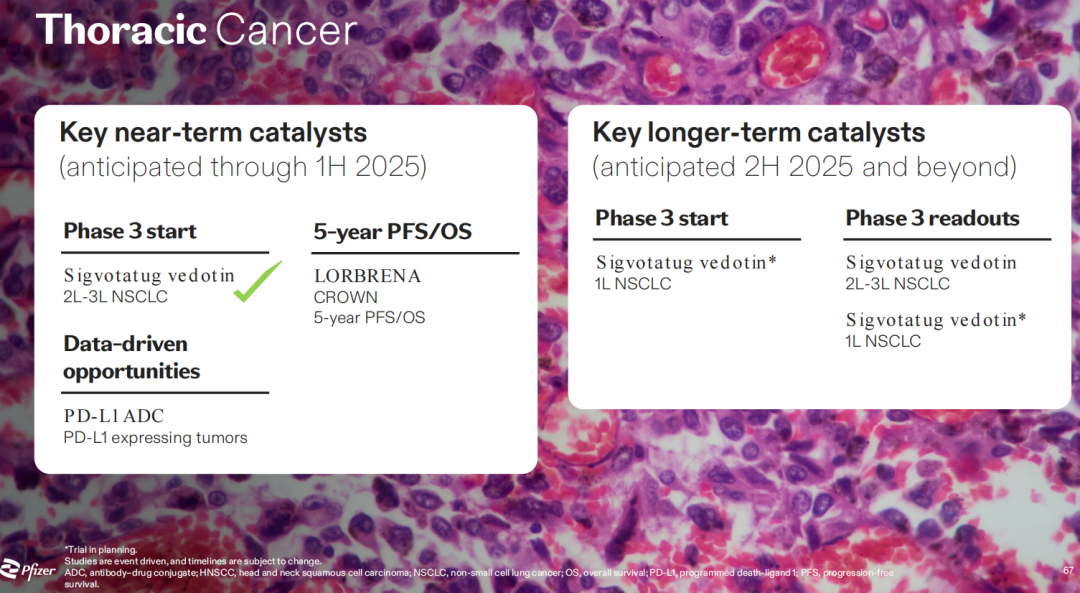
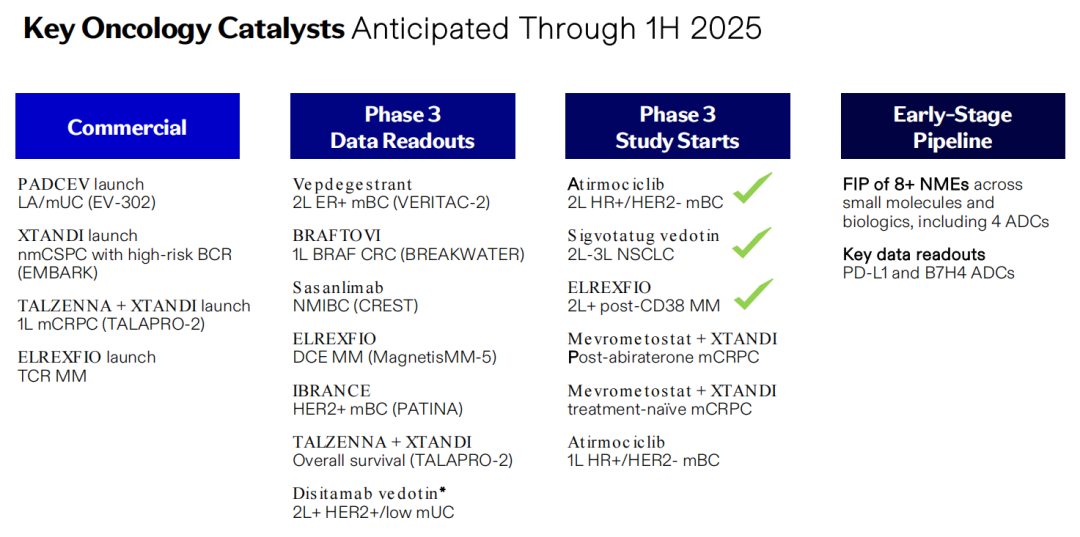
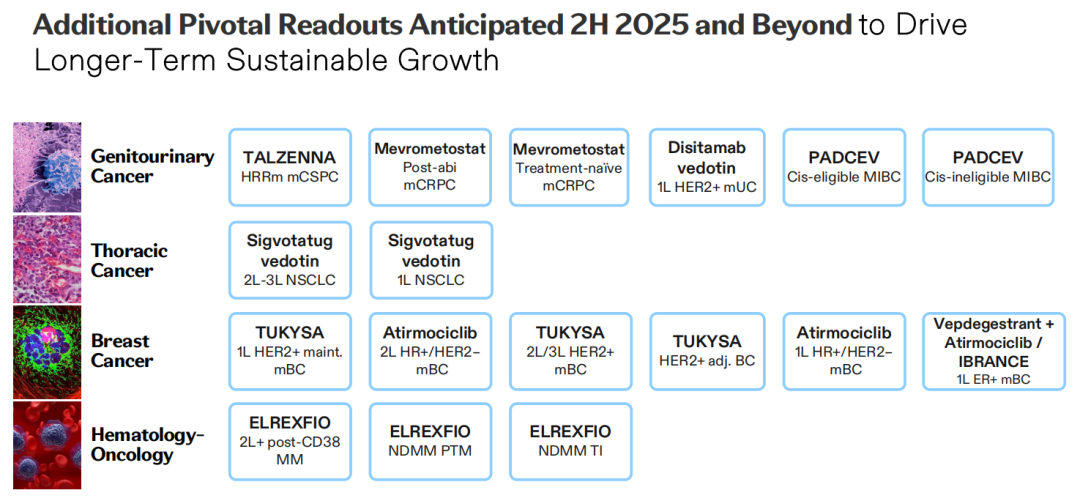
As forChest Cancer, Pfizer CurrentlyThere are relatively fewer layouts for this.In terms of lung cancer, Pfizer is working to establish its third-generation ALK inhibitor, Lorlatinib, as the new standard of care in this field. The integrin β-6-directed ADC, Sigivotamab vedotin, has recently entered Phase 3 for pretreated non-squamous non-small cell lung cancer.Test, with readings expected to be obtained around 2026 or 2027.In general,Pfizer ArrivesThe First Quarter of 2025Key Tumor Catalysts as Follows, with Additional Key Data Expected in Q2 2025 and Beyond, will drive the company's long-term sustainable development and achieve growth.PS: In[Pharmaceutical Time and Space] Reply to the keyword "Pfizer Oncology Innovation Day", you can obtainPfizerTumor Innovation DayPPT ReportMaterials (Total 141 Pages)!References:[1]Pfizer fleshes out oncology strategy, targeting 8 blockbuster cancer drugs by 2030.Fierce Pharma.By Angus Liu.Feb 29, 2024 5:42pm.[2] Pfizer’s $43 Billion Acquisition of Seagen Nears Completion. PharmaCube. Invest. 2023-12-13.[3]Pfizer Oncology Innovation Day Presentation.Scan the WeChat QR code to add.Medicine Space-TimeEditor Please indicate: Name + Research Direction!