

Pfizer Oncology Pipeline Highlights Over 8 Potential Blockbuster Therapies Across Three Key Modalities: Small Molecules, ADCs, and Bispecific Antibodies

Pfizer
Pharmaceutical R&D Developer
▎WuXiEdited by Kant Content Team
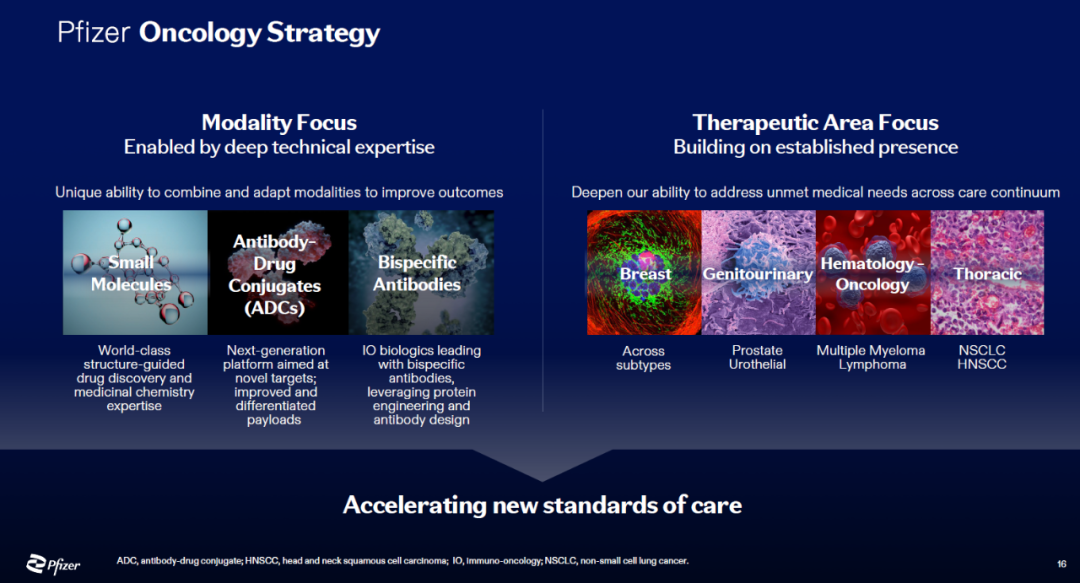
Recently, Pfizer held its Oncology Innovation Day, disclosing the company’s R&D layout in the field of oncology. Company executives stated,By 2030, the oncology R&D pipeline is expected to produce more than eight blockbuster therapies. The company will focus on three treatment modalities: small molecule drugs, antibody-drug conjugates (ADCs), and bispecific antibodies.In today's article, the WuXi AppTec content team will introduce to readers some of the oncology R&D projects that the company highlighted at its Innovation Day.Reply "Pfizer Oncology" to the WeChat account of WuXi AppTec to receive the download link and view the PPT report from the Oncology Innovation Day.
Disitamab Vedotin: Promising to Change the Treatment of HER2-Positive Urothelial Carcinoma
Disitamab vedotin is a HER2-targeted antibody-drug conjugate acquired by Pfizer after its acquisition of Seagen, jointly developed by Seagen and Rongchang Biopharmaceutical.It has been approved in China for the treatment of specific gastric cancer and urothelial cancer patients. Disitamab vedotin has received Breakthrough Therapy Designation from the U.S. FDA as a monotherapy for HER2-positive locally advanced or metastatic urothelial cancer patients who have undergone two or more systemic therapies.When used in combination with anti-PD-1 antibodies as a potential first-line or second-line therapy for patients with locally advanced or metastatic urothelial carcinoma, it demonstrated a confirmed objective response rate (ORR) of 73.2%.It has now initiated a Phase 3 clinical trial in combination with Keytruda for the first-line treatment of patients with urothelial cancer. Pfizer executives pointed out,This combination may become the new standard for first-line treatment of HER2-positive urothelial carcinoma.
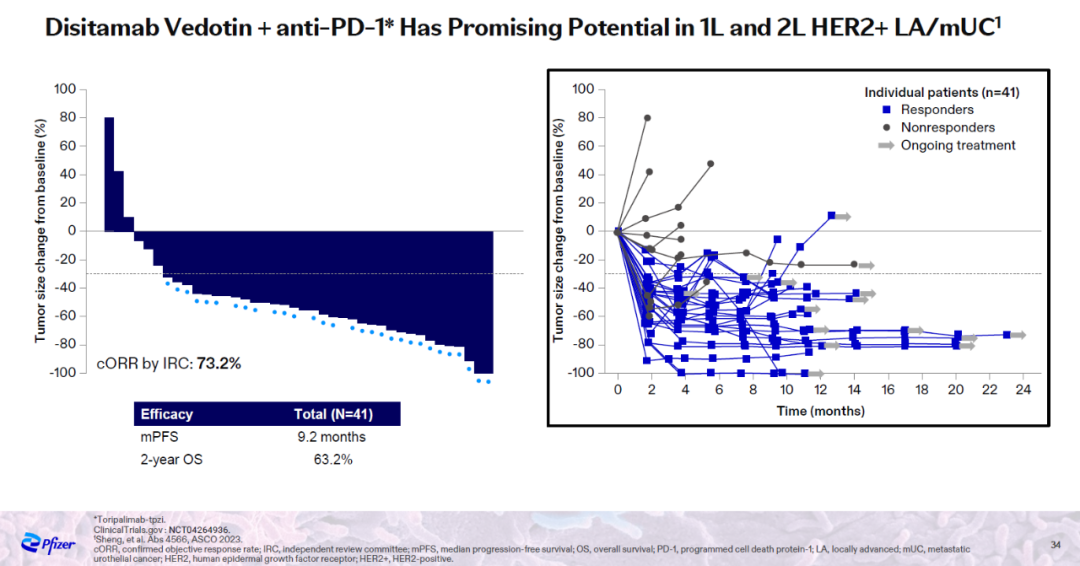
▲Clinical Trial Results of Disitamab Vedotin in Combination with Anti-PD-1 Antibody (Image Source:Pfizer Official Website)
Mevrometostat: A Potential First EZH2 Inhibitor for the Treatment of Prostate Cancer
Mevrometostat is a selective, orally available, potent EZH2 inhibitor. Used in combination with Xtandi, it demonstrated encouraging anticancer activity in a Phase 1 clinical trial for the treatment of patients with previously treated metastatic castration-resistant prostate cancer (mCRPC).Pfizer plans to launch a Phase 3 clinical trial in the second half of this year to test the efficacy of this combination in mCRPC patients who have not received prior treatment and those who have been treated with abiraterone.
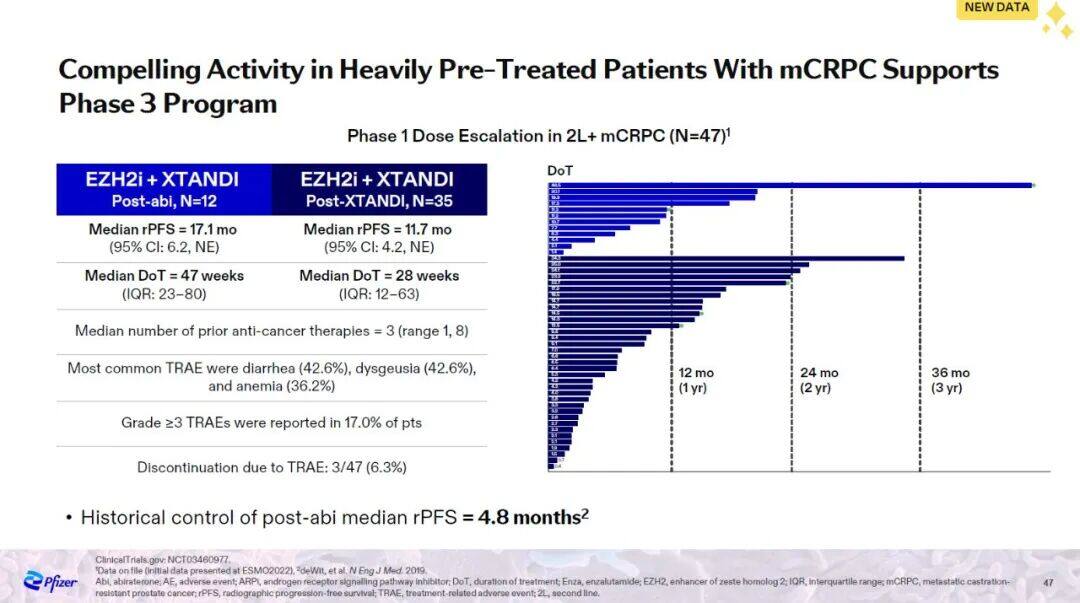
▲Clinical Trial Results of Mevrometostat (Image Source: Pfizer's Official Website)
Sigvotatug Vedotin: Potential "First-in-Class" Integrin β6-Targeted Antibody-Drug Conjugate
Sigvotatug vedotin enhances the tumor selectivity of this ADC by engineering the antibody to be specific for integrin β6 (IB6), thereby avoiding binding to other integrins.It demonstrated good safety and encouraging anticancer activity in Phase 1 clinical trials for the treatment of patients with non-squamous non-small cell lung cancer. The company has initiated a Phase 3 clinical trial to further evaluate Sigvotatug Vedotin.
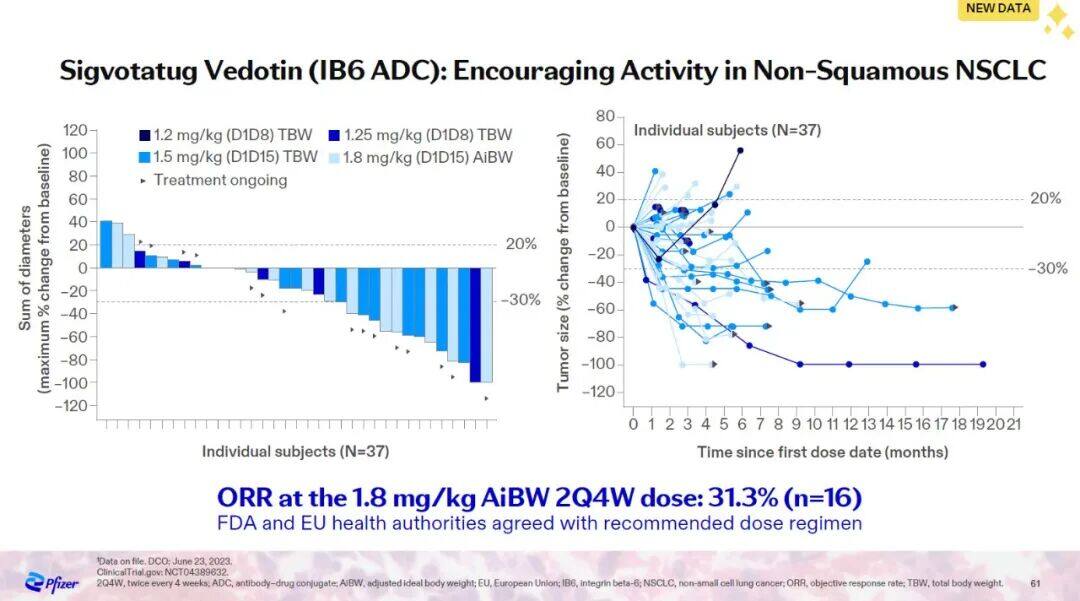
▲Sigvotatug vedotin Phase 1 Clinical Trial Results (Image Source:Pfizer Official Website)
PF-08046054: Potential "First-in-Class" PD-L1 Targeted ADC
PF-08046054 is an antibody-drug conjugate targeting PD-L1. In preclinical studies, itAlso exhibits anticancer activity in animal models with low PD-L1 expression or high expression heterogeneity.In a Phase 1 clinical trial conducted in patients with PD-L1 positive head and neck squamous cell carcinoma (HNSCC), PF-08046054 demonstrated favorable preliminary efficacy.
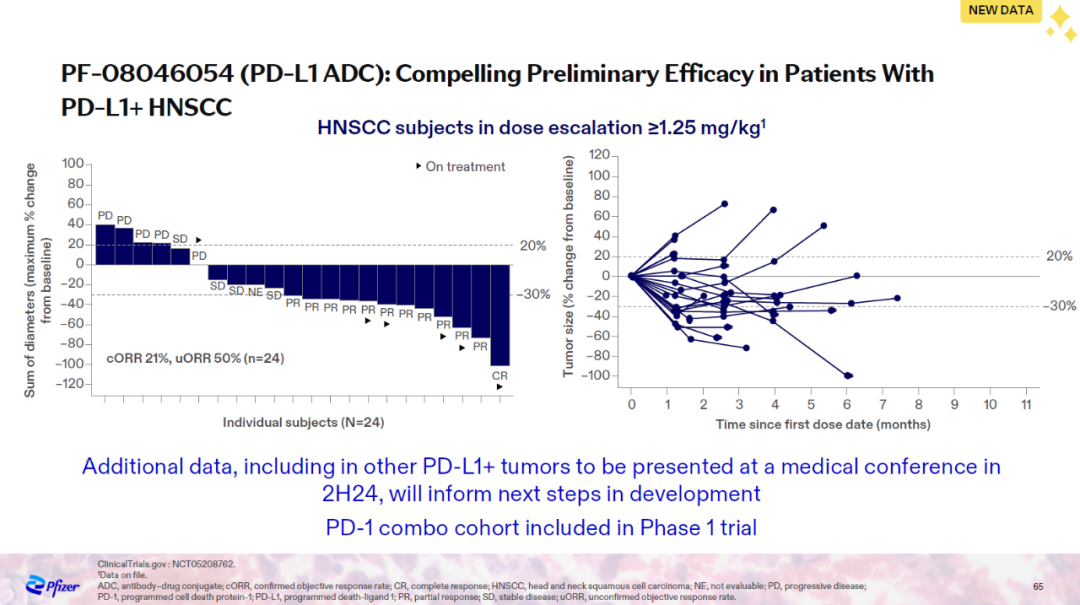
▲Preliminary Clinical Trial Results of PF-08046054 in the Treatment of HNSCC (Image Source:Pfizer Official Website)
Atirmociclib: Potential "Best-in-Class" CDK4 Inhibitor
Atirmociclib is a highly selective inhibitor of CDK4, with a selectivity for CDK4 that is 33 times greater than for CDK6. In Phase 1 clinical trials,Treatment with atirmociclib combination therapy achieved a 32% ORR in breast cancer patients who had received multiple prior treatments. The ORR for these patients with existing therapies is less than 10%.At the same time, the combination therapy of atirmociclib exhibited distinct safety and tolerability characteristics.
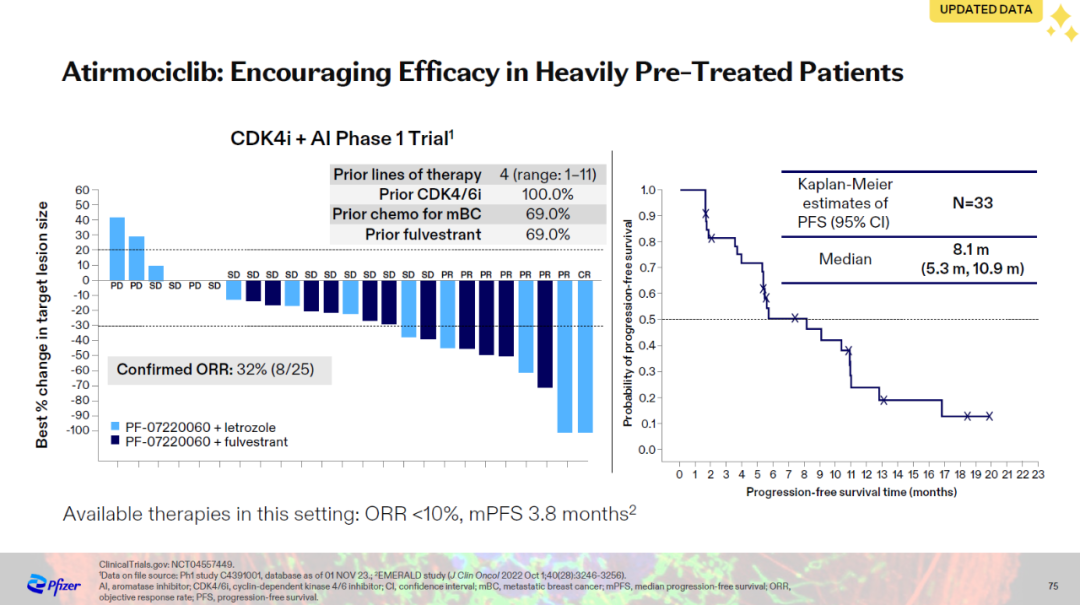
▲Phase 1 Clinical Trial Results of Atirmociclib (Image Source:Pfizer, Inc. Official Website)
Next-Generation Bispecific Antibody Therapy
Pfizer will develop immuno-oncology biologics by focusing on bispecific and multispecific antibody therapies. For example, therapies under research.PF-08046052 is a bispecific antibody targeting EGFR and γδ T cells, which recruits γδ T cells to the vicinity of solid tumors, activating innate immune responses.
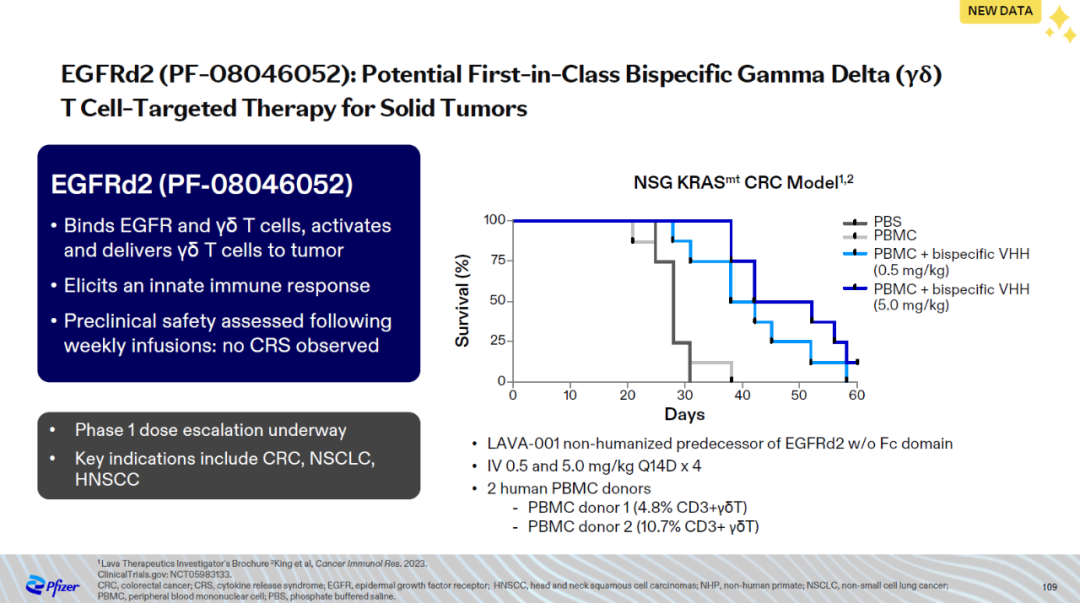
▲PF-08046052 is a potential “first-in-class” γδ T cell-targeting bispecific antibody therapy (Image source:Pfizer, Inc. Official Website)
At the Oncology Innovation Day, Pfizer also introduced several next-generation antibody-drug conjugates, small molecule drugs, and bispecific antibody therapies. Due to space limitations, this article will not go into further detail.Reply "Pfizer Oncology" to the WeChat account of WuXi AppTec to receive the download link and view the PPT report from the Oncology Innovation Day.

Everyone is watching






▲To learn more about the application of cutting-edge technologies in the biopharmaceutical industry, please long press to scan the QR code above to access "WuXi AppTec Live Studio" and watch live discussions and exciting replays on related topics.
Disclaimer: The content team of WuXi AppTec focuses on introducing the research progress in global biopharmaceuticals and health. This article is for information exchange purposes only, and the views expressed in the article do not represent the position of WuXi AppTec, nor does it indicate that WuXi AppTec supports or opposes these views. This article is not a recommendation for treatment plans. For guidance on treatment options, please visit a正规 hospital.
Copyright Statement: This article is from the content team of WuXi AppTec. Individuals are welcome to share it on their social media platforms, but unauthorized reproduction by media or institutions in any form to other platforms is prohibited. For authorization to reproduce, please reply with "reprint" on the WeChat Official Account of "WuXi AppTec" to obtain reprint guidelines.

Share,PointLike,In View,Focusing on Global Biomedical Health Innovation