Amivantamab Granted FDA Approval for First-Line Treatment of EGFR Exon 20 Insertion-Mutant NSCLC; Additional Indications Under Regulatory Review

Johnson & Johnson
Medical Device R&D and Manufacturer
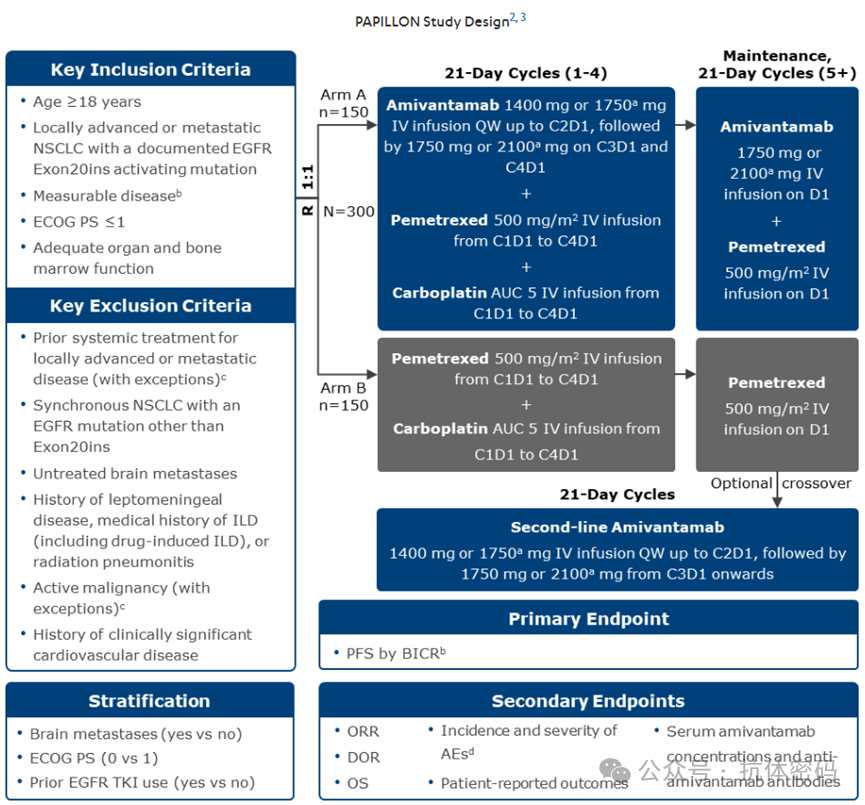
PAPILLON is a randomized, open-label, Phase 3 clinical study evaluating the efficacy and safety of amivantamab in combination with chemotherapy versus chemotherapy alone in previously untreated patients with advanced or metastatic NSCLC carrying EGFR exon 20 insertion mutations. Patients eligible for enrollment must have histologically or cytologically confirmed locally advanced or metastatic non-squamous NSCLC, with documented primary activating EGFR exon 20 insertion mutations; measurable disease according to RECIST v1.1 criteria; and an ECOG performance status of 0 or 1.
Amivantamab is administered via intravenous infusion at a dose of 1400mg (or 1750mg if the body weight is ≥80kg) once weekly. Starting from Day 1 of Cycle 2 (with each cycle lasting 21 days), an intravenous infusion of 1750mg (or 2100mg if the body weight is ≥80kg) is given on Day 1 of each cycle.
On day 1 of the cycle, patients in both groups received 500 mg/m² of pemetrexed and carboplatin. Pemetrexed was continued as maintenance therapy until disease progression.
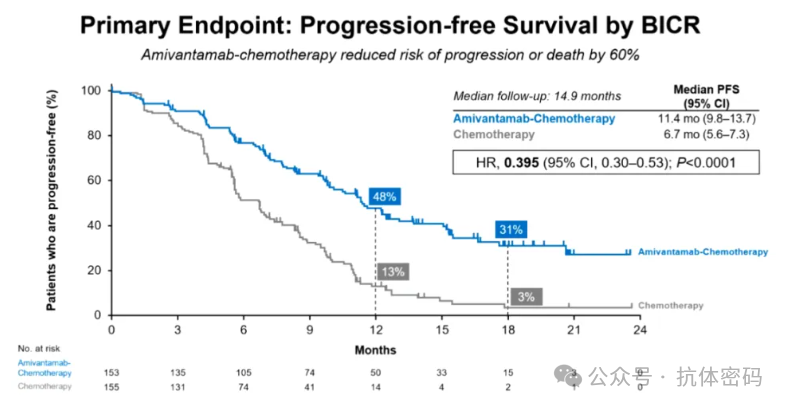
On July 17, 2023, Johnson & Johnson announced that the Phase III clinical study PAPILLON of Rybrevant combined with chemotherapy as a first-line treatment for EGFR ex20ins NSCLC succeeded, reaching the primary endpoint of PFS, compared with chemotherapy alone.
With a median follow-up of 14.9 months, the mPFS in the two groups was 11.4 months vs 6.7 months (HR=0.395, P<0.0001), respectively, and the combination therapy significantly reduced the risk of disease progression and death by 60%. The 18-month PFS rates in the two groups were 31% vs 3%, respectively.
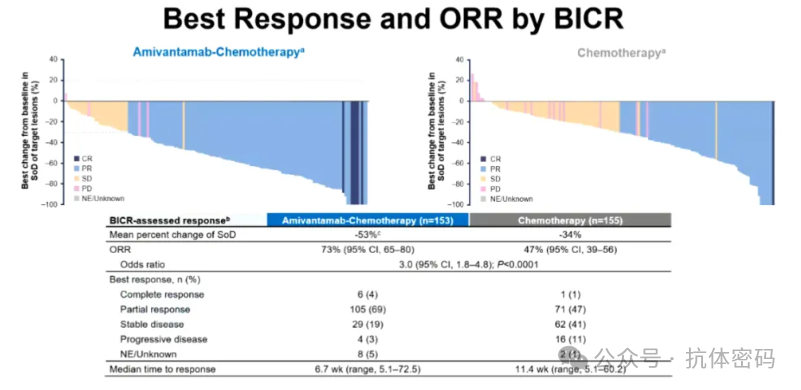
In terms of Objective Response Rate (ORR), the ORR for the combination therapy was 73%, compared to 47% in the control group (OR = 3.0, P<0.0001). Notably, six patients in the combination therapy group achieved complete response (CR, 4%).
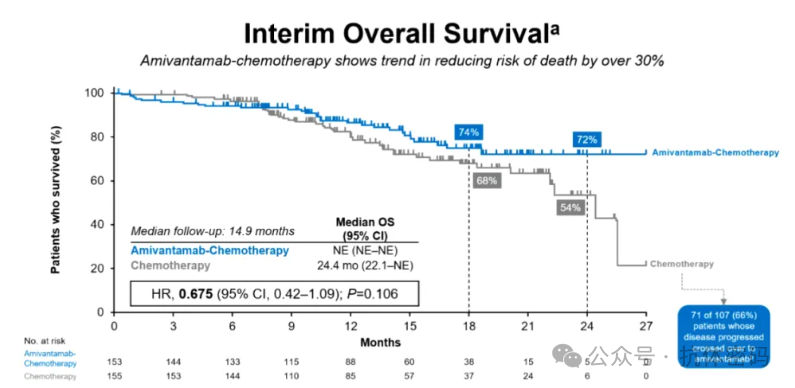
The interim OS analysis showed that, although 66% of patients in the chemotherapy group crossed over to receive second-line amivantamab treatment after disease progression, the combination therapy group still demonstrated a favorable trend over the chemotherapy group (HR=0.675, P=0.106), with a 2-year OS rate of 72% vs 54%.
In addition to the therapy approved this time,What other indications for amivantamab will be approved for marketing in the future?FirstAmivantamab Combination Therapy (Rybrevant ± Lazertinib + Chemotherapy) for Osimertinib-Resistant NSCLC: On December 21, 2023, Johnson & Johnson announced the submission of a supplemental Biologics License Application (sBLA) and a New Drug Application (NDA) to the U.S. FDA.SecondlyIt also submitted a marketing authorization application to the European Medicines Agency (EMA) for the indication, seeking approval for Rybrevant (amivantamab) in combination with the third-generation epidermal growth factor receptor (EGFR) tyrosine kinase inhibitor (TKI) oral medication lazertinib as a first-line treatment for adult patients with locally advanced or metastatic non-small cell lung cancer (NSCLC) harboring EGFR exon 19 deletions (ex19del) or L858R substitution mutations.
In addition, in October last year, Johnson & Johnson also submitted the first application for the marketing of amivantamab in China: for the treatment of adult patients with locally advanced or metastatic non-small cell lung cancer carrying EGFR exon 20 insertion mutations whose disease has progressed during or after platinum-based chemotherapy.


All articles reproduced in this official account are intended to convey more information, with the source and author clearly indicated. Media or individuals who do not wish to be reprinted may contact us (cbplib@163.com), and we will immediately delete the content. All articles represent the views of the author and do not represent the position of this site.