FDA Approves Amivantamab in Combination with Chemotherapy for First-Line Treatment of EGFR Exon 20 Insertion-Mutated NSCLC

Johnson & Johnson
Healthcare Product Manufacturers, Health Service Providers

On March 1, 2024, the FDA approved the first-line indication of Janssen's bispecific antibody in combination with chemotherapy for the treatment of non-small cell lung cancer, specifically amivantamab in combination with chemotherapy for the treatment of locally advanced or metastatic non-small cell lung cancer positive for EGFR exon 20 insertion mutations. At the same time, the FDA also converted the second-line monotherapy indication, which was granted accelerated approval in May 2021, to full approval.
Figure 1. Source: FDA
The approval of this first-line indication was based on the results of a Phase III clinical trial named PAPLILLON. PAPLILLON is a global, randomized, multicenter Phase III clinical trial that compared the efficacy and safety of Amivantamab in combination with chemotherapy versus chemotherapy alone in patients with advanced or metastatic NSCLC harboring EGFR Exon 20 insertion mutations.
PAPILLON Study Design
The PAPILLON study enrolled 308 treatment-naïve patients with advanced EGFR Exon 20 insertion-mutated NSCLC, who were randomized in a 1:1 ratio to receive either Amivantamab in combination with chemotherapy or chemotherapy alone. Patients in the chemotherapy group could cross over to receive second-line Amivantamab monotherapy after disease progression. The primary endpoint of the study was progression-free survival (PFS) assessed by blinded independent central review (BICR); secondary endpoints included objective response rate (ORR), overall survival (OS), PFS after the first subsequent therapy (PFS2), and safety, among others.
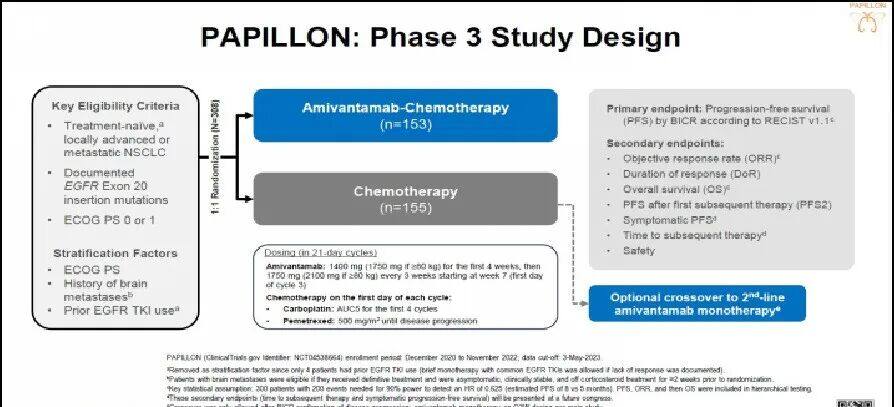
Figure 2. Study Design of PAPILLON
The study results showed that after a median follow-up of 14.9 months, the median PFS in the Amivantamab plus chemotherapy group was 11.4 months, significantly surpassing the 6.7 months in the chemotherapy-alone group (HR = 0.395; 95% CI, 0.30-0.53; P<0.0001), nearly doubling the PFS and reducing the risk of disease progression or death by 60%. Notably, the advantages of the Amivantamab plus chemotherapy group were consistent across all subgroups.
The ORR was 73% in the Amivantamab plus chemotherapy group and 47% in the chemotherapy group, with a significant advantage in the combination treatment group (HR = 1.50; 95% CI, 1.32-1.68; P<0.001). Interim OS data showed that despite 66% of patients in the chemotherapy group receiving second-line Amivantamab treatment after disease progression, the Amivantamab plus chemotherapy group still demonstrated an OS prolongation advantage over the chemotherapy group, reducing the risk of death by more than 30% (HR = 0.675; 95% CI, 0.42-1.09; P = 0.106).
Safety analysis showed that the most common (≥40%) treatment-emergent adverse events (TEAEs) in the combination therapy group were neutropenia, paronychia, rash, anemia, infusion-related reactions, and hypoalbuminemia, with no new safety signals observed. Additionally, the discontinuation rate due to Amivantamab-related adverse events was low, at only 7%, indicating that the safety of the Amivantamab plus chemotherapy regimen is highly predictable and manageable.
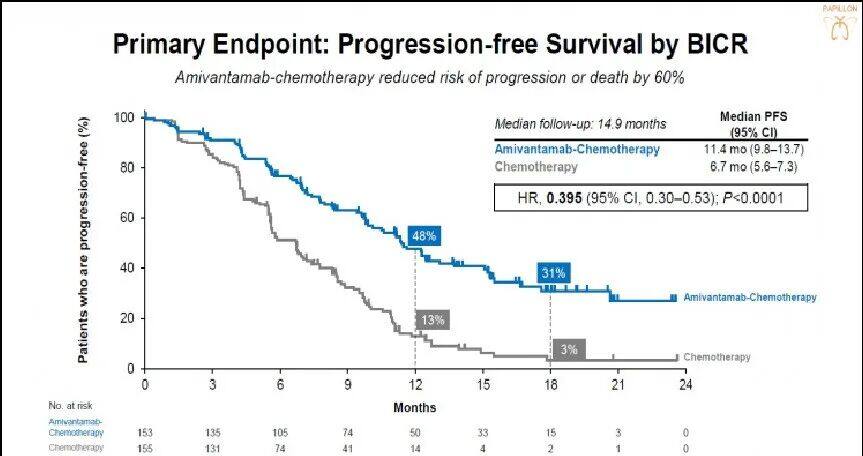 Figure 3. Progression-Free Survival (PFS) in the PAPILLON Study
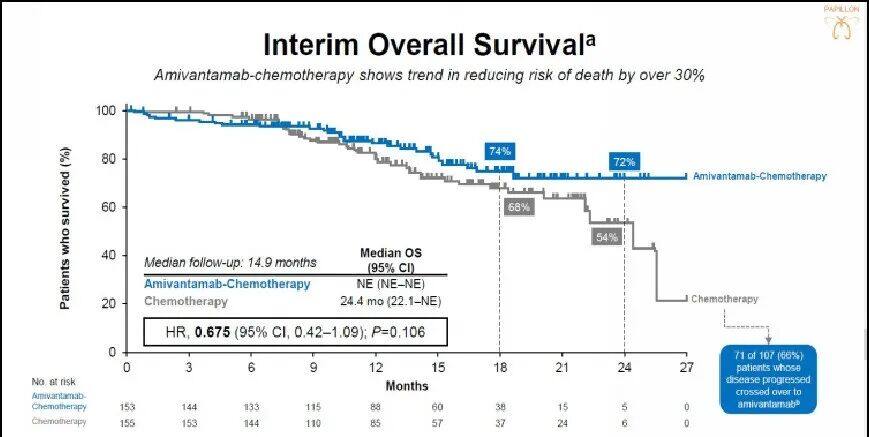 Figure 4. Interim Overall Survival (OS) of the PAPILLON Study
The results of the PAPILLON study were published in the prestigious medical journal, The New England Journal of Medicine, with Professor Zhou Caicun as the first author.
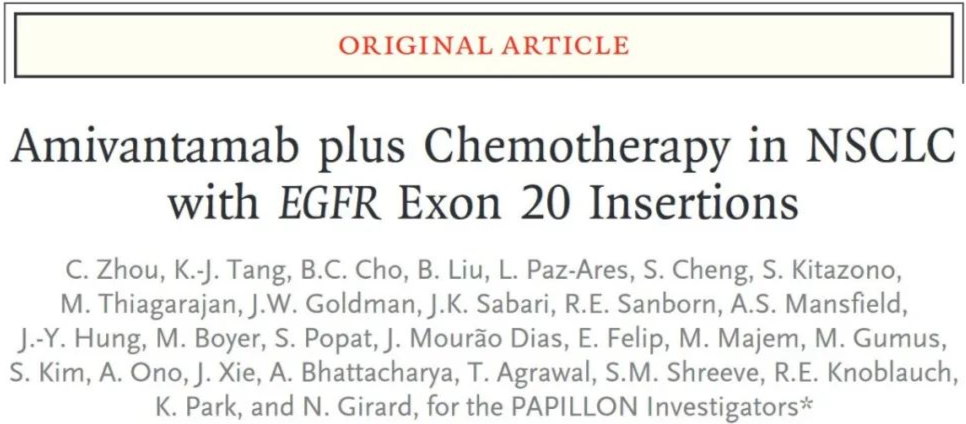
Figure 5. Screenshot of the study; from NEJM
Amivantamab (JNJ-61186372) is a bispecific antibody targeting EGFR and cMet, belonging to the category of monoclonal antibody drugs administered via intravenous infusion that target both EGFR and MET. It differs from previous orally administered EGFR TKIs. This bispecific antibody adopts a 1+1 asymmetric format (IgG1), with one Fab binding to the cMet target and the other Fab binding to the EGFR target, and it exhibits ADCC effects.
In May 2021, the FDA approved amivantamab for the treatment of patients with EGFR ex20ins mutation-positive advanced NSCLC whose disease has progressed after failure of platinum-based chemotherapy.
EGFR Exon 20 insertion mutation (Exon 20ins) is the third most common mutation in patients with advanced non-small cell lung cancer (NSCLC), following the two most prevalent EGFR mutations (Exon 19 deletion mutation and Exon 21 L858R point mutation), accounting for approximately 10% of EGFR mutations and about 2% of all NSCLC cases.
References