Recently, Dupilumab (trade name: Dupixent®The supplemental Biologics License Application (sBLA) for Dupixent (developed in collaboration by Sanofi and Regeneron) for the treatment of chronic obstructive pulmonary disease (COPD) has been accepted by the FDA and granted priority review, establishing a new milestone in new drug development within the COPD field.
As the first biologic agent in the COPD field, Dupilumab is also about to usher in a new era of COPD treatment, offering patients who previously only had "symptomatic treatment" options a completely new therapeutic choice.The Bottleneck of "Symptomatic Treatment" for COPD Has Arrived, and "Causal Treatment" Is Difficult to Breakthrough
COPD is a common chronic airway disease, clinically characterized by persistent airflow limitation and corresponding respiratory symptoms. According to statistics, there were approximately 300 million COPD patients globally in 2019, with 3.2 million deaths attributed to COPD.[1], the disease has become the third leading cause of death globally. China is a major COPD country, with the number of patients reaching 100 million.[2]。Currently, there is no cure for COPD, and the most effective approach to alleviate symptoms involves the use of bronchodilators (β2-agonists and anticholinergics) and anti-inflammatory drugs (corticosteroids). However, while these medications have shown significant efficacy, they still fail to fully meet patients' treatment needs. This situation arises from two main factors: on one hand, the heterogeneity of COPD leads to substantial individual differences, making treatment challenging; on the other hand, traditional inhalation therapies are insufficient to prevent acute exacerbations of COPD, necessitating the exploration of alternative treatment strategies. Therefore, a significant gap remains in the COPD market, awaiting solutions.When symptomatic treatment drugs have reached a bottleneck, exploring causal treatment becomes another way out. However, the pathogenesis of COPD is relatively complex and has not been fully elucidated to date. The latest research shows that about 20%-40% of COPD patients belong to the type 2 inflammatory endotype with elevated eosinophil levels; therefore, inhibiting the occurrence and development of type 2 inflammation has become a feasible direction for causal treatment of COPD. Some studies on biologics targeting inflammatory cytokines have released positive signals, among which targeting type 2 inflammatory factors such as IL-4, IL-5, and IL-13 is currently a popular research and development direction.[3]。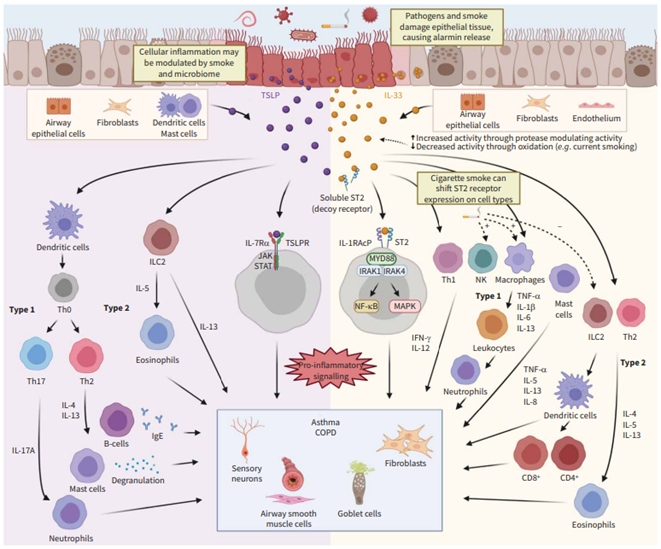
However, the products that ultimately advance to the clinical stage remain few. As of now, there are fewer than 20 biologics for COPD in clinical stages globally, including 10 products targeting IL-4/IL-4Rα, IL-5/IL-5Rα, IL-13, and IL-33/IL-33R. This path is not without obstacles, as multiple therapies have successively encountered clinical failures, being turned down by COPD.[5,6]。Biologics for COPD in Late-Stage Development
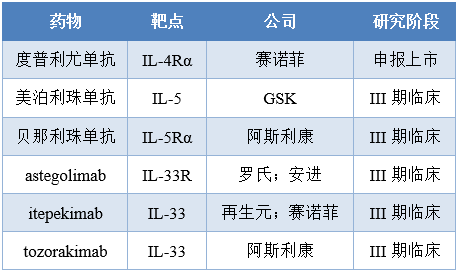
Note: According to the PharmaCube database
Besides, the complexity of patients' treatment backgrounds also poses a challenge for COPD biologics. Some clinical study results have shown that treatment responses to these drugs vary among populations due to differences in biomarker levels, smoking status, and asthma history.[5,7,8]。These challenges are like trenches lying between biologics and COPD, requiring repeated attempts to explore the correct solutions.
Dupilumab Brings Breakthrough in COPD Treatment
In the occurrence of Type 2 inflammation, IL-4 plays a critical role. IL-4 can induce naïve helper T cells (Th0) to differentiate into Th2 cells, which, once activated, secrete IL-4, IL-5, and IL-13, thus initiating the cytokine factory. Additionally, IL-4 can synergize with IL-13 to stimulate B cells to secrete IgE, promoting downstream inflammatory responses. Moreover, IL-4 and IL-13 can also induce alternative activation of macrophages and have various effects on inducing mucus production, goblet cell hyperplasia, and smooth muscle contraction.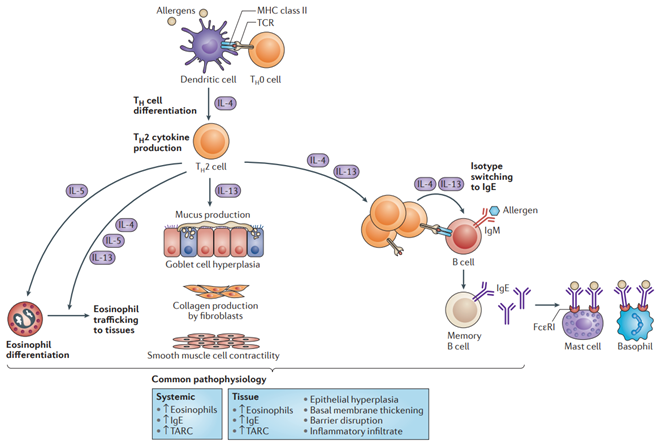
The Differentiation Process of Helper T Cells Involved by IL-4[9]The activation of type 2 inflammatory responses by IL-4 and IL-13 requires the participation of IL-4R. IL-4R is divided into type I IL-4R and type II IL-4R, where the former consists of the IL-4Rα subunit and the γc subunit and can specifically bind to IL-4, while the latter is composed of the IL-4Rα subunit and the IL-13Rα1 subunit and can bind to both IL-4 and IL-13.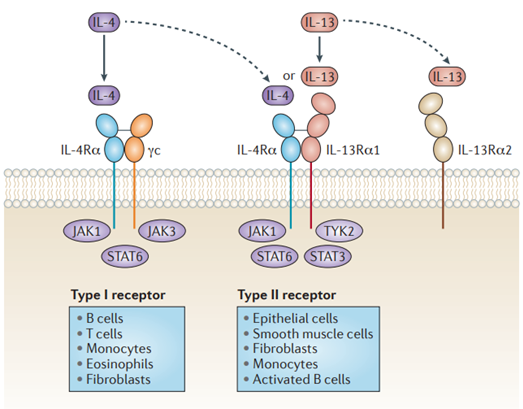
Therefore, as a monoclonal antibody targeting IL-4Rα, dupilumab can bind to it and block the interaction between IL-4 and IL-13 and their receptor complex, thereby inhibiting type 2 inflammatory responses mediated by IL-4 and IL-13. Additionally, the inhibition of the IL-4/IL-13 pathway can also achieve therapeutic effects such as suppressing mucus production and relaxing the bronchi. This mechanism provides a feasible path to overcoming the longstanding defense barriers of COPD.Before challenging COPD, Sanofi had already fully explored the therapeutic potential of dupilumab in indications such as atopic dermatitis, asthma, chronic rhinosinusitis with nasal polyps (CRSwNP), prurigo nodularis, eosinophilic esophagitis (EoE), and chronic spontaneous urticaria (CSU), accumulating a wealth of clinical evidence in the process. In doing so, Sanofi also established dupilumab as a powerful weapon against type 2 inflammatory responses, achieving success in multiple areas.The experience gained from multiple autoimmune indications has also been applied by Sanofi to the clinical development of the COPD indication, increasing its success rate. In the BOREAS study, the incidence of acute exacerbations of COPD in the dupilumab group was significantly reduced by 30% compared to the placebo group (P=0.0005); in the NOTUS study, the incidence of acute exacerbations of COPD in the dupilumab group was reduced by 34% compared to the placebo group (P=0.0002).Such results also support the therapeutic effect of dupilumab's mechanism in blocking the IL-4/IL-13 pathway to suppress type 2 inflammation-associated COPD. Meanwhile, the breakthrough of dupilumab in the COPD field reflects the utilization of Sanofi's years of accumulated experience in the inflammation domain.
Super Heavyweight Blockbuster Achievement Unlocked, Establishing Sanofi's Dominance in Immunology
Relying on the broad mechanism of action based on type 2 inflammation, Dupilumab has been expanding its territory in the autoimmune field, with its sales soaring year by year. It has now become a member of the billion-dollar drug club. If it can successfully secure the COPD indication as planned, Dupilumab's influence in the autoimmune field is expected to further expand, bringing its peak annual sales target of $13 billion within reach.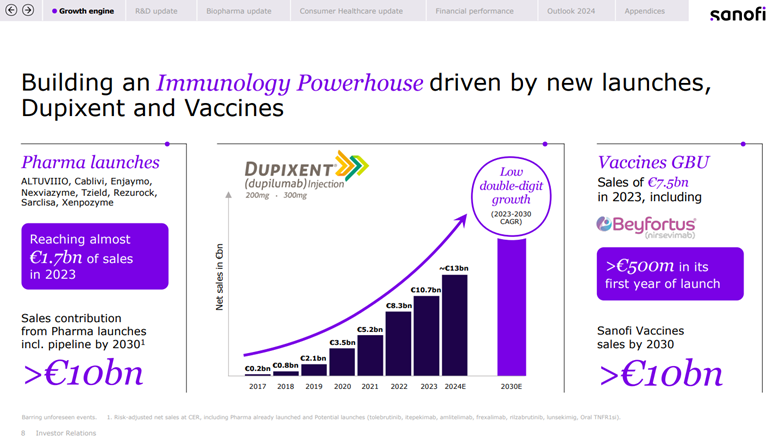
Dupilumab Sales (Source: Sanofi 2023 Earnings Presentation PPT)In recent years, Dupilumab has increasingly contributed to Sanofi's revenue, not only serving as a key driver in conquering the immunoinflammatory field but also boosting the overall growth of Sanofi’s business.Dupixent Annual Sales and Revenue Contribution
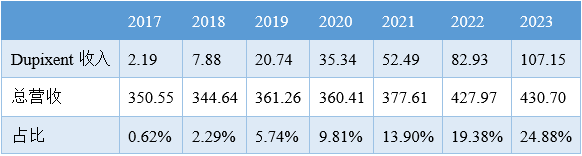
Note: The unit of income is billion euros.
However, relying on only one product may prove insufficient in the face of market competition. To solidify its position as the "immunology giant," Sanofi has also developed other products to support this goal.While fully tapping the potential of Dupilumab, Sanofi is developing a pipeline that goes "beyond Type 2 inflammation." At the R&D Day meeting held at the end of last year, Sanofi disclosed the development progress of several mid-to-late-stage immunology products in its pipeline, each with peak sales estimated between 2 to 5 billion euros, such as the OX40L antibody Amlitelimab, the IL-33 antibody Itepekimab, and the IL-13/TSLP bispecific antibody Lunsekimig.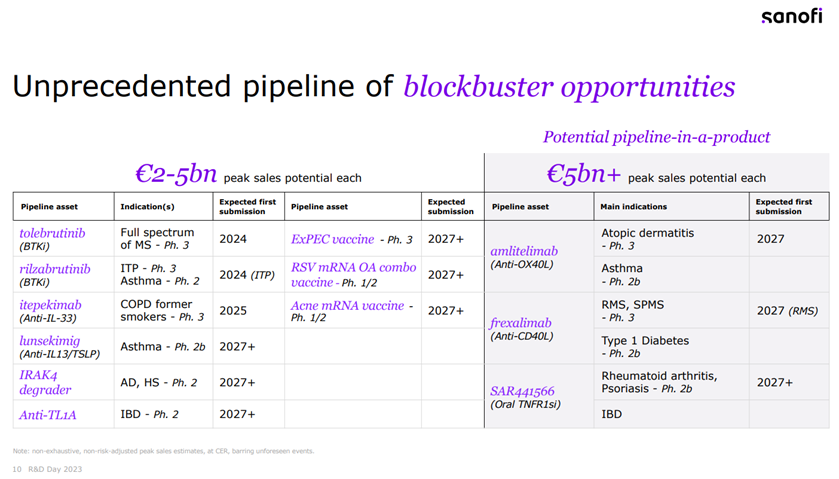
Key Mid-to-Late Stage Immunology Products in Sanofi's Pipeline(Source:Sanofi R&D Day Presentation PPT)
Under the global trend of synchronized innovation, Sanofi also places great emphasis on the R&D progress of its innovative products in China, striving to reduce the time gap between drug launches in China and globally. For instance, following positive results from the Phase II study of Amlitelimab for atopic dermatitis in Europe and the U.S., Sanofi swiftly initiated Phase II clinical trials in China.
Through the mechanism of Type 2 inflammation, dupilumab has found a common breakthrough for many inflammatory diseases, also helping Sanofi establish a solid foundation in the field of immune-inflammatory conditions. From atopic dermatitis to COPD, the clinical value of dupilumab has been fully explored. This is not only Sanofi's path to building dupilumab’s reputation in the market, but also its competitive strategy to continuously expand its influence in the immune-inflammatory field.The immunology and inflammation market is the second largest pharmaceutical market, only after oncology. Sanofi, which has positioned itself in this field, is leveraging Dupixent (dupilumab) as a core pillar of its business. On one hand, it aims to establish a leading position by tapping into the potential of Dupixent. On the other hand, under its new "Play to Win" strategy, Sanofi is pushing forward with the development and positioning of other high-potential products, injecting new vitality into breakthrough treatments in the field of immunological diseases.- Scroll up and down to view references -
[1] World Health Organization . The top 10 causes of death.[2] Prevalence and risk factors of chronic obstructive pulmonary disease in China (the China Pulmonary Health [CPH] study. Lancet. 2018. 391(10131):1706-1717.[3] GOLD 2024 Version v1.1.[4] Targeting interleukin-33 and thymic stromal lymphopoietin pathways for novel pulmonary therapeutics in asthma and COPD.[5] Mepolizumab for Eosinophilic Chronic Obstructive Pulmonary Disease. NEJM. 2017. 377(17): 1613-1629.[6] Benralizumab for the Prevention of COPD Exacerbations. NEJM. 2019. 381(11):1023-1034.[7] Safety and efficacy of itepekimab in patients with moderate-to-severe COPD: a genetic association study and randomised, double-blind, phase 2a trial. Lancet Respiratory Medicine. 2021. 9(11):1288-1298.[9] Targeting key proximal drivers of type 2 inflammation in disease. Nature Reviews Drug Discovery. 2015. 15(1):35-50.Copyright © 2024 PHARMCUBE. All Rights Reserved.
Welcome to forward, share, and reasonably cite. When citing, please clearly indicate the source of the article in a prominent position.For reprint, please leave a message or send a message to the WeChat Official Account backend, and indicate the name and ID of the official account.
Disclaimer: The information in this WeChat article is for general reference only and should not be used directly as decision-making content. PharmaCube assumes no responsibility for any loss incurred by any party due to the use of the content herein.