

C4 Therapeutics Files Prospectus Highlighting $4.8B in Deal Value Across 8 Strategic Partnerships

C4 Therapeutics
Targeted Protein Degradation Therapeutics Developer

Merck Group
Pharmaceutical R&D Developer
On March 4, C4 Therapeutics (C4T) announced a licensing and collaboration agreement with Merck KGaA of Germany to jointly develop targeted protein degraders for two key oncogenic protein targets advanced in C4T's internal discovery pipeline. Under the terms of the agreement, C4T will receive an upfront payment of $16 million, and Merck KGaA will fund C4T’s discovery research efforts. Over the course of the collaboration, C4T could potentially earn up to $740 million in discovery, regulatory, and commercial milestone payments.
According to incomplete statistics, C4 Therapeutics has reached eight transaction collaborations with enterprises both in China and abroad, including Merck & Co., Merck KGaA, Roche, Biogen, and Beta Pharma, with a total transaction amount reaching up to 4.813 billion US dollars.
C4T: Market Value of $730 Million, Focusing on Advancing Three Protein Degrader Clinical Trials
C4 Therapeutics, Inc. was founded in 2015, focusing on the field of protein degrader research and development. It specializes in leveraging the body's natural processes for regulating protein levels to develop new therapeutic candidates for treating cancer, neurodegenerative diseases, and other conditions. Its current market value is $730 million.
C4T Core Technology Platform TORPEDO stands for "Target ORiented ProtEin Degrader Optimizer." The platform focuses on the E3 ubiquitin ligase Cereblon, conducting research in design, analysis, and prediction to develop highly efficient and precise degrader drugs and screen effective candidate compounds. With the support of this platform, C4T has synthesized multiple small-molecule novel drugs, achieving significant success in enhancing and optimizing the targeting and efficacy of protein degraders. This also highlights numerous advantages of TORPEDO.
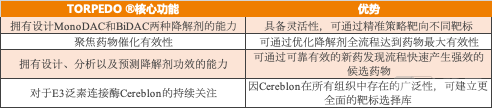
Through TORPEDO, C4T has primarily developed two types of protein degraders: molecular glues (MonoDAC) and PROTACs (BiDAC), with the hope of targeting and degrading different target proteins through tailored approaches. MonoDAC refers to monofunctional degradation-activating compounds, which enhance the binding efficacy between E3 ubiquitin ligase and the target protein by binding to the E3 ligase and creating a "glue" effect on it. These compounds can degrade inaccessible target proteins and are also known as molecular glue degraders. BiDAC, on the other hand, refers to bifunctional degradation-activating compounds designed such that one end of the degrader molecule binds to the pathogenic target protein, while the other end binds to the E3 ligase. BiDAC is also called a "heterobifunctional degrader," or PROTAC. Compared to MonoDAC, BiDAC consists of three parts, resulting in a larger molecular weight. Both degraders have their own advantages and can complement each other powerfully in application scenarios.
Currently, C4T has established the MonoDAC™ library and BiDAC™ library, focusing not only on efficacy issues that other existing therapies cannot adequately address but also aiming to lay the groundwork for drug design targeting undruggable or hard-to-drug targets. According to C4T's data, less than 15% of proteins are currently considered able to bind with traditional small-molecule inhibitors for drug development. However, targeted protein degradation technology can fundamentally break through this limitation, potentially enabling a large number of "undruggable" or "hard-to-drug" targets to become druggable.
In addition to pioneering TORPEDO, C4 Therapeutics also launched the aTAG open-source initiative for researchers to use, encouraging technological innovation in the field of protein degraders. aTAG, which stands for Achille’s TAG, is a system tool capable of predicting the degradation outcomes of target proteins. It can analyze the biological mechanisms and phenotypic results of degraders on target proteins in both in vitro and in vivo environments.
Currently, C4T is focusing on advancing three clinical trials for degraders.
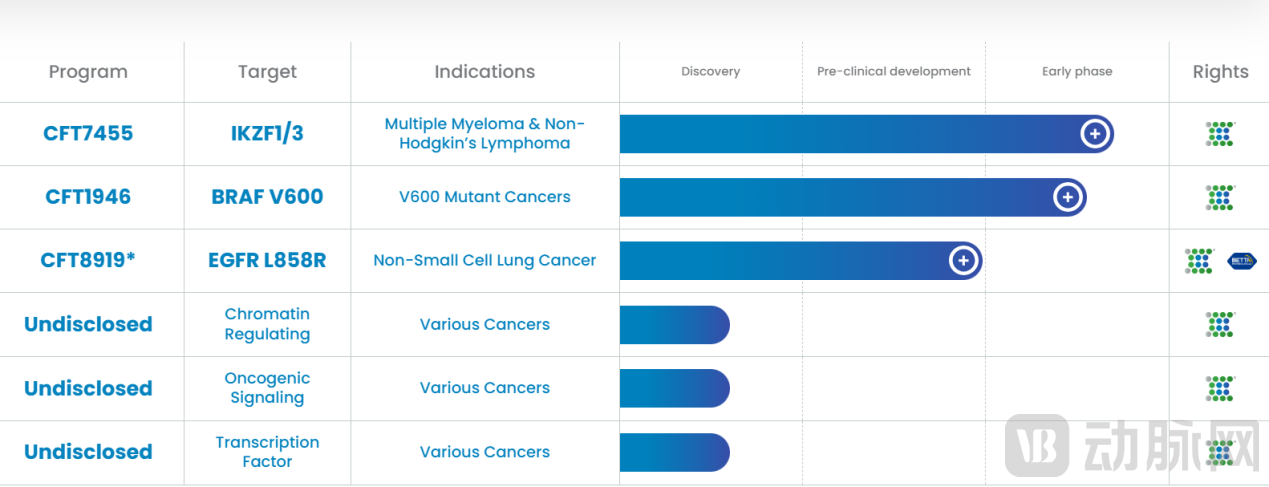
CFT7455 is an orally bioavailable MonoDAC degrader designed to bind with higher affinity to the E3 ubiquitin ligase Cereblon for targeted degradation of IKZF1/3 proteins, intended for the treatment of multiple myeloma (MM) and non-Hodgkin lymphoma (NHL). It has received FDA orphan drug designation for the treatment of multiple myeloma. In preclinical studies, CFT7455 has demonstrated high binding affinity and target selectivity for Cereblon, enabling rapid and deep degradation of IKZF1/3 proteins. Data from Part A of the Phase I/II clinical trial cohort showed that CFT7455 exhibited favorable efficacy in the NCI-H929 MM xenograft model, but the initial dose triggered severe neutropenia side effects, resulting in an overly narrow safety window.
CFT1946 is a protein degrader targeting BRAF V600X mutations, primarily used for the treatment of solid tumors with V600X mutations. It is currently in Phase I/II clinical trials. Preclinical studies have shown that CFT1946 is active in cancer models driven by BRAF V600E and in models resistant to BRAF inhibitors.
CFT8919 is a degrader targeting the EGFR L858R protein, demonstrating good activity and selectivity against EGFR exon 21 (L858R) mutations, as well as efficacy against secondary resistance mutations such as T790M or C797S in EGFR. It is primarily used for the treatment of non-small cell lung cancer (NSCLC). It has currently received FDA approval to enter clinical trials. In 2023, Betta Pharmaceuticals reached an agreement with C4 Therapeutics for nearly $400 million, obtaining the exclusive license for the development and commercialization of CFT8919 in Greater China. CFT8919 was approved for clinical trials at the end of last year.
MNC's "All-Staff" Layout: Protein Degraders Show Billion-Dollar Market Potential
There are two major natural protein degradation pathways in the human body: the proteasome pathway and the lysosome pathway. Protein-targeted degradation leverages these two protein degradation systems to achieve efficient and precise degradation of pathogenic proteins. Based on these two protein degradation systems, various technological approaches are currently being researched and have entered clinical trials, with the most well-known technologies being PROTAC and molecular glue.
MNC's layout in the protein degradation field began as early as 2015.Pfizer, BMS, Novo Nordisk, Seagen, Roche, Biogen, Novartis, Astellas, and other major pharmaceutical companiesSuccessively reached multiple cooperation projects worth hundreds of millions of dollars. In China,Many domestic pharmaceutical companies such as BeiGene, Haisco, Kintor Pharmaceuticals, and Complix BioClinical progress is at the forefront. Among emerging pharmaceutical companies overseas,Including C4 Therapeutics, Arvinas, Nurix Therapeutics, Kymera Therapeutics, and other biotechnology companiesFierce competition is unfolding around protein degraders.
Although no PROTAC drugs have been approved by regulatory authorities for marketing, several candidate drugs have entered the clinical development stage. Globally, there are 29 PROTACs under clinical research, of which 19 are in Phase I clinical trials, accounting for 66%; 9 are in Phase II clinical trials, accounting for 31%.
In terms of molecular glue drugs, the FDA has currently approved three: thalidomide, lenalidomide, and pomalidomide, which are used to treat multiple myeloma, myelodysplastic syndromes, etc., with lenalidomide achieving sales of $12.89 billion in 2021. In addition to these three approved drugs, more than 21 molecular glue drugs have now entered the clinical trial stage.
With the continuous advancement of basic research and clinical trials, protein degraders such as PROTAC have demonstrated significant commercial value. Compared with small molecule drugs, they have the following advantages:
First, it is expected to overcome drug resistance. Protein degraders can eliminate pathogenic proteins, thereby inhibiting non-enzymatic functions and completely removing all functions of the pathogenic protein, reducing drug resistance.
Second, it is expected to turn "undruggable" into "druggable." 80% of the protein targets discovered globally are undruggable, with no effective methods or pathways available. However, protein degradation technology differs from the traditional small-molecule drug approach of "occupancy-driven," aiming to completely degrade and eliminate target proteins. This means that 80% of currently undruggable proteins have great potential to become druggable through targeted protein degradation.
Thirdly, it is expected to become the "best in class" and an ideal way to develop anticancer drugs. Protein degraders can be recycled in the body, potentially achieving the desired therapeutic effect with a smaller dose.
References:
QianDao Group.QianYan | Targeted Protein Degradation Technology Ushers in the Next Golden Age of Small Molecule Drugs