

Dazhou Medical, Led by Harvard Postdocs, Secures China NMPA Class III Approval for World’s First 3D-Printed Trabecular Tantalum Bone Implant and Files IPO Prospectus

Dazhou Medical
Developer of Novel Regenerative Medicine Materials and Innovative Implant Devices
February 2024,Under Dazhou MedicalWorld's First 3D-Printed Bone-Like Structured Tantalum Metal Bone Filling and Reconstruction Rod (TANRUIS®) Obtains NMPA Class III Medical Device Registration CertificateThis is the first 3D-printed metal implant device product to be registered in Shenzhen and the Guangdong-Hong Kong-Macao Greater Bay Area.
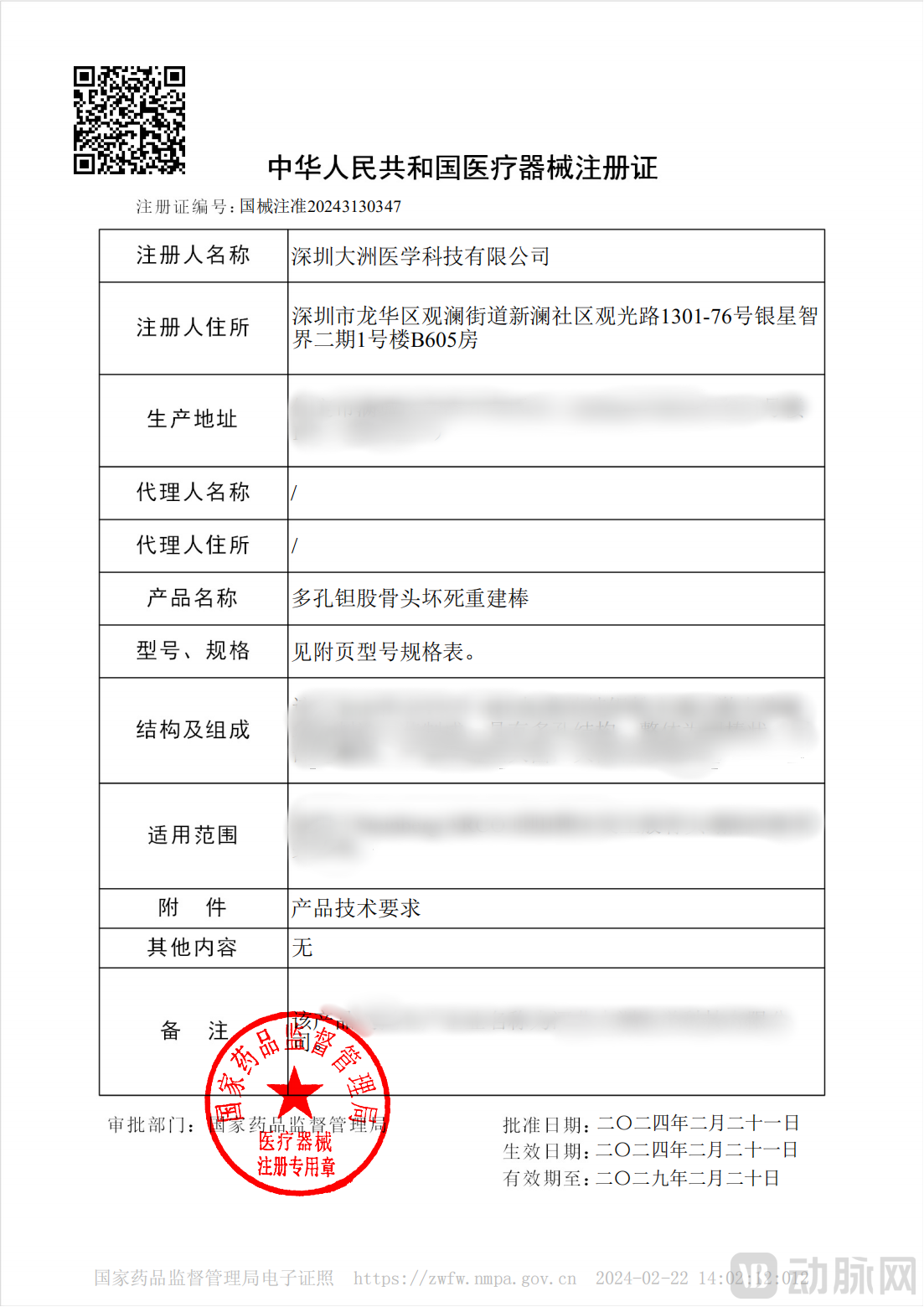
Dazhou Medical, founded in 2019, is a pioneer in biomedicine and new material technology, focusing on the innovative research and development and industrialization of biomedical materials, 3D printed implants, and regenerative medicine products.
Dr. Yang Jingzhou, founder, CEO, and chief scientist of Dazhou Medical, stated,This product is developed based on the core technology of 3D-printed biomimetic bone porous tantalum, which is the only domestically patented invention authorized by the state in China. "According to publicly available data, this product is a world-first."
"The porous tantalum implant with a bionic trabecular structure prepared using laser melting 3D printing technology not only has a channel structure highly similar to human cancellous and trabecular bones but can also be personalized for the patient's defect area, which is more conducive to treatment and postoperative recovery," said Dr. Yang Jingzhou.
Tantalum metal, due to its excellent biocompatibility and osteoinductive properties, has become another new biomaterial after titanium. Before the emergence of 3D-printed biomimetic porous tantalum, tantalum went through two stages: dense tantalum and traditionally-processed porous tantalum.
Dense tantalum has a significantly different elastic modulus from bone tissue, which is not conducive to bone integration. It is gradually being replaced by porous tantalum, which possesses physical properties such as high porosity, an elastic modulus similar to cancellous bone, and a high surface friction coefficient.
Currently, the main producer of porous tantalum implants is a U.S.-based company whose products have been clinically applied for over two decades, demonstrating a clear market advantage. However, due to factors such as production costs and import tariffs, the high price tag of 20,000 to 30,000 yuan has deterred many patients. To break this technological monopoly and further reduce costs while improving efficiency for porous tantalum, Dazhou Medical has taken the lead in overcoming the key preparation technology for laser 3D printing of biomimetic trabecular porous tantalum, securing an exclusive authorized invention patent. Over 10 academic papers on 3D-printed bioactive porous tantalum and medical metals have solidified its strong technical barrier.
The 3D-printed bone-like structure tantalum metal bone filling and reconstruction rod approved this time achieves 100% three-dimensional connectivity of the porous structure, with an average pore size of 400-800 microns and a porosity greater than 70%. It provides a three-dimensionally connected ultra-large space for bone integration, bone ingrowth, and blood vessel ingrowth, promoting bone and vascular regeneration.
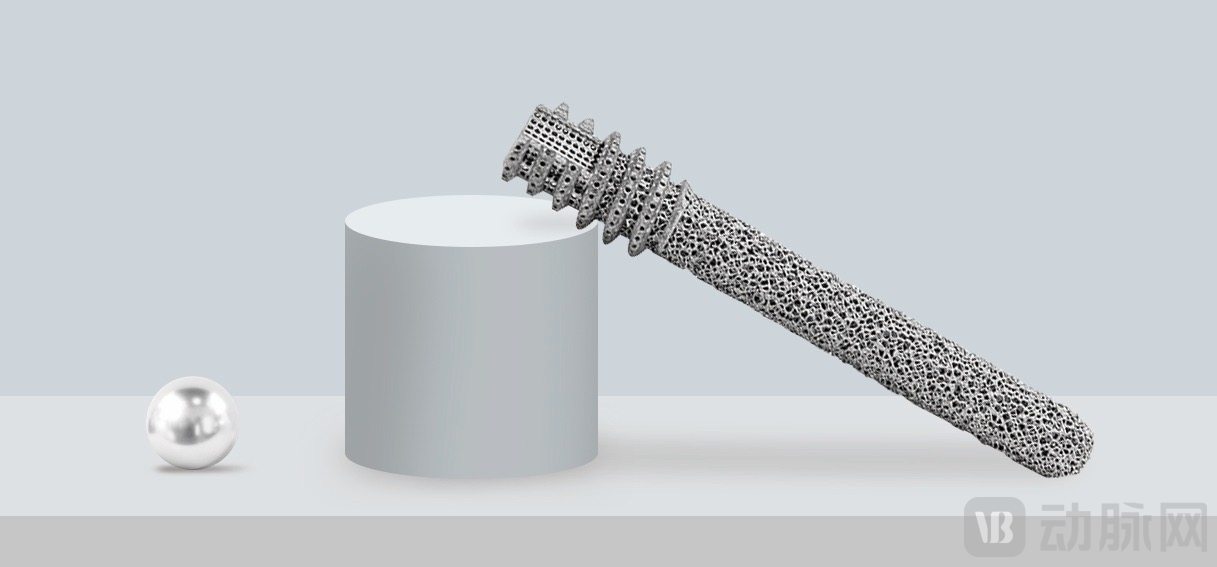
Dazhou Medical 3D Printed Bone-like Structure Tantalum Metal Bone Filling and Reconstruction Rod
Dr. Yang Jingzhou introduced that due to the significant differences in the morphology of bone defect areas, the required porous tantalum implants also vary in shape. Dazhou Medical uses an exclusive innovative algorithm based on the improved Voronoi principle to construct a bionic trabecular porous structure, adjusting the porosity of the trabecular lattice to match the patient's bone structure.Meet the personalized needs of patients。
Dazhou Medical 3D Printing Porous Tantalum Can Also "Customized Mass Production". These are difficult to achieve with traditional porous tantalum preparation techniques. Compared to traditional methods, Dazhou Medical's 3D-printed porous tantalumThe production cost is also lower., approximately one-fifth the price of imported products. Products with ultra-high cost performance help quickly capture market share.
Dazhou Medical's porous tantalum and novel medical alloy surgical implants, prepared based on independent intellectual property technology, can be widely applied in bone tissue functional reconstruction in limbs, spine, oral, and craniofacial areas.
Dazhou Medical is a company with comprehensive R&D and production capabilities for novel regenerative medical materials and innovative implantable devices.Platform-based enterprises have established technology platforms for 3D printing of bioactive medical metal materials, 3D printing of tissue-inducing absorbable medical ceramic materials, and micro-nano self-assembled degradable medical polymer materials, benefiting patients in fields such as oral and maxillofacial, medical aesthetics and plastic surgery, orthopedics, and general surgery.
Dr. Yang Jingzhou introduced that the three major technology platforms of Dazhou Medical are at the leading level globally.3D Printing Active Medical Metal TechnologyExclusive invention patents authorized in China and the United States enable the manufacturing of next-generation implant devices with bionic functions using materials of high bioactivity such as tantalum metal and new medical alloys, which are extremely difficult to process through traditional techniques. This achieves a comprehensive upgrade in material, structure, and efficacy, while also allowing for low-cost, high-efficiency, and scalable customized production.Tissue-Inducing Absorbable MaterialsIt is the key to upgrading "replacement reconstruction" of human tissues and organs to "regenerative repair." The Dazhou Medical technology team has developed an exclusive material formula and 3D printing process, which, through material and structural innovation, significantly enhances osteoinduction and bone regeneration capabilities. It can be applied in clinical fields such as oral and maxillofacial surgery and medical aesthetics.Biodegradable Medical Polymer Materials and Their Micro-Nano Self-Assembly TechnologyMainly regulate biological and mechanical properties at the molecular level; products can be used for regeneration and repair of tissues and organs such as skin, muscle, and cartilage.。
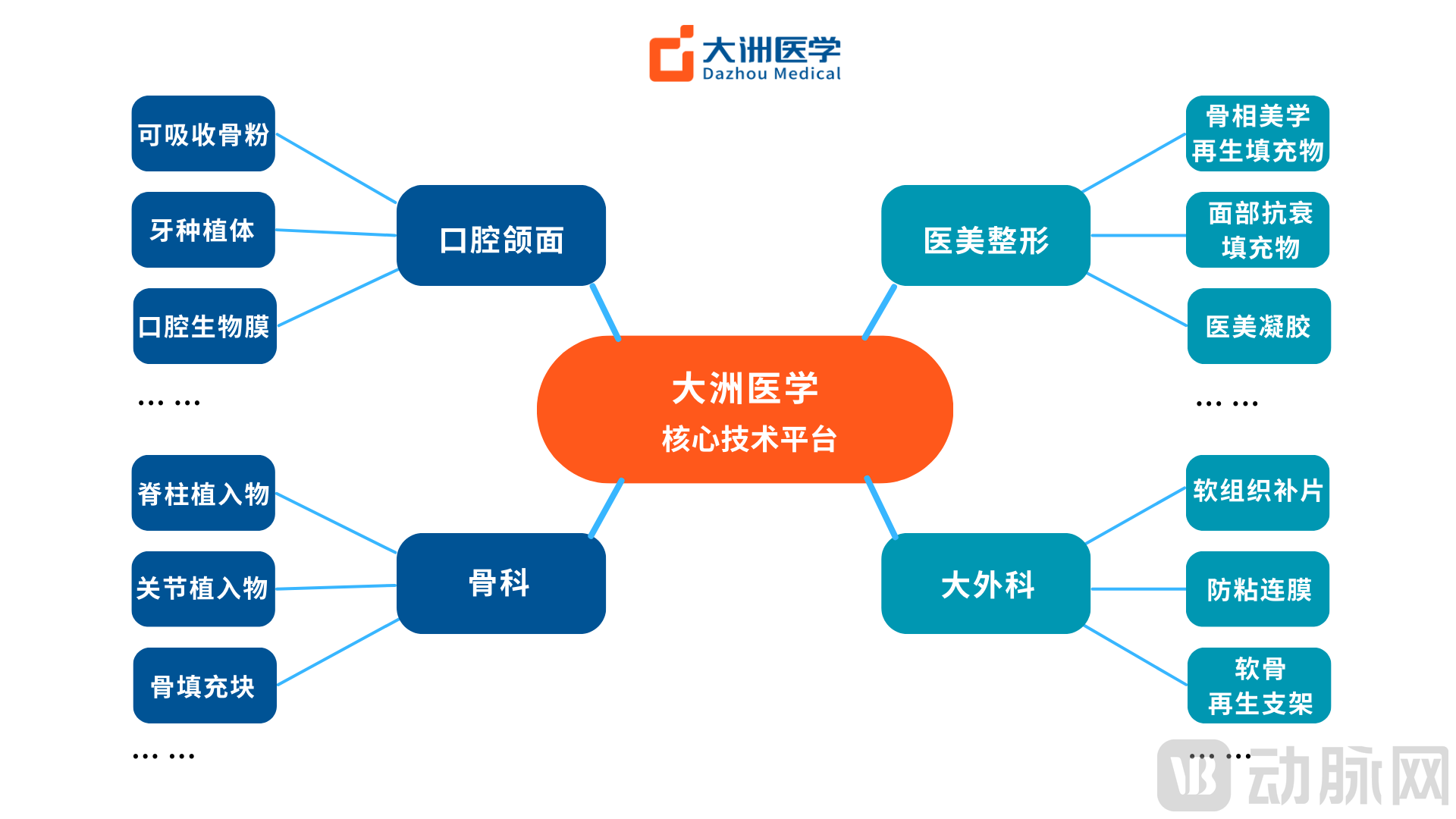
Dazhou Medical Product Pipeline Diagram
"We follow the core product development strategy of 'reserving one generation, researching and developing one generation, and industrializing one generation,' establishing a rich technical reserve and product pipeline. Our current R&D pipeline is mainly focused on the fields of oral and maxillofacial, medical aesthetics, and orthopedics. Products from all three technology platforms have been successfully developed and are gradually entering the registration phase."In 2024, it is expected to obtain 3-5 domestic NMPA and U.S. FDA implantable medical device registration certificates, including products for oral aesthetics."Dr. Yang Jingzhou is highly confident in this."
Dazhou Medical can be said to be a scientific team with a high "Ph.D." content.Dr. Yang Jingzhou introduced that before founding Dazhou Medical, he had long been engaged in research at the intersection of biomaterials, regenerative medicine, and 3D printing. The accumulated experience in biomaterials research and industrialization laid the foundation for the core product development of Dazhou Medical.
Co-founder and Chief Chemist Dr. Kan Yue, along with Dr. Jingzhou Yang, both are postdoctoral fellows in Biomedical Engineering at Harvard University. As national high-level talents, they are responsible for the foundational research and development of novel medical polymer materials. With a long-term focus on polymer materials and self-assembly chemical synthesis, they have published over 70 academic papers with more than 10,000 SCI citations. Dr. Yue currently serves concurrently as a professor and doctoral supervisor at South China University of Technology.
The third co-founder, Dr. Xiaopeng Li, is a postdoctoral researcher at KU Leuven in Belgium. As the company's chief materials scientist, he is responsible for the foundational research and development of novel medical metal materials. He also has a strong academic background, with over 70 published academic papers, and currently holds a concurrent position as a professor and doctoral supervisor at the University of New South Wales.
It is worth mentioning that,This is also a team of scientist entrepreneurs with deep experience in commercial operations management.The fourth co-founder, Yang Jinghao, is a master of finance from the University of Western Australia, with solid expertise in corporate operations management, marketing theory, and commercialization practices. He and Dr. Yang Jingzhou were deeply involved in the entrepreneurial journey and subsequent rapid growth phase of their elders' new materials enterprise, helping the company achieve an annual revenue of over 100 million yuan.
The founding team's many years of overseas study and work experience have laid a solid foundation for Dazhou Medical's "going global."Currently, Dazhou Medical is actively collaborating with top universities and medical institutions both in China and abroad to advance research and clinical partnerships, accelerating the development and commercial implementation of its technologies and products both domestically and internationally.
Dr. Yang Jingzhou stated that 3D printing is a disruptive intelligent manufacturing technology, driving product upgrades and industrial transformation in many industrial fields, including healthcare. Fundamental innovations in materials and processes have significantly improved the clinical outcomes of implantable devices. 3D printing is not only suitable for customized medical products but also plays a crucial role in the iteration of standard products. For example, in orthopedic implants such as interbody fusion cages, 3D-printed porous products are gradually replacing dense products made with traditional methods, showing an evident trend of upgrading.
"The U.S. FDA has approved more than 100 registration certificates for 3D-printed implant devices, while Chinese regulatory authorities approved more than 10 registration certificates for 3D-printed implant devices in 2023 alone, far surpassing previous years. From the perspective of regulatory approval policies, technological development, and market demand, 3D-printed medical devices have entered a period of industry explosion," said Dr. Yang Jingzhou.
Dazhou Medical will also seize the opportunity to quickly grow into a comprehensive international medical technology enterprise. Since its establishment, Dazhou Medical has completed two rounds of financing and obtainedShenzhen Capital Group, Cowin Capital, SCSF, Decheng Capital, and Sany VenturesFavored by first-tier investment institutions, among which Shenzhen Capital Group (SCG) has been accompanying its growth since the angel round.
Dr. Yang Jingzhou stated that Dazhou Medical is currently at a critical stage of transitioning from research and development to production and sales. To accelerate the R&D upgrade of core products and promote the rapid commercialization of products in both domestic and international markets, a new round of financing will be carried out.