

MNCs Like AstraZeneca, Novo Nordisk, Amgen, and AbbVie Expand In-House Manufacturing Capacity Through New Plants and CDMO Acquisitions—Is Outsourcing Losing Its Appeal?

AstraZeneca
Biopharmaceutical Manufacturer
With the recovery of the global economy and the continuous growth of public demand for health, pharmaceutical pioneers represented by multinational pharmaceutical companies are increasingly investing to expand their own production capacity, in order to meet the ever-upgrading market demands.
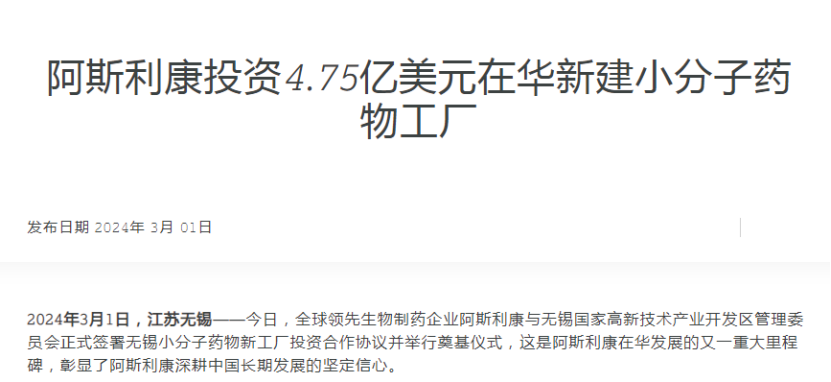
Recently, AstraZeneca officially signed the Wuxi Small Molecule Drug New Factory Investment Cooperation Agreement with the Wuxi High-Tech Zone Management Committee and held a groundbreaking ceremony. According to the agreement, AstraZeneca will invest 4.75 billion US dollars to build a new small molecule drug factory in Wuxi High-Tech Zone. It is expected that specific small molecule drugs of AstraZeneca to be launched in China will be produced in the Wuxi new factory from formulation to packaging, and will supply both domestic and international markets.
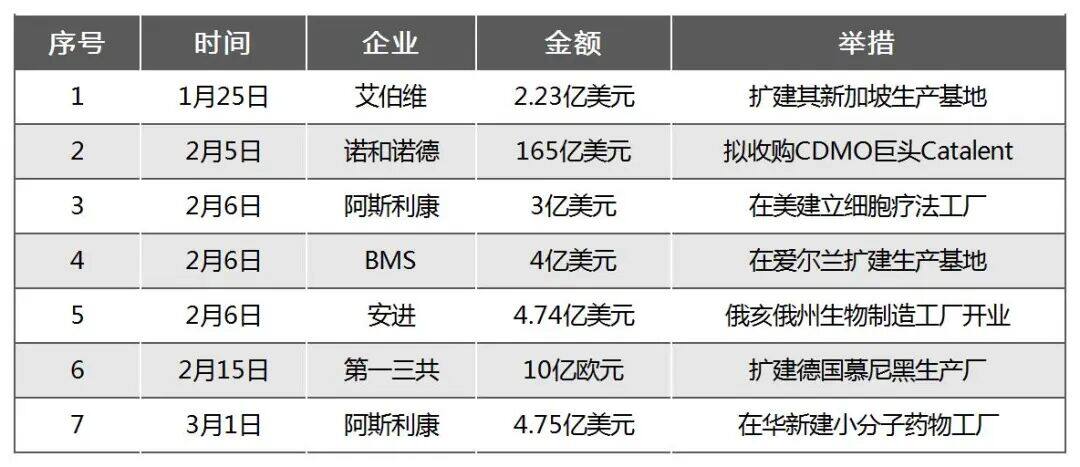
In fact, since the beginning of this year, multinational pharmaceutical companies have shown a positive trend in terms of investment in factory construction and capacity expansion. According to incomplete statistics, as of March 6, several multinational pharmaceutical companies, including AstraZeneca, Novo Nordisk, Amgen, BMS, AbbVie, and Daiichi Sankyo, have successively announced measures to increase their own production capacity. These methods are not limited to investing in the construction of new factories, acquiring CDMO companies, and expanding existing production bases.
Industry insiders believe that over the past two decades, the professional division of labor in the global pharmaceutical industry chain has become increasingly prominent, and pharmaceutical companies have shown a major trend of outsourcing their R&D and production operations to other specialized companies. However, times are changing, and potential shifts may reverse this trend. Facing intensified market competition and constantly evolving regulatory policies, cash-rich multinational pharmaceutical giants are enhancing their own production capacity and optimizing global resource allocation to strengthen the stable production of key products in the global supply.
Over $2 Billion Boost to Manufacturing Capacity
AstraZeneca Races to Catch Up with International Peers
China Market Plays an Important Role in AstraZeneca's Global Business Landscape. According to the 2023 financial report, AstraZeneca's total annual revenue reached 45.811 billion US dollars, increasing by 6% year-on-year. Among this, the China market contributed 5.876 billion US dollars in revenue, accounting for 13% of AstraZeneca's global market share, second only to the United States and European markets. In terms of production and supply, China also holds a significant strategic position within AstraZeneca's global supply network.
In recent years, AstraZeneca, which has been deeply cultivating the Chinese market, has continuously increased its investment in "Made in China," building a world-class production and supply network in China. In 2001, AstraZeneca's production and supply base in Wuxi, with an investment of 134 million U.S. dollars, was officially completed and put into operation, marking a key step in establishing AstraZeneca’s global production and supply system in China. In 2014, the Taizhou production and supply base, with a total investment of approximately 300 million U.S. dollars, was officially put into use. In 2016, AstraZeneca's China Logistics Center in Wuxi officially began operations.
Guided by the "Opinions on Further Optimizing the Foreign Investment Environment and Increasing Efforts to Attract Foreign Investment" issued by the State Council in August 2023, China is unleashing a new round of strong "magnetic attraction," becoming the top or one of the top three global investment destinations for foreign enterprises. AstraZeneca, quick to seize policy opportunities, invested an additional $700 million in the same year to build a new production and supply base in Qingdao and announced plans to expand its Taizhou facility with a new production line for diabetes drugs, further establishing a global production and supply base for diabetes drugs with an annual output worth billions.
In the industry's view, the rapid sales growth of core products and the incremental expectations of potential varieties are the key factors driving AstraZeneca to increase production capacity. Financial reports show that, thanks to continuous breakthroughs in the two major fields of heart failure and chronic kidney disease, the oral hypoglycemic drug dapagliflozin contributed $5.963 billion in revenue to AstraZeneca in 2023, a year-on-year increase of 36%, making it the company's best-selling drug that year. Notably, AstraZeneca is also continuously consolidating its advantages in the diabetes field. In November 2023, AstraZeneca acquired ECC5004, a small-molecule GLP-1 receptor agonist developed by Chime Biologics, for an upfront payment of $185 million.
This new factory in Wuxi, with an investment of $475 million, was first disclosed by AstraZeneca at the 2023 China International Import Expo (CIIE). The official signing of the investment agreement for the new factory once again demonstrates AstraZeneca's determination to accelerate localization. It is reported that the AstraZeneca Wuxi Small Molecule Innovative Drug New Factory will be equipped with cutting-edge continuous tablet manufacturing process equipment and sustainable pharmaceutical packaging production lines, creating an autonomous intelligent manufacturing factory. AstraZeneca believes that after the completion of the new factory, it will further enhance its small molecule drug production capacity. Leveraging the company’s agile and efficient global supply network, the products will be supplied to both the Chinese and global markets.
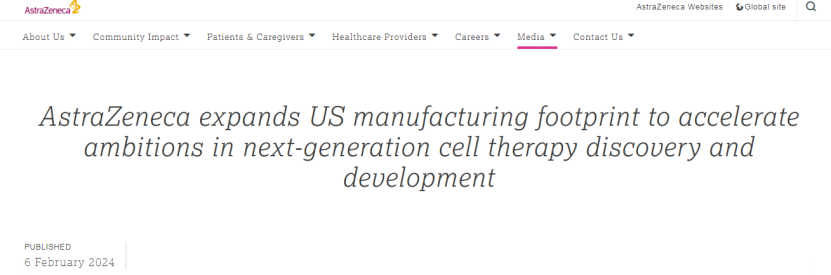
In fact, this is not the first time AstraZeneca has announced plans to boost its own production capacity this year. In February, AstraZeneca announced a $300 million investment to build a facility in Rockville, Maryland, USA, for the production of cell therapy products for critical clinical trials and commercial supply. Reportedly, the facility will create over 150 new jobs. AstraZeneca stated that the Rockville facility will initially focus on producing T-cell therapies, enabling clinical trials to be conducted worldwide, with the possibility of expanding into other types of products in the future.
Building a new factory in Rockville is closely related to AstraZeneca's continuous heavy investment in the cell therapy field in recent years. Only in 2023, AstraZeneca has reached development cooperation for relevant candidate products with several cell therapy companies such as Neogene, Quell, Cellectis, and CBMG. At the end of the year, it even announced a $1.2 billion acquisition of Chinese Biotech company Gracell Biotechnologies to obtain the latter’s product pipelines, including the autologous CAR-T therapy GC012F targeting BCMA/CD19. The transaction was completed at the end of February this year, making Gracell Biotechnologies a wholly-owned subsidiary of AstraZeneca.
AstraZeneca Executives Highlight Role of Rockville Facility in Boosting Self-Sufficiency During Q4 2023 Earnings Call
$16.5 Billion Acquisition of CDMO Leader
Rapidly Increase the Supply of Semaglutide
The密集举动of increasing investment, production, and capacity at the start of this year, to a certain extent, reflect AstraZeneca's urgent catch-up in production and supply investments, which have lagged behind its peers in recent years.Facing the recent transaction trends of multinational pharmaceutical competitors, especially after Novo Nordisk announced the acquisition of CDMO giant Catalent, AstraZeneca CFO Aradhana Sarin admitted that having an increasingly self-sufficient supply chain is becoming more important. Many times, companies fail to keep up with their growth ambitions due to insufficient investment in supply.
On February 5, Novo Nordisk announced that its controlling shareholder, Novo Holdings, has agreed to acquire CDMO leader Catalent for $16.5 billion. As part of the deal, Novo Nordisk will acquire three of Catalent's filling and finishing sites from Novo Holdings for $11 billion in upfront payment. These three sites specialize in sterile drug product filling and are located in Anagni, Italy; Brussels, Belgium; and Bloomington, Indiana, in the United States.
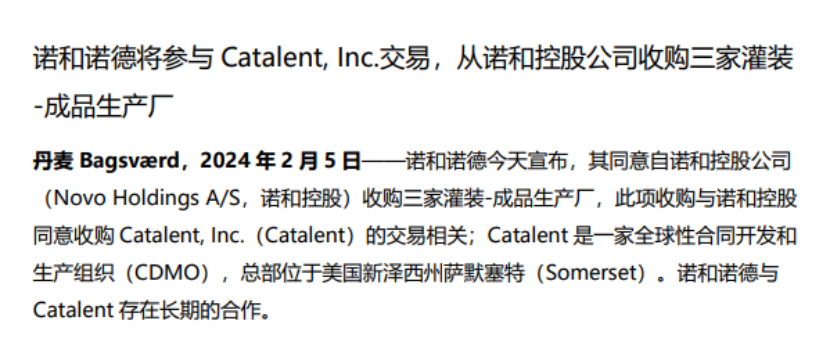
Catalent, headquartered in Somerset, New Jersey, USA, is a global contract development and manufacturing organization (CDMO) with over 50 global manufacturing sites and a total workforce of more than 18,000 employees, including over 3,000 scientists and technical staff. Novo Nordisk stated that the acquisition of Catalent's filling facility aligns with its strategy to use existing and future treatments to help more patients with diabetes and obesity.
According to the financial report, Novo Nordisk's revenue in 2023 was 232.261 billion Danish kroner (approximately 33.771 billion US dollars), increasing by 31% year-on-year. The operating profit was 102.574 billion Danish kroner (approximately 14.914 billion US dollars), growing by 37% year-on-year. Semaglutide, a GLP-1 receptor agonist with both blood sugar reduction and weight loss effects, is Novo Nordisk's star product, achieving sales of 145.811 billion Danish kroner (approximately 21.201 billion US dollars) in 2023. Among this, the revenue from Semaglutide Wegovy (for obesity) was 31.343 billion Danish kroner (approximately 4.557 billion US dollars), surging by 407% year-on-year.
In response to the booming market demand for GLP-1 products, Novo Nordisk has long been increasing its investment in production bases to expand the capacity of semaglutide. In November 2023, Novo Nordisk announced that it would invest more than 42 billion Danish kroner (approximately 6.1 billion US dollars) starting from 2023 to expand its existing production facilities in Kalundborg, Denmark, for the production of current and future portfolios of serious chronic disease products, including GLP-1 products.
In fact, Novo Nordisk's semaglutide relies primarily on Catalent for filling on a global scale. Through this acquisition of Catalent, Novo Nordisk stated that its production capacity will see a rapid and large-scale increase, while also providing its existing supply network with more options and flexibility in the future. It is expected that, starting from 2026, this acquisition will gradually enhance Novo Nordisk’s filling capacity.
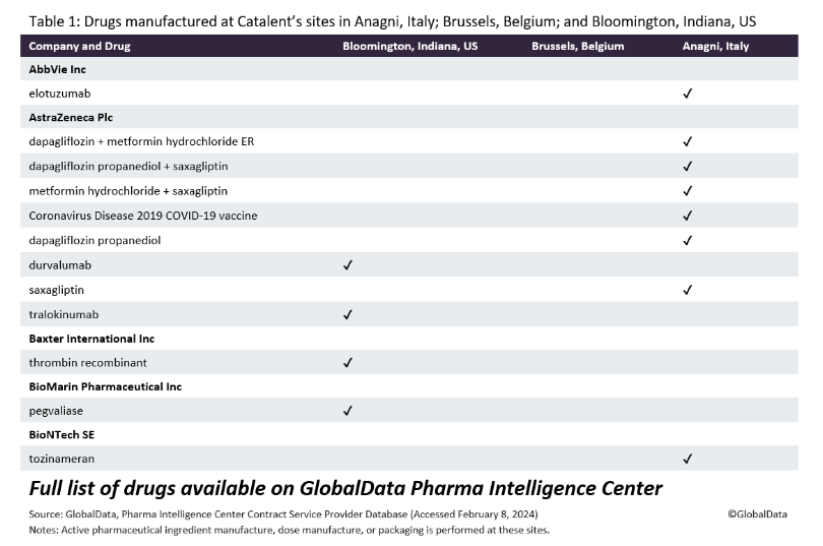
However, it is not only Novo Nordisk that has a long-term cooperation with Catalent. AbbVie's Elotuzumab, Eli Lilly's Tirzepatide, and eight key products under AstraZeneca, including Dapagliflozin, Saxagliptin, and Durvalumab, are all produced by Catalent. Although Catalent has publicly committed to not interrupting its existing contract services, doubts remain about whether it can accept new orders going forward. This is also an important reason why multinational pharmaceutical companies like AstraZeneca are urgently seeking to enhance control over their own production capacity.
Pharmaceutical Giants Expand Their Own Production Capacity
Master the Initiative of the Global Supply Chain
Coincidentally, on February 26, media reports stated that BMS will invest $400 million to expand its production base in Ireland, planning to add sterile pharmaceutical operations and hire 350 people. Reportedly, the new sterile drug capabilities at this site will be built upon the existing API biomanufacturing operations, significantly expanding the facility’s production and laboratory capacities. In the future, it will be responsible for the manufacturing of BMS's oncology, immunology, and hematology products.
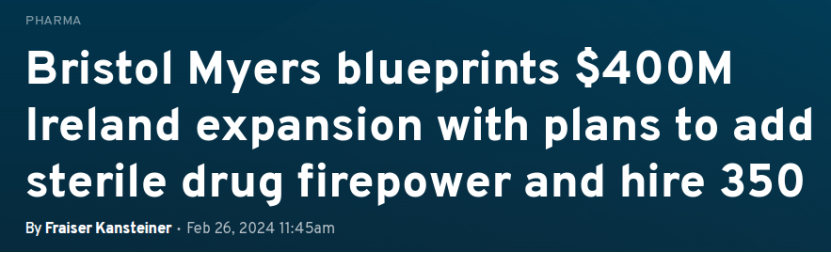
A relevant BMS official stated that the expansion project is expected to commence in March and be completed by 2026. This investment will enhance BMS's sterile pharmaceutical product capabilities, reinforce stable production for global supply, and accelerate the development and commercialization of innovative biologics and other pipeline drugs.
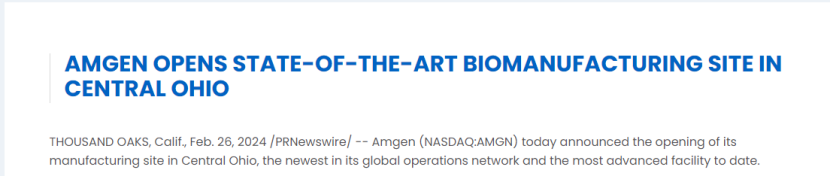
On the same day, Amgen also announced the official opening of its biomanufacturing facility located in Ohio, USA. According to reports, Amgen invested $474 million in the construction of this plant, which integrates cutting-edge manufacturing technology, spans nearly 300,000 square feet, and will be equipped with 400 employees. The company plans to transform it into "the most advanced digital product assembly and packaging plant." Amgen stated that as part of its global biomanufacturing network, the plant will play a significant role in helping the company leverage innovative biopharmaceuticals to address serious diseases worldwide.
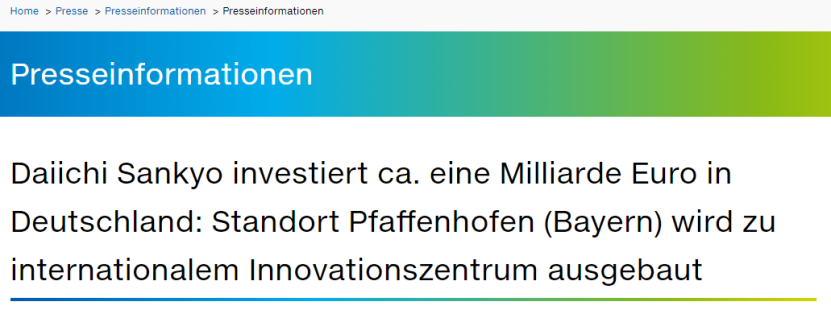
As a major player in the ADC field, Daiichi Sankyo is also taking steps to prepare for future capacity expansion. On February 15, Daiichi Sankyo announced that it would invest approximately 1 billion euros in its manufacturing plant located in Munich, Germany, primarily to enhance ADC production capabilities in order to meet potential future growth demands. The expansion plan is expected to be completed no later than 2030 and will create at least 350 new jobs during this period. In the future, in addition to cardiovascular drugs, the Munich plant will also support the development and manufacturing of treatments for breast cancer, lung cancer, and gastric cancer.
Currently, Daiichi Sankyo's ADC business is primarily supported by its blockbuster breast cancer therapy Enhertu, which is co-developed and commercialized with AstraZeneca. In the first three quarters of the 2023 fiscal year, this star product generated over $1.51 billion in revenue for the company. In January this year, Enhertu’s supplemental Biologics License Application received priority review from the U.S. FDA, aiming to approve its use for unresectable or metastatic HER2-positive solid tumors. Given its strong market and clinical performance, Daiichi Sankyo has raised the full-year sales forecast for Enhertu, now expecting the therapy to achieve $2.61 billion in sales for the 2023 fiscal year.
In addition to Enhertu, Daiichi Sankyo is also developing at least seven other ADC products. In February this year, the U.S. FDA accepted the BLA for Dato-DXd, another ADC targeting TROP2 co-developed by Daiichi Sankyo and AstraZeneca, for the treatment of locally advanced or metastatic non-squamous non-small cell lung cancer (NSCLC), with a PDUFA date of December 20 this year. Furthermore, in December last year, the BLA for HER3-DXd, co-developed by Daiichi Sankyo and Merck, was also accepted by the U.S. FDA and granted priority review. The indication is for EGFR-mutated locally advanced or metastatic NSCLC that has received at least two prior systemic therapies, with a PDUFA date of June 26 this year. Notably, this product is also the first HER3 ADC to be submitted for marketing.
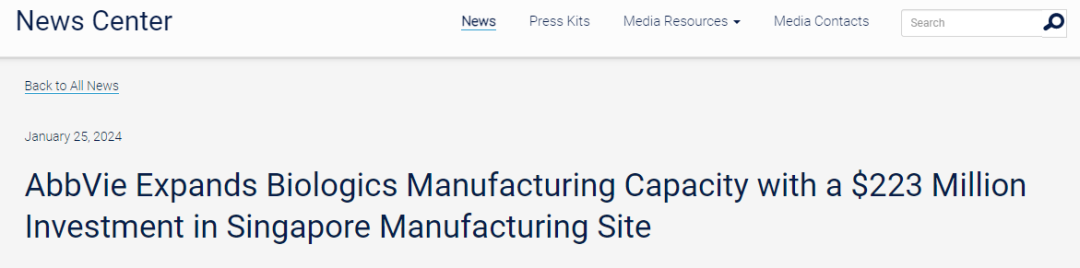
Earlier on January 25, AbbVie also announced an investment of $223 million to expand its Singapore production base and strengthen its manufacturing capabilities. According to reports, the expansion plan will begin in the second half of this year and is expected to start operations in 2026. It was introduced that this capacity expansion will not only be used for the production of AbbVie's marketed products but will also be used to produce immunology and oncology drugs in the clinical trial stage.
Analysts point out that, with the rapidly changing market competition and regional policies, multinational pharmaceutical companies, as leading pharmaceutical enterprises, are flexibly adjusting their strategies according to the new logic of the global industrial chain to adapt to the ever-changing market environment. By firmly grasping the initiative of their own production capacity, they are enhancing their global market competitiveness.Facing the market competition in the new era, improving self-production efficiency and capacity might continue among multinational pharmaceutical companies, and their cooperative relationship with third-party production outsourcing agencies may reach a turning point.




www.yyjjb.com.cn
Insight into Industry Trends

"Pharmaceutical Economy Newspaper"
Academic Official Account
Focus on the Frontier of Oncology Academia

Terminal Official Account