Novo Nordisk Announces Positive Phase 3 FLOW Trial Results for Semaglutide in Chronic Kidney Disease, Yet Shares Drop 2.5%
Novo Nordisk
Insulin Developer and Manufacturer
Phase 3 Clinical Trial Stopped Early Due to Significant Efficacy: Novo Nordisk Announced Yesterday the Results of the FLOW Phase 3 Study on Semaglutide for the Treatment of Chronic Kidney Disease (CKD).
This trial is a randomized, double-blind, placebo-controlled clinical trial designed to examine the effects of 1.0mg injectable semaglutide compared to placebo, as an adjunct to standard treatment, in preventing the progression of kidney injury and reducing the risk of renal and cardiovascular death in patients with type 2 diabetes and CKD.
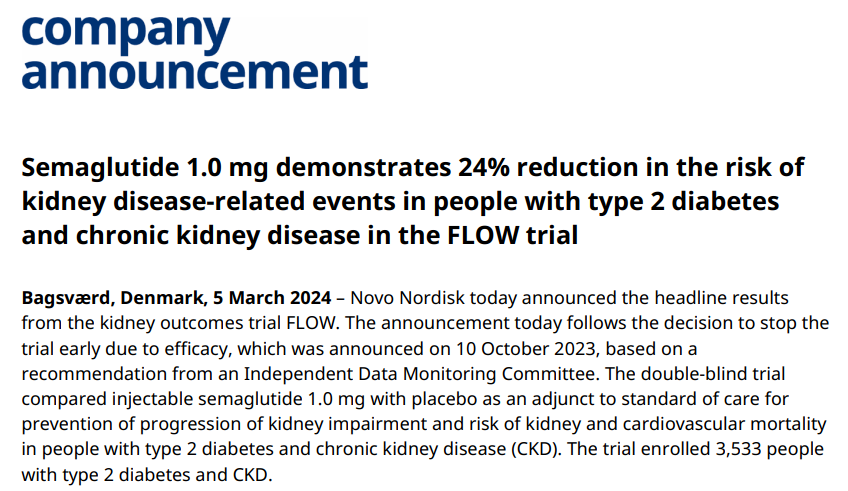
(Company Announcement)
Last October, due to the excellent results from the interim analysis, Novo Nordisk terminated the study early based on the recommendation of the independent Data Monitoring Committee (DMC). This was a year ahead of schedule, leaving room for speculation among Novo Nordisk's investors.
The trial enrolled 3,533 patients with type 2 diabetes and CKD. The primary endpoint was a composite endpoint consisting of multiple components, including: time to a sustained ≥50% decline in estimated glomerular filtration rate (eGFR) from baseline; time to eGFR falling below <15 mL/min/1.73m²; initiation of chronic kidney replacement therapy (dialysis or kidney transplantation); death from renal disease or cardiovascular disease in patients with type 2 diabetes and chronic kidney disease. Key secondary endpoints included the annual rate of change in eGFR, major adverse cardiovascular events (non-fatal myocardial infarction, non-fatal stroke, cardiovascular death), and all-cause mortality.
Results showed that, compared with the placebo group, the risk of kidney disease progression as well as cardiovascular and renal death in the semaglutide group was reduced by 24%, reaching the superiority endpoint. In addition, the study also met the superiority criteria for confirmatory secondary endpoints. In terms of safety, semaglutide demonstrated good safety and tolerability, consistent with previous studies.
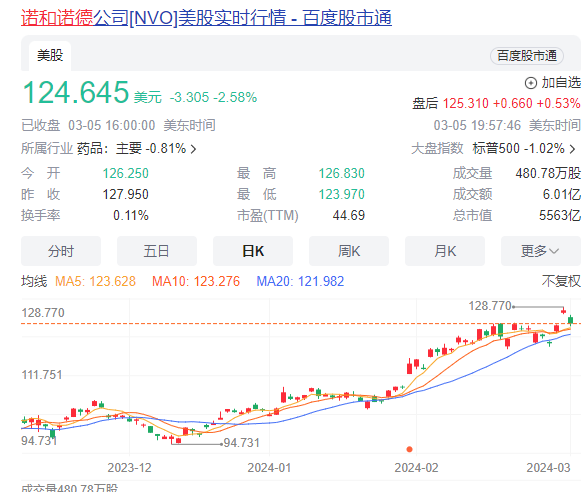
But the data failed to satisfy investors. After Novo Nordisk released its announcement, its share price fell by 2.58% on the same day. On the previous day, Novo Nordisk's share price had just reached a record high.
Analysts at Sydney Bank and Jefferies believe that the trial data released by Novo Nordisk was slightly below the expectations of some investors.
Chronic Kidney Disease (CKD) is a condition characterized by the gradual loss of kidney function, where the kidneys are unable to effectively remove waste and excess fluid from the blood. CKD typically progresses gradually, marked by a decline in estimated glomerular filtration rate (eGFR) and elevated albuminuria. Due to its insidious onset, the rates of early diagnosis and treatment are low. Once CKD patients reach end-stage kidney disease (ESKD), renal replacement therapy (including hemodialysis, peritoneal dialysis, or kidney transplantation) becomes necessary to sustain life, significantly impacting the patient's quality of life.
Diabetes has become one of the leading causes of CKD. High blood sugar slowly damages the kidneys, and over time, the kidneys may stop filtering blood properly, leading to chronic kidney disease. According to data from the ADA, the Chinese Journal of Diabetes, and Research and Markets, the global population of patients with type 2 diabetes and chronic kidney disease exceeds 100 million, with over 20 million in China.
Therefore, several overseas giants have laid out plans around hypoglycemic drugs for chronic diseases, including chronic kidney disease.
As with BI/Lilly's diabetes treatment drug empagliflozin, a clinical trial named EMPA-KIDNEY showed that empagliflozin significantly benefits CKD patients, reducing the relative risk of kidney disease progression or cardiovascular death events by 28% compared to placebo. This is also the largest and most extensive SGLT2 inhibitor trial conducted for CKD. Empagliflozin has now been approved in the United States, the European Union, China, and other regions for this indication.
Semaglutide, a GLP-1 receptor agonist class hypoglycemic drug, is currently the best-selling GLP-1 drug. In addition to its primary function of lowering blood sugar, it also suppresses appetite, making weight loss its secondary indication and propelling it into the spotlight as a phenomenal "miracle drug." In 2023, its sales reached 145.811 billion Danish kroner (approximately $21.2 billion), marking an 89% year-on-year increase, with sales second only to the newly crowned blockbuster drug Keytruda.
Its biggest rival in the GLP-1 field, tirzepatide (Lilly), is also actively pursuing indications for chronic diseases such as chronic kidney disease, cardiovascular disease, heart failure with preserved ejection fraction, and obstructive sleep apnea.
Obviously, although semaglutide reached a superior clinical endpoint in the FLOW trial, it was slightly inferior to empagliflozin, which might be the reason for failing to satisfy investors.
But semaglutide still holds the most promise as the first GLP-1 treatment for patients with type 2 diabetes and chronic kidney disease, and Novo Nordisk is expected to submit regulatory applications in the U.S. and EU this year.
Disclaimer: This article is for reference only and does not constitute any investment advice. The final results shall be subject to the official final disclosure. If there are any omissions in the information, you are welcome to provide supplements.
References:
Corporate Announcement
"Why Did Novo Nordisk's Stock Price Fall Instead of Rise Despite the 'Weight Loss Wonder Drug' Treating Kidney Disease?"

Editor: Bai Ji
Disclaimer: This article is a reprint from Yaozhi.com. The images and text are the property of the original author, and the purpose of the reprint is to convey more information. It does not represent the views of this platform. If there are any issues regarding the content, copyright, or other aspects, please leave a message on this platform, and we will address it promptly.