Abbott Highlights Synergistic Growth: GLP-1 Drugs Boost Continuous Glucose Monitor Sales

Abbott
Diagnostic and pharmaceutical product manufacturers
Source: Siyu MedTech; Editor: Sophia
Reprint Requirements: Please indicate the source of the article at the beginning of the text, and it can be reprinted directly.

On March 6, 2024, Abbott (Abbott, NYSE: ABT) announced the data from a real-world study.Data shows that, in order to control their conditions more effectively, patients tend to use Continuous Glucose Monitors (hereinafter referred to as CGMs) and GLP-1 drugs simultaneously.The two methods are complementary to each other.
The CEO of Abbott said,As the research results of real-world data show"CGMs + GLP-1 Drug Therapy" Is an Important Trend.The company plans toWithin the next five yearsWillFreeStyle Libre SeriesDevelop into aValue$10 billion worth of products。
This discovery was unexpected.Some analysts had predictedThe large-scale sales of GLP-1 drugs may eventually impact the CGM industry.
But in fact, it seems that the CGMs industry is still booming, and the competition in the GLP-1 field is becoming increasingly fierce.Pharmaceutical companies both in China and abroad are heavily investing in the development of GLP-1 drugs, hoping to secure a place in the market.
# Abbott Data Analysis at a Glance
Abbott's internal executives stated that, based on an analysis of the user base, the number of patients taking GLP-1 drugs who are also using the FreeStyle Libre continuous glucose monitor is increasing.The two methods are complementary to each other and can ultimately improve the health condition of patients.GLP-1 drugs have catalyzed the use of CGMs devices.
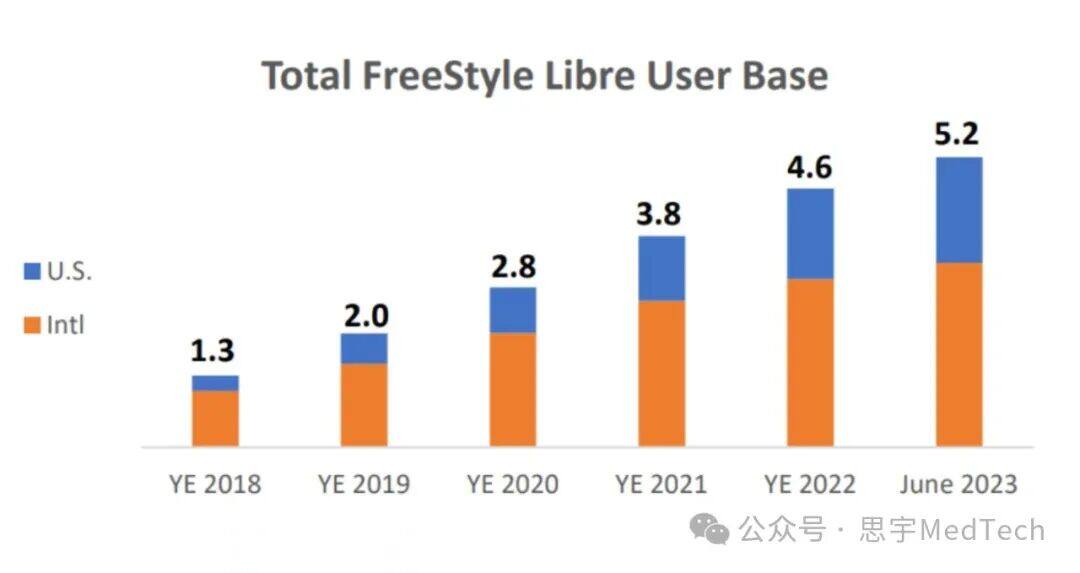
▲Proportion of CGM Users Growth ((Source: Company's official website, same as below)
Currently, Abbott's CGM system reader, FreeStyle Libre 3, has received European approval.
Related Reading:FDA Reapproval! Abbott Continuous Glucose Monitor
Abbott said,“Although we traditionally think that treatment options must compete with each other, this is between two productsComplementary RelationshipA great example of this, both products help toOptimize Diabetes Treatment。”
So, complementary to CGMsWhat are GLP-1 drugs? What are the characteristics of their development history? Market performance andIndustrial ChainHow?
Peptide Drugs
Peptide (Polypeptide) refers to a chain of amino acids (AAs) linked by amide bonds or peptide bonds. The covalent peptide bond is an amino acidFormed through a condensation reaction, the alpha-carboxyl group of one amino acid condenses with the alpha-amino group of another amino acid, releasing water to form a peptide bond.
Amino Acid Unit in Peptide Chain Called "Residue". Formation of Peptide Bond Leads to Loss of Water. The "Backbone" of a Peptide Is the Peptide Bond, Side Chains Are Variable; It Is Also an Intermediate Product of Protein Hydrolysis. Proteins Contain Multiple Peptide Chains; Generally, Molecules with Molecular Weights (MWs) Less Than 10,000 Daltons or Fewer Than 50 Amino Acids (AA) Are Called Polypeptides, While Those Exceeding These Values Are Called Proteins, Between Small-Molecule Chemical Drugs and Protein-Based Drugs.
Over the past 60 years,ChinaThe year-on-year growth of the globular peptide therapy market is 7.9%. Insulin analogs account for 50% (USD 25 billion) of peptide drug revenue.Next is the glucagon-like peptide-1 (GLP-1) receptor agonist dulaglutide. Among the currently approved peptide drugs, the majority are agonists.
GLP-1: The Star Target for Hypoglycemic and Weight-Loss Drug Development
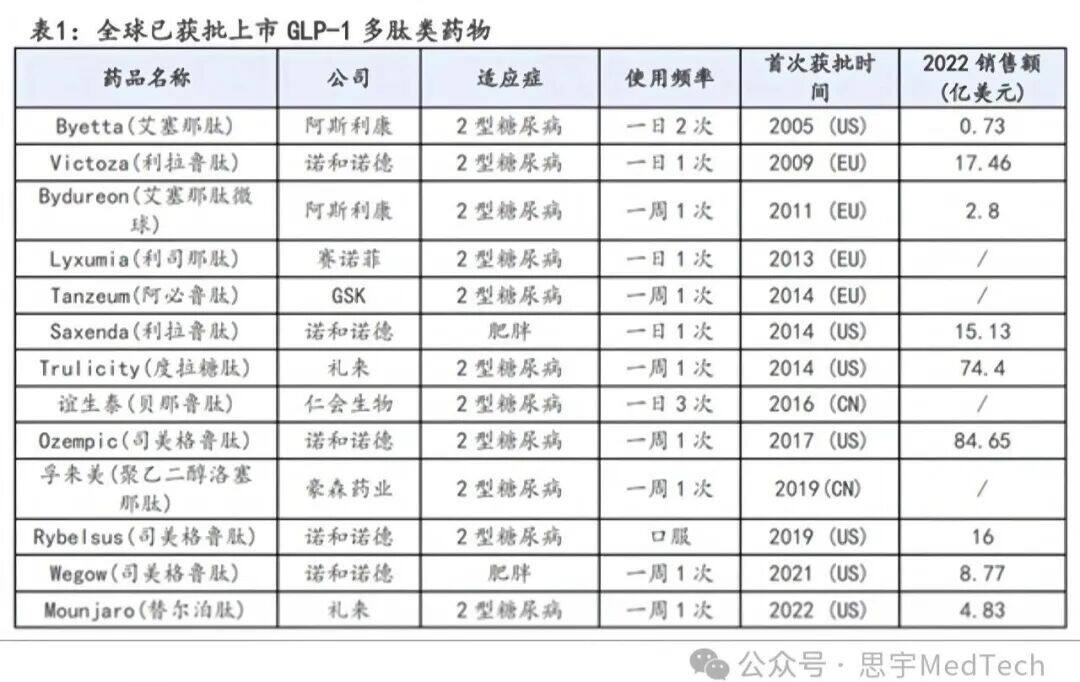
Glucagon-like peptide-1 (GLP-1) is a hormone secreted by intestinal L cells, and its receptor (GLP-1R) is widely distributed in multiple organs and tissues, including the central nervous system, cardiovascular system, muscles, and gastrointestinal tract. GLP-1 has a glucose concentration-dependent hypoglycemic effect, and its receptor agonist (GLP-1RA) can mimic the physiological actions of GLP-1.It is an important drug for the treatment of diabetes and obesity.In addition, GLP-1RA also has effects on the cardiovascular system, kidneys, central nervous system, etc.Protective effect. GLP-1 Peptide Drugs Approved for Marketing Worldwide Currently, multiple GLP-1 peptide drugs have been marketed globally, including:
Daily Injection Products(Exenatide, Liraglutide, Lixisenatide, and Benaglutide, etc.) Weekly Injection Formulation(Exenatide Microspheres, Albiglutide, Dulaglutide, Semaglutide, Tirzepatide, and Pegvisomant, etc.) OralSemaglutide, etc.
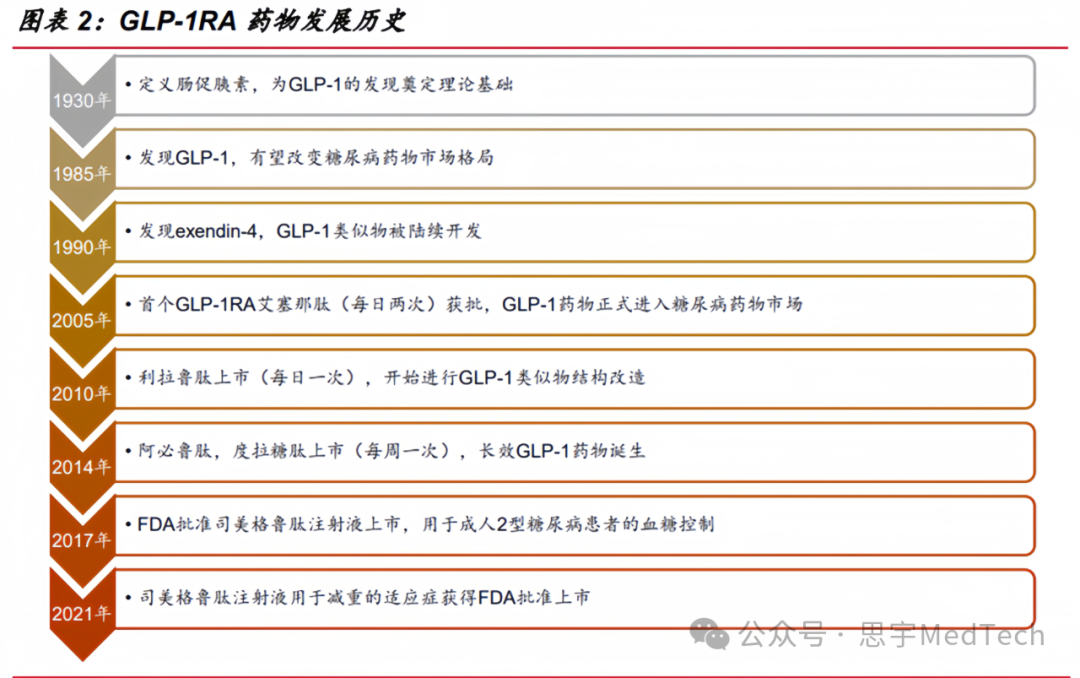
In 1985, natural GLP-1 was discovered for the first time.。Its mechanism of increasing insulin secretion in a glucose-dependent manner can compensate for the potential hypoglycemia drawback of diabetes treatment at that time. Exendin-4 was discovered in 1990,It is a hormone found in the saliva of the Gila monster, with insulinotropic and anti-hyperglycemic activity, and has a longer half-life compared to GLP-1. In 2005, Exendin-4 synthetic product Exenatide was approved as the first GLP-1RA drug, marking the beginning of competition in the GLP-1RA field. From 2009 to 2010, Novo Nordisk's liraglutide was approved in Europe and the United States for the treatment of type 2 diabetes, becomingThe first once-daily GLP-1RA injectable with a half-life of 13 hours. In 2017, Novo Nordisk successfully launched a blockbuster product based on liraglutide — semaglutide.It is also the most successful long-acting GLP-1RA product to date, offering potent glucose-lowering and weight-loss effects while providing cardiovascular benefits. In 2022,Eli LillyLaunched the world's first GLP-1/GIP dual agonist, tirzepatide.
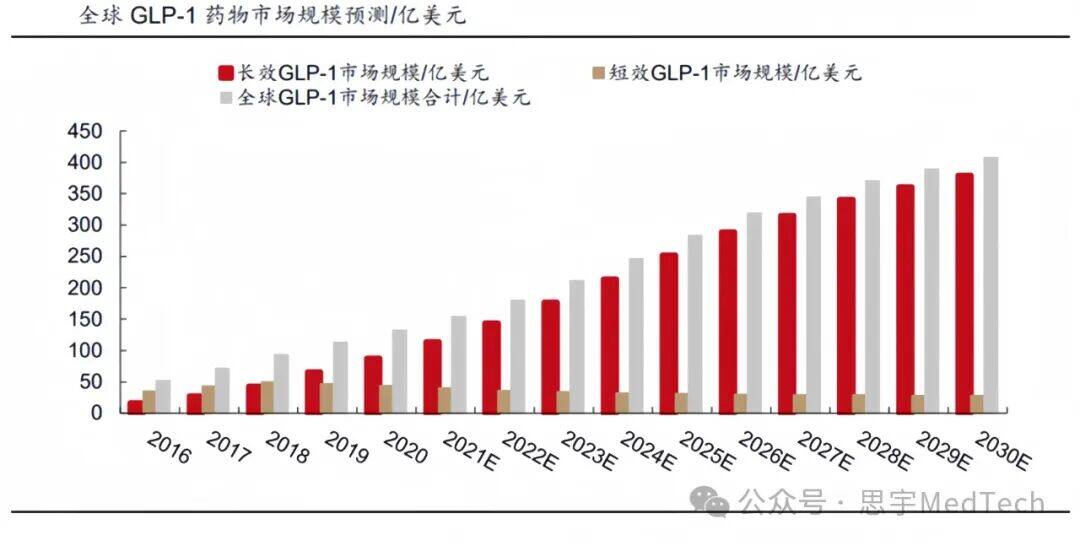
Among GLP-1 drugs, Semaglutide becomes a hit product The overall sales scale of GLP-1 peptide drugs that have been approved for marketing worldwide in 2022 has reached$22.5 billionAbove a certain scale, the two best-selling productsOzempic (Semaglutide), Trulicity (Dulaglutide)Sales reached$8.465 billion, $7.44 billion.GLP-1 Drug Growth Exceeds Expectations; Overseas Giants Novo Nordisk and Eli Lilly Raise Full-Year Forecasts. GLP-1 Drugs Gain Larger Share in Diabetes Field and Become Mainstream Research Direction for Weight Loss Indications The treatment options for Type 2 diabetes are numerous, and the market share of GLP-1 peptides has been continuously increasing in the global market in recent years. According to Novo Nordisk's 2022 annual report, from 2017 to 2022, the overall market size of insulin, GLP-1 peptides, DPP-4 inhibitors, and SGLT-2 inhibitors had a CAGR of 4%, with GLP-1 peptides reaching 19%. This indicates that the market size of GLP-1 peptide hypoglycemic drugs is rapidly expanding. At the same time, the market share of GLP-1 peptides in China is also continuously increasing.
The upstream of the industry chain consists of raw material suppliers. The commercial production of peptide APIs at kilogram scale and above involves projects including consumables, purification processes, and the procurement of peptide raw materials. Related companies includeNPT Biotech, Sinobioway Biotech, Jiuzhou Pharma, Hanmi Pharmaceuticals, Aorui Te, Puli Pharmaceutical, Sunresin, Haozhou Biotechetc.
The downstream is pharmaceutical enterprises, including those in China.Innovent Biologics, Hengrui Medicine, Huadong Medicine, Tonghua Dongbao, CSPC Pharmaceutical Group, Gan&Lee Pharmaceuticalsetc.
From the perspective of industrial chain outsourcing services, CDMO in ChinaCompanyIncluding HuaQuan Pharmaceutical, Asymchem, and Jiuzhou Pharmaceutical, etc.
GLP-1 for weight loss and other indications expansion, continuously opening up potential market space.Currently, the proportion of patients using GLP-1 among all hypoglycemic drugs is not high, but its sales revenue share stands out. In addition, apart from the diabetes market, GLP-1 continues to explore new indications such as weight loss, NASH, CKD, and AD. Clinical data shows that GLP-1 is highly effective in weight loss. With the increase in GLP-1 usage and the expansion of indications, there may still be significant potential market space in the future.
Annual revenue for 2023 was $40.11 billion, a decrease of 8.1% year-on-year; revenue in the fourth quarter was US$10.24 billion, an increase of 1.5% year-on-year; 2023Annual net profit was $5.72 billion, a decrease of 17.5% year-on-year; net profit in the fourth quarter was US$1.59 billion, an increase of 54.2% year-on-year; Medical device business saw the most significant growth in 2023, with annual sales reaching $16.89 billion, representing a year-on-year increase of approximately 14%., among whichDiabetes care grows fastest (22.1%), followed by neuromodulation (15.5%), and then electrophysiology (13.9%); Full-year organic sales growth (excluding COVID-19 testing-related sales) for fiscal year 2024 is expected to be between 8.0% and 10.0%.
Global MedTech TOP100: 2023 Global MedTech TOP100
2023 Global MedTech Industry Contribution Award
2023 Global Medical Technology Innovation Award
2023 Global MedTech Rising Star Award
2023 Global Innovation Medical Device Award
Editor-in-Chief | Zhao Qing Reviewed by | Yi He