Global Top 18 Failed Clinical Trials (January–February 2024): Overview and Pipeline Insights

Asieris
Innovative Drug Developer

Gilead Sciences
Antiviral Drug Developer

Synlogic
Innovative Drug Developer

AstraZeneca
Biopharmaceutical Manufacturer

AN2 Therapeutics
Developer of Therapeutics for Infectious Diseases

Otsuka
Drug Developer

Roivant Sciences
Biopharmaceutical Company

Denali Therapeutics
Biopharmaceutical Manufacturer

Theravance Biopharma
Innovative Drug Developer
Allakos
Antibody Therapy Developer
Bristol-Myers Squibb
Biopharmaceutical and Nutritional Product R&D and Sales
Laekna Therapeutics
Innovative Drug Developer

The failure of clinical trials may stem from multiple aspects. A study shows that 90% of clinical failures in drug development may be attributed to four reasons: lack of clinical efficacy.(40%-50%)、Uncontrollable Toxicity(30%)、Poor drug-like properties(10%-15%)`, as well as the lack of commercial demand and poor strategic planning.`(10%), including poor clinical efficacy, safety issues, etc.[1]。
According to incomplete statistics, there were approximately 18 failed clinical studies in January and February 2024, of which 12 studies ended due to not meeting the primary endpoint.

Asieris:APL-1202TreatmentRecurrent High-Risk Non-Muscle-Invasive Bladder Cancer After Chemotherapy InfusionPivotal Clinical Trial
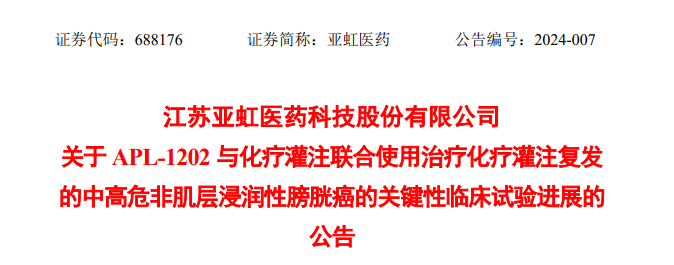
On February 5, Asieris announced that its product APL1202, used in combination with chemotherapy instillation, is intended for treating intermediate- and high-risk non-muscle-invasive bladder cancer recurring after chemotherapy instillation.(NMIBC)The randomized, double-blind, controlled, multi-center pivotal clinical trial did not meet the primary endpoint, and the company has decided to terminate the further development of APL-1202 in combination with chemotherapy instillation for this indication.
APL-1202(Product name: Veescan®)It is an orally administered reversible MetAP2 inhibitor with anti-angiogenic, anti-tumor activity, and the ability to modulate the tumor immune microenvironment. This study is a randomized, double-blind, controlled, multicenter pivotal clinical trial, with the primary endpoint being event-free survival.(EFS, "Event" is defined as recurrence, progression, or death caused by bladder cancer confirmed by pathology)The results showed that, although a certain trend of superiority was observed in some patient populations, the primary efficacy endpoint, event-free survival (EFS), did not meet the pre-specified statistical hypothesis.
In addition to this study, the company is also conducting two other clinical trials of APL-1202. A Phase III clinical trial of APL-1202 monotherapy for untreated intermediate-risk NMIBC.(Ascertain)In the clinical enrollment stage. APL-1202 oral combination with tislelizumab for muscle-invasive bladder cancer(MIBC)Phase II Clinical Trial of Neoadjuvant Therapy(Anticipate)All subjects have been enrolled, and the top-line data of Phase II is expected to be released in the third quarter of 2024. The interim analysis of the Anticipate Phase II clinical trial has been completed, and the results met the pre-specified requirements of the protocol.
Gilead:
Magrolimab in the Treatment of Acute Myeloid LeukemiaⅢPhase ENHANCE-3 Study
On February 7, Gilead Sciences announced the termination of magrolimab, a CD47 antibody, for the treatment of acute myeloid leukemia.(AML)In the Phase 3 ENHANCE-3 study, the FDA included all magrolimab treatments for myelodysplastic syndromes.(MDS)The research on acute myeloid leukemia, including the related expanded access program, has been placed on full clinical hold. These decisions were made based on the recommendation of the Independent Data Monitoring Committee, which reviewed the overall survival data from ENHANCE-3.(OS)First-line data from the interim analysis plan. In this analysis, magrolimab in combination with azacitidine and venetoclax showed no treatment effect, and an increased risk of death was observed, primarily due to infections and respiratory failure.
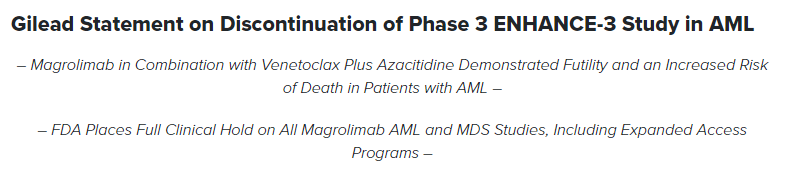
Two other trials targeting high-risk MDS(ENHANCE)and TP53-mutated AML(ENHANCE-2)Preliminary analysis of the clinical research data also indicates an increased risk of patient mortality in the magrolimab treatment group, with no therapeutic effect observed. Based on these results, Gilead Sciences, Inc. has stated that it will no longer further develop magrolimab for the treatment of blood disorders.
Synlogic:
SYNB1934TreatmentPhenylketonuriaThePhase IIISynpheny-3 Study
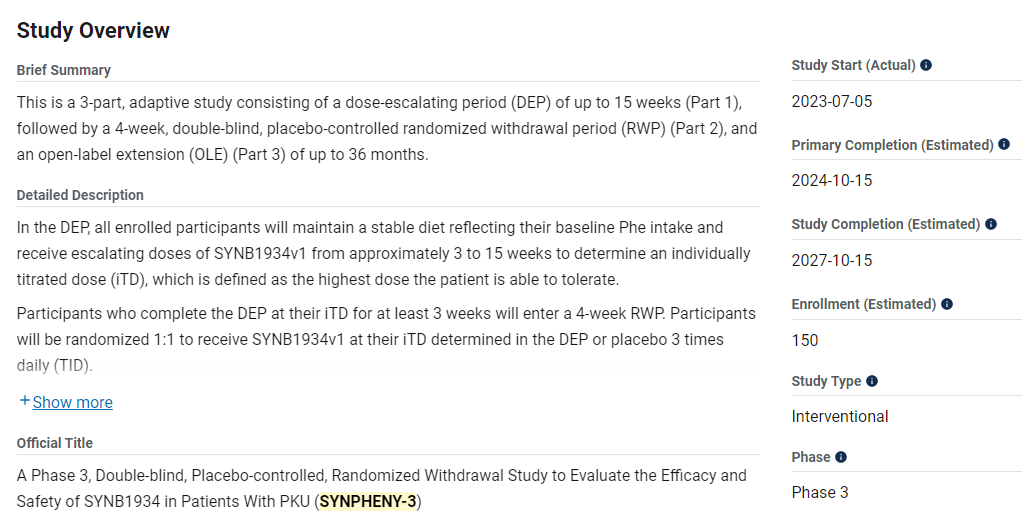
February 8, Synlogic, Inc.(Nasdaq: SYBX)Announcement of the Termination of the Synpheny-3 Study, a Research on Labafenogene Marselecobac (SYNB1934)As phenylketonuria(PKU)A potential treatment method is currently undergoing Phase III clinical research. SYNB1934 is a genetically engineered bacterial strain with the ability to degrade phenylalanine.
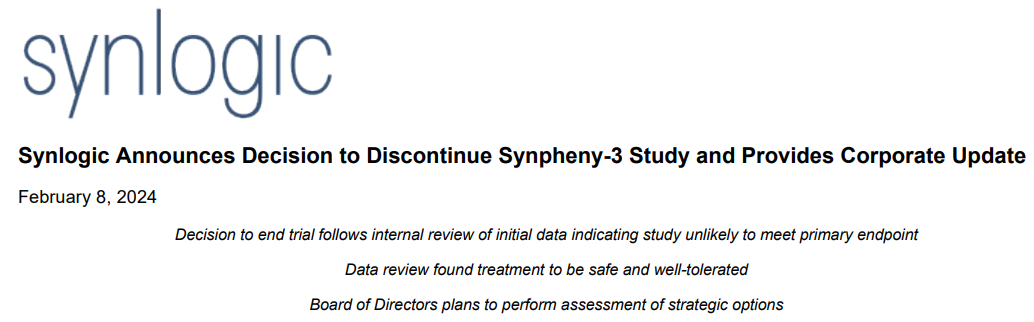
The decision to terminate the Synpheny-3 trial was based on the upcoming independent data monitoring committee.(DMC)Results of the internal review prior to the assessment indicate that the trial is unlikely to meet its primary endpoint. This decision was not based on concerns regarding safety or tolerability. Synlogic will now collaborate with relevant clinical trial sites of Synpheny-3 to implement the decision to terminate the trial.
AstraZeneca:
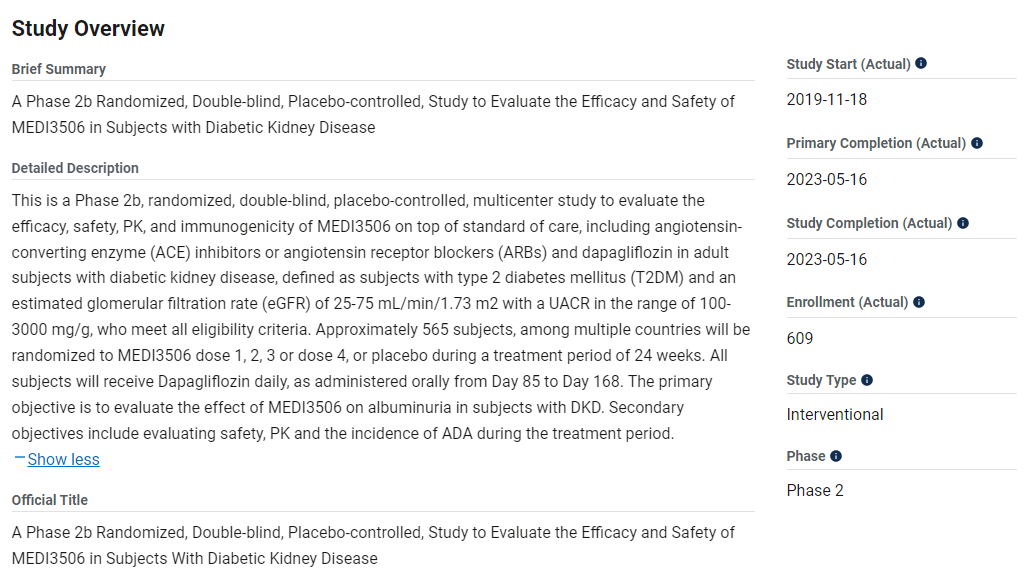
TozorakimabDapagliflozinCureTreatment of Diabetic NephropathyDiseaseOfIIbPhase Clinical ResearchStudy
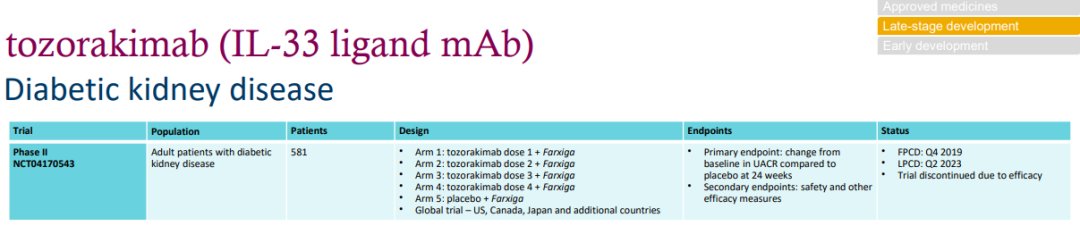
On February 8, AstraZeneca announced in its 2023 full-year financial report that it had decided to terminate the Phase IIb clinical trial of anti-IL-33 monoclonal antibody Tozorakimab in combination with dapagliflozin for the treatment of diabetic nephropathy due to insufficient efficacy.(NCT04170543)。
This study aims to evaluate the efficacy and safety of MEDI3506 in patients with diabetic nephropathy on top of standard therapy. The primary objective is to assess the effect of MEDI3506 on albuminuria in adult subjects with diabetic nephropathy, while secondary objectives include evaluating safety, PK, and the incidence of ADA during treatment.
AN2 Therapeutics:
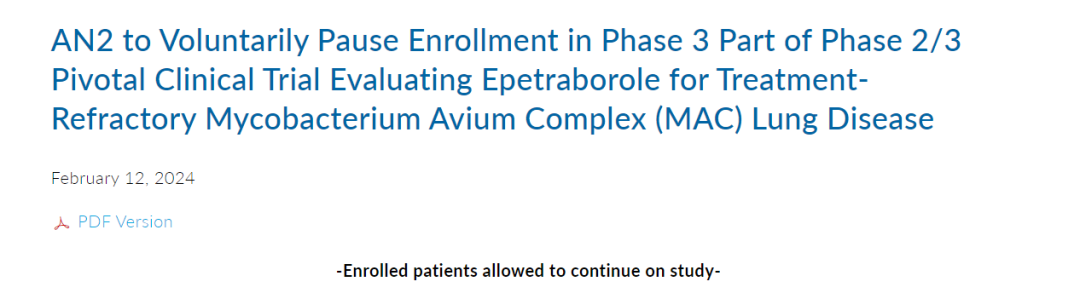
Epetraborole for the Treatment of Refractory Pulmonary DiseaseII/IIIPhaseEBO-301 Study
BigTomb Pharmaceutical:
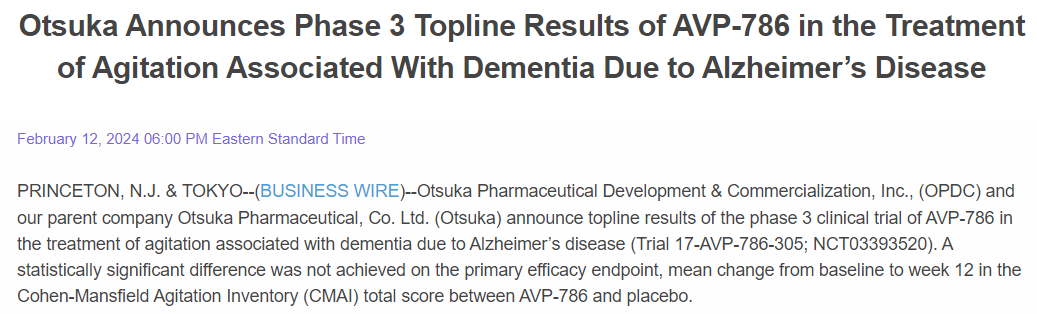
AVP-786TreatmentAgitation Associated with Alzheimer's Disease DementiaTheIIIPhase Clinical Study
Roivant Sciences:
RVT-2001 is used for the treatment ofMyelodysplastic SyndromesPhase I/II Trial
On February 13, Roivant Sciences disclosed in its financial report the termination of the Phase I/II clinical trial for RVT-2001, an SF3B1 modulator for the treatment of myelodysplastic syndromes, due to lower-than-expected efficacy following an interim analysis.
In 2022, Roivant and Eisai(Eisai)A licensing agreement has been reached to obtain global exclusive rights to the investigational drug RVT-2001, a potential first-in-class oral small molecule splicing factor SF3B1 modulator. RVT-2001 has enabled more than 30% of patients to become independent of red blood cell transfusions among 19 low-risk, transfusion-dependent MDS patients.

Denali/Sanofi:
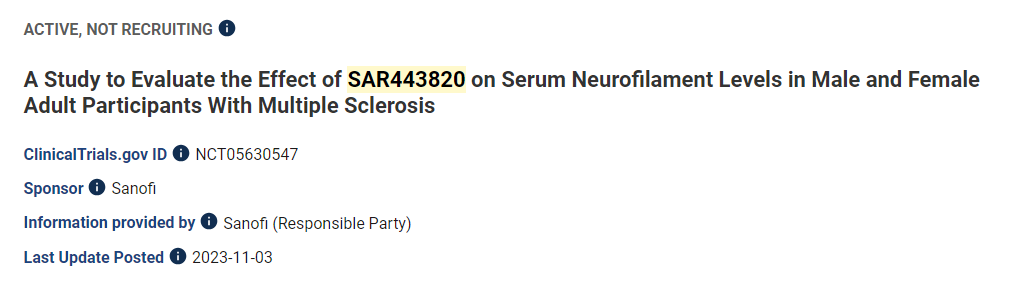
DNL78Phase II HIMALAYA Study for the Treatment of Amyotrophic Lateral Sclerosis
On February 16, Denali Therapeutics disclosed in an SEC filing that DNL788(SAR443820)Treatment of Amyotrophic Lateral Sclerosis(ALS)The Phase II HIMALAYA study failed to achieve a significant improvement in the revised ALS Functional Rating Scale.(ALSFRS-R)The primary endpoint of the score. Following this news, Denali's stock price fell by nearly 8%.

In October 2018, Sanofi and Denali Therapeutics embarked on a broad collaboration for the global development and commercialization of RIPK1 inhibitors. Sanofi will lead the Phase 1 and Phase 2 clinical development of SAR443820/DNL788 for the treatment of ALS and MS, and will collaborate with Denali Therapeutics on Phase 3 clinical trials of the drug for ALS, MS, and Alzheimer's disease.
SAR443820/DNL788 is an effective, selective, and brain-penetrant RIPK1 inhibitor jointly developed by Sanofi and Denali Therapeutics. Sanofi will continue the K2 Phase 2 study of SAR443820/DNL788 in patients with multiple sclerosis; on January 8, Denali Therapeutics disclosed in a press release that Sanofi had completed the treatment phase of SAR443820/DNL788 for multiple sclerosis.(MS)A total of 174 participants were recruited in the Phase 2 trial.
Theravance Biopharma:
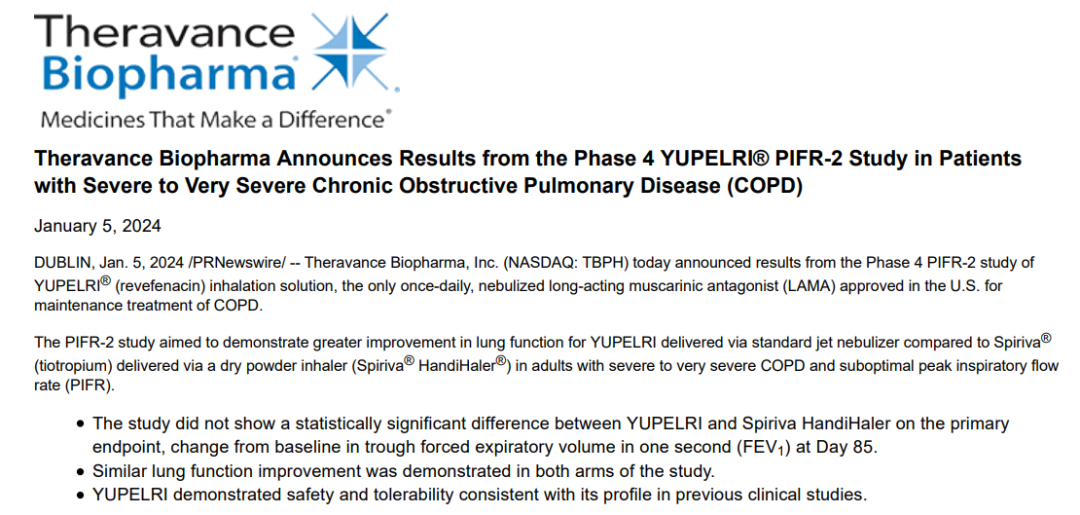
YupelriFor the treatment of COPDPhase IV PIFR-2 Study
The failure of this study also led to a 10% drop in Theravance's stock price.
Allakos:
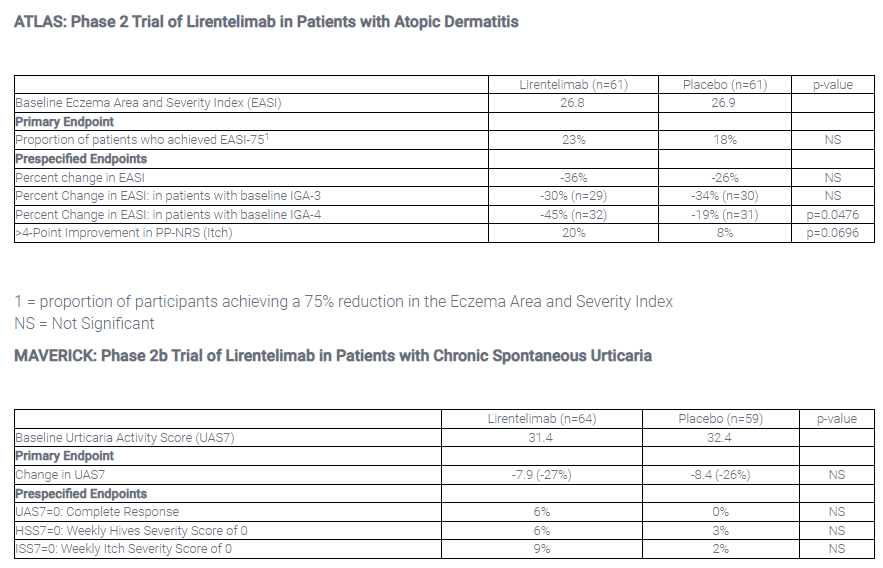
lirentelimabTreatmentPhase II ATLAS Study and Treatment of Atopic DermatitisChronic Spontaneous UrticariaThePhase IIb MAVERICK Study

Gilead:
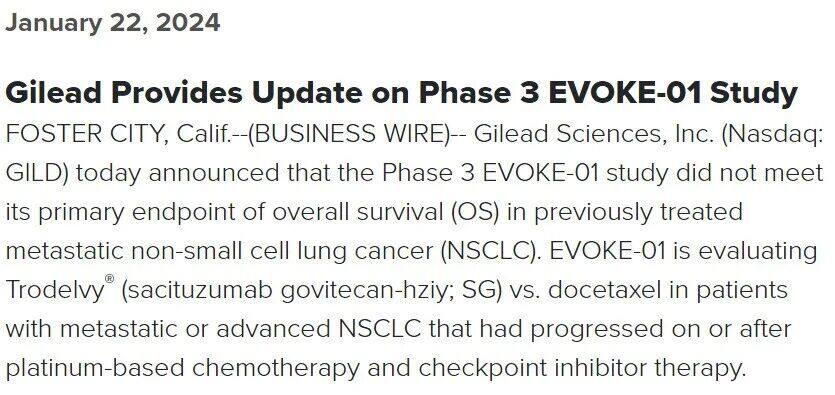
TrodelvyTreatmentPreviously Treated Metastatic or Advanced Non-Small Cell Lung CancerPhase IIIEVOKE-01Research
On January 22, 2024, Gilead Sciences announced that the Phase III clinical trial EVOKE-01 of Trodelvy, a Trop2 ADC drug for the treatment of non-small cell lung cancer, did not meet the primary endpoint of overall survival (OS). EVOKE-01 is evaluating the Trop2 ADC drug Trodelvy®.(sacituzumab-govitecan-hziy;SG)Efficacy of docetaxel in patients with metastatic or advanced NSCLC who have progressed during or after platinum-based chemotherapy and checkpoint inhibitor treatment.
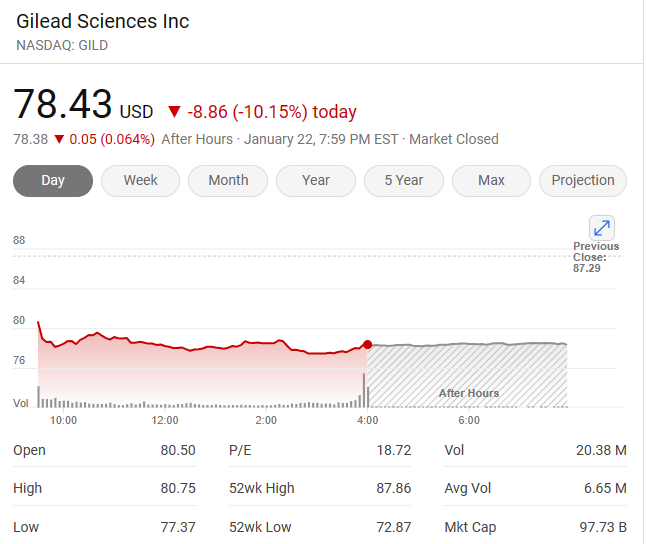
The failure of Trodelvy caused Gilead Sciences' stock price to plummet by about 10% on Monday after reaching an 11-month high.
BMS:
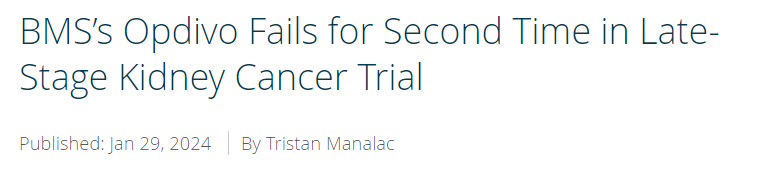
OpdivoTreatment for Amyotrophic Lateral SclerosisPhase III CheckMate-914 Study
On January 29, Bristol-Myers Squibb(BMS)Announced that its PD-1 inhibitor Opdivo failed in Part B of the Phase III CheckMate-914 study, showing no significant disease-free survival benefit for patients with locally advanced renal cell carcinoma at high risk of recurrence post-surgery.
Laekna Therapeutics:
Phase II Clinical Study of Afuresertib Combined with Paclitaxel in the Treatment of Drug-Resistant Ovarian Cancer
According to publicly available data, 18 drugs have already failed in clinical trials since the beginning of 2024. Efficacy remains the most critical reason for terminating Phase II and Phase III clinical trials, with an even higher proportion in oncology and CNS diseases, reflecting the complexity and heterogeneity of these conditions, which still require more perseverance to overcome. Although the proportion of failures due to safety reasons has increased in Phase II trials, this cause accounts for a decreasing share in Phase III, indicating that research and development efforts are increasingly focusing on safety, allowing products with poor safety profiles to be screened out early in the process. On the path to developing new drugs, only by overcoming setbacks and having the courage to face difficulties can we offer a chance for people suffering from diseases to regain their health.

END
Reply to the keyword "Report", access dozens of exclusive reports produced by Pharma Intelligence
Reply to the keyword "CSCO", Obtain 2023 CSCO Guidelines
Reply to the keyword "ASCO", Obtain 2023 ASCO Abstracts by Cancer Type
Reply to the keyword "First Generic in 2022", Obtain the List of First Generic Drugs Approved in 2022
Reply to the keyword "Medical Insurance", Obtain the 2022 Medical Insurance Catalog
Contact us to experience more professional services from PharmaCloud. | ||||
WillDiscussion CombineWork | GardenDistrict TakeMission | Database Consultation | Customization Service | Media Cooperation |