

Ribo Bio Inks Over RMB 700 Million Deal with Qilu Pharma for PCSK9 siRNA Candidate RBD7022 in Greater China

Ribo Life Science
Small Nucleic Acid Drug Developer

Qilu Pharmaceutical
Specialty Formulations and Active Pharmaceutical Ingredients (API) Developer


On December 15, 2023, Ribo Life Science entered into a cooperation agreement with Qilu Pharmaceutical to license the rights of the PCSK9 siRNA new drug RBD7022 in Greater China to the latter. Qilu Pharmaceutical will pay a total of over 700 million yuan in upfront and milestone payments, as well as sales royalties of up to double-digit percentages.
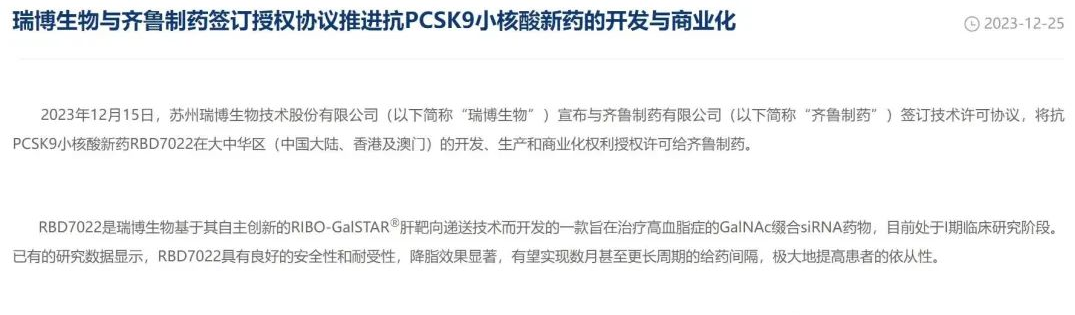
Just don't know how much the down payment is.
Inclisiran
The only siRNA product currently on the market is Novartis' Inclisiran sodium, which has been launched in China, the United States, the European Union, and Japan. Its global sales in 2022 were $112 million.
On December 9, 2020, Inclisiran sodium was approved by the European Medicines Agency (EMA) and is marketed by Novartis Europharm Ltd under the trade name Leqvio.®。(EMEA/H/C/005333)
On December 22, 2021, Inclisiran sodium was approved by the U.S. Food and Drug Administration (FDA) and is marketed by Novartis under the brand name Leqvio.®。(NDA214012)
On August 22, 2023, Inclisiran sodium was approved by China's National Medical Products Administration (NMPA) and is marketed by Beijing Novartis Pharmaceuticals Co., Ltd. under the trade name Leke Wei.®.(Approval No. HJ20230103)
On September 25, 2023, Inclisiran sodium was approved by Japan's Pharmaceuticals and Medical Devices Agency (PMDA) and is marketed by Novartis under the trade name Leqvio Subcutaneous Injection 300mg Syringe.®。(30500AMX00279000)


An Event That Shocked China and the World Erupted

Drug discovery and development are important research areas for pharmaceutical companies and chemical scientists. However, inefficiency and high costs present obstacles in this field. Additionally, handling large amounts of complex data from genomics, proteomics, microarrays, and clinical trials also poses challenges.
Artificial intelligence and machine learning technologies have modernized the pharmaceutical field. Machine learning and deep learning algorithms have been applied to various drug discovery processes, including peptide synthesis, virtual screening, toxicity prediction, drug monitoring and release, pharmacophore modeling, quantitative structure-activity relationship, drug repositioning, polypharmacology, and physiological activity. Additionally, new data mining and management techniques have supported recently developed modeling algorithms.
CADDUsing computer models to predict the interactions between drugs and proteins in living organisms, thereby predicting the potential activity of new drugs.AIDDThis utilizes machine learning algorithms to process larger datasets and provide more accurate predictions. The combination of both offers strong theoretical support for the development of new drugs.

CADD Computer-Aided Drug Design
AIDD Artificial Intelligence Drug Discovery and Design
Protein Crystal Structure Analysis
Single-Particle Cryo-EM Structure Analysis

Content Introduction
PART 01


CADD Computer-Aided Drug Design
Day 1
Introduction and Fundamentals
1. The Importance of Predicting Protein 3D Structures for Drug Discovery
1.1 Homology Modeling
1.2 De Novo Modeling
2. The Importance of Protein (Enzyme/Target) Active Sites in Drug Discovery
3. Key Structural Features in Drug Discovery (Especially Small Molecules)
4. Common Computational Methods for Drug Discovery Assistance
4.1 Molecular Docking
4.2 Virtual Screening
4.3 Molecular Dynamics Simulation
4.4 Others
Introduction to the PDB Database
1.1 Retrieval Protein
1.2 Page Functions and Interpretation
1.3 Data Download
1.4 Interpretation of the PDB File Format
2. PyMol
2.1 Software Introduction
2.2 Introduction to Basic Operations
2.3 Protein and Small Molecule Surface Diagrams, Electrostatic Potential Representation
2.4 Plotting Interaction Diagrams and Creating Simple Animations
The Next Day
Homology Modeling
1. Introduction to Homology Modeling Principles
1.1 Functions and Application Scenarios of Homology Modeling
1.2 Homology Modeling Methods
2. Swiss-Model Homology Modeling;
2.1 Homologous Protein Search (BLAST, etc.)
2.2 Protein Sequence Alignment
2.3 Protein Template Selection
2.4 Protein Model Construction
2.5 Model Evaluation (Protein Raman Spectra)
2.6 Protein Model Optimization
Case Study and Practice: Modeling with the 2019-nCoV Spike Protein Sequence and Evaluating the Model Based on Corresponding Parameters and Methods
Small Molecule Construction
1. Introduction to ChemDraw Software
1.1 Small Molecule Structure Construction
1.2 Calculation of Small Molecule Physicochemical Properties (e.g., Molecular Weight, clogP, etc.)
1.3 Construct macrolides, amino acids, DNA, RNA and other molecules respectively
Small Molecule Compound Library
2 Small Molecule Database
2.1 DrugBank、ZINC、ChEMBLIntroduction and Usage of Databases
2.2 Introduction and Use of Natural Product and Traditional Chinese Medicine Component Databases
Day 3
Basics of Molecular Docking
1.1 Principle of Molecular Docking
1.2 Classification of Molecular Docking
1.3 Molecular Docking Scoring Function
2. Practice of Conventional Molecular Docking
2.1 Execution of Docking
2.1.1 Preparation of Drug Molecular Ligands
2.1.2 Preparation of Protein Receptors
2.1.3 Receptor Grid Calculation
2.1.3 Perform Semi-Flexible Docking
Result Evaluation
1.2.1 Comparison of Crystal Structure Conformations
1.2.2 Evaluation of Docking Results from an Energy Perspective
1.2.3 Evaluation of Docking Results by Cluster Analysis
1.2.4 Selection of the Optimal Binding Conformation
2 Integration with Other Methods
Day 4
1 Flexible Docking
1.1 Small Molecule Ligand Optimization Preparation
1.2 Preparation of Protein Receptors
1.3 Definition of Flexible Residues
1.4 Protein Receptor Grid Calculation
1.5 Flexible Docking Calculation and Result Evaluation
1.6 Comparison and Selection between Semi-flexible Docking and Flexible Docking
2 Flexible docking implementation in other ways
Afternoon
Receptor-Based Drug Discovery
1 Preparation for Virtual Screening
1.1 Different Formats of Small Molecule Files
1.2 Introduction to the Most Practical Features of OpenBabel
1.3 Conversion of Small Molecules in Different Formats
2. Docking-Based Virtual Screening
2.1 Definition, Workflow Construction, and Demonstration of Virtual Screening
2.2 Target Protein Selection, Compound Library Acquisition
2.3 Virtual Screening
2.4 Result Analysis (Scoring Values, Energy, and Interaction Analysis)
Day 5
Morning
Some special molecular docking
1.Small molecule-small molecule docking
1.1 Introduction to Small Molecule-Small Molecule Interactions
1.2 Small Molecule Structure Preprocessing
1.3 Small Molecule-Small Molecule Docking (Sugar-Small Molecule as an Example)
1.4 Display and Analysis of Docking Results
2. Protein-Nucleic Acid Docking
3. Protein-Protein Docking
Afternoon
Ligand-Based Drug Discovery
1. Construction of 3D-QSAR Model (Sybyl Software)
1.1 Small Molecule Construction
1.2 Creation of Small Molecule Database
1.3 Small Molecule Charge Addition and Energy Optimization
1.4 Determination and Superposition of Molecular Active Conformations
1.5 Creation of 3D-QSAR Model
1.6 Construction of CoMFA and CoMSIA Models
1.7 Test Set Validation Model
1.8 Model Parameter Analysis
1.9 Model Equipotential Map Analysis
1.10 3D-QSAR Model Guided Drug Design
Day 6
Morning
1. Introduction to Linux System
2. Introduction to Common Commands
3. Installation of Programs on Linux (GROMACS)
Afternoon
MD Practice 1: Molecular Dynamics Simulation of Protein under Solvation
Fully familiar with the general process of molecular dynamics simulation
Day 7
Morning
MD Practice II: Molecular Dynamics Simulation of Protein-Ligand under Solvation
Mastering Force Field Fitting for Handling Non-Standard Residues
Afternoon
Commonly Used Analysis Commands in Molecular Dynamics Simulations
Calculation of Protein-Ligand Binding Free Energy
Partial Model Case Images
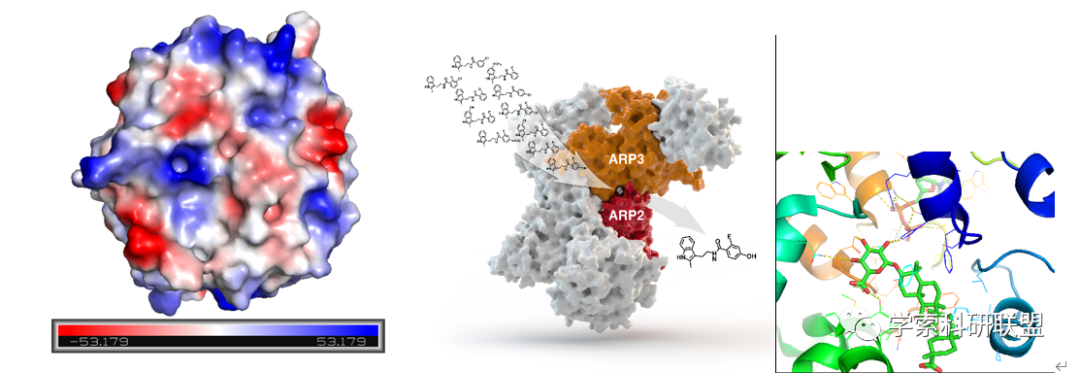
PART 02


AIDD Artificial Intelligence Drug Discovery and Design
Day 1
1 Introduction to Artificial Intelligence Drug Discovery (AIDD)
2 Application of Machine Learning and Deep Learning in the Field of Drug Discovery
2.1 Molecular Property Prediction and Optimization
2.2 Virtual Screening
2.3 Drug Side Effect Prediction and Safety Assessment
2.4 New Drug Molecular Design
3 Introduction and Installation of Tools
3.1 Installation of Anaconda3/Pycharm
3.2 Numpy Basics
3.3 Pandas Basics
3.4 Matplotlib Basics
3.5 Scikit-learn Basics
3.6 Pytorch Basics
3.7 RDKit Basics
The Next Day
1 Introduction to Machine Learning
1.1 Four Elements of Machine Learning
1.2 Data Module
1.3 Core and Advanced APIs
2 Regression Algorithms and Applications
2.1 Linear Regression
2.2 Lasso Regression
2.3 Ridge Regression
2.4 ElasticNset Elastic Network
3 Classification Algorithms and Applications
3.1 Logistic Regression
3.2 Naive Bayes
3.3 KNN
3.4 SVC
3.5 Decision Tree
3.6 Random Forest
3.7 Integrated Learning
4 Clustering Algorithm
4.1 KMeans
4.2 Density-Based Clustering DBSCAN
5 Dimensionality Reduction
5.1 Singular Value Decomposition SVD
5.2 Principal Component Analysis PCA
5.3 Non-negative Matrix Factorization NMF
6 Evaluation Methods and Metrics of the Model
6.1 Hyperparameter Optimization
6.2 Cross-Validation
6.3 Evaluation Indicators
7 Feature Engineering
8 Machine Learning Drug Discovery Case (I)
——Compound Bioactivity Classification Model
9 Machine Learning Drug Discovery Case Studies (II)
——Compound Bioactivity Regression Model
10 Machine Learning Drug Discovery Cases (III)
—— Drug Side Effect Prediction Model
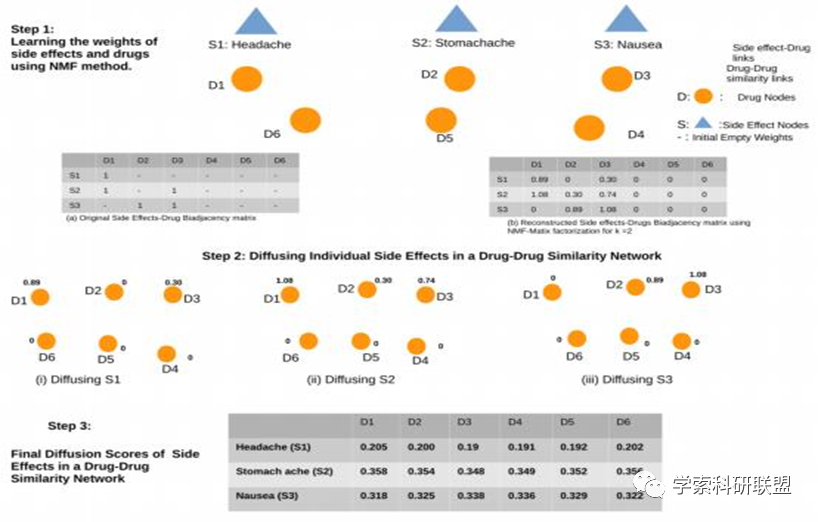
Figure 1. Side effects propagate in the drug-drug similarity networkBroadcast.
Day 3
1 Deep Learning and Drug Discovery (I)
1.1 Deep Neural Networks
1.2 Forward and Backward Propagation
1.3 Optimization Methods
1.3.1 Gradient Descent with Momentum
1.3.2 Adaptive Learning
1.3.3 Adam
1.4 Loss Function
1.4.1 Mean Absolute Error
1.4.2 Mean Squared Error Loss Function
1.4.3 Cross-Entropy Loss Function
1.5 Convolutional Neural Network
1.5.1 Convolutional Layer
1.5.2 Padding and Stride
1.5.3 Pooling Layer
1.5.4 LeNet Network
1.5.5 AlexNetNetwork
2 Deep Learning Drug Discovery Case Study (I)
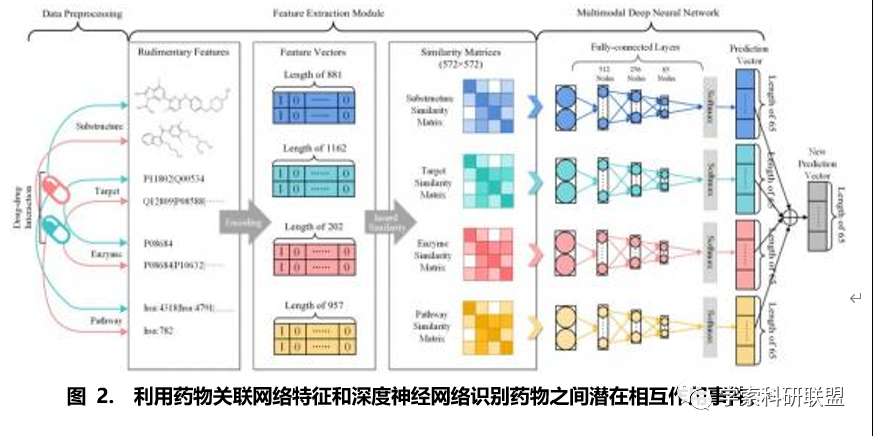
—— Drug-Drug Interaction Prediction Model
Day 4
1 Deep Learning and Drug Discovery (II)
1.1 Recurrent Neural Network
1.2 Message Passing Neural Networks
1.3 Graph Convolutional Neural Networks
1.4 Graph Attention Neural Network
1.5 Graph Sampling and Aggregation
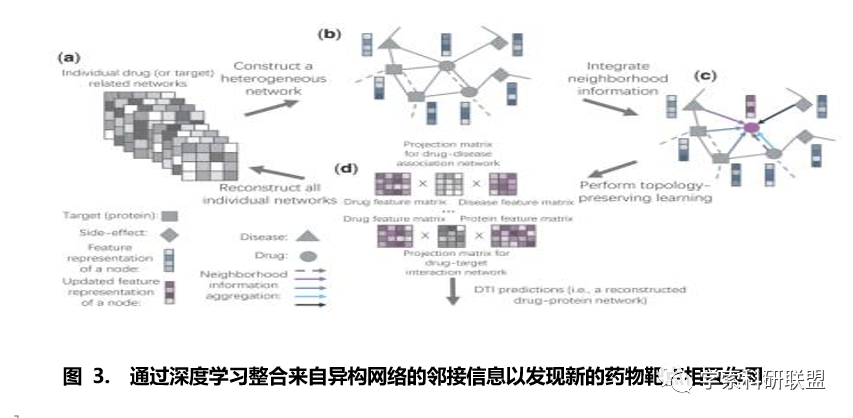
2 Deep Learning Drug Discovery Case (II)
—— Drug Target Interaction Prediction Model
3 Deep Learning Drug Discovery Case Studies (III)
—— Drug Repositioning Model
Day 5
1 Deep Learning and Drug Discovery (III)
1.1 Attention Mechanism
1.2 Self-Attention Model
1.3 Multi-Head Self-Attention Model
1.4 Cross-Attention Model
1.5 Transformer Model
2 Deep Learning Drug Discovery Case Studies (IV)
—— Drug-Drug Interaction Prediction Model
3 Deep Learning Drug Discovery Case Studies (V)
—— Drug Target Binding Affinity Prediction Model
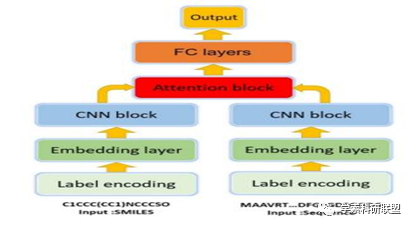
Figure 4.With Attention Blocks Linking Drug and Protein InformationAttentionDTAModel
PART 03


Protein Crystal Structure Analysis
Day 1
Preparation for Protein Crystallization
Course Introduction and Basic Introduction to Protein Structure and Function
Purify proteins, determine conditions such as concentration, pH, buffer, etc., and control protein stability.
1. Purpose Protein Information Retrieval and Investigation
- Use bioinformatics tools to collect gene sequences, domains, and homologous protein information of the target protein.
- Analyze the physicochemical properties of the target protein, such as molecular weight, isoelectric point, degree of polymerization, stability, etc.
2. Plasmid Preparation
- Design primers and clone the target gene into an expression vector.
- Transformation expression host, extraction of recombinant plasmid
- Plasmid sequencing and other validations for target gene insertion
3. Protein Purification
- Select appropriate induction expression conditions to express soluble or insoluble recombinant proteins
- Lyse bacterial cells to release recombinant proteins
- Protein Purification: Principles and practices of chromatography techniques such as affinity chromatography, ion exchange chromatography, and gel filtration.
4. Protein Non-expression and Inclusion Body Issues
- Analyze the reasons for non-expression and optimize induction conditions
- Improve dissolution buffer conditions to enhance protein release from inclusion bodies
5. Protein Activity Identification
- Verify protein activity through Western Blot or enzyme activity assays
6. Pre-crystallization Analysis of Proteins
- Determination of protein purity, aggregation state, stability, etc.
- Optimize buffer conditions, adjust protein to appropriate pH and ionic concentration, etc.
The Next Day
Protein Crystallization and Diffraction Data Collection
Protein crystals obtained through co-crystallization screening, with diffraction data collected under synchrotron radiation.
1. Protein Crystallization
- Basic Principles of Protein Crystallization
- Factors Affecting Protein Crystallization
- Basic Methods of Protein Crystallization
- Crystallization Condition Screening Strategy - Crystallization Condition Screening Strategy
- No crystal or strategy to improve crystal quality
- Post-crystallization Processing
- Basic Principles and Strategies of Crystal Cryopreservation
2. Introduction to SSRF (Synchronous Radiation Light Source)
- Introduction to SSRF
- Advantages of SSRF Light Source
- Introduction to SSRF Experimental Station
3. Protein Crystal Diffraction Data Collection
- Basic Principles of X-ray Crystallography
- Crystal Probe and Crystal Positioning
- Crystal Testing and Optimization
- Diffraction Data Collection Parameter Setting and Collection Strategy
- Diffraction Data Processing and Analysis
Day 3
Protein Crystal Structure Analysis Software Installation
Install relevant computer programs, such as Phenix, XDS, Pymol, etc., for subsequent data processing and model building.
1. Brief Introduction to Download and Installation
2. Installation of Protein Crystal Structure Analysis Software
- Installation of CCP4
- Phenix Installation
- Coot Installation
- PyMol Installation
- Installation of other structural analysis support software
Introduce the download and installation methods of major structure analysis software such as CCP4, Phenix, Coot, and PyMol in sequence. The installation of other software tools required for structure analysis can also be introduced.
Index, Integrate, and Scale & Merge: Software Usage and Introduction
Use software to index and integrate diffraction points, and process diffraction data through scaling & merging to correct intensity.
1. Basic Knowledge of Crystal Structure
- Fundamentals of Diffraction Theory in Crystallography
- Bragg's Law and Reciprocal Space
- Symmetry of Crystals
2. Protein Crystal Structure Analysis Process
- Expression and Purification of Proteins
- Crystallization of Proteins
- X-ray Crystallography Data Collection
- Overview of Crystal Structure Analysis Process
3. Index and Integrate
- Purpose and Principle of Indexing
- Purpose and Process of Integration
4、Scale & merge
- The Purpose of Scale & Merge —— Data Correction
- Common Methods for Scale & Merge
5. Scale & merge using Scala/XSCALE/Aimless, etc.
- Introduction to software such as Scala/XSCALE/Aimless
- Steps for data scaling & merging using Scala/XSCALE/Aimless
6. Use HKL2000 for index, integrate, and scale & merge
- Introduction to HKL2000 Software
- Indexing using HKL2000
- Integration using HKL2000
- Use HKL2000 for scaling & merge
Day 4
Phase analysis, electron density reconstruction, molecular structure model construction, correction, optimization, and structure submission
Determine the protein framework using phase resolution methods such as direct method/molecular replacement/M(S)AD/M(S)IR, manually build the remaining structure, and submit the protein coordinates to the database after revision and optimization to meet the standards.
1. Direct method/molecular replacement method/M(S)AD/M(S)IR and other methods for phase determination
(1) Basic principles of direct method/molecular replacement method/M(S)AD/M(S)IR, etc.
(2) Purpose of Direct Method/Molecular Replacement Method/M(S)AD/M(S)IR, etc.
(3) Introduction to Commonly Used Software
(4) Specific operational steps for Direct Method/Molecular Replacement/M(S)AD/M(S)IR, etc.
2. Electron Density Modification:
(1) Basic Principles of Electron Density Modification:
(2) Purpose of Electronic Density Modification
(3) Introduction to Commonly Used Software for Electron Density Modification
(4) Specific Operating Steps for Electronic Density Modification
3. Electron Density Reconstruction
(1) Purpose and Basic Principles of Electron Density Reconstruction
(2) Operation of Electron Density Reconstruction
4. Protein Crystal Structure Model Construction
(1) Protein sequence alignment to determine the starting model for construction
(2) Main Chain Construction Method
(3) Side Chain Construction Method
(4) Model inspection after completion of construction
5. Correction and Optimization of Protein Crystal Structures
(1) Principle of Minimum Energy
(2) Principle of Simulated Annealing
(3) Principles of Molecular Dynamics Simulation
(4) Evaluation Criteria in the Optimization Process
(5) Introduction to Commonly Used Software for Structural Correction
(6) Specific Operating Steps for Structural Modification
6. Protein Crystal Structure Validation
(1) Purpose and Basic Principles of Structural Validation
(2) Ramachandran Plot Analysis
(3) Distribution of various bond lengths and bond angles
(4) Close Contact Point Analysis
(5) Distribution of Factor B
(6) Evaluation of Electron Density Matching
(7) Various Indicators and Statistical Data
7. Protein crystal structure submitted to PDB
(1) PDB Data Submission Requirements
(2) After all validations are confirmed to be correct, compress the files that need to be submitted.
(3) Submit the form on the PDB website, upload the file, wait for the review result, and reply to the message.
Day 5
Protein Crystal Structure Display and Analysis, Relationship between Structure and Function
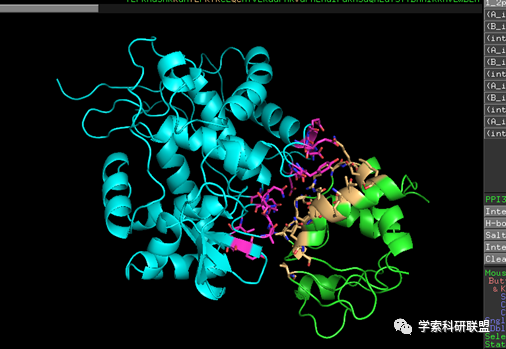
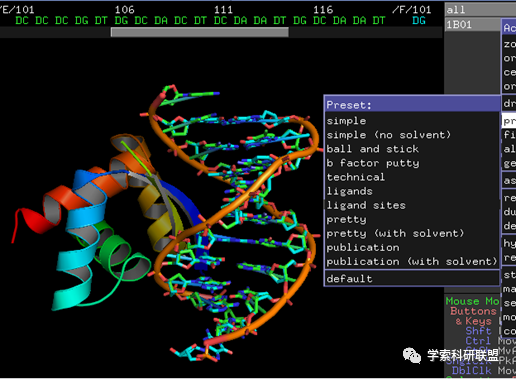
5.1 Use software such as Pymol to analyze and display structural information of proteins, including secondary structure, tertiary structure, active pockets, etc.
1. Introduction to pdb Format Files
- Overview of pdb files: Standard format containing protein crystallography data
- Atomic coordinates: Records the xyz coordinates of each atom
- Temperature Factor: Records the thermal motion parameters of each atom
- Secondary structure: Record the positions of α-helices and β-sheets
- Structural Annotation: Records important structural information such as ligands and enzyme active sites.
2. PyMOL for Creating Protein Crystal Structure Diagrams
- Introduction to PyMOL: Popular Molecular Visualization Software
- Load pdb file
- Display protein chains, α-helices, and β-sheets
- Adjust perspective, change color, and enlarge key structures
- Export high-quality images 3. Use PyMOL to create protein-ligand binding site information
- Identify protein-ligand interactions
- Highlight ligand-binding site residues
- Generate surface model at the binding site
- Create a close-up view of the ligand-binding site
4. Investigating Protein Temperature Factors B-factors Using PyMOL
- Display temperature factor putty diagram
- Analysis of Flexible Domains and Stable Domains
- Relationship with the enzyme active center and functional sites
5. Using PyMOL to Overlap and Compare Different Protein Crystal Structures
- Load pdb files in different states
- Overlap Alignment of Protein Structures
- Compare conformational changes, such as different intermediate states in enzyme kinetics processes; use PyMOL to display the electron density map of ligands in protein crystal structures.
- Load the pdb file containing ligand density
- Display 2Fo-Fc and Fo-Fc electron density maps
- Check the match between the ligand and the electron density.
- Evaluate the accuracy of ligand positioning and orientation 7, synchronize the display of protein molecules in asymmetric units using PyMOL combined with Chimera
- Displaying the protein asymmetric unit in PyMOL
- Synchronize the display of asymmetric units in Chimera
- Compare the same structure in different molecules
- Analysis of Intermolecular Interactions in Protein Polymer Formation
5.2 Introduction to the Structure of Biomacromolecules
5.3 Structure-Function Relationship:
(1) How to analyze the relationship between structure and function:
(2) Purpose of Structural Analysis:
(3) Research methods for the relationship between structure and function:
(4) What can structure bring?
(5) Introduction to the Thought Process After Determining the Structure
PART 04


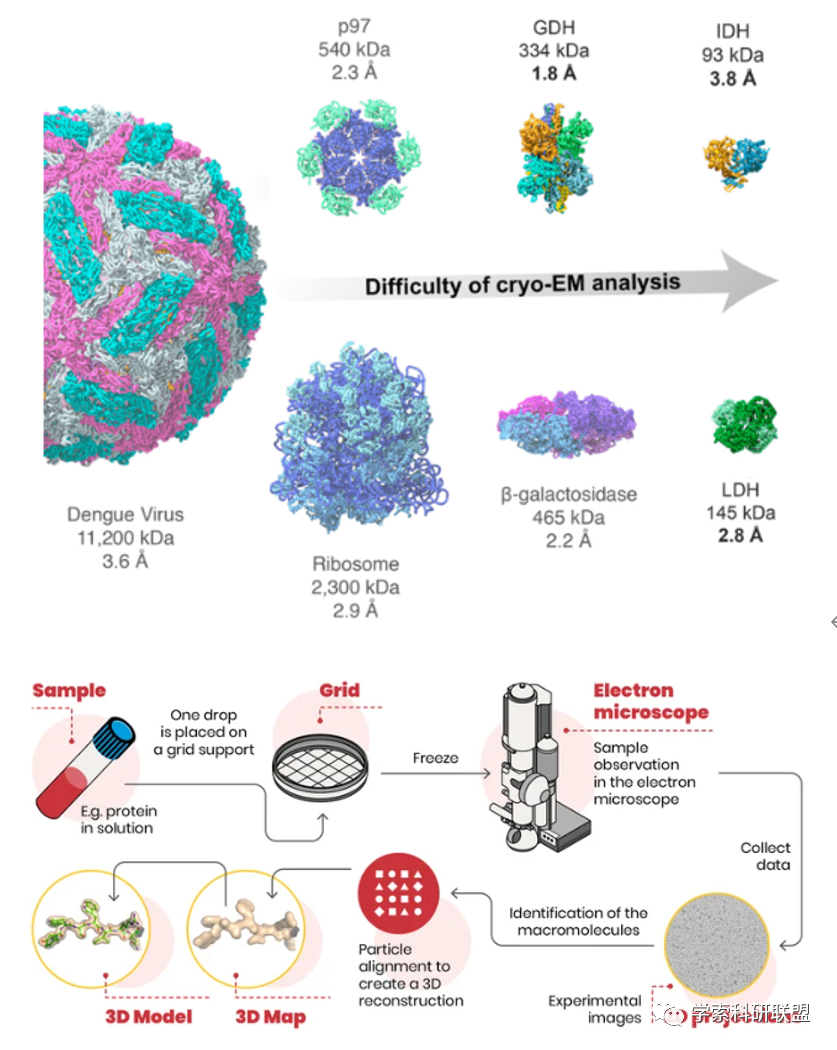
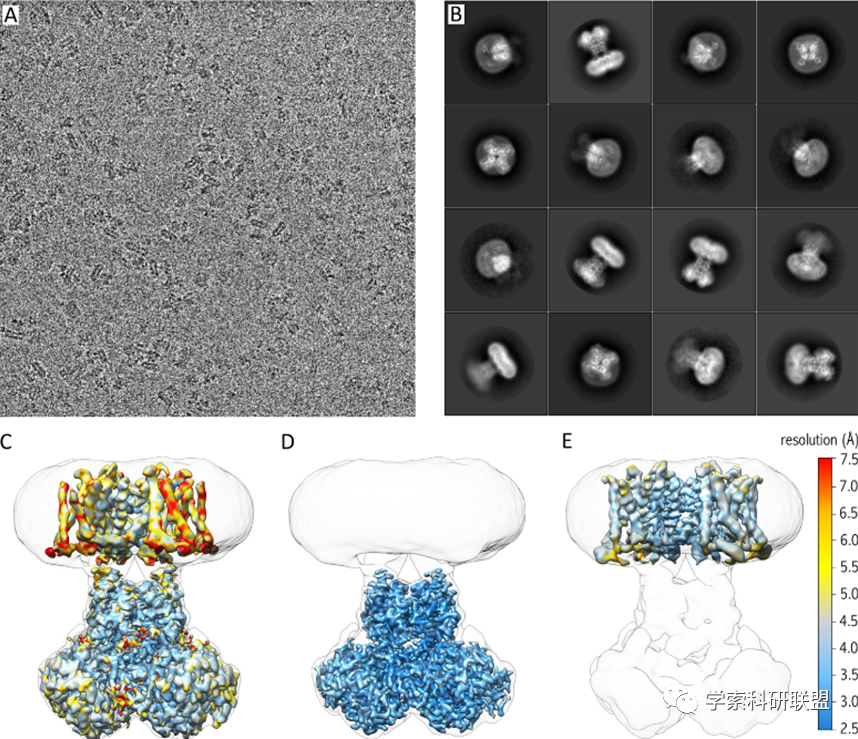
Single-Particle Cryo-EM Structure Analysis
Day 1
1. The Origin and Development of Cryo-Electron Microscopy
1. The Origin of Cryo-Electron Microscopy
2. Principle of Cryo-Electron Microscopy
3, The Development of Cameras
4. Development of Cryo-Sample Preparation Methods
2. Overview of Cryo-EM Applications
1. Single Particle Cryo-EM Analysis
2. In-situ cryo-electron tomography (cryo-ET)
3. Microcrystal Electron Diffraction (Micro-ED)
The Next Day
3. Application of Cryo-Electron Microscopy in Structural Analysis
1. Overview of Structural Analysis Methods
2. Application of Single-Particle Cryo-Electron Microscopy
3. Application of Single-Particle Cryo-EM in Structure Analysis and Drug Development
4. Structure and Imaging Principles of Cryo-Transmission Electron Microscopy
1. Basic Concepts
2. The Structure of Cryo-Transmission Electron Microscope
3. Brief Introduction to Imaging Principles
Day 3
5. Sample Preparation for Cryo-Electron Microscopy
1. Overview of Cryo-EM Samples
2. Cryo-EM Sample Types and Processing Methods
3. Sample Preparation Methods and Their Advantages and Disadvantages
4. Selection of Cryo-EM Grids (Types and Characteristics of Grids)
6. High-resolution data collection using cryo-electron microscopy
1. Data Collection Software
2. Data Collection Process and Precautions
3. Data Analysis and Evaluation
Day 4
7. Cryo-EM Data Processing
1. Introduction to Basic Principles of Data Processing Software
2. Basic Concepts of Data Processing
3. Software Usage, Data Processing Workflow and Precautions
4. Precautions for Data Processing Software and Interconversion of Software Systems
Day 5
8. Display and Processing of Electron Microscope Map
1. Chimera, ChimeraX Software Download and Installation
2. Basic Software Usage Rules
3. Application of Chimera in Cryo-EM Data Processing
9. Model Construction and Structural Correction
1. Download and Installation of Coot, Phenix Software
2. Basic Process of Model Construction
3. Structural Modification and Evaluation
Introduction of the Lecturer


CADD Computer-Aided Drug Design
The lecturers are from universities and institutions in China, such as the Chinese Academy of Sciences. They specialize in research areas including deep learning, machine learning, virtual drug screening, computer-aided drug design, AI-driven drug discovery, molecular docking, and molecular dynamics.

AIDD Artificial Intelligence Drug Discovery and Design
The lecturer, Mr. Yu, has more than ten years of experience in computer algorithm research and program design. His research areas involve bioinformatics, deep learning, drug target identification, and adverse drug reactions. He has participated in two projects funded by the National Natural Science Foundation of China and led three provincial-level scientific research projects. As the first author, he has published several SCI papers in well-known journals such as BMC Bioinformatics, Journal of Biomedical Informatics, and International Journal of Molecular Sciences.

Protein Crystal Structure Analysis
Professor Fan graduated from the Institute of Biophysics, Chinese Academy of Sciences, under the tutelage of renowned structural biologist Academician Wang. He has over six years of study abroad experience at Yale University in the United States and works as an independent Principal Investigator (PI). His research focuses on structural biology and immunology. In addition to his in-depth work in structural biology and immunology, he is also actively involved in and promotes the educational efforts in structural biology, having been invited to teach structural biology courses at multiple universities and research institutions. He has published over 30 papers in international journals, all indexed by SCI, including four first-authored or corresponding-authored articles in top-tier journals such as two publications in the prestigious PNAS journal and two in other top-tier journals. He also leads projects funded by the National Natural Science Foundation of China and serves as a reviewer for internationally acclaimed academic journals such as Nature Communications, Journal of Virology, and Structure.

Single-Particle Cryo-EM Structure Analysis
A Ph.D. in structural biology graduated from the Chinese Academy of Sciences, primarily utilizing single-particle cryo-electron microscopy to study the molecular mechanisms of drug targets and structure-based drug design. The current main research focus is on the structural studies of membrane proteins and virus-related proteins. In the past five years, several articles have been published in top domestic and international journals, including Nature, Nature Communications, and Cell Research.
Target Audience
Researchers and enthusiasts in China engaged in artificial intelligence, life sciences, metabolic engineering, organic synthesis, natural products, pharmaceuticals, bioinformatics, botany, zoology, chemical engineering, medicine, genomics, agricultural science, botany, zoology, clinical medicine, food science and engineering, cancer immunology and targeted therapy, pan-cancer analysis of whole genomes, human cohesin folding genome mechanisms, virus detection, functional genomics, genetic mapping, gene mining variations, metabolomics, proteomics, transcriptomics, biomedicine, cancer, nucleic acids, toxicology, etc.
Training Objectives
01、CADD Computer-Aided Drug Design
Enable students to master including PDB database, target protein, protein-ligand, protein-ligand small molecule, protein-ligand structure, introduction and use of notepad, molecular docking, protein-ligand docking, virtual screening, protein-protein docking, protein-polysaccharide molecular docking, protein-hydration docking, Linux installation, gromacs molecular dynamics full operation, solvated molecular dynamics simulation.
02、AIDD Artificial Intelligence Drug Discovery and Design
This course enables students to understand the cutting-edge background of drug discovery, learn various common algorithms in the field of artificial intelligence, become familiar with the installation and use of toolkits, acquire certain algorithm programming skills, and apply computational methods to research drug-related issues. Through extensive case studies and hands-on practice, students will develop the ability to construct AIDD models and perform data analysis.
03、Protein Crystal Structure Analysis
Allow students to understand the principles, methods, and techniques of protein crystal structure analysis, learn molecular cloning, protein expression and purification, protein crystallization methods, software installation, protein structure data processing, and obtain high-resolution protein crystal structures. Through this course, enable students to easily analyze protein crystal structures and refine crystal structures.
04、Cryo-EM Structure Analysis
The cryo-EM structure analysis course is dedicated to training students to master the application of cryo-electron microscopy in structural biology and structure-based drug design, as well as the principles, experimental methods, and practical applications of single-particle cryo-EM structure analysis. Through in-depth theoretical explanations and hands-on practice, students will gradually develop a profound understanding of this critical field.

CADD Computer-Aided Drug Design

2024.04.16-2024.04.19Evening Class (Evening19:00—Evening22:00)
2024.04.20-2024.04.21All-day teaching (morning9:00-11:30Afternoon13:30-17:00)
2024.04.22-2024.04.25Evening Class (Evening19:00—Night22:00)
2024.04.27All-day teaching (morning9:00-11:30Afternoon13:30-17:00)
Tencent Meeting Live Stream Format

AIDD Artificial Intelligence Drug Discovery and Design

2024.04.08-2024.04.11Evening Class (Evening19:00—Evening22:00)
2024.04.13-2024.04.14All-day teaching (morning9:00-11:30Afternoon13:30-17:00)
2024.04.16-2024.04.17Evening Class (Evening19:00—Night22:00)
TengLive broadcast format of the conference

Protein Crystal Structure Analysis

2024.04.08-2024.04.11Evening Class (Evening18:30—Night21:30)
2024.04.13-2024.04.14All-day teaching (morning9:00-11:30Afternoon14:00-17:30)
2024.04.16-2024.04.17Evening Classes (18:30—Night21:30)
TengLive broadcast format of teleconference

Cryo-EM Structure Analysis

2024.04.15-17-18-19Evening Class (Evening19:00—Evening22:00)
2024.04.20-2024.04.21All-day teaching (morning9:00-11:30Afternoon13:30-17:00)
April 22, 2024, April 24, 2024Evening Class (Evening19:00—Night22:00)
TengLive broadcast format of teleconference

CADD Computer-Aided Drug Design;
AIDD Artificial Intelligence Drug Discovery;
Protein Crystal Structure Analysis;
Cryo-EM Structure Analysis;
(Machine Learning Biomedical Free Gift)
Public Price per Class: 5880
Self-funded price per class: 5480



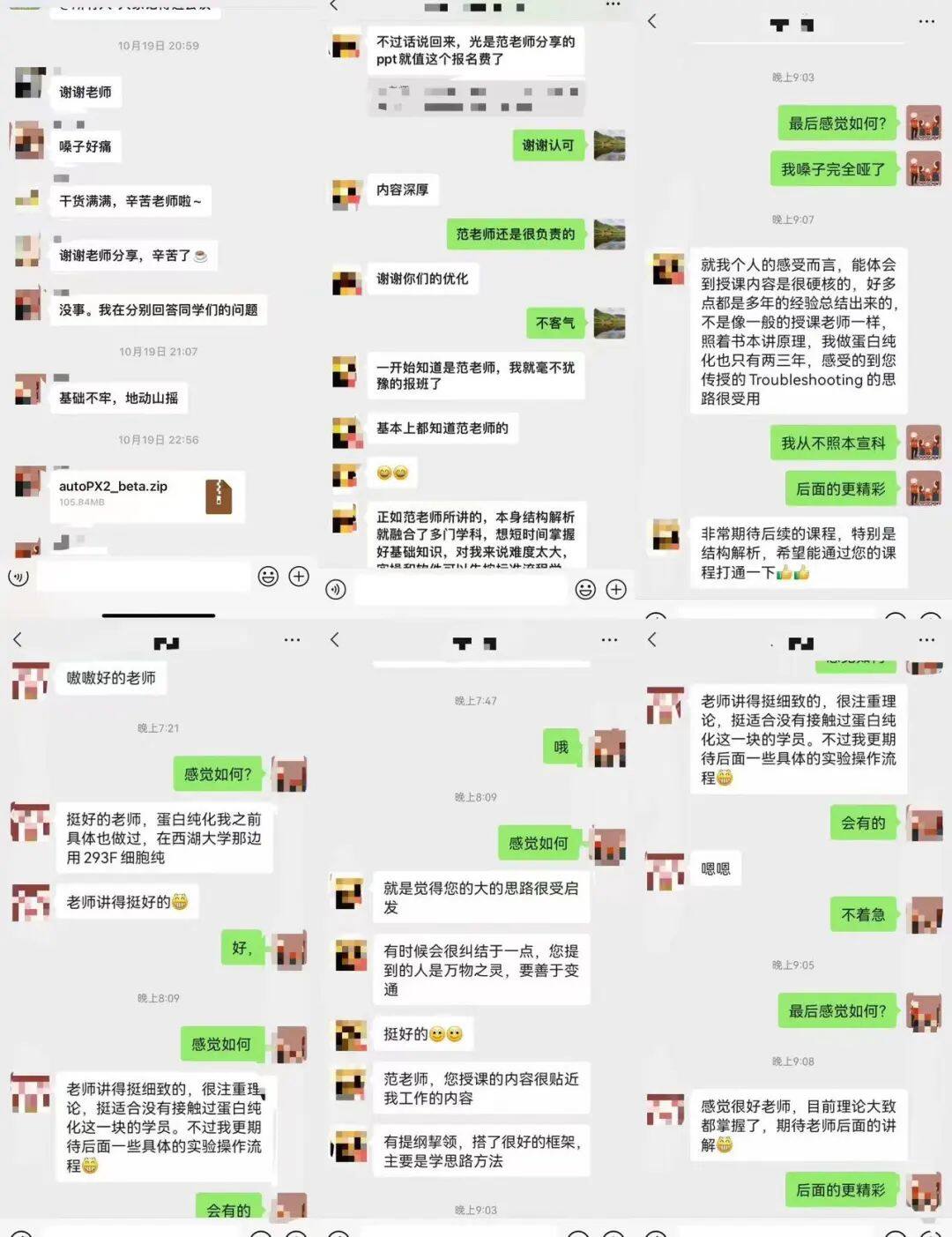
Student Feedback

Official Contact / Scan Code for More Information


Contact: Teacher Wang
Phone: 17638148717 (Same on WeChat)