

Astellas Subsidiary Nanna Therapeutics Partners with Ubiquigent to Advance DUB-Targeted Therapeutics Including DUBTACs

Ubiquigent
Compound Development and Design Company

Astellas
Pharmaceutical R&D Manufacturer
Welcome to follow Asymchem Pharma News

On March 11, 2024, Ubiquigent announced an agreement with Nanna Therapeutics, a subsidiary of Astellas (referred to as "Nanna"). According to the terms of the agreement,Ubiquigent will provide Nanna with a drug discovery platform focused on deubiquitinating enzymes (DUBs),Development of Novel Therapies for Human Diseases
One
About Ubiquigent
Ubiquigent is the partner of choice for many leading industrial and academic organizations in drug discovery programs focused on protein degradation, stabilization, and cellular signaling. The company has established a dedicated drug discovery platform and possesses long-standing expertise in the development of DUB therapeutics.The platform supports the development of DUB inhibitors, DUB-targeting PROTACs, and DUBTACs in any therapeutic area.
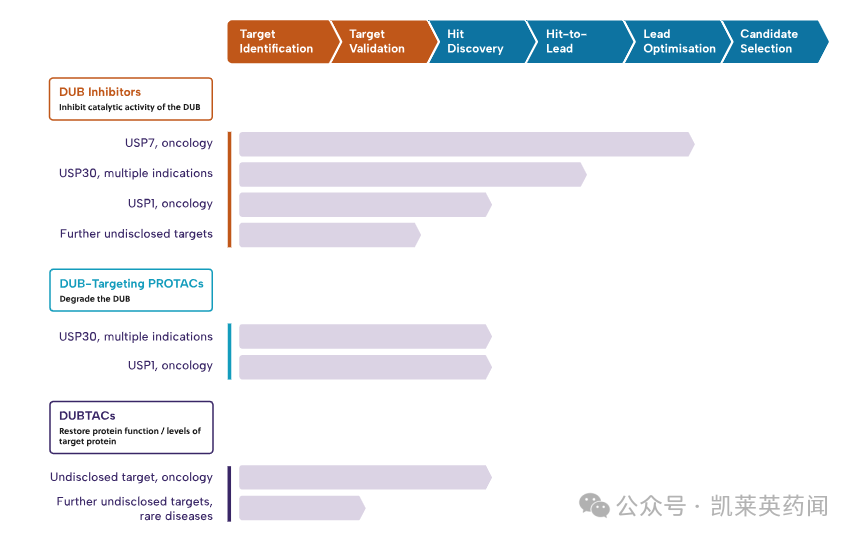
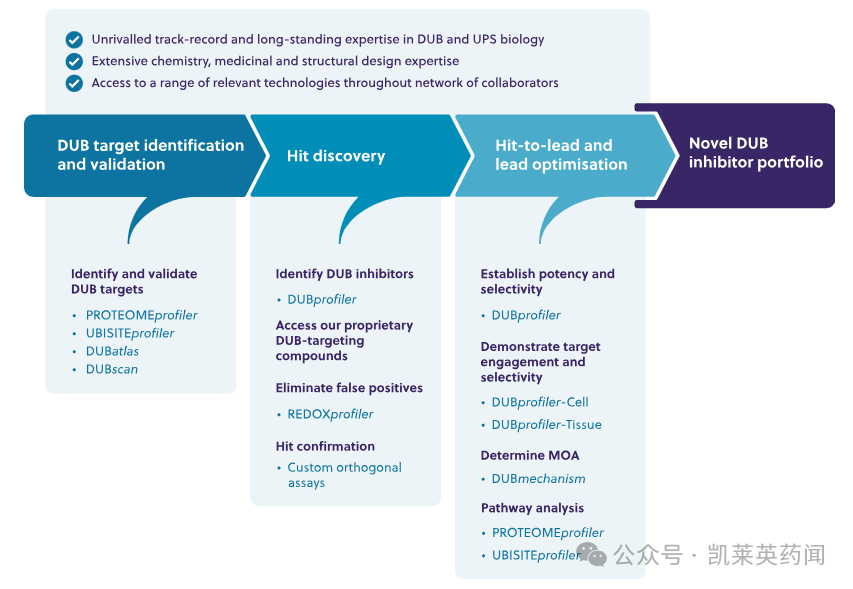
The company's existing PROTEOME profiler™ and DUB profiler-Cell™ multiple tandem mass spectrometry support platforms can be used for target identification and validation. The workflow of PROTEOME profiler™ is highly flexible, providing reliable target validation by further confirming the correlation between targets and diseases (and related pathway modulation). Additionally, the DUBprofiler™ in vitro platform can rapidly reveal chemical starting points from existing libraries, supporting the Q-SAR medicinal chemistry cycle for compound optimization, thereby modulating potency and selectivity across a broad range of DUB platforms.
Two
About Deubiquitinating Enzymes (DUB)
The Ubiquitin-Proteasome Pathway: An Essential Protein Degradation Regulatory System in Cells
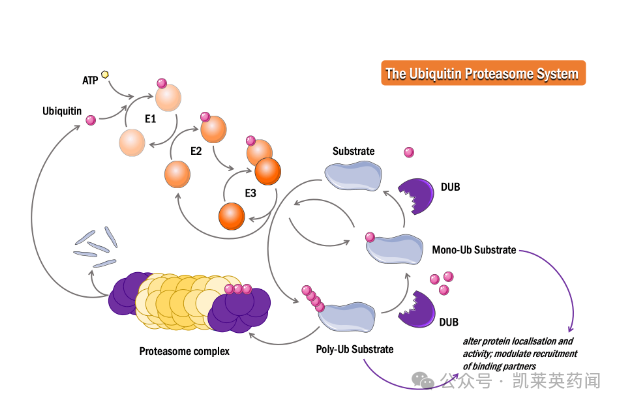
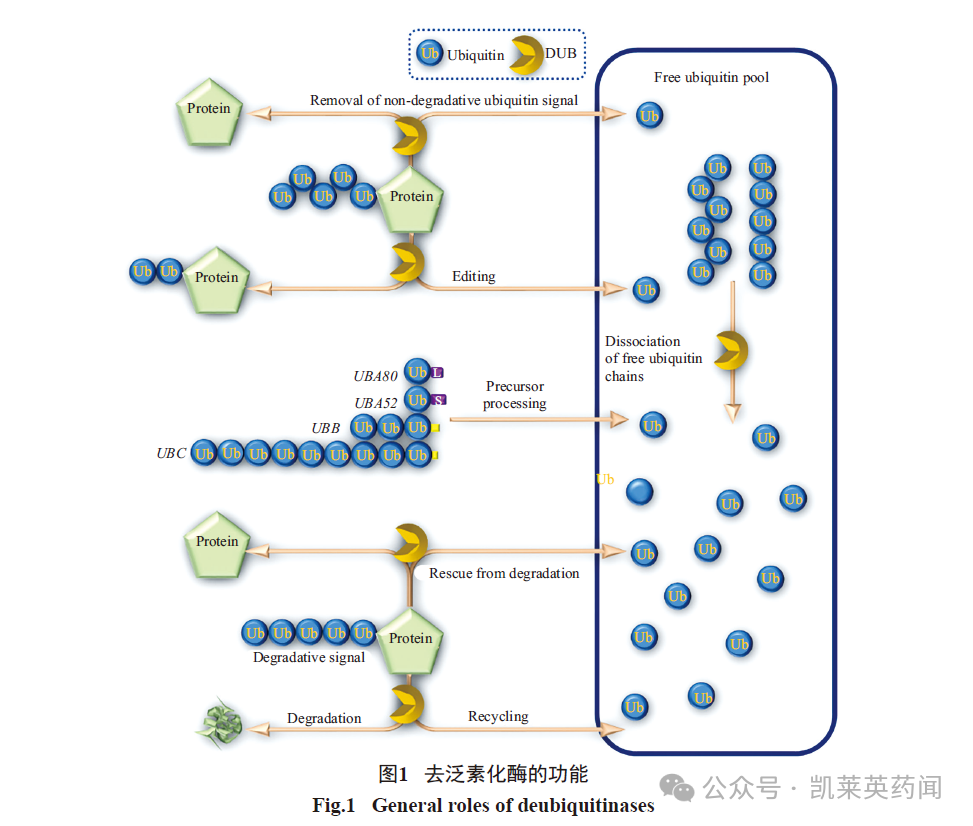
DUB is a large family of proteases, mainly divided into five families: the Ubiquitin Carboxy-terminal Hydrolase (UCH) family, the Ubiquitin-specific Protease (USP/UBP) family, the Otubain (OTU) family, the Josephin domain protein family, and the JAMM family. This family is responsible for specifically cleaving ubiquitin molecules from ubiquitinated proteins or precursor proteins by hydrolyzing ester bonds, peptide bonds, or isopeptide bonds at the carboxyl terminus of ubiquitin, playing a role in deubiquitination, inversely regulating protein degradation, and thereby affecting protein function.
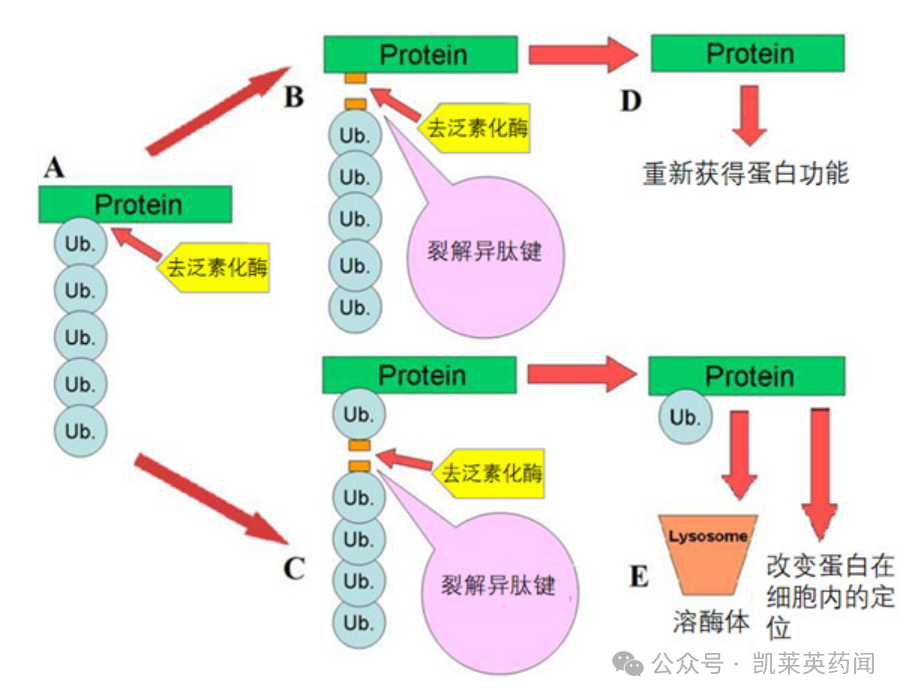
Within cells, the functions of DUBs can generally be divided into the following categories:
Process ubiquitin precursors to produce free ubiquitin molecules;
Remove ubiquitin chains from proteins, prevent proteasomal degradation, and stabilize proteins;
Remove non-degradative ubiquitination signals attached to proteins;
By preventing ubiquitin molecules from being degraded along with substrate proteins, ensuring the homeostasis of ubiquitin molecules within cells;
Participates in the disassembly of free ubiquitin chains within cells;
By cleaving ubiquitin chains, edit the type of ubiquitin chain.
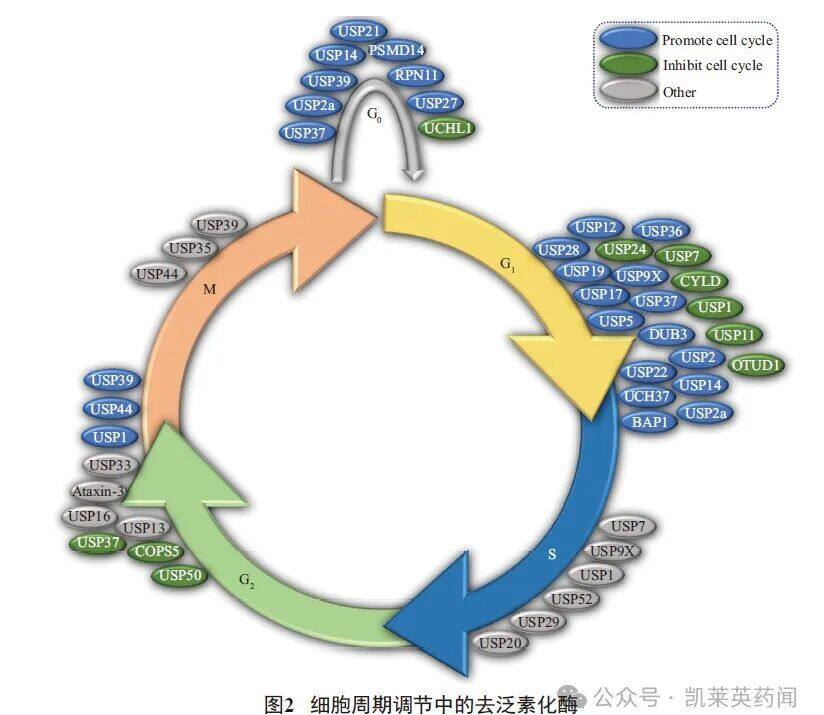
Cell cycle progression involves multi-level and multi-faceted regulation, with deubiquitinating enzymes playing different biological roles in different phases of the cycle. For example, USP44 promotes cell cycle progression during the G2/M phase, while USP39 facilitates it during both the G0/G1 and G2/M phases, and influences cell cycle progression during the M phase by regulating chromosome segregation. USP9X and USP1 are mainly involved in DNA damage repair during the S phase, impacting cell cycle progression at this stage; USP9X promotes cell cycle progression via other pathways during the G1/S phase, as does USP1 during the G2/M phase.
The Relationship Between Deubiquitinating Enzymes and Cell Cycle Regulation
Three
About the Application of DUB in DUBTAC
As is known to all, in order to expand the range of druggable proteins, some heterobifunctional molecules play a role in degrading or stabilizing target proteins by guiding protein proximity, thus targeting undruggable proteins. Among them, the most well-known is PROTAC, which utilizes the body's naturally existing protein degradation system to degrade disease-causing proteins for therapeutic purposes and has shown great potential in targeting proteins previously considered undruggable.
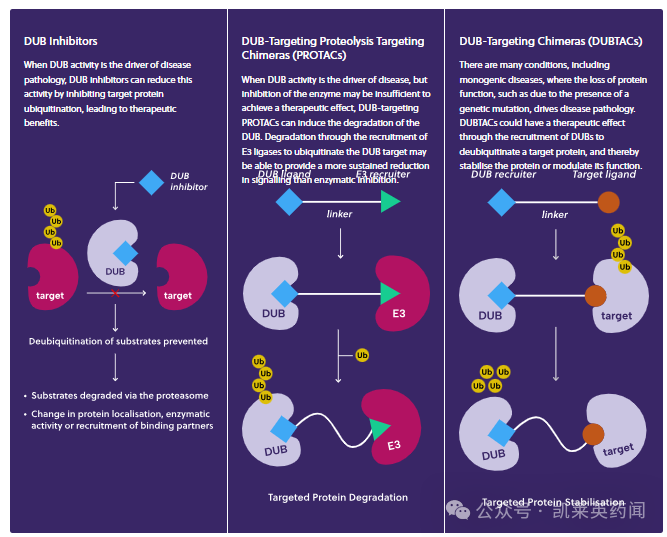
In March 2022, scientists at the University of California, Berkeley described a heterobifunctional molecule similar in structure to PROTAC but opposite in function, capable of achieving targeted protein stabilization—Deubiquitinase-Targeting Chimeras (DUBTAC). Studies have shown that after DUBTACs enter cells, they induce proximity between the deubiquitinase (DUB) and the target protein, thereby removing ubiquitin chains to prevent proteasome-mediated protein degradation, stabilizing specific proteins that rely on ubiquitination for degradation, and providing direction for treating diseases caused by abnormal protein degradation.
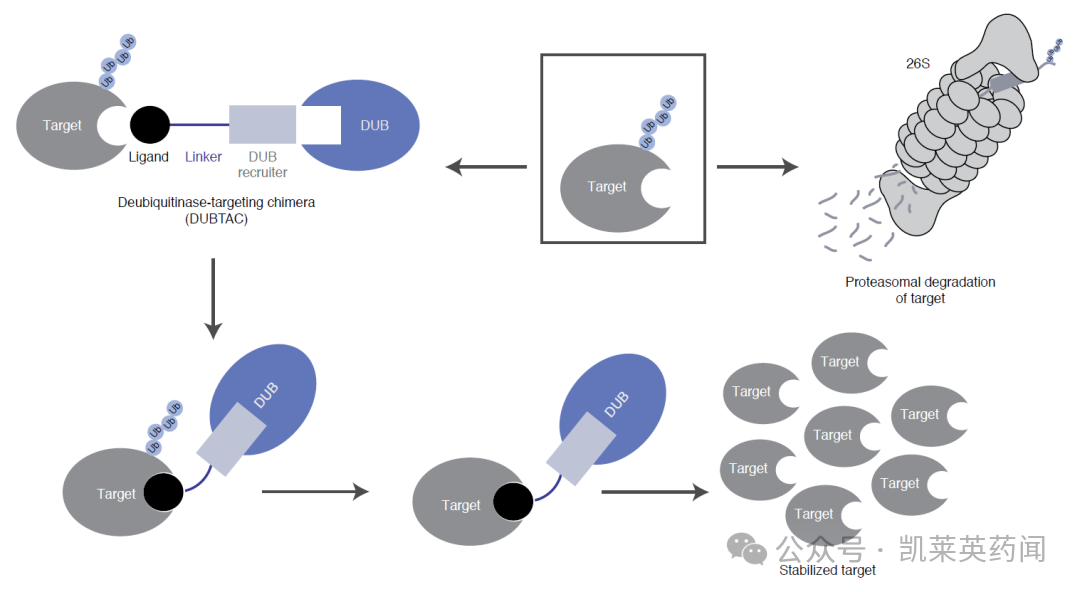
Although DUBTAC appears to be a concept very similar to PROTAC, there are still many key differences in its specific implementation.
One is the ligand binding site; the E3 targeted by PROTAC is mainly a scaffold protein, but the DUB in DUBTAC needs to retain catalytic function;
Secondly, the requirements for enzyme activity may differ; PROTAC may only need a low level of ubiquitinated targets to gradually degrade the target protein, but DUBTAC may need to hydrolyze the vast majority of ubiquitin to prevent the target from being degraded.
Thirdly, the conditional requirements for ubiquitination are different; PROTAC does not require a high level of ubiquitination of the target protein, but DUBTAC requires the target protein to be already ubiquitinated in order to function.
However, compared with PROTAC, the development of DUBTAC will face more obstacles; although there are many E3 ligases, currently we still rely on a few ligands discovered years ago; with over 100 DUBs, it is not easy to find high-activity ligands with smaller molecular weight.
Four
Astellas' Layout in the Protein Degradation Field
Targeted protein degraders are one of Astellas' main focuses. In January 2023, Masahiko Hayakawa, head of Astellas Pharma's protein degradation drug division, stated, "Japan has many experts in chemical synthesis required for small-molecule drugs," and has contributed to the development and mechanism elucidation of degrader drugs from an early stage.
Based on this, in June 2023, Astellas and Cullgen jointly announced that they had reached a research collaboration and exclusive option agreement to jointly develop multiple innovative targeted protein degraders. The two parties aim to combine Cullgen's proprietary uSMITE™ targeted protein degradation platform with Astellas' drug discovery capabilities to develop various targeted protein degraders. Cullgen and Astellas will conduct joint research, and Astellas will have an exclusive option. During the initial stage of clinical development, Cullgen can choose to share costs, profits, and losses equally and co-commercialize the lead project in the United States.
According to the terms of the agreement: (1) Astellas will provide a $35 million upfront payment to Cullgen. (2) Cullgen is also eligible to receive an additional $85 million after Astellas exercises its license option related to the lead program. (3) If Cullgen achieves all milestones for all projects and Astellas exercises other licenses, Cullgen could receive payments exceeding $1.9 billion. (4) Additionally, Cullgen is also entitled to receive royalties from Astellas on commercial sales of all products.
Secondly, in July 2023, Astellas ("Astellas") and PeptiDream jointly announced a research collaboration and licensing agreement to select two targets for the development of novel targeted protein degraders. Based on this agreement, Astellas can additionally select up to three more projects for collaboration in the future. The two companies plan to combine PeptiDream's PDPS (Peptide Discovery Platform System) technology with Astellas' drug discovery capabilities to identify various next-generation targeted protein degraders for different targets; Astellas will be responsible for the development and commercialization of the collaboration products.
Under the terms of the agreement, Astellas will provide PeptiDream with an upfront payment of 3 billion yen; PeptiDream will be eligible to receive discovery, development, and commercial sales milestone payments of up to 20.6 billion yen per project. Additionally, PeptiDream is also eligible to receive royalties in the single-digit percentage based on net sales of any products arising from the collaboration.
References
1. Official Websites of Various Companies
2、Henning N J, Boike L, Spradlin J N, et al. Deubiquitinase-targeting chimeras for targeted protein stabilization[J]. Nature chemical biology, 2022, 18(4): 412-421.
3. Shengjie Frontier
4. Absin Official Website, Antpedia




"Views"Click once