

Roche Highlights Advances in Alzheimer's, Parkinson's, and DMD Therapies at Neurology Investor Event

Roche
Oncology Drug Research, Development, and Manufacturing
▎WuXiEdited by Kant Content Team
Recently, Roche presented the latest updates on its neurology R&D pipeline at the Neurology Investor Event. During the event, executives from Roche stated thatThe clinical-stage neurology R&D pipeline includes 12 new molecular entities (NMEs)., which is expected to support the company's medium- and long-term development. At the investor eventRoche highlighted the latest advancements in its pipeline therapies for Alzheimer's disease, Parkinson's disease, and Duchenne muscular dystrophy (DMD).In today's article, the WuXi AppTec content team will share with readers the highlights of this event.
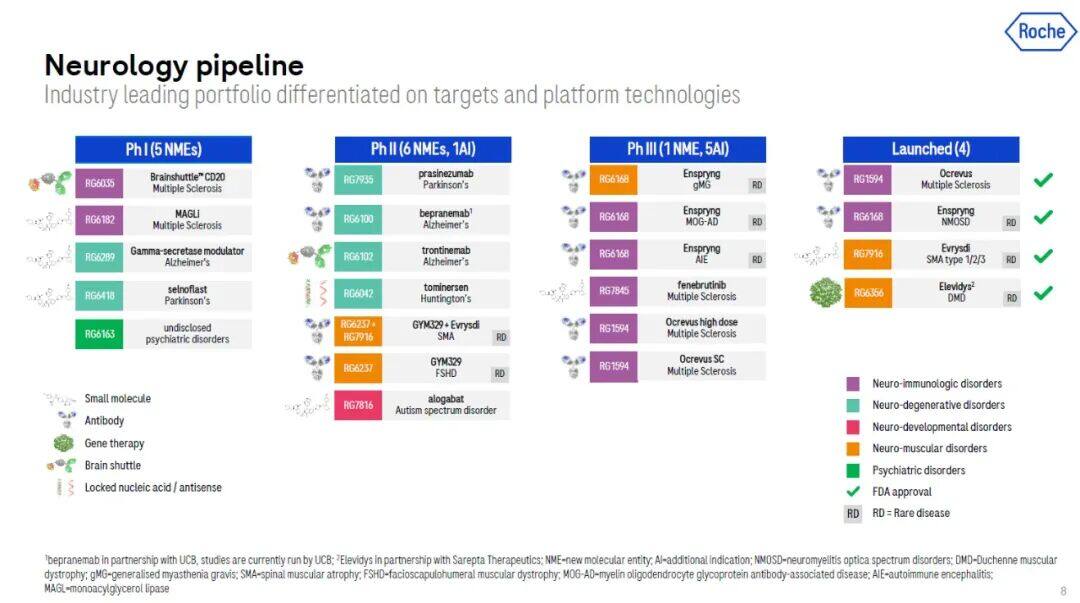
Alzheimer's Antibody Therapy: Crossing the Blood-Brain Barrier, Rapid Amyloid Clearance in 12 Weeks
Roche's Antibody Targeting Beta-Amyloid (Aβ)Trontinemab utilizes the company's Brainshuttle technology, fusing an antibody targeting Aβ with a protein domain targeting transferrin receptor 1 (TfR1), assisting trontinemab to cross the blood-brain barrier through TfR1-mediated endocytosis.
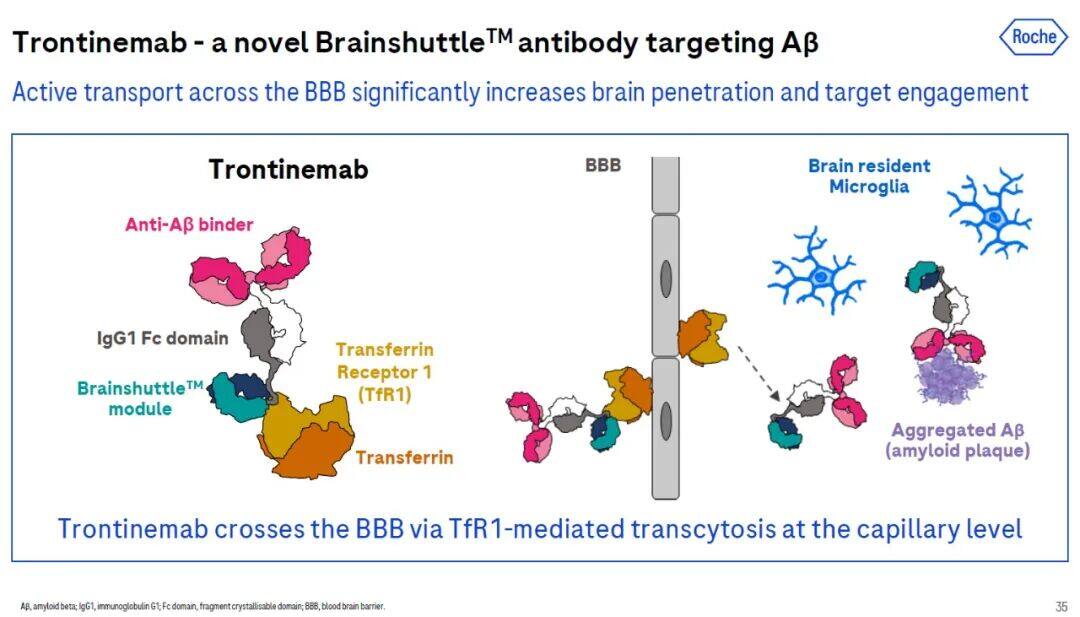
▲Mechanism of Action of Trontinemab (Image Source:Roche Official Website)
The latest clinical trial data shows,Among the 8 patients treated with 3.6 mg of trontinemab, 5 required only 12 weeks for the level of amyloid-beta deposits in their brains to decrease below the detection threshold., demonstrating the ability of this therapy to rapidly clear amyloid plaque deposits in the brain.
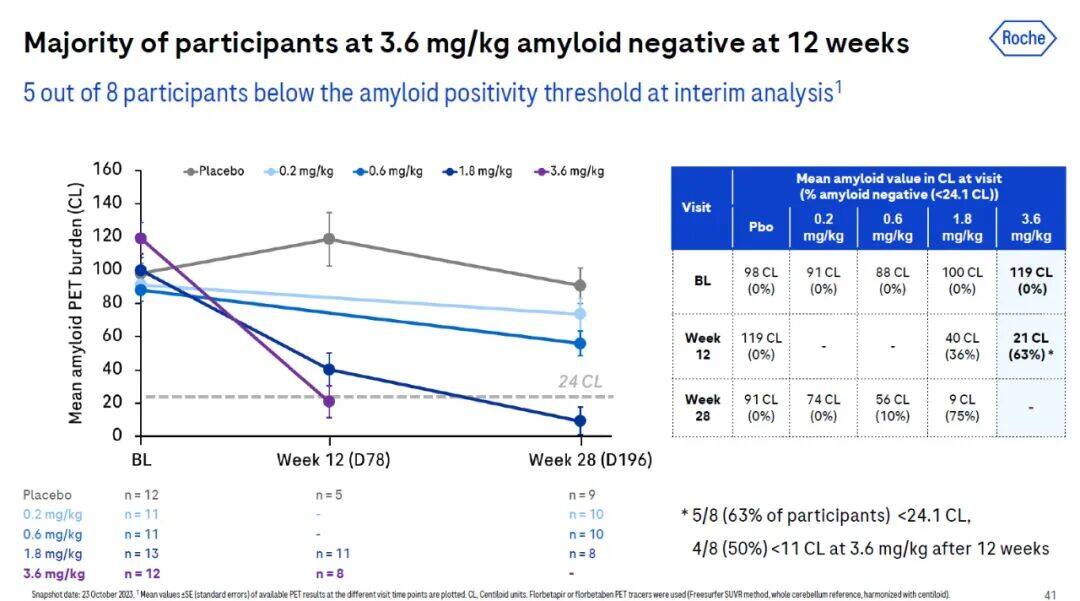
▲TRontinemab Quickly Clears Amyloid Plaques from the Brains of Alzheimer's Patients (Image Source: Roche Official Website)
It is worth mentioning that antibody therapies targeting Aβ often present side effects known as ARIA, which can be detected through MRI as brain edema (ARIA-E) or microhemorrhages (ARIA-H).In this clinical trial, the incidence of trontinemab treatment-related ARIA was very low, with no ARIA-E or ARIA-H observed in the 3.6 mg dose group.
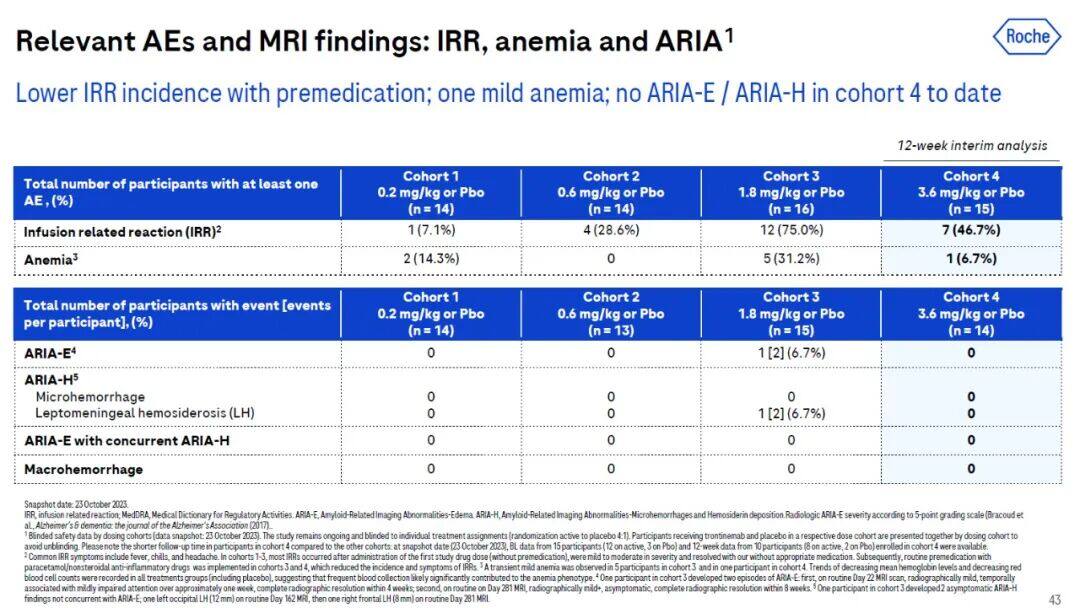
▲Trontinemab has good safety and a low incidence of ARIA (Image Source:Roche Official Website)
Parkinson's Disease: Antibody Therapy to Slow Disease Progression
Roche'sPrasinezumab is a humanized monoclonal antibody that selectively binds to α-synuclein aggregates, designed to reduce the neurotoxicity of α-synuclein aggregates, prevent the spread of aggregates between cells, and thereby slow the progression of Parkinson's disease.
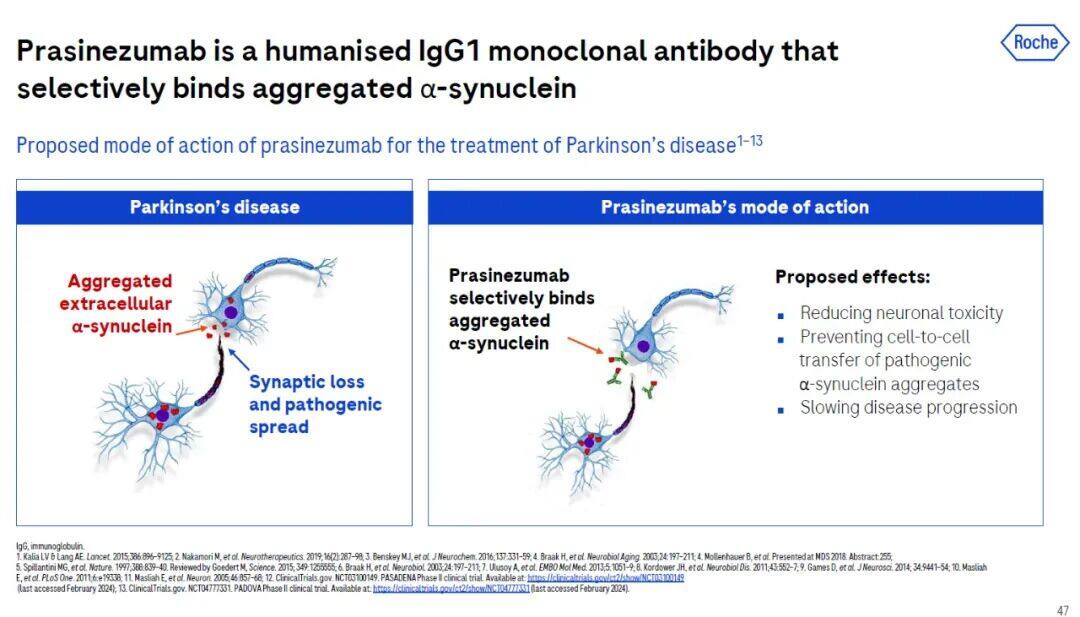
▲PrasinMechanism of Action of Ezumab (Image Source: Roche Official Website)
In the long-term open-label extension clinical trial named PASADENA, early Parkinson's disease patients treated with prasinezumab showed significantly slowed disease progression, as assessed by motor function scores, compared to an externally matched control group constructed from real-world data.Subgroup of patients who received prasinezumab treatment early showed a 65% reduction in disease progression.
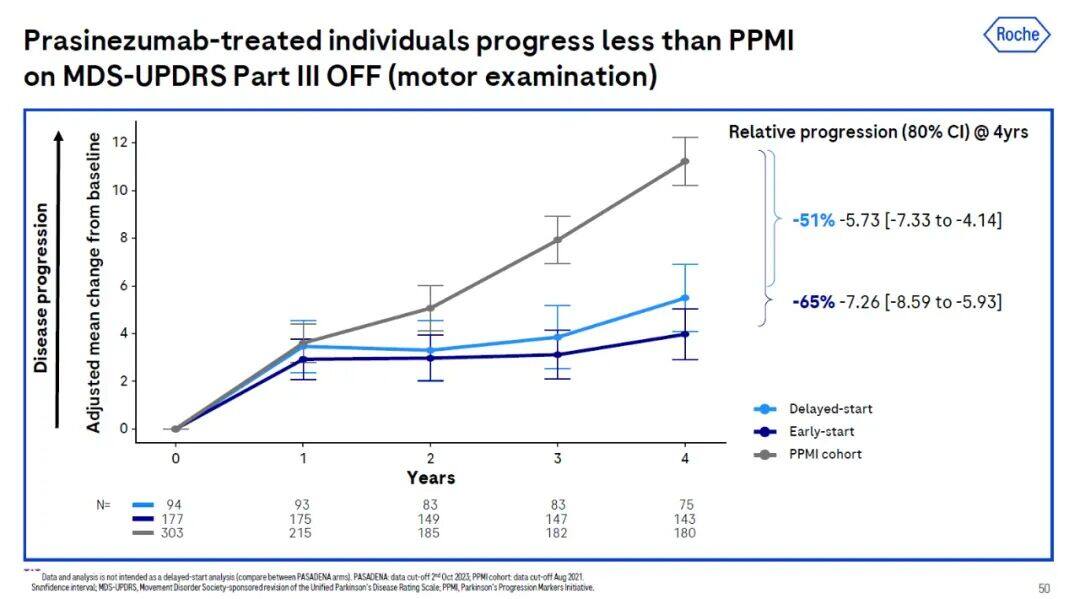
▲Prasinezumab Slows Disease Progression in Parkinson's Disease (Image Source:Roche Official Website)
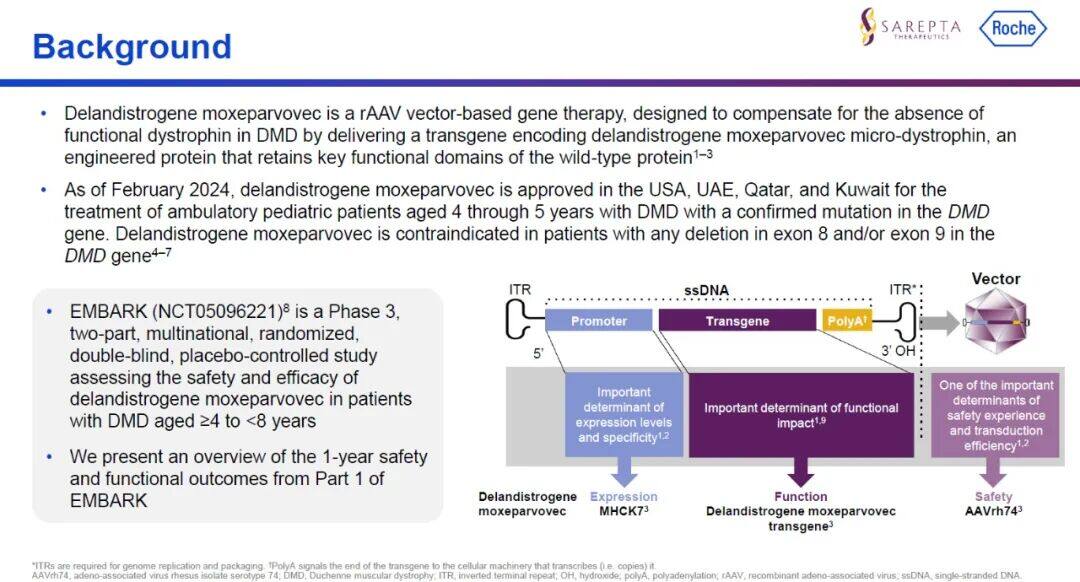
▲Introduction to Delandistrogene moxeparvovec (Image Source:Roche Official Website)
At an investor event, Roche shared positive results from the phase 3 clinical trial EMBARK of this gene therapy. The primary endpoint of this trial was the total score of the North Star Ambulatory Assessment (NSAA). The NSAA score of patients in the delandistrogene moxeparvovec group improved by 0.65 points compared to the control group, but it did not reach statistical significance.
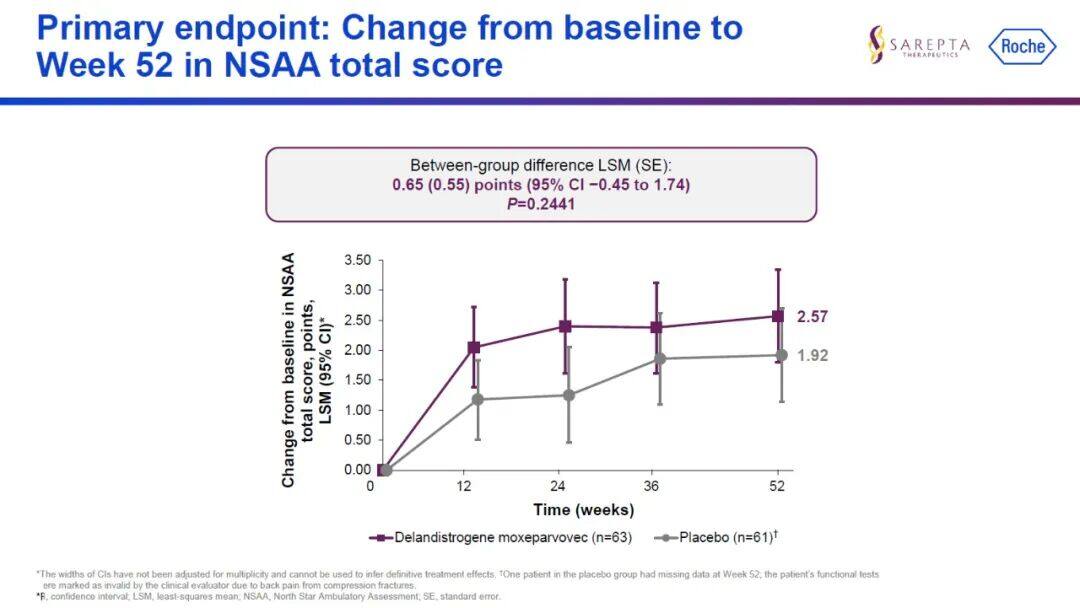
▲Delandistrogene moxeparvovec Primary Endpoint Results in Phase 3 Clinical Trial (Image Source:Roche Official Website)
Delandistrogene moxeparvovec consistently improved multiple functional indicators across primary and secondary endpoints measuring patients' motor abilities.
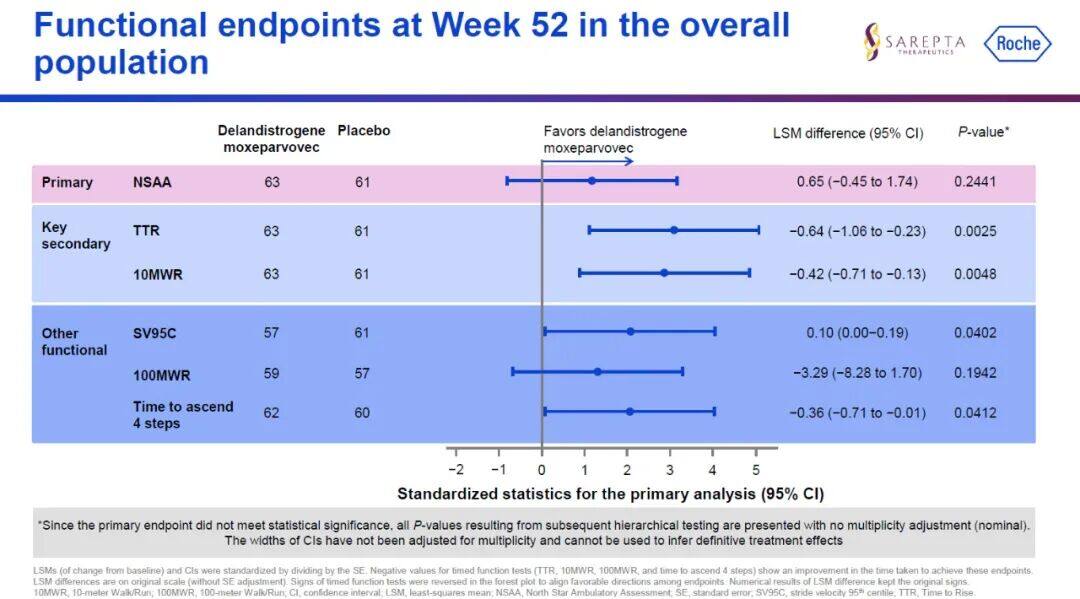
▲DelandIstrogene Moxeparvovec Consistently Improves Multiple Functional Endpoint Indicators in Patients (Source: Roche Official Website)
Based on the overall data from the trial, Roche and Sarept have submitted a regulatory application to the U.S. FDA seeking to convert the accelerated approval of delandistrogene moxeparvovec into full approval and expand the patient eligibility. This application has been granted by the FDA.Priority Review Status。
Roche also presented clinical trial results of innovative therapies at this investor event, such as the company’s brain-penetrant Bruton's tyrosine kinase inhibitor (BTKi) fenebrutinib and the monoclonal antibody GYM329 that binds to the precursor protein of myostatin. Due to space limitations, this article does not introduce them one by one.Click "Read more" at the end of the article to browse the PPT report of Roche's investor event.

Everyone is watching






▲To learn more about the application of cutting-edge technologies in the biopharmaceutical industry, please long-press and scan the QR code above to access "WuXi Live Studio" and watch live discussions and exciting replays on related topics.
Disclaimer: The content team of WuXi AppTec focuses on introducing the research progress in global biopharmaceuticals and health. This article is for information exchange purposes only, and the views expressed in the article do not represent the position of WuXi AppTec, nor does it imply that WuXi AppTec supports or opposes these views. This article is not a recommendation for treatment plans. For guidance on treatment options, please visit a正规 hospital.
Copyright Statement: This article is from the content team of WuXi AppTec. Individuals are welcome to share it on their social media circles, but unauthorized reproduction by media or institutions in any form to other platforms is prohibited. For authorization to reproduce, please reply with "reprint" on the WeChat Official Account of "WuXi AppTec" to obtain reprint guidelines.


Share,PointLike,In View, Focus on Global Biomedical Health Innovation