GE Healthcare Deepens AI Collaboration with Mass General Brigham, Ranked Among Top 5 Global Hospitals

Mass General Brigham
Comprehensive Academic Medical System

GE Healthcare
Digital Solution Provider

Medical Device Media Reporting Pioneer
Share Professional Medical Device Knowledge
Source:Instrument Family,Reproduction without authorization is prohibited, and reproduction is allowed 24 hours later.
Today, March 13,GE Healthcare announces plans to expand AI partnership with Mass General Brigham.Both parties plan to integrate the foundational medical imaging model into their AI research efforts, with a focus on responsible artificial intelligence practices.
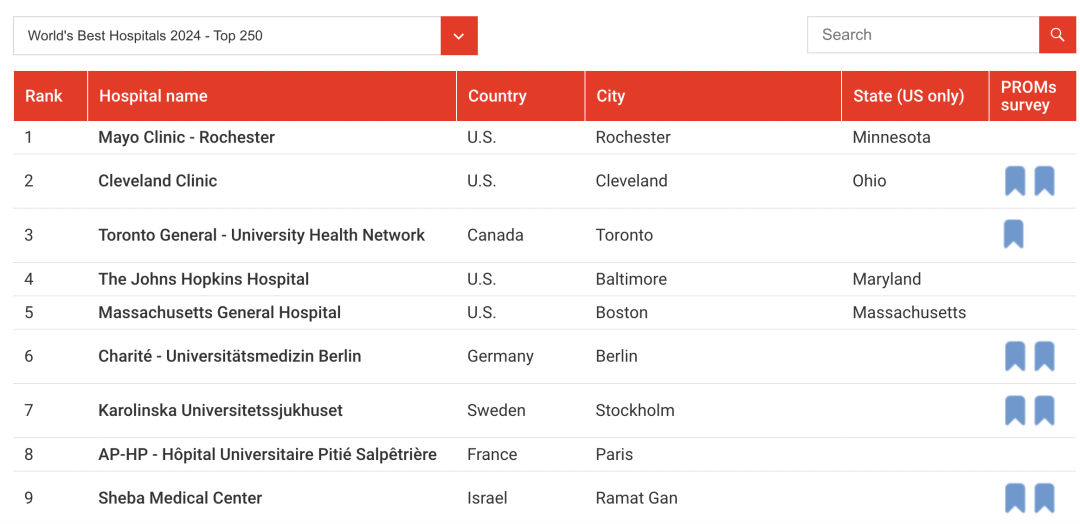
In the 2024 World's Best Hospitals ranking published by Newsweek, Mass General Brigham ranked fifth.
It is reported that the two companies began to focus on the research of artificial intelligence solutions after announcing a 10-year partnership commitment in 2017. Traditionally, integrating AI into healthcare systems requires retraining models to adapt to the unique needs of different patient populations and hospital environments. This approach can increase costs and complexity, hindering the widespread adoption of AI technology in the healthcare industry.
AndBasic models are expected to transform the healthcare field by improving workflow efficiency and imaging diagnosis, demonstrating strong capabilities in addressing various tasks.Foundation models thus become the basis for the healthcare industry to develop reliable and adaptable custom AI applications.
GE Healthcare's Chief AI Officer Parminder Bhatia stated: "The long-term collaboration between GE Healthcare and Mass General Brigham has led to the development of AI tools that enhance operational efficiency and productivity."Now, by incorporating foundational models into our research efforts, we can advance digital and AI transformation, developing technological innovations that enhance patient care and outcomes."We are committed to integrating responsible AI practices into this phase, ensuring that these innovations comply with guidelines, prioritizing patient safety and privacy, and promoting fairness and transparency in all applications."
Dr. Keith Dreyer, Chief Data Science Officer of Mass General Brigham, commented: "The collaboration between Mass General Brigham's AI commercial division and GE Healthcare accelerates the application of AI across various products and digital health solutions. With foundational models, we are witnessing the next wave of AI innovation, which is reshaping how we develop, integrate, and utilize AI."
In 2017, GE Healthcare and Mass General Brigham embarked on a 10-year collaboration aimed at exploring new paradigms across a wide range of diagnostic and therapeutic fields through sustainable artificial intelligence development. At that time, both parties stated that the ultimate goal of the collaboration wasDevelop applications that enhance clinician productivity in diagnostic imaging and improve patient outcomes.
WithOver time, they plan to develop new business models for applying AI to healthcare and create products for other medical specialties such as molecular pathology, genomics, and population health.
Reportedly, the first innovative AI application from the collaboration is the scheduling prediction dashboard for the Radiology Operations Module (ROM), a digital imaging tool that helps optimize scheduling, reduce costs, and alleviate the administrative burden on medical staff, providing doctors and patients with more time for communication.Nowadays, ROM has been commercialized and can be used in medical institutions.

Operating AI tools can address issues such as nursing costs and hospital efficiency. For instance, when patients miss appointments, fail to schedule follow-ups, or are late, referred to as Missed Care Opportunities (MCO), the impact can be significant.The collaboratively developed algorithm aims to predict MCOs and late arrivals, which will better accommodate urgent, inpatient, or immediate appointments. In preliminary tests, the algorithm was able to predict missed care opportunities with up to 96% accuracy, with a low false-positive rate.
This deepened cooperation is another significant initiative for GE Healthcare to strengthen its presence in the artificial intelligence field.By integrating their respective strengths, redefine the standard of patient care and bring positive impacts to healthcare providers and patients.
It can be seen that in recent years, GE has been continuously increasing its investment in the fields of imaging and artificial intelligence. In September, GE Healthcare had revealedIn the future, an artificial intelligence (AI)-assisted ultrasound imaging automatic assessment tool will be developed.Used to increase access to high-quality healthcare services worldwide.
In February last year, the company also acquired Caption Health, a developer of AI ultrasound technology.Adding AI-driven ultrasound technology to its product portfolio, further strengthening its layout in medical imaging AI. Currently, Caption Health has launched an FDA-approved artificial intelligence-assisted cardiac ultrasound diagnostic software.
In January this year, GE Healthcare announced plans to acquire MIM Software, a provider of artificial intelligence and medical imaging analysis.Integrate its innovative solutions into its advanced visualization products, further expanding its capabilities in medical imaging analysis and digital solutions to provide patients with smarter, more personalized, and differentiated healthcare solutions.

Focus on Artificial Intelligence
GE Healthcare CEO Peter Arduini said in an interview that many of the company's current R&D priorities are still more focused on artificial intelligence. He pointed outAI plays an important role in medical imaging equipment such as MRI, CT, and ultrasound, and customers are willing to pay higher prices for these advanced products.And added that GE Healthcare's R&D investment over the past year has already led to the creation of 40 new products, which will have a "flywheel effect" on the business.
In addition, Arduini stated: "The last piece that we're building and will develop over the next several years is what's called multimodal data integration.——Your genomic information, pathological information, and imaging data. All this data is aggregated in one pane, and there is a specific algorithm or foundational model that can help interpret the data, assisting clinicians in guiding patients in the right direction."
ThisThe collaboration with Mass General Brigham not only drives technological innovation but also offers broader prospects for the future of healthcare. As they continue to collaborate and advance technology, we look forward to seeing more innovative applications and solutions to improve the accessibility, efficiency, and equity of the healthcare industry.In this regard, Device Home will continue to pay attention.
More exciting content
Welcome to follow the WeChat Video Channel


After Leadership Change and Layoffs, Medical Device Giant Receives Massive Government Support
Industry Leader, "Huawei Line" Takes Over
Just now, the chairman of a Chinese orthopedic giant resigned
45,000 Units, Medtronic Issues Level One Recall
Roche Enters This Strong Market
Global TOP6: China-produced Imaging Core Component Leader Launches IPO
Over 130,000 Units, Major Recall Initiated
Plummeted Over 100 Billion, "King of China-Made Implant Devices" Latest Announcement
Over 15,000 Units: GE Healthcare Issues Level 1 Recall
Breaking: Medical Device Giant May Sell Its Largest Business


BusinessBusiness cooperation email: qxzj@landianyiliao.com