Recently, the FDA decided to recall Abbott's Left Ventricular Assist Device (LVAD) HeartMate Touch Communication System Class I, which is the most serious type of recall as per FDA regulations.
Abbott Warns Its Left Ventricular HeartMate 3 Touch System May Stop or Start Unexpectedly.The FDA stated that this recall is a correction rather than a product withdrawal. The company reported that the personnel associated with this recall are8 Injured, 0 Deaths.This recall affects a total of products sold in the United States between May 7, 2020, and December 18, 2023.1,560 units of equipmentAbbott initiated this recall on January 3, 2024.
Why Was the Only FDA-Approved Left Ventricular Assist Device Recalled?
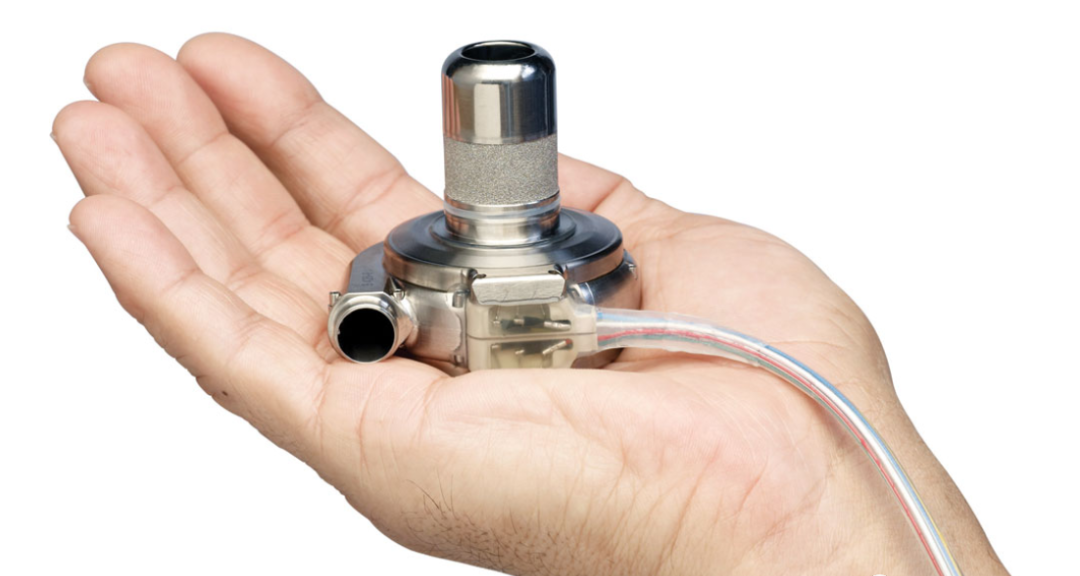
HeartMate Touch Communication System Monitors Patients with Implanted HeartMate 3 Left Ventricular Assist Device (LVAD). Abbott previously reported that HeartMate 3 can extend the lives of patients with advanced heart failure by at least five years.HeartMate 3 LVAD is a heart pump approved by the FDA for both long-term and short-term treatment of heart failure.In recent years, it has been implanted in thousands of patients and is currently the only LVAD on the U.S. market to have received FDA approval.The HeartMate Touch Communication System is a tablet-like device designed to provide real-time patient data to healthcare providers after successful implantation of the HeartMate 3 LVAD. It can also be used during the implantation process if additional patient monitoring is considered potentially beneficial.HeartMate Communication SystemThe company initiated the recall because a problem may occur if the Touch system disconnects from the controller while executing the "Stop Pump" command. When the HeartMate Touch reconnects to the same or a new controller, depending on the pump’s status at the time of reconnection, it will either stop or start.If the pump stops upon reconnection, it will restart. If it is running, a pump stop phenomenon will occur, Abbott Laboratories stated. There are no alarms or indicators to warn users that the "stop pump" command remains in the command queue.Use of the affected system may lead to serious adverse health consequences, including dizziness, sudden changes in blood flow, loss of consciousness, and death.In January 2024, Abbott sent an urgent medical device correction letter external link disclaimer to all affected customers.- When executing the "Stop Pump" sequence, follow the instructions in Chapter 4 of the HeartMate Touch Communication System, pages 4-58 to 4-59.
- Do not disconnect the white cable of the HeartMate system controller or the wireless adapter from the power module until the "Stop Pump" sequence screen with the red progress bar is no longer visible and the "Stop Pump" screen changes automatically.
- Do not disconnect the pump during the water infusion process until the timer reaches zero, the pump stops, and the "Infusion Complete" message appears.
HeartMate 3 received FDA approval in the United States to enter the market in 2017.,It is also the artificial heart product with the largest scale of 5-year clinical trial data currently available. The data shows that the system can extend the survival period of patients with advanced heart failure by about 5 years, bringing them significant survival benefits.
Medtronic Exits Heart Assist Market Due to Recall
On August 11, 2021, the FDA announced on its official website that due to the risks of neurological adverse events, death, and potential inability to restart, Medtronic is recalling the HeartWare HVAD System. The FDA has classified this as a Class I recall. This recall has resulted in 14 deaths and involves 4,620 devices.According to Medtronic, there were more than100 complaints involved delays or failure to restart the HVAD internal pump, resulting in 14 deaths and the removal of 13 pumps.The FDA website reminds healthcare providers not to use the HeartWare HVAD system for patients. For new LVAD implants, use alternatives such as Abbott's HeartMate 3 LVAD instead of Medtronic's HeartWare HVAD system.This time, Medtronic's recall of the HeartWare HVAD system, along with the announcement to halt distribution and sales, essentially means that Medtronic will be exiting the ventricular assist device field.
Left Ventricular Assist Device: Active Layout by Enterprises in and out of China
In recent years, the global prevalence of heart failure has shown a continuously rising trend, with the left ventricular assist device (LVAD) becoming a primary treatment for advanced heart failure. According to statistics from the CHS (2012-2015), the number of heart failure patients aged 35 and above in China is approximately 8.9 million, while the number of new heart failure cases annually among those aged 25 and above is about 2.97 million. Meanwhile, the global number of heart failure patients has reached around 64 million.In the U.S. guidelines for treating advanced heart failure (Advanced Heart Failure), the primary treatment methods for advanced heart failure include heart transplantation, left ventricular assist devices (or durable mechanical circulatory support devices), and palliative care. Among these, the left ventricular assist device (LVAD), as a type of durable mechanical circulatory support device, has gained a dominant position globally due to its superior performance and is widely used as either a bridge-to-transplant or destination therapy.Abroad,Abbott's HeartMate 3, as a representative of fully magnetically levitated LVADs, dominates the overseas market.Currently, LVAD has gone through three rounds of iteration. The third-generation centrifugal pump technology (magnetic-liquid suspension, magnetic suspension, etc.) performs better. In 2021, Medtronic announced the cessation of HVAD system sales, and full magnetic suspension (represented by Abbott's HeartMate 3) has become the mainstream in the United States.In China, after 2019, four domestically produced LVADs were successively approved, and the market that had long been vacant is expected to be gradually filled. In 2021, among the 742 heart transplant cases registered in the China Heart Transplant Registry, the proportion of LVAD usage was 1.1%, which was still relatively low but showed a significant increase compared to 0.3% in 2020. All four domestic products use the latest third-generation technology. Based on currently available clinical data, the survival rate after implantation of domestic products is relatively high, and their performance is excellent.Concentric Medical:CH-VAD® Implantable Left Ventricular Assist System, independently developed by Concentric Medical, received approval from the National Medical Products Administration (NMPA) on November 24, 2021. This marks the first domestically produced artificial heart in China with complete independent intellectual property rights, as well as the world's first fully magnetically levitated artificial heart to gain NMPA approval, symbolizing the commercialization in China of a ventricular assist device product representing a new generation of global technology.Etern Heart Medical:In August 2019, YongRenxin Medical's EVAHEART implantable left ventricular assist system was approved for marketing. This product is the first officially marketed Chinese-made implantable left ventricular assist system, featuring a centrifugal mechanical bearing structure. In February 2024, YongRenxin Medical announced that its newly developed next-generation ultra-small long-term artificial heart, the "EVA-Pulsar™ Left Ventricular Assist Device," had received medical device registration approval from the National Medical Products Administration (NMPA), becoming the fifth artificial heart approved for marketing in China.Core Medical:In June 2023, the Corheart® 6 Implantable Left Ventricular Assist System, independently developed by Shenzhen Core Medical Technology Co., Ltd. (hereinafter referred to as "Core Medical"), was officially approved for marketing by the National Medical Products Administration (NMPA), with the registration certificate number GuoXieZhuZhun 20233120716. This artificial heart, which has complete independent intellectual property rights and is produced in China, is currently the most implanted artificial heart in China and also the smallest and lightest artificial heart in the world.Aerospace Taixin:In July 2022, HeartCon Implantable Left Ventricular Assist System, developed by Hangtian Taixin, was approved for marketing in China. It is the first domestically produced implantable artificial heart using magnetic-liquid suspension technology.Industry insiders pointed out that continuously expanding the application scope of artificial hearts through technological innovation, and promoting a wider range of heart failure patients to regain healthy lives, is the long-term goal of artificial heart technology development. In the future, artificial hearts will develop towards wireless, miniaturization, and intelligent aspects.In addition to the already listed implantable artificial heart products, includingXinQing Medical, LifeShield MedicalCompanies, including Abbott Laboratories, are still developing interventional artificial heart products. The interventional artificial heart adopts a minimally invasive surgical method, which can implant a miniaturized blood pump into the patient's aorta through peripheral vascular interventional surgery, thereby providing rapid and non-invasive circulatory support when the patient's heart pumping function fails. This technology is able to provide cardiac protection during high-risk coronary interventional procedures.
▲ Source of the article: Medical Device Innovation Network▲Please indicate the source above when reprintingDisclaimer: This article is intended solely for the purpose of information transmission and is for reference only. It does not constitute any advice on investment or treatment; please scrutinize carefully. If it involves issues related to the content, copyright, or other aspects of the work, to protect the rights and interests of both parties, please contact us and we will handle it immediately. If any platform reprints this article, it must take responsibility for the content of the article itself. The Medical Device Innovation Network is not responsible for any secondary dissemination caused by reprints.