

Deruim + CAS Empowerment, Implemented in 600+ Schools, CAS Mental Map Uses PGPT Large Model to Close the Mental Health Loop
"In a sense, modern people are always living in a kind of silent despair." — Henry David Thoreau, *Walden* (1854)
A century and a half ago, Thoreau's reflections by Walden Pond still resonate deeply in today’s era of rapid urbanization. Amid widespread changes in social structures and lifestyles, public concern and demand for mental health are increasingly growing. According to the "Report on the Development of National Mental Health in China (2019-2020)" released by the Chinese Academy of Sciences’ Institute of Psychology in March 2021, the detection rate of depression risks among Chinese adolescents has reached 24.6%, while the psychological stress index of urban residents has been on the rise for five consecutive years.
"Mismatch Between Supply and Demand in Professional Psychological Services to Persist Long-Term," noted Feng Zhentao, CEO of Zhongke MindMap. On the demand side, exponential growth is driven by societal transition pressures, increased mental health awareness, and new issues spawned by digitalization. On the supply side, constraints such as the lengthy training cycle for professionals, uneven regional distribution of resources, and an incomplete payment system result in fragmented supply, delayed screening, data silos, and challenges in rapidly scaling effective provision… This misalignment between the "slow variable" of supply and the "fast variable" of demand, compounded by the non-standardized nature of psychological services, has led to the current mismatch in China's mental health industry.
Zhongke MindMap, jointly founded by Deru Psychology, a full-chain enterprise in psychology, and the technical team of the Chinese Academy of Sciences, is committed to building China's mental health intelligence hub. Its core objective is to provide scalable, full-chain psychological service solutions covering "screening-treatment-intervention-insurance coverage" for scenarios such as schools, hospitals, insurance companies, and families through its large model PGBT and data platform.
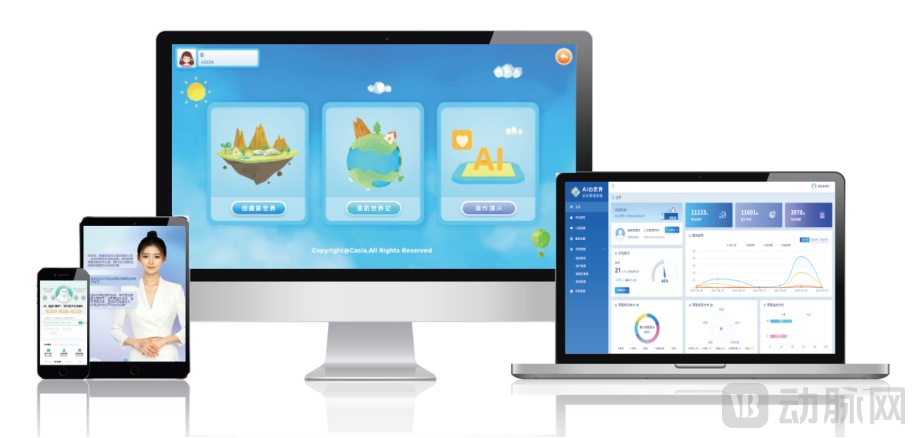
How to Understand Zhongke Xintu's "Mental Psychological Intelligence Center"?
Data Middle Platform:Diverse Heterogeneous Data Collection and Integration of Various Types of Data (Assessment, Dialogue, Physiological, Medical Visits, Insurance, etc.) to Support Large Models.
PGBT Psychology Vertical Domain Large Model:This model is trained on multi-source heterogeneous data (including psychological counseling, assessment, medical, insurance data, etc.) and has various functions such as emotion recognition, personality modeling, and risk warning. It is not only widely used in the mental health field but also capable of providing cross-industry services.
Multi-Agent Plugin:For example, in a school setting, AI psychological screening, professional support from psychology teachers, agency tools for parents and students, as well as linkage with medical and insurance systems are provided to achieve closed-loop psychological management.
Among them,The PGPT Psychology Vertical Domain Large Model is the "central processing unit" of Zhongke Xintu.This large model is powered by multimodal data inputs, integrating various data structures (such as psychological counseling, assessments, medical data, insurance data, etc.), to provide foundational support for different mental health services. Through in-depth analysis of this data, the PGPT model can not only perform emotion recognition and behavior prediction but also offer personalized mental health intervention plans for different scenarios. It can be applied in scenarios such as education, healthcare, customer service, insurance, robotics, and smart hardware.
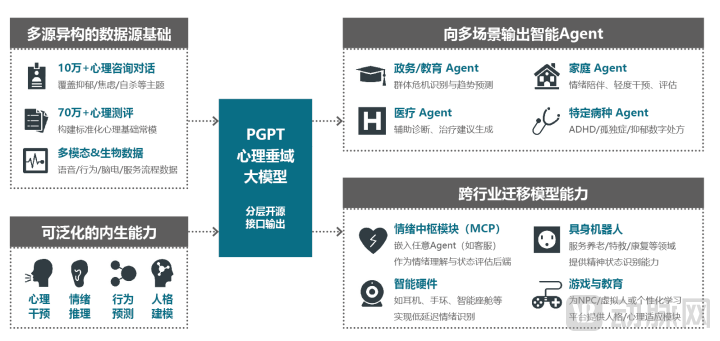
"PGPT is not a single-task model, but an opportunity across the entire industry chain, spanning the whole process from screening, assessment, intervention, to prevention." Feng Zhentao particularly emphasized that, unlike general large models,PGBT is a multimodal large model specifically designed for the psychological field, with multiple capabilities such as personality modeling, emotion recognition, risk warning, and behavior prediction. Its training data includes not only psychological counseling dialogues but also integrates multi-source heterogeneous data such as assessment data, medical data, and insurance data., thereby achieving comprehensive analysis and full intervention.
It is worth mentioning that this model has a high threshold in terms of engineering.Zhongke Mind Map relies on the accumulated 100,000+ psychological counseling dialogue data from its parent company, Derui Mu.A great deal of meticulous fine-tuning and middleware development has been carried out, enabling it to comprehensively outperform general-purpose models in vertical domain performance.
If PGPT is the "engine" of Zhongke Xintu, then school psychological screening is the most representative landing scenario.
There are three core pain points in the current field of school mental health screening:First, there is a phenomenon of data silos among schools,Traditional screening methods over-rely on non-intelligent questionnaire scales, using the same set of tools from lower to higher grades over a long period, making it difficult to effectively identify the true mental health status.Secondly, schools have limited budgets for the procurement of relevant hardware and software.; Thirdly, there is a lack of unified evaluation criteria,The differences in service products purchased by different schools prevent the education authorities from establishing mental health records for all students, making it difficult to form a long-term tracking mechanism.
In response to the above issues, ZK MindMap has developed an AI-based mental health assessment algorithm and application system. The system continuously accumulates over 700,000 real assessment cases, with model accuracy constantly improving. Its reliability and validity exceed 0.75, enabling schools to precisely identify high-risk student groups while freeing up teachers from the heavy workload of screening tasks. This allows them to focus more on tiered intervention and treatment processes, also providing solid support for the large-scale promotion of mental health screenings.
Taking the school mental health screening process as an example, Zhongke Xintu has launched the "AI Heart World·Student Mental State Awareness Screening System." The system is designed based on psychological projection theory and sandplay therapy. Students perform gamified operations on terminal devices—arranging sandplay figures, constructing scenes, and completing interactive tasks.Throughout the process, the system does not directly ask students about their emotional state but instead generates a psychological status assessment through an algorithmic model by recording non-verbal behavioral data such as their operation sequence, dwell time, and preference choices.
"The higher the information density per unit time, the higher the screening accuracy," explained Feng Zhentao. Traditional scales are a low-information-density method of 'fixed order, closed choice,' while gamified sandboxes can capture much richer non-verbal information, enabling higher precision recognition.Currently, the system has accumulated over 700,000 assessment cases, with accuracy increasing from 15% for traditional scales to over 80%. It also supports repeated assessments across multiple grades and semesters, avoiding distortion caused by the memory effect.
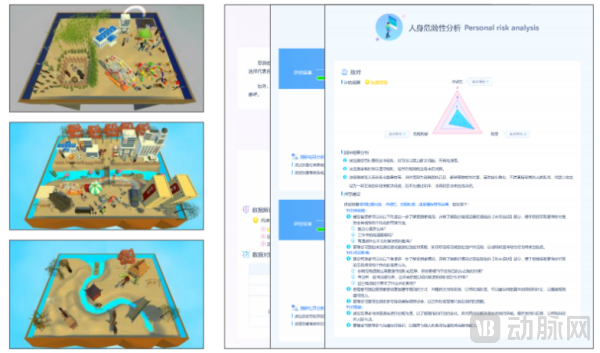
AI Heart World·Student Mental State Perception Screening System
After the screening, a management system that meets unified data standards can be delivered to the government side, with risk warnings realized through AI capabilities. Based on the screening results, the system automatically categorizes students into three levels according to the severity of their psychological issues: mild, moderate, and severe. For mild cases, intervention is directly conducted by the AI agent; for moderate to severe issues, professional psychological services and medical resources are engaged.
In order to achieve a closed-loop service and ensure effectiveness, ZK MindMap also providesTeachers are equipped with "Psychological Teacher Copilot" to provide systematic supervision plans; for parents, a "Family Psychological Mini-Program" agent has been developed to improve the impact of the family environment on children's mental health from the source.
In addition, to address the bottom-line risk requirements of schools,Zhongke Xintu Innovatively Introduces Insurance Mechanism to Cover the Entire Process of Services, building a "prevention-intervention-guarantee" three-in-one safety net. All data generated throughout the service chain is沉淀至数据中台, and through continuously feeding back to AI models, technical iteration is achieved, forming an "application-data-optimization"良性循环, and constantly improving risk identification accuracy and service adaptability.
This model addresses the core pain points of traditional mental health services, such as "inaccurate screening, inability to refer, and lack of adequate support," through technological empowerment and resource integration. Additionally, it constructs a multi-party collaborative ecosystem involving the government, schools, families, and medical institutions, providing standardized, intelligent, and full-cycle mental health management solutions for the education system.
"Our solution does not rely on hardware; it is a pure software deployment."Feng Zhentao emphasized that many local governments are currently facing budget pressures, making it difficult for schools to procure integrated hardware and software solutions. The characteristic of pure software deployment gives Zhongke Xintu's products an advantage in scaled promotion.
Currently,Its system has been deployed in more than 600 schools nationwide, with the longest-serving school already in its fourth year of repurchase. Feng Zhentao emphasized: "No serious psychological crisis incidents have occurred in schools using our products."
"Students are our entry point, next we will connect to parents, and then to the entire family's mental health account." Feng Zhentao revealed that although Zhongke Xintu currently focuses on the education market as its main area, its vision goes far beyond this. It is reported that Zhongke Xintu hasEducation and judicial fields achieve batch implementation of provincial/city-level projects, forming a replicable and promotable model.
In addition, the company alsoTertiary hospitals and specialized medical institutionsEstablish in-depth cooperation and use the PGPT model to provide doctors with auxiliary diagnosis and triage support. In the insurance process, PGPT data can also serve asInsurance CompanyProvide psychological risk assessment to reduce the risk of compensation.
Through this multi-scenario collaboration, Zhongke Xintu is building a mental health ecosystem network covering education, healthcare, and insurance.
In terms of business model, Zhongke Xintu has formedToG(Government/Education)为主、ToB(Enterprise/Hospital) as auxiliary,ToC(A family/individual)-centered multi-model approach, achieving sustainable monetization through the combination of "software + service + insurance."
"Mental health is a very clear incremental market." Feng Zhentao concluded, "AI currently cannot replace humans in the entire process; more importantly, it is about building an ecosystem that organically integrates humans, AI, and scenarios."