


BioAge
Drug Discovery Platform Developer
AirDrop
Peptide Research Society wants to share with you

Refuse
Receive
-Enterprise Perspective Issue 032-

Bioage
Contents | contents
01
Company Fundamentals
Enterprise Characteristics & Development History & Management Team & Enterprise Scale
02
Artificial Intelligence Platform
03
Lose Fat, Not Muscle
04
The Differentiated GLP-1 Breakthrough Path
Azelaprag & BGE-100 & Competitors
05
R&D Pipeline
Azelaprag & Competitors & BGE-100
06
A Good Wind Borrows Strength
01
BioAge Corporate Profile
BioageInitially a biotech company focused on AI-driven development of anti-aging drugs, BioAge began fully committing to the weight loss and muscle anti-aging field after its combination therapy of Azelaprag and Tirzepatide achieved the anticipated effect of reducing fat without muscle loss.
?Artificial Intelligence
?Anti-aging Drugs
Fat Reduction and Muscle Gain
Development History
Swipe up to view

BioAge Founded in California, USA | 2015 |
2017 | $10.9Mn Series A Financing, Led by Andreessen Horowitz Bio Fund, to Collaborate with the Estonian Genome Center on Developing Anti-Aging Drugs |
$23Mn Series B Financing to Drive the Development of AI-Based High-Throughput Platforms | 2019 |
2020 | $90Mn Series C Financing, Co-led by Andreessen Horowitz and Elad Gil with Felicis Participating, Funds to Advance Pipelines BGE-117 and BGE-175 |
Important Progress Made in Collaboration with HitGen on the Discovery and Development of Novel Small Molecule Compounds | 2021 |
2021 | Signed a global exclusive license agreement with Amgen to obtain the development and commercialization rights of Azelaprag, as well as subsequent licensed indications. |
Reached a cooperation agreement with Age Labs, obtaining exclusive access to the AgeLabs database, and developing drug targets for aging-related diseases by analyzing longitudinal biological samples and clinical data. | 2022 |
2022 | Positive Data from Phase Ib Clinical Trial of Azelaprag for Muscle Atrophy: Significant Prevention of Muscle Atrophy and Maintenance of Muscle Protein Synthesis |
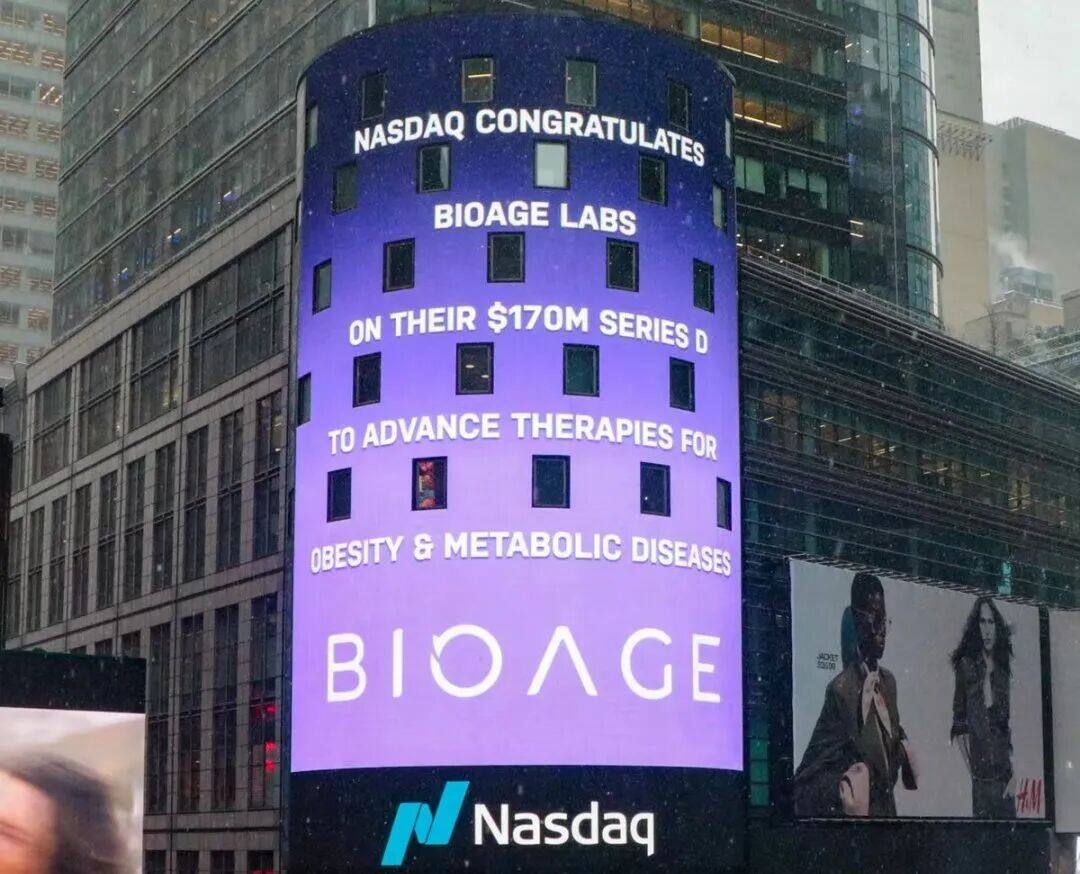
$170Mn Series D Financing to Advance Phase II Clinical Trials of Azelaprag and Tirzepatide Combination Therapy for Obesity | 2024 |
Enterprise Scale
BioAge is headquartered in California, USA., with approximately 90 employees.

Management

Kristen Fortney
Co-Founder
CEO
Co-founder and CEO with over 10 years of research experience in the field of bioinformatics. Ph.D. in Bioinformatics from the University of Toronto, Postdoctoral Fellow at Stanford University. Research Fellow at the American Federation for Aging Research and the Ellison Medical Foundation. Published 18 papers in areas including computational drug discovery, biomarkers of aging, and genetics of human lifespan extension. Served as a consultant for Insilico Medicine, Humanity, and Retro Biosciences. The data-driven approach to identify and target molecular pathways driving aging at BioAge was developed under their leadership.

Eric Morgen
Chief Operating Officer
COO
Ph.D. in Medicine from the University of Toronto, CIHR Fellow. Has published over 15 papers in the fields of molecular biomarker discovery, pharmacogenomics, aging, and diagnostic medicine. Holder of a license from the Medical Council of Canada, and a Fellow of the Royal College of Physicians and Surgeons of Canada.
02
Artificial Intelligence Platform
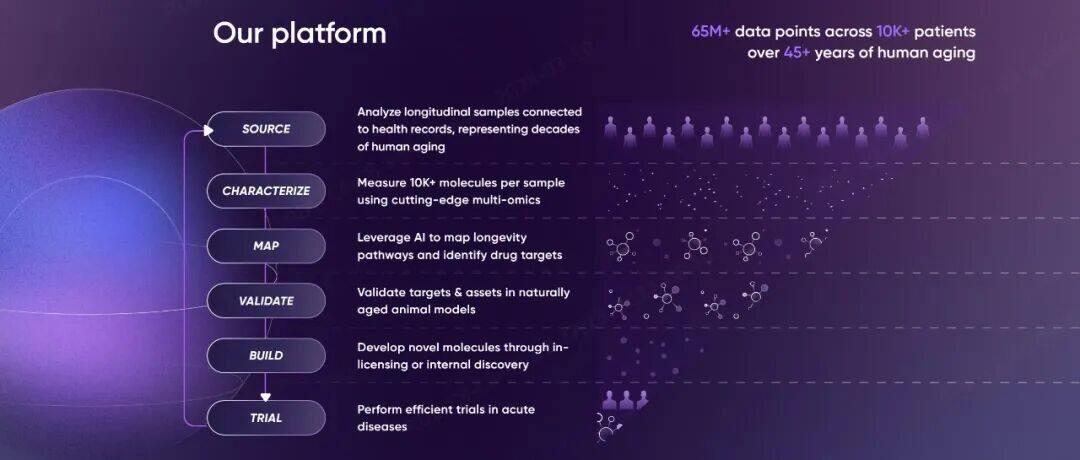
BioAge Labs' AI platform is dedicated to identifying key mechanisms of human health and longevity and discovering drug targets for aging-related diseases. It is an in-depth analysis platform based on over 45 years of the human aging process, involving more than 10,000 patients and up to 65 million data points.

Data Source Analysis
By analyzing health records in samples to study the human aging process over decades, it helps identify molecular mechanisms associated with healthy lifespan.

Multi-omics Measurement
Each sample measures over 10,000 molecules, and high-throughput data collection provides powerful data support for understanding the human aging process.

AI Mapping and Drug Target Identification
Capable of mapping the aging process and identifying new drug targets, accelerating the translation of preclinical data into drug discovery and enhancing research efficiency.

Target and Molecular Validation
Validate drug targets and molecules in naturally aging animal models to ensure that candidate drugs have a biological basis and therapeutic potential before entering clinical trials.

Molecular Development
Develop new molecular entities through independent research and development or licensed引进.

High-Efficiency Testing
Conduct acute disease clinical trials to improve the efficiency of translating R&D outcomes into clinical applications.。
03
Lose Fat, Not Muscle
Currently, BioAge's research mainly focuses on the field of combination therapies for weight loss drugs. In 2021, the company introduced Azelaprag, which was in Phase I clinical trials, from Amgen. This molecule is an orally available or intravenously injectable APJ agonist that mimics the activity of apelin. Apelin is a peptide hormone secreted during exercise, acting on skeletal muscles, the heart, and the central nervous system to regulate metabolism and promote muscle regeneration.
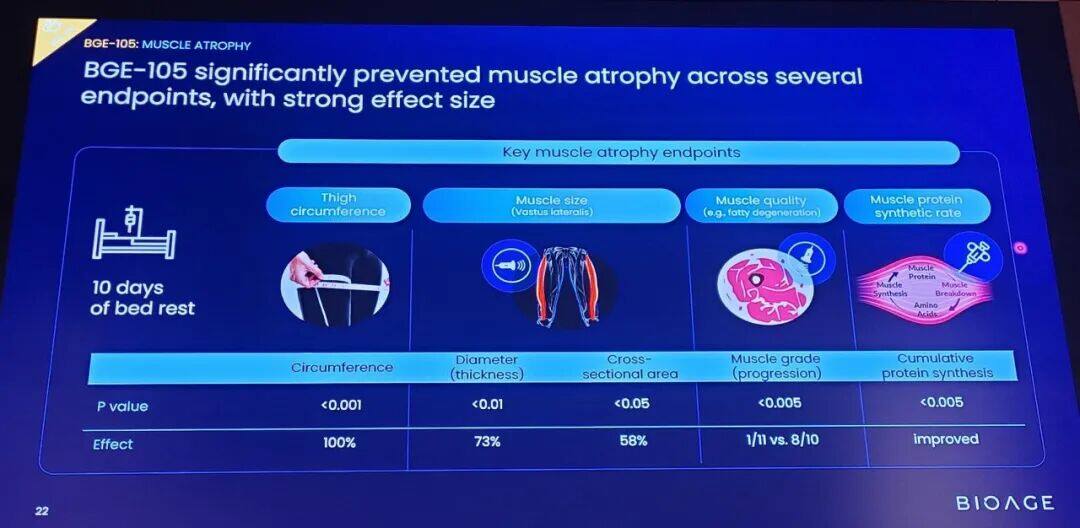
Phase Ib clinical data show that people treated with Azelaprag during bed rest experienced significantly less loss of thigh muscle mass compared to those on placebo, with a marked improvement in muscle physiology, promotion of muscle metabolism, and prevention of atrophy.
Preclinical studies show that the combination of Azelaprag and Tirzepatide enhances overall weight loss in tested mice compared to Tirzepatide alone. The Azelaprag group exhibited twice the weight loss and was able to restore body composition and muscle function to manageable levels. It is foreseeable that Azelaprag + Tirzepatide achieves a 1+1>2 effect: enhancing weight loss without muscle loss.
BioAge and Lilly are expected to officially launch a Phase II clinical trial for weight loss in mid-2024, combining azelaprag with Tirzepatide. The primary goal is weight reduction, with secondary goals focusing on other potential benefits, anticipating an average weight loss of 20%. BioAge will also collect information on aging-related biomarkers from participants.
In essence, BioAge's R&D strategy aligns with the goals pursued by the next generation of weight-loss drugs — healthy weight loss, reducing fat while minimizing muscle loss, allowing patients to maintain an ideal body mass index.
04
The Differentiated GLP-1 Breakthrough Path
As of 2024-02-18, there are 220 global R&D pipelines targeting GLP-1, involving 154 companies and covering 107 indications; 158 of these are in clinical or later stages, accounting for 72% of all pipelines; in China, only 82 pipelines have entered the clinical or later stages, accounting for 37%, with overall progress lagging behind the global average.
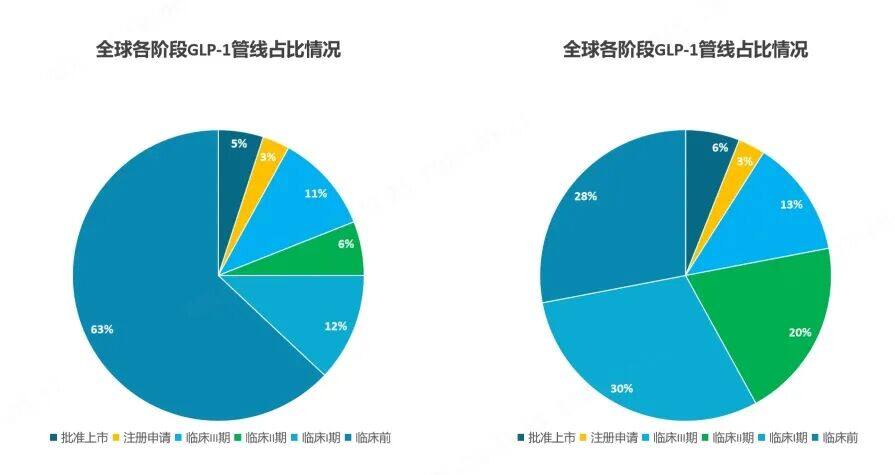
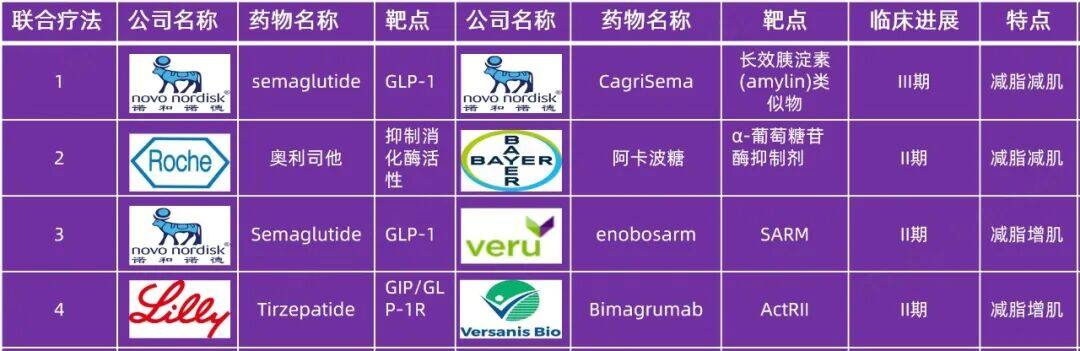
Lilly, Novo Nordisk, AstraZeneca, Pfizer, Roche and other MNCs are continuously entering the GLP-1 weight loss track. Over 50% of the TOP20 MNCs have GLP-1 pipelines. How to stand out has become an unavoidable topic — some companies have already started combination therapies, and reducing fat without losing muscle is undoubtedly a clever development strategy.
05
R&D Pipeline
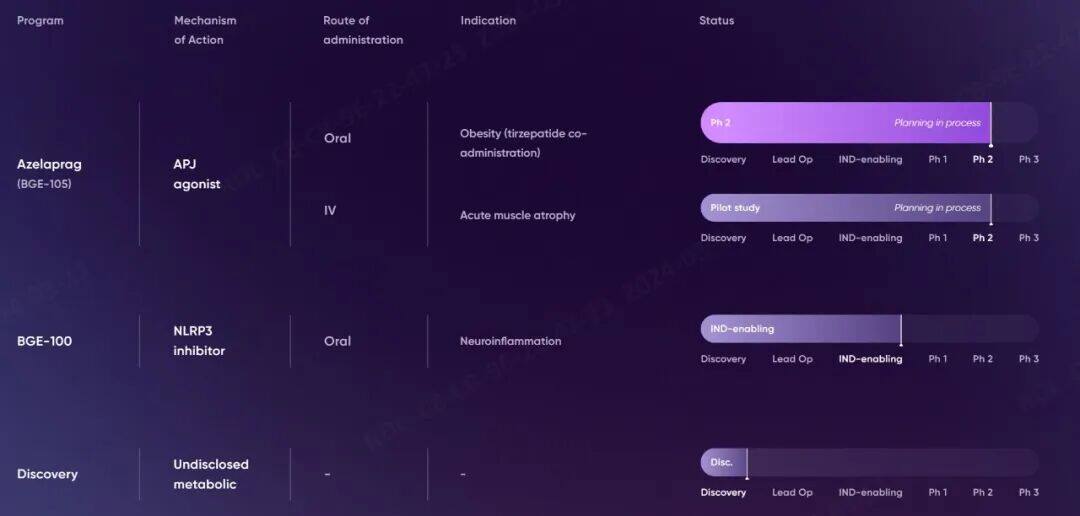
BioAge currently has two main pipelines: its core pipeline is Azelaprag, which is pioneering an innovative combination therapy for fat reduction without muscle loss, and is expected to make waves in the weight-loss drug market. The other pipeline, BGE-100, is an NLRP3 inhibitor that can treat neurodegenerative diseases.
Previously, BioAge also had two anti-aging pipelines, BGE-117 and BGE-175, but both pipelines have been suspended.
In the prevailing trend of weight-loss drugs, the company wisely chose to adjust its strategic focus, concentrating all efforts into one breakthrough.
Combined Therapy Pipeline
Azelaprag
Development Method
Co-developed with Amgen
Project Introduction
Oral Apelin receptor agonist. For the treatment of acute muscle atrophy, currently under investigation in combination with Tirzepatide for obesity.
Indications
Obesity, Acute Muscle Atrophy
R&D Progress
Phase II Clinical
Mechanism of Action
It is a polypeptide that can activate the body to produce more Apelin, regulating metabolism and promoting muscle regeneration through interactions with skeletal muscle, the heart, and the central nervous system.
Competitors


Direct Competitors
Versanis
Pipeline
Bimagrumab
Development Method
Co-developed with Lilly
Project Introduction
Potential "first-in-class" monoclonal antibody targeting activin type II receptor (ActRII) may enable fat reduction and muscle gain
Indications
Inclusion Body Myositis
R&D Progress
Clinical Phase IIb
Mechanism of Action
By inhibiting activin type II receptor (ActRII), the signaling of activin and myostatin is blocked, thereby achieving the purpose of treating muscle atrophy and obesity.

Direct Competitors
Rivus
Pipeline
HU6
Development Method
Self-developed
Project Introduction
A Novel Investigational Drug: Controlled Metabolic Accelerator (CMA) with Potential to Address Cardiometabolic Disease-Related Issues
Indications
Obesity, MASH, etc.
Research and Development Progress
Clinical Phase IIa
Mechanism of Action
By leveraging the natural mechanism of mitochondrial uncoupling, the resting metabolic rate of the human body is increased in a controlled and physiological manner, enhancing fat consumption.
Anti-aging Pipeline
BGE-100
Development Method
Self-developed
Project Introduction
CNS-penetrant NLRP3 inhibitor, capable of crossing the blood-brain barrier, has the potential to address a series of neurodegenerative diseases caused by neuroinflammation.
Indications
Neuroinflammation
Clinical Stage
IND
Mechanism of Action
The inflammasome is a protein complex that assembles in response to infection and tissue damage, activating inflammatory responses. Among them, NLRP3 is a key component of the inflammasome.
06
A Good Wind Borrows Strength
As competition in the weight-loss drug market intensifies, future focus may shift towards sustainable weight management rather than mere weight reduction—achieving fat loss while minimizing muscle loss to maintain an ideal Body Mass Index (BMI). This will be one of the goals for the next generation of weight-loss drugs.
While Semaglutide and Tirzepatide are selling well, they have exposed certain flaws, such as weight loss accompanied by muscle loss. Azelaprag from BioAge is precisely one of the solutions to this problem. With the rise of AI, combination therapies under the concept of healthy weight loss have once again brought BioAge to the forefront. It must be said that BioAge is a fortunate beneficiary of the times. Amidst the rush of capital investment and its partnership with Lilly, it holds great promise to create a remarkable success story.
END

Flagship Report


Column Recommendation






Peptide Research Society

Biopharmaceuticals · Beauty & Personal Care · Nutrition & Health
Animal Health · Green Agriculture · Biomaterials
Professional Focus | Achieving Customer Success | Growing Together