

From Glaucoma Micro-Stents to RF Energy Platforms: Langmu Medical Builds a Comprehensive Minimally Invasive Ophthalmic Treatment Solution through Clinically Integrated Innovation

Purevision Medical
Developer of Ophthalmic Disease Treatment Products
March 10-16, 2024 marks the 17th World Glaucoma Week, with this year's theme being: "Managing Glaucoma as a Chronic Condition, Preserving Vision for the Long Term." As an irreversible chronic blinding eye disease, glaucoma not only severely impacts patients' quality of life but also imposes a heavy burden on tens of millions of families and societies worldwide.
According to data from the "Chinese Glaucoma Guidelines (2020)" released by the Ophthalmology Branch of the Chinese Medical Association, the number of people with primary glaucoma worldwide exceeded 76 million in 2020.As one of the countries with the highest number of glaucoma patients globally, China had 21 million glaucoma cases in 2020, with 5.67 million resulting in blindness.
It is worth noting that the incidence of glaucoma worldwide is increasing year by year with the deepening of the aging population process, the popularity of electronic products, and other factors. Moreover, due to the inconspicuous initial symptoms and the longer course of the disease, it requires our high attention and effective measures to address it.
Under the severe burden of diseases, Suzhou Purevision Medical Technology Co., LTD. (hereinafter referred to as: Purevision Medical), a technology-based enterprise focusing on innovative ophthalmic medical devices, officially set sail in 2021.
Purevision Medical is committed to building a globally leading innovative ophthalmic minimally invasive treatment platform.Awarded successively"Jiangsu Province Double Innovation Talent Enterprise" "Jiangsu Province Potential Unicorn Enterprise" "National High-tech Enterprise"And other honorary qualifications, and has received special support from the Jiangsu Provincial Department of Science and Technology for the transformation of scientific and technological achievements.
Purevision Medical's self-developed original Chinese glaucoma treatment stent product AqueFish®It is a minimally invasive glaucoma surgical instrument that represents an original innovation by Chinese doctors. It is also one of the few stent products in the world that can be used for both angle-closure glaucoma and open-angle glaucoma, bringing more possibilities to glaucoma treatment.
The entrepreneurial story of Purevision Medical begins with two core figures.
Since 2015, the team led by Professor Liang Yuanbo, Vice President of the Eye Hospital of Wenzhou Medical University, has been focusing on the development of an innovative Penetrating Schlemm's Canaloplasty (referred to as PCP surgery). After clinical practice involving thousands of cases across nearly 100 centers, it has been proven that the drainage pathway of aqueous humor through the trabeculectomy opening and then via the Schlemm’s canal endpoint is feasible. Moreover, the success rate of this procedure is relatively high when applied to both open-angle and closed-angle glaucoma.
After receiving real feedback from clinical practice, in order to further simplify the surgical operation and increase the success rate of completing the surgery, Professor Liang Yuanbo's team hopes to develop a minimally invasive glaucoma treatment device that is more suitable for the structure of the Chinese eyeball, helping tens of millions of patients slow down the damage and protect their vision through a new method that is less invasive and safer.It was also during this interdisciplinary medical innovation process that Dr. Kan Min met Professor Liang Yuanbo.
In 2018, Kan Min, who was then engaged in business development and management in the high-precision 3D printing industry, realized that the advantages of 3D printing—such as rapid prototyping and customization—had broad market prospects, especially in the medical field where it held irreplaceable advantages. Consequently, he shifted the focus of his work to the medical technology sector.
During a collaboration with a global ophthalmic pharmaceuticals and medical device giant to develop a glaucoma treatment product, Kan Min realized:Glaucoma treatment device products have become a key focus for ophthalmic giants, while the domestic market was almost空白 at that time.
Thus, Kan Min, who holds a Ph.D. from the College of Engineering at Peking University and is proficient in various precision machining technologies for metals and non-metals, began actively seeking collaboration with ophthalmologists in China. He hopes to leverage innovative technologies to help bring doctors' creative ideas to fruition, transforming them into innovative products that can be applied in clinical treatment to benefit more patients.
"It is a fortunate encounter for two individuals from different fields but equally focused on minimally invasive glaucoma treatment. In 2018, after discussing the product schematic with Professor Liang online, I further optimized the product structure. From that point on, the prototype of the first-generation China-originated glaucoma micro-stent was born," said Dr. Kan Min.
Subsequently, with the impetus from all parties, Dr. Kan Min, Professor Liang Yuanbo, and Dr. Wang Yan, who has a background in metal materials science and extensive experience in corporate management and operations, jointly founded Purevision Medical. They formed a founding team with a deep background in interdisciplinary medical-engineering collaboration. Thus began a startup story of "from clinical needs back to clinical applications."
With the continuous development of technology in recent years and the increasing attention to eye health, minimally invasive glaucoma surgery (MIGS) devices have gradually become a popular track actively laid out by many ophthalmic medical device companies at home and abroad due to their advantages such as higher safety, shorter operation time, and faster recovery. The technologies and products brought by this trend are also constantly innovating and progressing.
But it is undeniable that, currently, high-end ophthalmic medical devices in China are still dominated by overseas enterprises. Moreover, the pathogenic factors of glaucoma are complex, with numerous disease types and varied symptoms, making existing treatment methods unable to fully meet the clinical needs of all glaucoma patients.
Against this backdrop, Purevision Medical has independently developed the Chinese-produced glaucoma stent AqueFish.®This micro-stent product is not only an original innovative minimally invasive glaucoma treatment medical device exclusively developed by Chinese doctors, but also specifically fills the domestic market gap in China.Specifically, the advantages can be mainly divided into the following:
First, from the pathogenic mechanism of glaucoma, the main cause of glaucoma is the increase in intraocular pressure caused by increased resistance to aqueous humor outflow through the trabecular meshwork. Currently,Therapeutic SurgeryThe "gold standard" is trabeculectomy, also known as external ocular drainage surgery, which involves creating a filtering bleb between the conjunctiva and sclera and performing a trabeculectomy to allow aqueous humor to drain, thereby controlling intraocular pressure.
From the clinical feedback, trabeculectomy tends to result in postoperative complications and has a relatively high recurrence rate. Sometimes, multiple surgeries are required to effectively control intraocular pressure, making it mainly suitable for the treatment of moderate to advanced glaucoma.
In this regard, Dr. Kan Min introduced: "Although trabeculectomy is currently an external drainage filtration surgery, when Cairns, the inventor, first proposed trabeculectomy in 1968, the original concept...Actually"The hope was that the aqueous humor could flow through the trabeculectomy ends into Schlemm's canal, achieving the goal of lowering intraocular pressure via internal drainage; this idea simply wasn't realized at the time."
Fortunately, the integration of medicine and engineering is creating more possibilities for advancing medical technology.More than half a century later, the AqueFish co-developed by Purevision Medical and Professor Liang Yuanbo's team®Purevision Medical's glaucoma Schlemm's canal drainage stent successfully restores trabeculectomy to its original "essence."
Specifically, AqueFish®The internal drainage principle of the glaucoma stent is similar to the well-known cardiac stent, but it is smaller in size, with characteristic structural dimensions reaching a level comparable to a hair's breadth at hundreds of micrometers. AqueFish®Acting on the original physiological circulation channels of aqueous humor, through"Propping open" the originally collapsed channel,Restore the circulation pathway of aqueous humor, thereby achieving the purpose of lowering intraocular pressure.
Whether from the perspective of design principles or treatment methods, AqueFish®The innovation of glaucoma stents is beyond doubt.From the perspective of the most critical clinical treatment outcomes, this stent not only reduces damage to the endothelial cells and structure of Schlemm's canal, preserving the integrity of Schlemm's canal and the trabecular meshwork to the greatest extent, but also ensures physiological aqueous humor flow through a non-filtering bleb-dependent method, reducing the incidence of related complications.
Secondly, as an original innovation by Chinese doctors, AqueFish®The design and application of glaucoma stents are also more in line with China's national conditions and the needs of Chinese patients.
"Currently, the mainstream products available in the European and American markets often target indications limited to early- and mid-stage open-angle glaucoma. However, due to factors such as the anatomical characteristics of the eyes in Asian populations and national conditions, most Chinese glaucoma patients undergoing surgical treatment are typically at the middle or late stages, with a significant number being angle-closure glaucoma patients. This reality leads to the potential issue of 'mismatched indications' when imported products are applied clinically in China," said Dr. Kan Min.
As for AqueFish®In addition to greatly reducing surgical trauma and improving the success rate of surgery, the glaucoma stent is also one of the few products globally that is suitable for both open-angle glaucoma and angle-closure glaucoma.Specifically, AqueFish®Can be applied to the vast majority of glaucoma types, including secondary glaucoma, primary angle-closure glaucoma, and primary open-angle glaucoma, and is aMoreInnovative Solutions Suitable for Asian Glaucoma Patients.
Building on the foundation of technical advantages, in order to better meet patients' treatment needs and standardize surgical treatment standards, Professor Liang Yuanbo further proposed "Stent-Assisted Internal Trabecular Drainage Surgery (SLITs)."
According to the introduction, AqueFish®Glaucoma stents are currently undergoing multicenter randomized controlled trials at 10 institutions in China, including Peking University Third Hospital and Beijing Tongren Hospital affiliated to Capital Medical University., and as of February 2024, the company has achieved one-third of its clinical enrollment goal within three months, further demonstrating the high alignment between the product's indications and Chinese glaucoma patients.
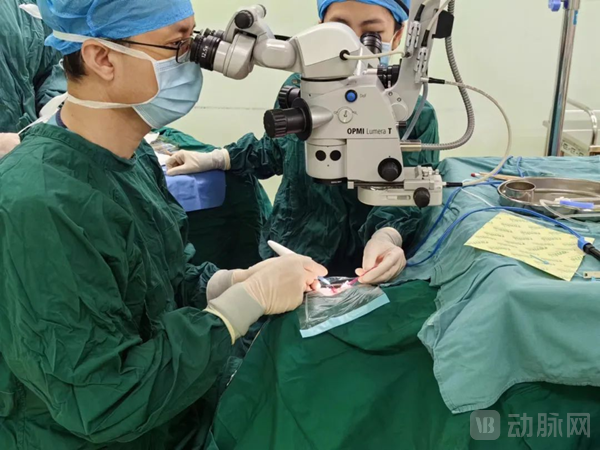
World's First AqueFish®Glaucoma Stent Implantation Surgery
Except for AqueFish®Except for glaucoma stents,In order to further promote the early detection, early diagnosis, and early treatment of glaucoma and other eye diseases, Purevision Medical has simultaneously targeted the ophthalmic surgical energy instrument track for strategic layout. They have developed the first innovative device that utilizes radiofrequency technology to control aqueous humor production in the ciliary body to achieve the goal of reducing intraocular pressure — the AqueEel.®Ophthalmology Radiofrequency Energy Platform.
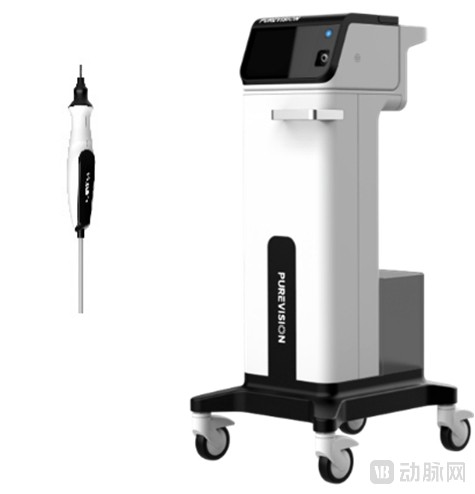
AqueEel®Ophthalmology RF Energy Platform
According to the introduction, although AqueEel®Similar to the principle of traditional cyclophotocoagulation, but AqueEel®The controllability and precision of radiofrequency energy are higher, and the difficulty of surgical operation is lower. Therefore, the corresponding postoperative complications are milder. The entire surgery can be completed within 5-10 minutes, demonstrating extremely high value for promotion and popularization. It is expected to broaden the indications to include early, middle, and late stages, as well as various types of glaucoma treatments.
Currently, AqueEel®It has entered the type inspection stage and has been preliminarily verified for safety and effectiveness in animal experiments. Human trials are expected to be launched within 2024.
Medical-Engineering Collaborative Innovation: An Important Means to Advance Medical Treatment Technology
Purevision Medical has laid out multiple invention patents in China, as well as in the UK, US, and other countries, focusing on original innovative ophthalmic medical devices. The company is also progressively establishing in-depth cooperative relationships with overseas ophthalmic centers, which is expected to lay an important foundation for the future path of Chinese original innovation going global.
Behind these advancements and achievements lies the team's relentless efforts over more than three years. The R&D team of Purevision Medical accounts for more than one-third of the company's total staff, with over half holding master’s degrees. Notably, the current R&D director of the company was among the first five employees of a well-known Chinese publicly listed medical device company, possessing extensive experience in product development and registration, which is expected to accelerate the progress of AqueFish.®Clinical Trials and Registration Process for Glaucoma Stents.
At the end of the interview, Dr. Kan Min stated: "Purevision Medical's short-term goal is to become a complete solution provider for glaucoma treatment in China. In the future, relying on the strong innovative strength of its existing technology, the company will also enter broader overseas markets and become a globally leading ophthalmic minimally invasive treatment platform driven by both innovative technology and clinical needs. It aims to provide better treatment options for eye disease patients worldwide and reduce the disease and treatment burden of glaucoma and other eye conditions."