

HRYZ-T101: A First-in-Class HLA-Class II-Restricted TCR-T Therapy Targeting HPV18 E7 for Solid Tumors Advances into Clinical Development

HRYZ
Immune Cell Therapy Developer


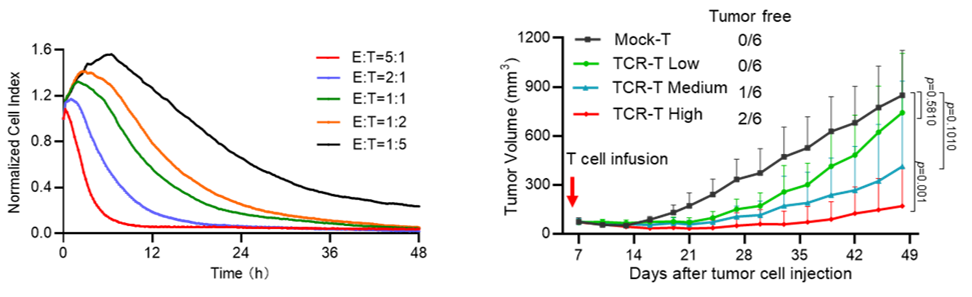
Recently, the R&D team from Hengrui Yuanzheng (Shanghai) Biotechnology Co., Ltd.Nature CommunicationsPublished in the journal (Impact Factor 16.6) titledHLA-class II restricted TCR targeting human papillomavirus type 18 E7 induces solid tumor remission in miceThe research paper. It details the development process, mechanism of action, and preclinical efficacy and toxicology studies of the company's first TCR-T product (HRYZ-T101) to enter the clinical stage. HRYZ-T101 isWorld's First Innovative Drug(First in class),Belonging to neither domestically nor internationally listedNew targets, new structures, new mechanism innovative drugs.
Research Background
Cervical Cancer is one of the most common malignant tumors in gynecology, ranking fourth in the incidence of female malignant tumors. Currently, there are no recommended treatment options for metastatic or recurrent cervical cancer patients who have failed second-line chemotherapy both in China and internationally. Research has confirmed that over 95% of cervical cancers are associated with HPV (Human Papillomavirus), with types 16 and 18 being the most common. In addition, HPV infection can also lead to various head and neck cancers as well as anogenital tumors. Tumor cells that undergo carcinogenesis after HPV infection continuously overexpress the E7 viral protein, which is not expressed in normal tissues and serves as an excellent target for targeted therapies such as TCR-T.
Research Results
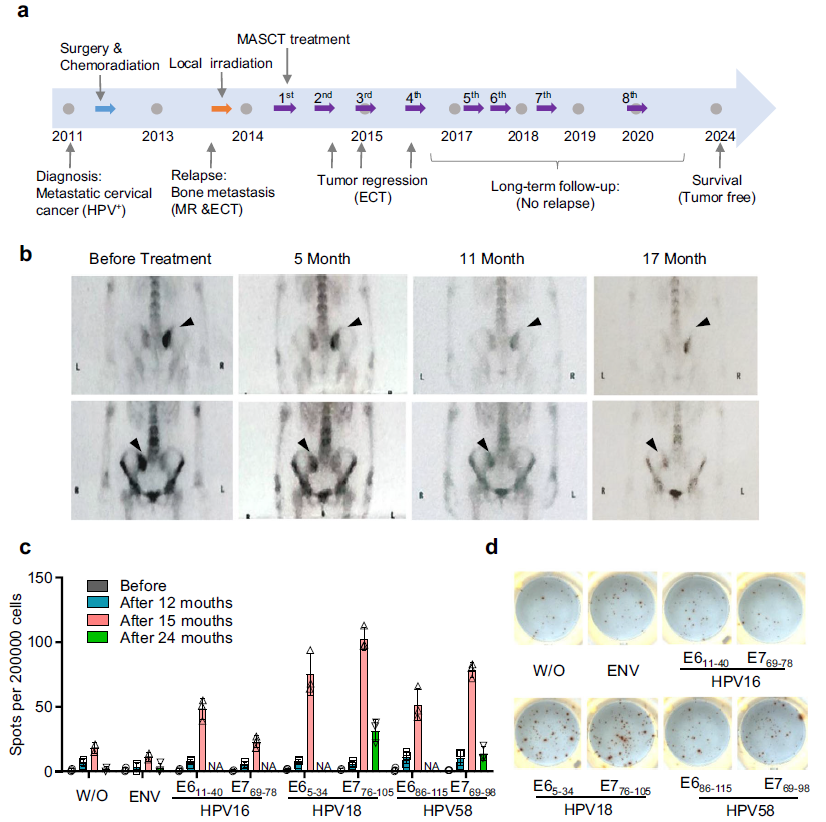
In this study, the research team successfully cloned a TCR molecule (10F04 TCR) targeting the HPV18 E7 tumor antigen from a patient who benefited from early multi-antigen autologous immune cell therapy (MASCT), based on the TCR Reverse Genetic Engineering (ReGET) platform technology. The patient was diagnosed with HPV-positive advanced metastatic squamous cell carcinoma of the cervix in 2011 and experienced recurrence after conventional treatments such as surgery, chemotherapy, and radiotherapy. The patient, starting from 2014,After multiple courses of MASCT treatment, the tumor gradually regressed and achieved long-term remission. To date, the patient has survived cancer-free for over nine years.。The long-term presence of specific T cells targeting multiple tumor antigens such as HPV18 E7 in the patient's body is a possible reason for the patient's clinical benefit.
References:
Long, J. et al. HLA-class II restricted TCR targeting human papillomavirus type 18 E7 induces solid tumor remission in mice. Nature Communications 15, 2271 (2024).
T Cell Receptor (TCR) molecules can simultaneously recognize almost all tumor cell antigens on the cell membrane surface and within cells. Compared to Chimeric Antigen Receptor (CAR) molecules, TCRs have greater advantages and potential in the treatment of solid tumors. In 2022, Immunocore's Tebentafusp, the world’s first protein drug that fuses a TCR with a CD3 antibody, was approved by the FDA for the treatment of uveal melanoma. In August 2024, Adaptimmune Therapeutics' Afami-cel, the world’s first TCR-T cell therapy product targeting solid tumors, will also receive approval for a Biologics License Application (BLA) from the U.S. FDA for the treatment of synovial sarcoma.
Hengrui Yuanzheng Biotechnology Co., Ltd. is a biopharmaceutical enterprise focusing on cell and gene therapy (CGT), jointly established in 2015 by Jiangsu Hengrui Pharmaceutical Group and Shenzhen Yuanzheng Cell Medical Technology Co., Ltd. The company specializes in solid tumor immunotherapy and has developed multiple product pipelines based on tumor-specific T-cell receptors (TCR) and multi-target autologous immune cells (MASCT). Among them, MASCT-I is the world's first dual immunocyte therapeutic product to obtain IND approval and has entered Phase II clinical trials. The first TCR-T product incubated through the company’s self-developed ReGET platform, HRYZ-T101, has also received IND approval and entered Phase I clinical trials. The ReGET platform can continuously incubate first-in-class TCR molecules based on Asian population HLA typing, addressing the bottleneck issue of TCR products always being based on European and American populations’ HLA typing. The company’s latest TCR fusion protein product further solves the "off-the-shelf" problem of cell therapy, greatly improving drug accessibility and is expected to benefit more Chinese patients with solid tumors. The company owns over 60 core patents in its main business and has been granted authorization in multiple countries and regions including China, the United States, the European Union, and Japan.


The Inspiring Speech by the Legend Behind DS-8201 and the Discoverer of EGFR Mutations at the DyNAbix Research & Development Day | PharmaTimes Weekly Live Broadcast Summary

The Stubbornness Under the Reign of Monoclonal Antibodies: Small Molecule Alzheimer's Disease Therapy

Milestone! FDA Approves the First New Drug for Metabolic Steatohepatitis (NASH/MASH) to Hit the Market!
 Click here to enjoy more exciting content!