Roche/MediLink's c-MET ADC YL211 Receives IND Acceptance in China Following Landmark Global Licensing Deal
MediLink
Antibody-Drug Conjugates Developer
Roche
Oncology Drug Research, Development, and Manufacturing
On March 19, according to the CDE official website, the clinical trial application for YL211 Injection, a Class 1 new drug developed by Suzhou MediLink Biopharmaceutical Co., Ltd. ("MediLink" hereinafter), was accepted. At the beginning of 2024, Roche acquired the global development and commercialization rights to this project from MediLink for over 1 billion US dollars, marking the first overseas deal of the year.

Image Source: CDE Official Website
Monoclonal Antibodies, Bispecific Antibodies, ADC…
c-MET Iterative Update
c-MET is a member of the receptor tyrosine kinase (RTK) family and is closely related to the formation, invasive growth, and metastasis of various tumors. Its ligand is hepatocyte growth factor (HGF). Relevant studies have shown that multiple c-MET-targeted therapies, including monoclonal antibodies, bispecific antibodies, CAR-T, and ADCs, have demonstrated excellent efficacy in patients with solid tumors. However, due to issues such as c-Met gene amplification, overexpression, and c-Met mutations, acquired resistance has inevitably emerged with currently used c-Met inhibitors in clinical practice. For this reason, the c-Met target continues to undergo iterative updates.
YL211, developed by MediLink, is a next-generation ADC drug that specifically targets c-MET. According to publicly available data, YL211 utilizes MediLink's next-generation TMALIN® ADC platform technology, which addresses the limitations of existing ADC technologies, such as a limited range of antibody selection, drug resistance, and suboptimal therapeutic effects. Additionally, YL211 is paired with a highly specific c-MET antibody.
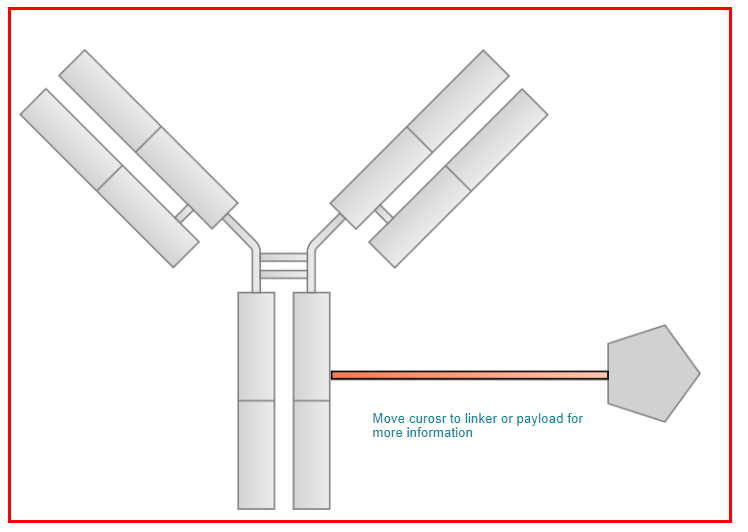
Image Source: MediLink
MediLink stated that YL211 has demonstrated highly promising efficacy and safety in various preclinical tumor models and safety evaluation experiments. In early 2024, Roche obtained the global exclusive rights to the YL211 project, and MediLink will jointly develop the project with Roche China Innovation Center up to Phase I clinical trials.
The acceptance of the clinical trial application for YL211 by the CDE will further advance the progress of this agreement.
Focus on ADC
Multiple Products Progressing Rapidly
MediLink focuses on the development of innovative conjugate drugs. Currently, based on its proprietary TMALIN® platform, it has developed a series of promising ADC candidate projects, covering multiple targets such as B7H3 and HER3.
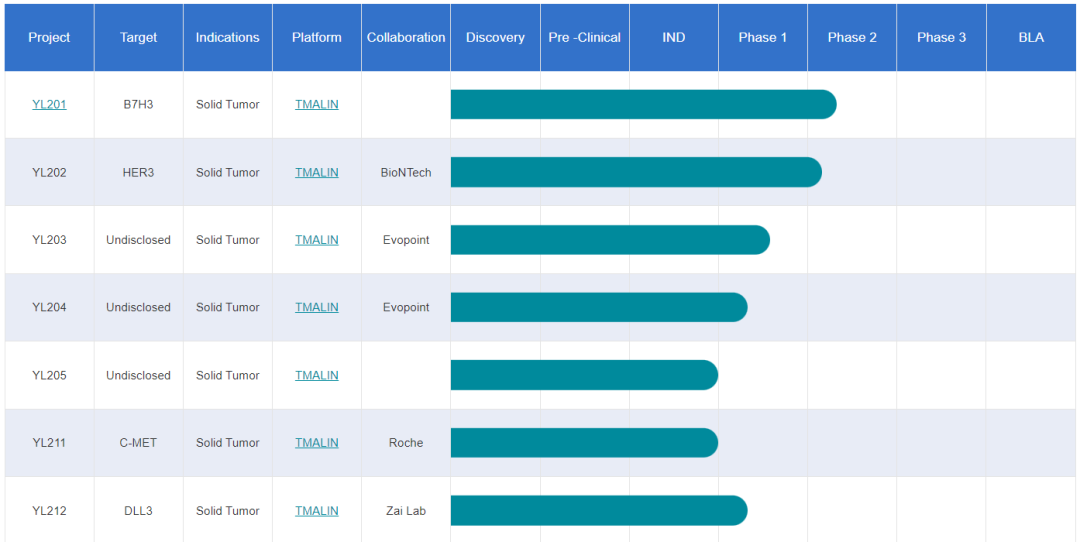
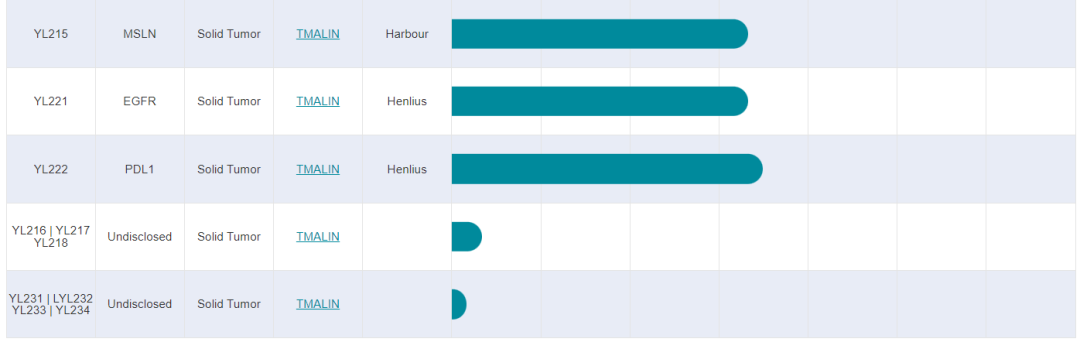
Image Source: MediLink
Since 2023, multiple projects of MediLink have made new progress.
YL212
In April 2023, MediLink entered into an agreement with Zai Lab regarding the YL212 project, under which both parties will collaborate to advance the project to the clinical stage. In late February this year, Zai Lab mentioned in its annual report that the global Phase I clinical study of ZL-1310 (YL212) for the treatment of small cell lung cancer (SCLC) would become one of the key focuses of its 2024 global pipeline clinical development. Currently, YL212 has successfully obtained clinical trial authorization in both China and the United States.
YL201
YL201 is an ADC drug targeting B7H3, and relevant studies have shown that this target is highly expressed in esophageal cancer. In November 2023, MediLink announced that YL201 had received orphan drug designation from the U.S. FDA for the treatment of esophageal cancer. Currently, the YL201 project is undergoing multi-tumor dose expansion studies in China and the United States, including further efficacy exploration for the esophageal cancer indication.
HLX42
At the end of November 2023, Henlius announced that the IND application for the HLX42 project, co-developed with MediLink, received approval from the U.S. FDA. The drug is intended for the treatment of advanced/metastatic solid tumors. This drug is a novel ADC candidate targeting EGFR, which has demonstrated promising anti-tumor activity and safety in preclinical studies.
In addition, MediLink is also collaborating with BioNTech to develop HER3 ADC, partnering with Nona Biosciences, a subsidiary of Harbour BioMed, to develop MSLN ADC, and has multiple other projects in the pipeline under development.
Conclusion
Based on the TMALIN® ADC platform, through independent innovation and collaborative development, MediLink is expected to launch more groundbreaking ADC products in the future.

Editor: Mucan
Disclaimer: The views expressed in this article are solely those of the author and do not represent the position of Pharma Intelligence Network. We welcome exchanges and supplements in the comment section; if you need to reproduce this article, please be sure to indicate the author and source. If it involves the content, copyright, and other issues of the work, please leave a message on this platform, and we will handle it promptly.