Source of the article:SiYu MedTech;Editor:Li Yuanming
Reprint Requirements: Please indicate the source of the article at the beginning of the text, and it can be reprinted directly.

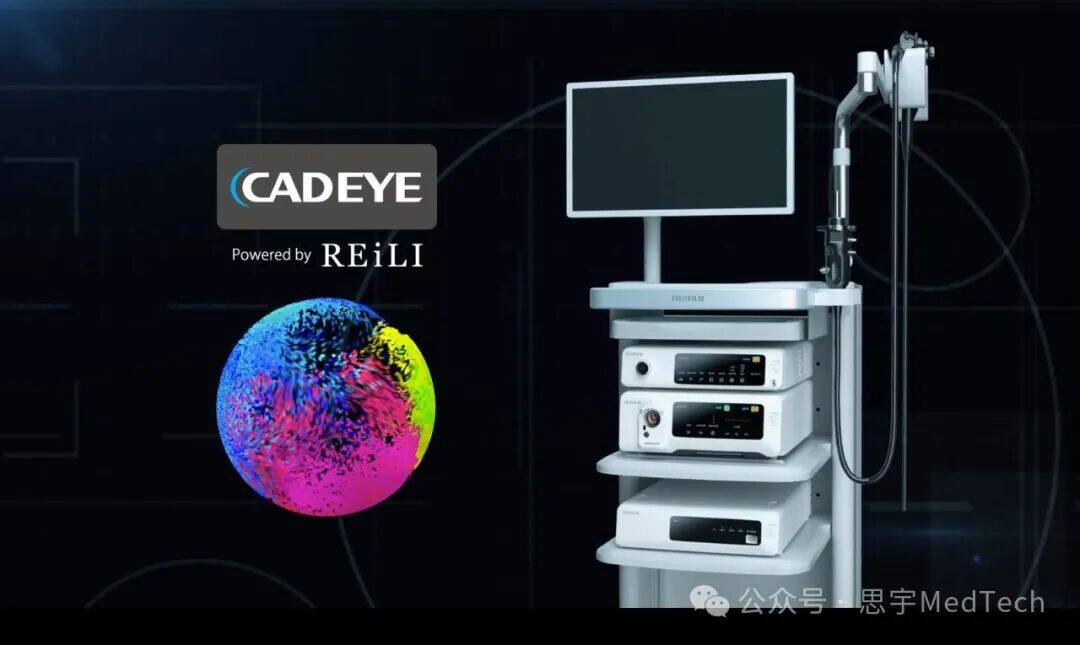
On March 20, 2024, U.S. time, Fujifilm Medical Americas, a subsidiary of Fujifilm, announced that the FDA had approved itsCAD EYE for Endoscopic Imaging® AI Detection System510(k) clearance.
It is reported that the productCan be combined with white light imaging andLinked Color Imaging (LCI)Work together, while the latter is its collaboration with Medtronic.GI GeniusThe key to competition.
# UnderstandingCAD EYE® AI Detection SystemColorectal cancer is one of the most common malignant tumors, and early diagnosis and screening are crucial. However, the verification process for colorectal cancer is fraught with difficulties. The bends and folds within the colon can lead to blind spots in visibility, and many colonic lesions closely resemble normal mucosa, greatly testing the skills of the examining physician.FUJIFILM's CAD EYE Approved This Time®CanDuring the colonoscopyReal-time DetectionColonic Mucosal Lesions, such as polyps and adenomas. It supports endoscopists in detecting and removing precancerous lesions regardless of their size, shape, and color.The technologySupports the detection of those easily overlooked lesions, including flatFacial lesions, lesions in the corners of the endoscopic view, and multiple lesions appearing in a single frame.WhenCAD EYE®When suspicious polyps are identified, the doctor automatically receives visual and auditory alerts. The visual cues overlap but do not interfere with the clinical images in the existing workflow.In addition, it providesSeamlessly integrated into the doctor's workflow. Doctors can activate and deactivate on the endoscope handle.CAD EYE®, without having to turn to the equipment tower, avoiding taking your eyes off the patient.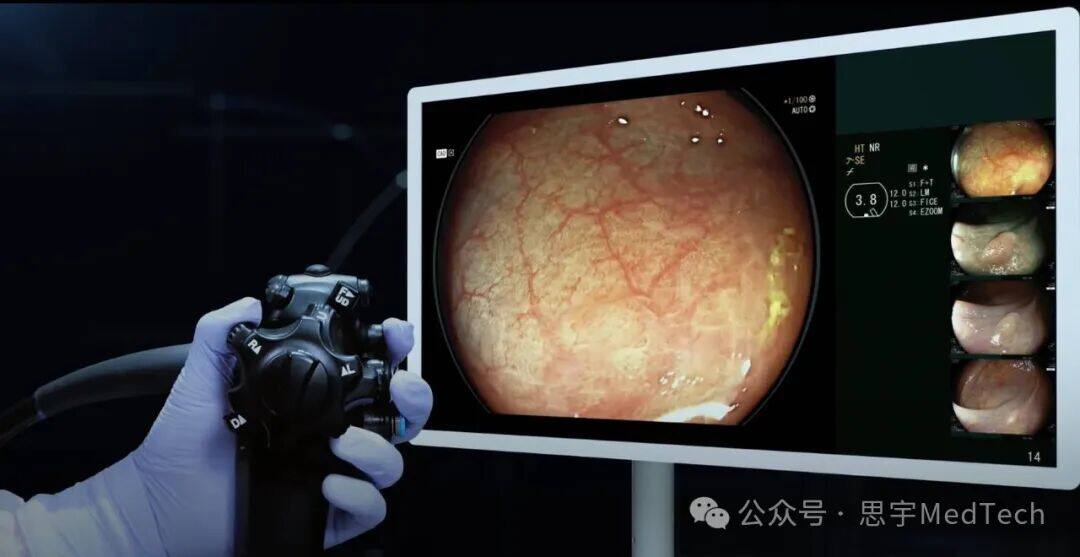
Medtronic GI Genius isAn intelligent endoscope system, it isAn AI-driven computer-aided polyp detection system, reportedly, this product isThe first product on the market to use AI technology to assist in clinical settingsBedside doctors use devices to detect colon lesions of different shapes, sizes, and forms in real time.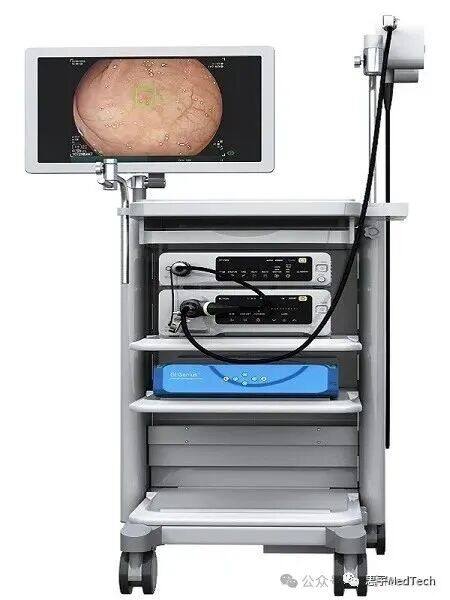
GI GeniusUsing artificial intelligence algorithms for image recognition and analysis. It can automatically identify and classify intestinal tissues, such as normal tissue, ulcers, etc.Both of these tools are designed to assist endoscopists in detecting colonic mucosal lesions.The system is highly compatible and can be used by simply connecting to the existing endoscopes, video processors, and monitors of medical institutions. It can also integrate with mainstream endoscope processors available on the market.No need to change the process of colonoscopy.。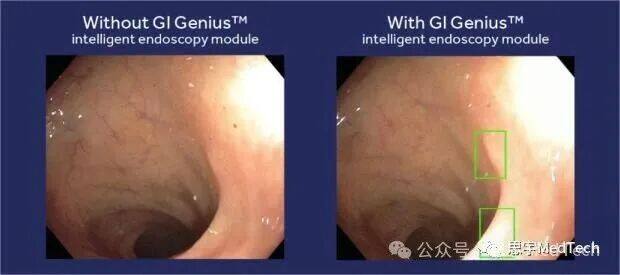
GI GeniusThe training relies on the colonoscopy video library established by the company, whichContains 13 million polyp images of different shapes and sizes.Compared with standard care (i.e., high-definition white light colonoscopy), using the GI Genius™ systemCan improve ADR (adenoma detection rate) and reduce AMR (adenoma miss rate).。The FDA granted de novo clearance to the GI Genius system in April 2021. The system also received CE certification in Europe and has been launched in some markets in Asia, Australia, and the Middle East.And MedtronicWhat sets the GI Genius system apart is that it belongs to Fujifilm.CAD EYE®Can be combined with white light imaging andLinked Imaging Technology(Linked Color Imaging ,LCI)Working together. Fujifilm provides an enhanced visualization mode to differentiate the red spectrum, improving mucosal visibility.It is reported that LCI is a new type of endoscopic auxiliary observation technology, which has unique diagnostic advantages in the screening of early gastrointestinal cancers and the differentiation of inflammatory lesions, and has been increasingly recognized by clinicians in recent years.▲From the official website
Anthony Borrelli, Executive Director of Endoscopic Products and Marketing at Fujifilm Healthcare America, told the media that in addition to high-definition white light,LCI FunctionThe key difference in competing with GI Genius.
About the Advantages of LCI:
- Combination of 4 LED lightsThe combination of optimal spectrum and advanced signal/image processing enables LCI to distinguish red hues more effectively than white light imaging.
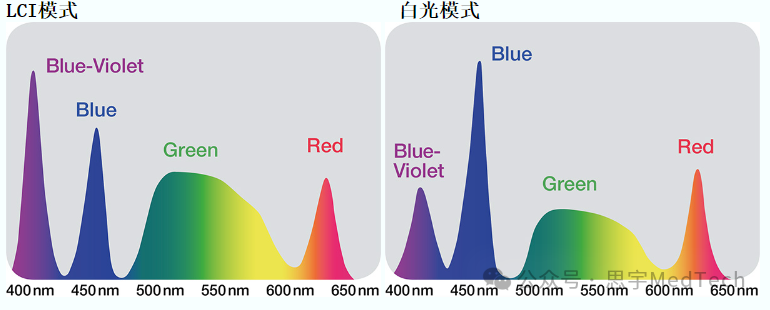 ▲FromOfficial Website
Digital signal/image processing emphasizes slight color differences and provides better color contrast in the red range. As a result, the original red areas appear redder, while the original white areas appear whiter but with natural tones. Thus, the enhanced color contrast supports more accurate depiction as well as the detection of lesions and inflammation.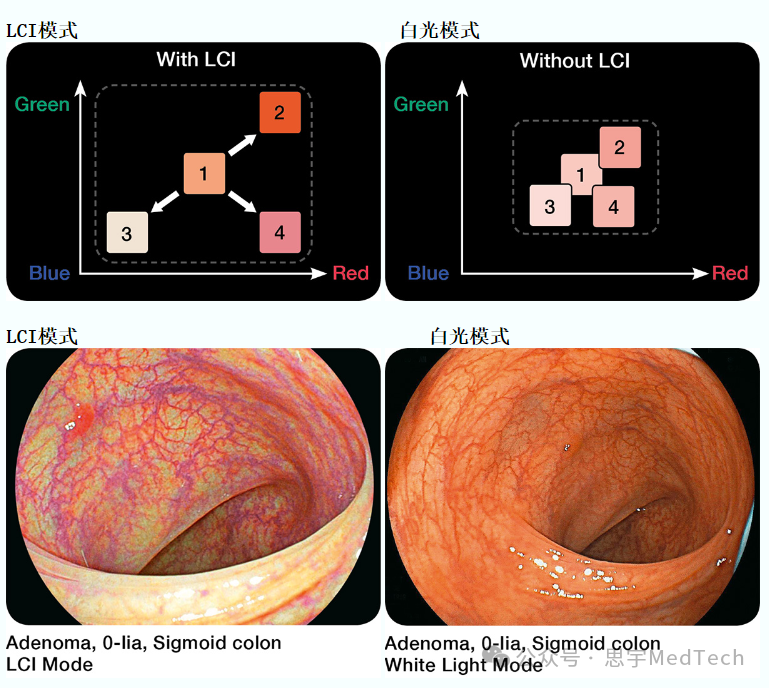 ▲FromOfficial Website
# Excellent Clinical Outcomes, Commercialization ImminentThe relevant clinical studies displayed by the company show,CAD EYE®Can beColorectal Cancer Screening and SurveillanceConsiderable progress has been made in this aspect.Compared with traditional high-definition colonoscopy without AI assistance,CAD EYE®Detected in screening and monitoringAdenomas are significantly more numerous.,And does not prolong the operation time。In addition, Fujifilm's system has a compatible expansion unit (Fujifilm EX-1) and endoscope support software (EW10-EC02).CAD EYE®Building on the company's Eluxeo endoscopic imaging system, AI image processing is integrated with the system's processor and endoscope.Dr. Sravanthi Parasa of the Swedish Medical Center commented on the FDA approvalCAD EYE®The news was exhilarating: "This breakthrough not onlyEarly detection of precancerous lesions in colorectal cancer, while also significantly reducing the risk of missed lesions, improves accuracy and helps enhance clinical outcomes for patients.。”The company plans to, after completing limited market evaluation,This SpringWillCAD EYE®Commercialization。Although the public generally perceives FUJIFILM as a film and photography company, it actually started in medical imaging.The medical field is one of the industries that Fujifilm entered relatively early.As early as 1936, Fujifilm launchedThe First Medical X-ray Film, as well as later advancements in imaging film and archival film, laid the foundation for a series of breakthrough technologies.In 1983, FujifilmDevelopedThe World's First Computerized Radiographic Imaging Diagnostic System (FCR), becoming the world's first company to produce digital X-ray diagnostic imaging systems. Professional medical personnel soon discovered that images generated from various tests and procedures could be shared between different institutions, and could even be used for remote diagnosis and consultation.At the end of the 20th century, with the emergence of dynamic networks, informatics, and cross-system data management and sharing, the Internet was born.Amid the digitalization trend in medical imaging, Fujifilm in 1999Synapse®Push to the market, combining the information technology revolution with the networking of diagnostic imaging systems.In 2015, the sales revenue of Fujifilm's medical business reachedApproximately 420 billion yen (approximately 252 billion RMB)。# About Fujifilm Medical AmericasFUJIFILM Healthcare Americas CorporationIt is a subsidiary of Fujifilm Corporation, formed by the merger of Fujifilm Medical Systems USA and Fujifilm Healthcare USA.The company has a wide range of medical product portfolios, includingMagnetic Resonance Imaging (MRI), Computed Tomography (CT), X-ray, Endoscopy, Ultrasound, and In Vitro Diagnostics (IVD)etc.It leverages AI and other technologies to support healthcare professionals in improving diagnostic and treatment efficiency, enhancing patient experience and safety. It focuses on providing medical imaging and healthcare solutions, strengthening Fujifilm's comprehensive cooperation capabilities with healthcare institutions in the medical device field.
Global MedTech TOP100: 2023 Global MedTech TOP100
2023 Global Medical Technology Industry Contribution Award
2023 Global Medical Technology Innovation Award
2023 Global MedTech Pioneer Award
2023 Global Innovative Medical Device Award
Global Leading Medical Device Companies | Dynamic CollectionChinese Medical Device Listed Companies | Dynamic CollectionEditor-in-Chief | Zhao Qing Reviewed by | Yi He