First-in-Class FRα ADC Elahere Receives Full FDA Approval; Competitive Landscape of Domestic Pipeline Leaders Analyzed

AbbVie
Innovative Drug Developer
▎Traceability
March 22, 2024AbbVie today announced that the U.S. FDA has fully approvedIts "first-in-class" antibody-drug conjugate (ADC) Elahere (mirvetuximab soravtansine) is used to treat patients with folate receptor alpha (FRα)-positive, platinum-resistant epithelial ovarian cancer, fallopian tube cancer, or primary peritoneal cancer who have previously received up to three systemic treatment regimens. ELAHERE is the first and only antibody-drug conjugate (ADC) approved in the United States for the treatment of this difficult-to-treat malignancy.
ELAHERE received FDA approval for the first time in November 2022.Accelerated Approval, This time, the data from the confirmatory Phase III MIRASOL trial has been converted to full approval. According to the currently published data, the median OS for patients in the Elahere group was 16.46 months, compared to 12.75 months in the IC chemotherapy group,The hazard ratio (HR) was 0.67, p=0.0046. This means that, compared with the IC chemotherapy group, the risk of death in the Elahere group was reduced by 33%.Compared with IC chemotherapy, Elahere demonstrated a statistically and clinically significant improvement in PFS, with a hazard ratio of 0.65 (p<0.0001), which means that the risk of tumor progression or death was reduced by 35% in the Elahere group compared to the IC chemotherapy group.The median PFS in the Elahere group was 5.62 months, compared to 3.98 months in the IC chemotherapy group. The ORR in the Elahere group was 42.3%, including 12 complete responses (CR), while the ORR in the IC chemotherapy group was 15.9%, with no patients achieving CR. Compared with the IC chemotherapy control group, ELAHERE overall showed fewer grade 3 or higher adverse events and a lower proportion of discontinuations due to adverse events.
Elahere, as the first FRa ADC, has a toxin of DM4 and a cleavable linker. In terms of expression,FRα is highly expressed in ovarian cancer, followed by lung cancer. In preclinical animal models, ADCs with DXD or exatecan as payloads demonstrated promising efficacy, regardless of high, medium, or low expression levels.
In my ADC development journey, DXD has truly demonstrated efficacy—whether observed clinically for targets with medium to low expression or traced back to preclinical effectiveness—almost without question, showing promising results. DXD has ushered in a new era. Currently, the two leading companies in China developing this target are Bio-Thera and Provention Bio.exatEcan. Compared with DXD, exatecan has one less hydroxyacetyl group, which results in completely different activities and linkers suitable for their cleavage. As known, exatecan is more toxic than DXD. The toxicity of the free drug form is 5-20 times higher than that of DXD, varying across different cells. The key point is hydrophilicity.linkerTheTransformation, DXD andexatecanNot compatible with the same set of linkers, useexatecanNeed to explore new linkers. It should be noted that the cytotoxicity of free drug is different from the cytotoxicity of ADC formed by conjugating toxin to antibody. Different ADC designs, even with the same drug, also have certain differences.
Pufang and Bio-Thera both modified the linker to be more hydrophilic, with Pufang adding a sugar chain and Bio-Thera adding PEG.
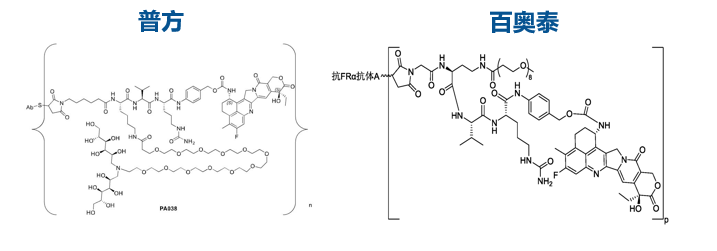
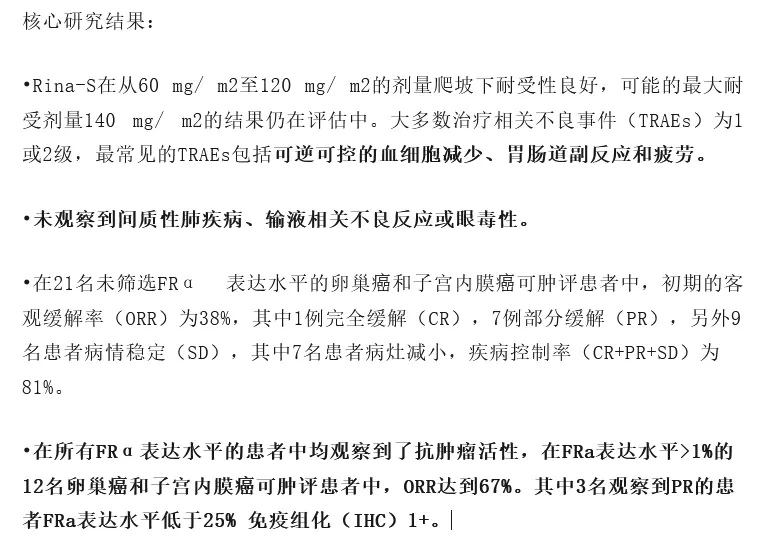
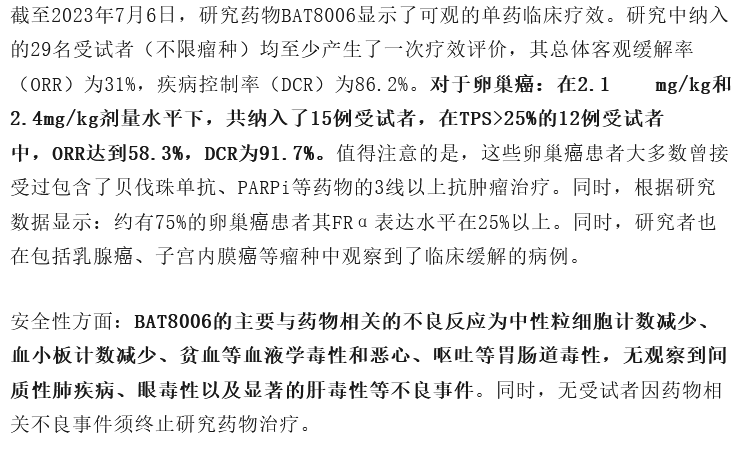
Interstitial pneumonia associated with DS-8201 has been indicated in literature to be related to Fc. However, in our ADCs using exatecan as the payload, no such side effect of interstitial pneumonia was observed, so there is no basis to discuss whether Fc silencing could reduce this effect. More clinical data is needed for further clarification.
The linker-payload designs of Pufang and Bio-Thera are extremely similar. However, when standardized to the same dosing unit, Bio-Thera's dose is 2.4 mg/kg, while Pufang's (potential dose) is 3.4 mg/kg, indicating a certain gap. Due to differences in both the linker and Fc design, it is impossible to definitively conclude whether the observed effects are due to the linker or the Fc region. Hematological toxicity occurs regardless of whether the Fc is silenced or not, suggesting that such toxicity is mainly caused by free toxins released after cleavage. It can also be confirmed that silencing the Fc does not reduce its efficacy compared to Bio-Thera’s non-specialized Fc design. Mechanistically, silencing the Fc can indeed reduce non-targeted distribution of ADCs, avoid affecting PK, thereby enhancing drug infiltration into tumors. Another point is whether Pufang’s design is more hydrophilic compared to Bio-Thera’s.
The design of ADCs by Pufang and Bio-Thera Solutions provides an interesting contrast, offering significant reference value to the industry. However, whether exatecan holds greater advantages over DXD toxins still requires further data for verification and comparison. Both Bio-Thera Solutions' and Pufang's FRα ADCs have demonstrated promising efficacy data so far.
But whether a good linear PK can be achieved within the dose range of 2-3 still requires further data release for analysis. The lower dose of Bio-Thera's drug is, to a certain extent, more challenging to achieve favorable PK. The PK limitations of the drug may, to a certain extent, affect the maximum efficacy of the drug. Innovent also...exatecanFor the payload, adopting the DAR4 design, whether it can be more advantageous, we also look forward to the unveiling of future answers.