

First-in-Human Clinical Study of BMS’s Radiolabeled Cyclic Peptide 18F-BMS-986229 for PD-L1 PET Imaging in Gastroesophageal Cancer

Bristol-Myers Squibb
Biopharmaceutical and Nutritional Product R&D and Sales
01
BMS Cyclic Peptide Nuclear Medicine: First Clinical Study of 18F-BMS-986229
 Journal of Nuclear Medicine March 2024, jnumed.123.267186;
1. Gastroesophageal Cancer &PD-L1 Tracer
Gastric and esophageal cancer (GEC) causes 1.3 million deaths annually and is the second leading cause of cancer-related mortality worldwide. Over the past 2 years, PD-1 inhibitors combined with chemotherapy have become the standard first-line treatment for metastatic disease, with regulatory approvals and patient selection often based on PD-L1 expression.Currently, the main method to detect the expression level of PD-L1 in clinical practice is through Immunohistochemistry (IHC), but IHC is an invasive examination.Although a high PD-L1 combined positive score (CPS) is associated with better treatment outcomes, there are some limitations in pathological assessment.A single biopsy cannot fully capture the tumor heterogeneity within a single lesion or between multiple lesions in the same patient, CPSCPSIt is a dynamic biomarker that changes throughout the patient's course of disease.Therefore, a comprehensive and minimally invasive assessment of PD-L1 expression in GEC is required.
Radiolabeled PD-1 and PD-L1 antibodies have been evaluated in patients with non-small cell lung cancer, bladder cancer, and triple-negative breast cancer. However,Due to the slow kinetics of radiolabeled antibodies, imaging can only be performed several days to a week after the injection of the tracer.Low molecular weight PD-L1 tracers can be injected and imaged on the same day.18F-BMS-986192It has been evaluated in non-small cell lung cancer and melanoma, and its correlation with pathological evaluation and treatment response has been confirmed through this method.But its synthesis is challenging and can only be isolated with a low radiochemical yield.。18F-BMS-986229 is aMacrocyclic Peptides, which has a high affinity for PD-L1, binds tightly to the receptor, has a slow off-target rate, clears rapidly from non-PD-L1 expressing tissues, can be isolated in higher yields, and is also less synthetically challenging than 18F-BMS-986192. Preclinical evaluation of 18F-BMS-986229 has shown that it specifically binds to PD-L1 expressing tissues both in vitro and in vivo. This study represents the first PD-L1 targeted radiotracer 18F-BMS-986229 PET imaging (PD-L1 PET) investigation conducted in GEC patients.First Clinical Application of 18F-BMS-986229 as a PD-L1 Targeted Radiotracer.
2. The main purpose is to evaluate safety and feasibility.
BMS's 18F-BMS-986229 is designed based on the potent macrocyclic peptide-derived PD-L1 antagonist BMS-986189, which has picomolar-level PD-L1 affinity. According to the co-crystal structure of BMS-986189 and PD-L1, propargylglycine was incorporated into the solvent-exposed portion of the peptide, allowing this macrocyclic peptide to be labeled via copper-catalyzed azide-alkyne cycloaddition.
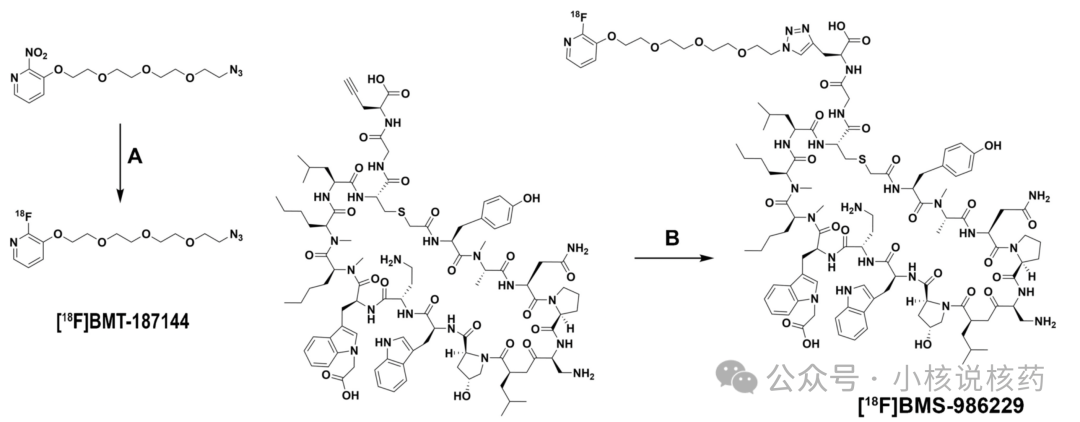 Synthesis Route of 18F-BMS-986229
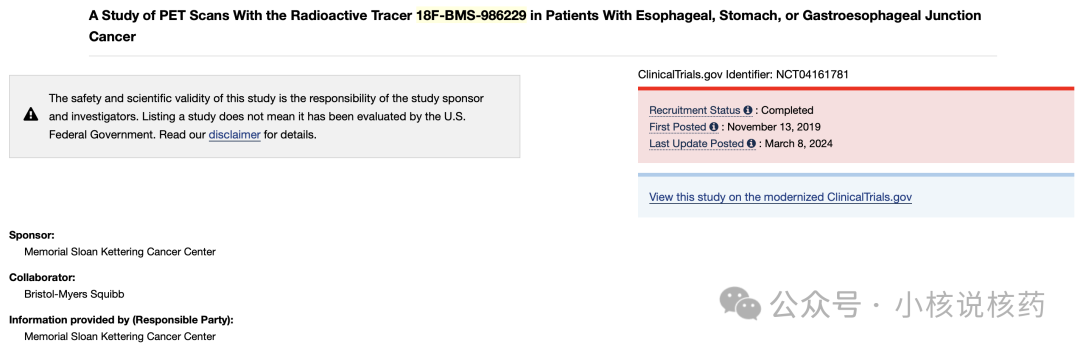
The main purpose of the study was to evaluate the safety and feasibility. If no grade 3 or higher 18F-BMS-986229-related adverse events occurred, and at least 70% of the patients were PD-L1 PET-positive, then PD-L1 PET imaging was considered safe and feasible.The patient was intravenously injected with 370 MBq of 18F-BMS-986229 radiotracer within 1-2 minutes, followed by whole-body PET/CT imaging 60 minutes (55-70 minutes) later.PET/CT imaging takes 30 minutes, followed by 30 minutes of patient observation after scanning, with a total observation time of 120 minutes after injection of the radiotracer. Patients are allowed to selectively undergo PD-L1 PET examination again 6 weeks after receiving anti-PD-1 treatment.
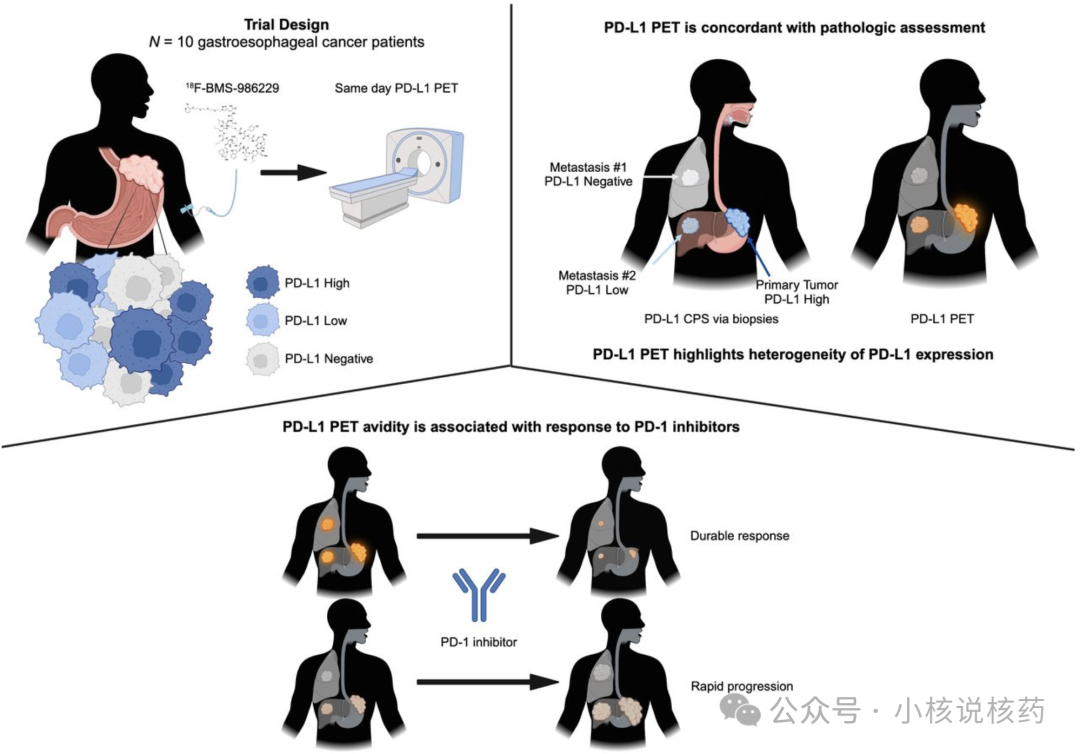
From February 3, 2020 to February 2, 2022,10 casesPatients with gastric esophageal adenocarcinoma underwent PD-L1 PET imaging. No adverse events related to the 18F-BMS-986229 tracer occurred, and imaging did not cause treatment delays; the primary endpoint of the trial was met. In 88% of biopsy lesions, radiologic assessment of PD-L1 expression was consistent with pathologic evaluation, and 18F-BMS-986229 uptake in PET imaging correlated with the combined positive score from pathologic assessment (Spearman rank correlation coefficient, 0.64). In patients showing 18F-BMS-986229 uptake in PET imaging,Seventy-one percent of the lesions showed no uptake of 18F-BMS-986229, highlighting the heterogeneity of PD-L1 expression in patients.In patients receiving first-line PD-1 inhibitor treatment, PET imaging showed that patients with 18F-BMS-986229 uptake in any lesion had a longer progression-free survival than those without tracer accumulation in any lesion (median progression-free survival,28.4 months vs. 9.9 months), but due to the small sample size, no further definitive conclusions could be drawn.
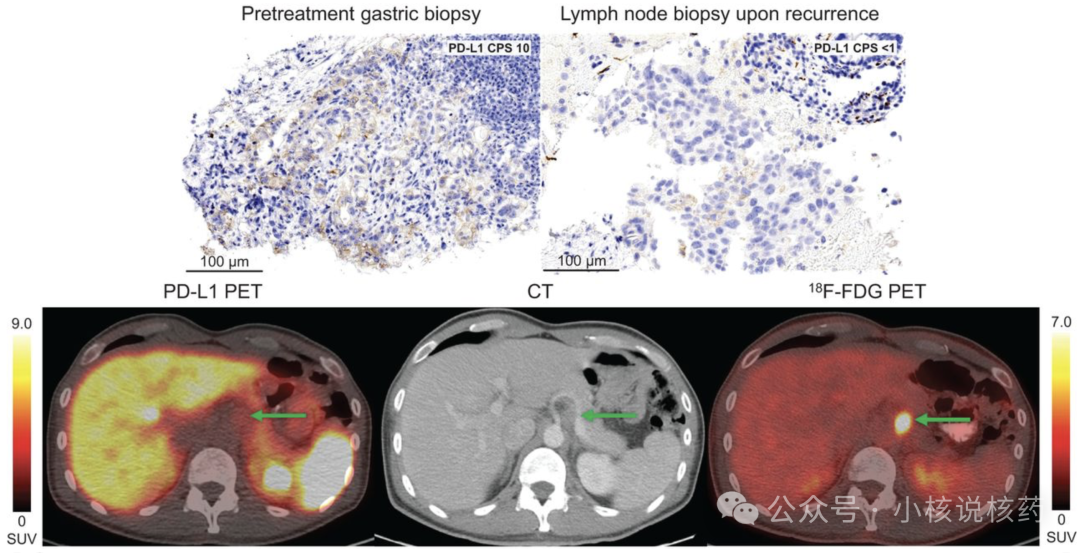 PD-L1 PET without uptake corresponds to PD-L1 negative biopsy. Biopsy of gastric mass (upper left) shows PD-L1 CPS of 10. The patient received chemotherapy and surgical treatment but subsequently developed lymph node metastasis recurrence, with biopsy showing PD-L1 CPS < 1 (upper right). PD-L1 PET at recurrence (lower left), corresponding CT (lower middle), and 18F-FDG PET (lower right) show the biopsied gastrohepatic lymph node (arrow), with no PD-L1 uptake but 18F-FDG uptake.
02
PD-L1 TracerResearch Status
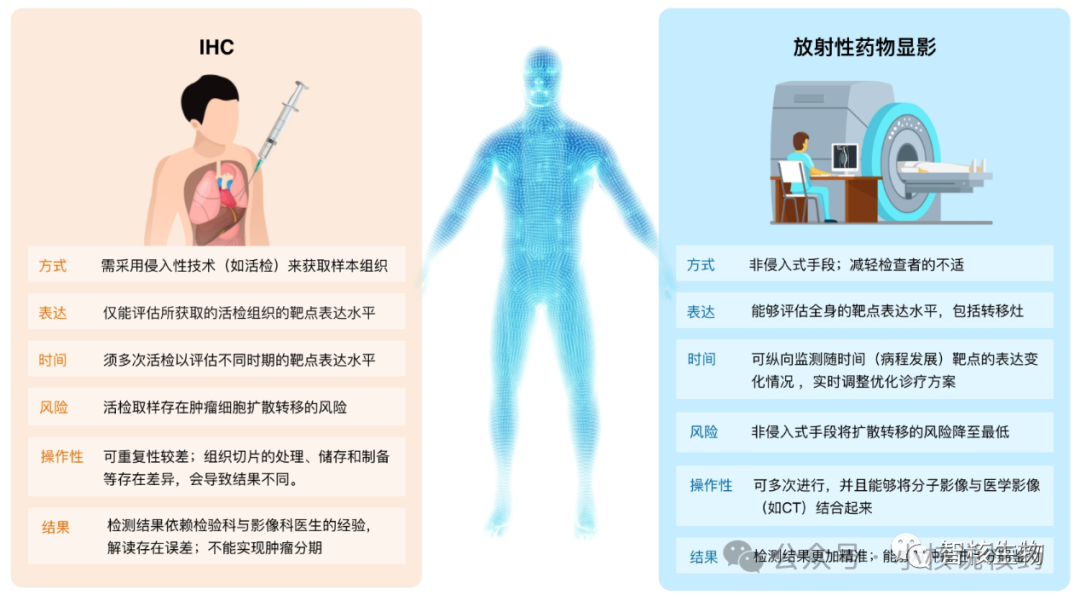 Screenshot source: Smart Nuclear Biology WeChat Official Account
SNA002, a 68Ga-labeled PD-L1 radioactive imaging agent independently developed by SmartNuclide Biotech, has received the clinical trial default approval for a new drug clinical trial (IND) from the Center for Drug Evaluation (CDE) of the China National Medical Products Administration.2022April received U.S. Food and Drug Administration (FDA) IND approval,A registrational clinical trial of SNA002, the first radiotracer targeting PD-L1 to receive IND approval in both China and the U.S., was initiated in 2023 at Zhongshan Hospital, Fudan University. The Phase I clinical trial has already enrolled multiple patients and demonstrated excellent clinical data.This probe is expected toAccurately screen the population responsive to PD-1 treatment, guide precision medication for cancer patients, comply with ethics, improve patients' quality of life, and save patients' medical expenses and national medical insurance funds.OthersPreclinicalPD-L1 radiotracer also indicated thatThe ability to detect the level of PD-L1 expression looks forward to more drugs entering into clinical translational research. Related links are as follows:
Clinical Study of a New PD-L1 Probe: 68Ga-THP-APN09!
PD-L1 PET Probe: [99mTc]Tc-HYNIC-KN035!
New Progress in PET Imaging Probe by Zhinhe Biotech for Detecting Tumor PD-L1 Expression
68Ga-DK223-PET binds to PD-L1 with high affinity and specificity!
PD-L1-Targeted PET Probes: A Comparison of Monoclonal Antibodies and Small Molecular Peptides
Tumor PD-L1 Imaging with I-124 PET Probe
【Literature Sharing】JNM|PET Imaging of a Non-Blocking Single-Domain Antibody Targeting Tumor PD-L1
New Tracer 68Ga-NODA-CDV-Nb109 for Monitoring PD-L1 Expression
18F-NOTA-NF12: PET Imaging of PD-L1 Status in First-in-Human Studies
PD-L1 New Nuclear Medicine Probe: 68Ga-TRAP-WL12!
PD-L1 Targeted 99mTc Diagnostic Radiopharmaceutical!
Zr89-labeled novel radiopharmaceutical targeting PD-L2!
Construction and Preclinical Evaluation of 124/125I-Labeled PD-L2 Specific Antibodies